
Do all door handles fit all doors?
Short answer: no — and assuming they do is one of the most common (and costly) mistakes people make when replacing door handles.
Long answer: door handles are influenced by door type, thickness, lock/latch standards, fixing centres, handing, and intended use. Two handles may look identical online, yet only one will physically work on your door.
This guide explains why door handles aren’t universal, what actually needs to match, and how to check compatibility before you buy.
Why door handles aren’t universal
At a glance, most handles seem interchangeable. But behind the door leaf is a mechanical system that has to line up precisely. If even one measurement or standard is wrong, you’ll run into issues like:
-
handles that don’t sit flush
-
spindles that are too short
-
screws that don’t line up
-
locks that won’t engage
-
handles that feel loose or fail prematurely
Door handles are designed to work with specific door constructions and locking systems, not as one-size-fits-all accessories.
The 5 key factors that determine whether a handle will fit
1) Door type (this matters more than anything)
Different doors use different locking systems.
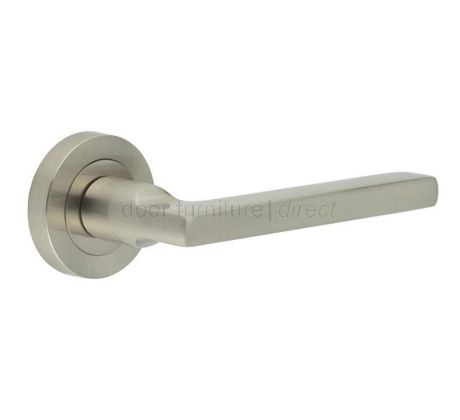
Internal doors (timber)
-
Usually use a simple tubular latch or mortice lock
-
Most lever-on-rose or lever-on-backplate handles are designed for these
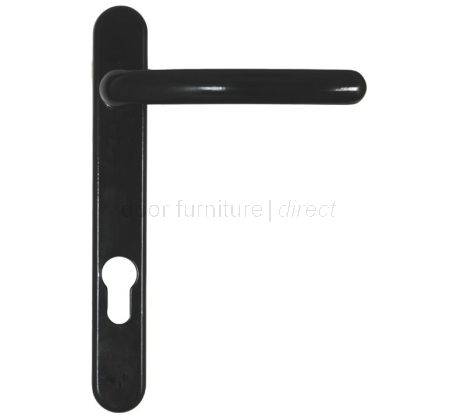
uPVC / composite doors
-
Use multi-point locking systems
-
Require handles with specific fixing centres (commonly 92mm, 62mm, or 72mm)
External timber doors
-
Often use mortice sash locks or deadlocks
-
Need stronger handles, usually on a backplate
👉 A handle made for an internal latch door will not work on a uPVC door, even if it “looks right”.
2) Fixing centres (especially for uPVC & composite doors)
Fixing centres are the distance between key elements on a backplate handle.
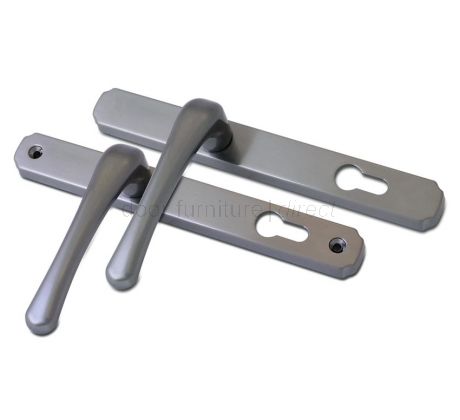

Common centre sizes:
-
92mm – most modern uPVC and composite doors
-
72mm – older uPVC systems
-
62mm – some specialist or continental locks
If the centres don’t match:
-
the screws won’t align
-
the spindle won’t engage the lock
-
the handle physically won’t install
There’s no workaround for incorrect centres — they must match exactly.
3) Door thickness
Not all doors are the same thickness, and this affects:
-
spindle length
-
bolt-through screw length
-
rose/backplate clearance
Typical thicknesses:
-
Internal doors: 35–44mm
-
External doors: 44–70mm+
-
Composite doors: vary by manufacturer
Many handles are supplied with a standard spindle, but thicker doors may need:
-
extended spindles
-
longer fixing bolts
Good-quality handles often include cut-to-size spindles or compatibility ranges — always check the spec.
4) Lock or latch type
Handles don’t operate locks generically — they’re designed for specific mechanisms.
Common combinations:
-
Lever latch handles → tubular latch
-
Lever lock handles → mortice lock (key-operated)
-
Lever bathroom handles → bathroom lock (with thumbturn)
-
Backplate handles → sash lock / multi-point lock
If you buy a latch handle but your door has a lock case, it won’t function correctly — even if it physically mounts.
5) Handing (less common, but still relevant)
Most modern lever handles are non-handed (they work on left- or right-opening doors).
However, some:
-
traditional designs
-
curved or cranked levers
-
specialist architectural handles
are handed, meaning you must specify left-hand or right-hand operation.
Installing a handed handle the wrong way can cause:
-
poor ergonomics
-
levers that point upward or downward incorrectly
-
failed returns
Common myths (and why they’re wrong)
“If the handle looks the same size, it will fit.”
→ Visual size means nothing; internal measurements matter.
“All internal door handles are universal.”
→ Mostly compatible, but spindle length, latch size, and door thickness still matter.
“I can just drill new holes.”
→ On uPVC/composite doors, drilling new holes can compromise structure and security.
“Backplates are interchangeable.”
→ Only if centres, spindle height, and lock type all match.
When door handles are interchangeable
There are scenarios where swapping is straightforward:
-
Internal timber doors
-
Same latch size (usually 57mm case / 8mm spindle)
-
Same door thickness
-
Like-for-like handle type (lever latch → lever latch)
In these cases, most quality handles will fit without modification.
A simple compatibility checklist (use this before buying)
Before ordering any door handle, check:
-
Door type – internal timber, uPVC, composite, external timber
-
Lock/latch type – latch, mortice lock, bathroom lock, multipoint
-
Fixing centres (if applicable)
-
Door thickness
-
Spindle size (most UK handles use 8mm, but always confirm)
-
Handing (if the design isn’t symmetrical)
If all six line up, the handle will fit.
Final verdict
No, not all door handles fit all doors — and they’re not meant to.
Handles are engineered components, not just decorative ones. Choosing the right one is about matching function first, then style.
The good news? Once you understand the basics — door type, centres, thickness, and lock — choosing the right handle becomes straightforward and repeatable.
