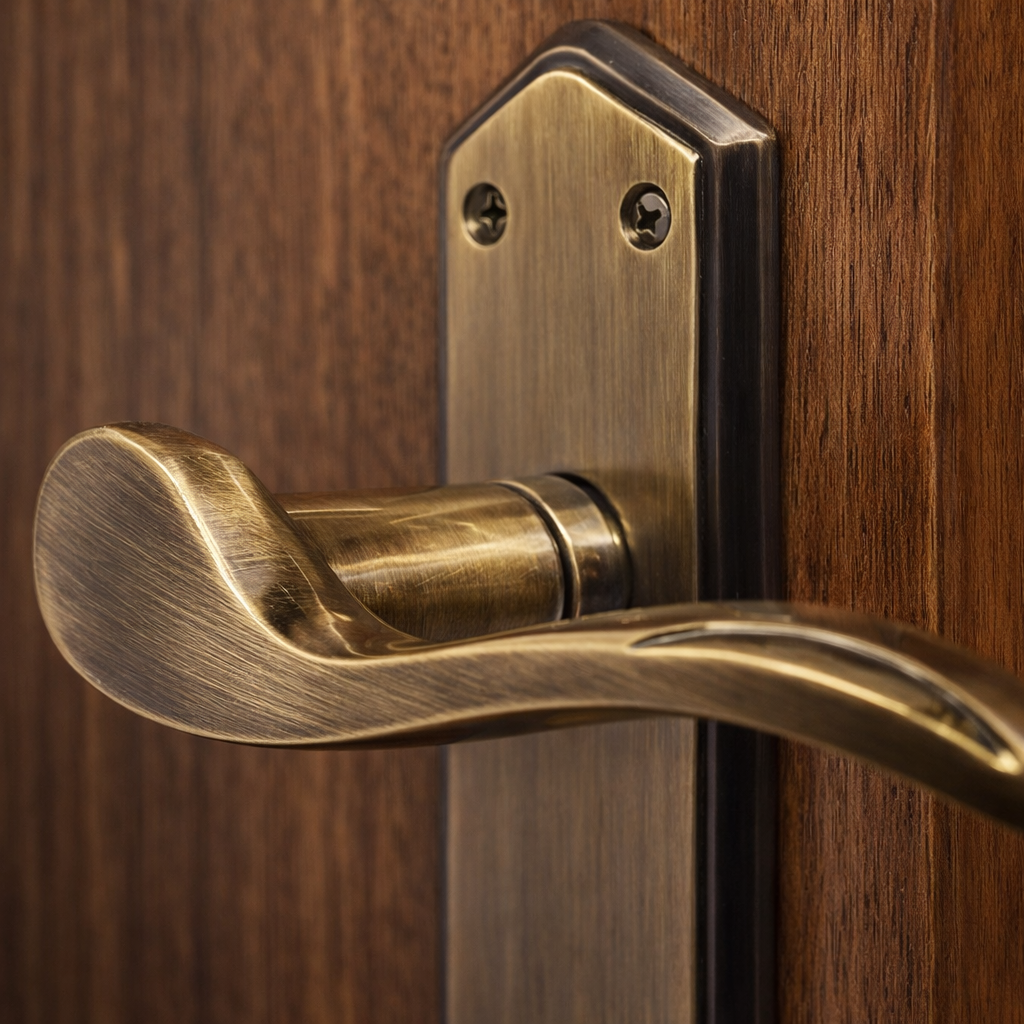
Antique Brass Door Handles with Dark Wood Doors
Dark timber doors have a richness that deserves the right hardware. Walnut, dark oak, mahogany and deeper wood stains already bring colour, grain and character into a room, so the best door handle is rarely one that fights for attention. Antique brass works particularly well because its warm, softened finish sits naturally alongside the brown, amber and chocolate tones found in darker woods.
The effect can be quietly luxurious rather than overtly traditional. Against timber, antique brass has less of the sharp contrast you would get from chrome or black. Instead, the two materials seem to belong together: one brings natural grain and depth, the other introduces a warm metallic highlight. The result works in period houses, contemporary renovations, boutique-hotel-inspired interiors and modern homes using walnut or stained oak as an architectural feature.
Dark wood allows the aged highlights and deeper tones within antique brass to become part of the material palette rather than simply sitting on top of it. Browse antique brass door handles.
Material-led interior
Let the timber do most of the talking
A beautiful timber door already has its own pattern. Grain changes direction, knots catch the eye and the colour shifts as the light moves across the surface. Rather than adding another highly contrasting element, antique brass can be used as a warm punctuation mark. The handle remains visible and tactile, but the overall composition still feels centred on the wood.
Why antique brass suits walnut and dark oak
Part of the appeal comes from undertone. Darker woods are not simply “brown”: walnut can contain chocolate, grey and even slightly purple notes, while stained oak often retains warmer honey or amber areas beneath the darker finish. Antique brass has a similarly varied appearance, with muted gold, brown and darker patinated areas rather than one flat metallic colour.
Put the two together and there is enough contrast for the handle to be clearly visible, but not so much that the ironmongery dominates the door. This makes the combination particularly effective where the timber itself is an investment — for example a solid or veneered walnut door, oak joinery, a bespoke study entrance or darker timber doors running throughout a hallway.
Use texture to complement the grain
One of the most interesting ways to choose hardware for a timber door is to look beyond colour and consider the direction of the detail. Wood grain naturally forms lines, so a reeded or finely textured backplate can echo that rhythm without trying to imitate the timber itself.
Design idea
Reeding against wood grain
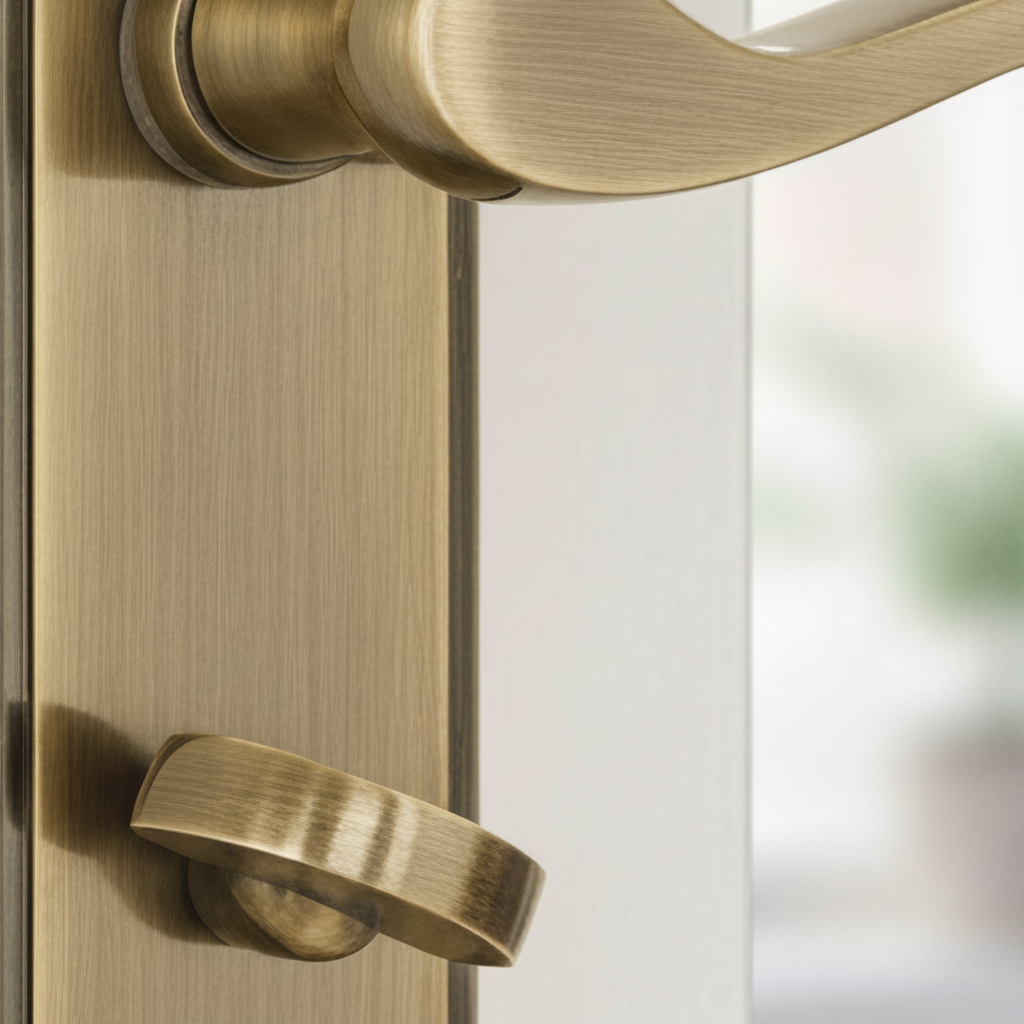
The Gio Reeded Antique Brass Latch Handle is a particularly useful example. Its long rectangular backplate carries fine vertical reeding while the lever itself remains clean and tapered.
On a wood door, those fine lines sit beside the natural grain rather than obscuring it. On walnut or a medium-to-dark stained oak, the same idea would feel richer and more dramatic, particularly where the timber has a fairly straight grain.
This is a good route if you want the warmth associated with antique brass but prefer an interior that feels designed rather than deliberately vintage.
With a strongly grained door, the handle does not need to be highly decorative. Often the most successful combination is interesting timber paired with beautifully finished, relatively simple hardware.
Dark wood can take a more modern handle than you might expect
It is easy to associate dark wood and antique brass with traditional interiors, but the materials themselves do not dictate the style. A dark flush door or clean-lined walnut veneer can look distinctly contemporary when it is paired with a geometric handle.
If your doors have minimal moulding — or no moulding at all — consider using a straighter lever rather than a scroll or highly decorative backplate. The warm brass keeps the timber from feeling too corporate, while the sharper handle profile gives the combination a modern architectural edge.
For clean-lined walnut
The Bauhaus Antique Brass Latch Handle uses a rectangular backplate and a strong geometric lever. Against a flat walnut or smoked-oak door, that simplicity creates contrast through shape rather than colour.
Pair with: pale stone, textured cream walls, dark timber cabinetry and understated lighting.
For a softer contemporary look
The Diplomat Antique Brass Latch Handle introduces gentle curves rather than hard geometry. It is useful when your timber door is contemporary but the room itself contains softer furniture and more traditional details.
Pair with: walnut, linen upholstery, warm off-whites and brown or bronze accents.
Browse Antique Brass Internal Door Handles
Think about contrast before you choose the handle
With a painted door, choosing hardware is largely about colour. With timber, there is another question: do you want the handle to stand apart from the grain, or become part of it?
Create definition
On very dark walnut, wenge-effect timber or heavily smoked oak, choose an antique brass handle with enough exposed brass to remain clearly visible. A substantial backplate, a long lever or reeded detailing will catch the light and create a deliberate focal point.
This approach works especially well in hallways, studies and dining rooms where dark timber is being used to add drama.
Let it blend
If you want a quieter result, select a darker antique finish or introduce wood into the handle itself. The hardware then becomes part of the overall material story rather than a separate metallic feature.
This can look particularly good on bedroom doors, traditional studies and timber-heavy schemes where you want a calm, established feel.
A different approach: put wood on the handle too
You do not have to choose between a wooden door and a metal handle. Combining the two materials within the hardware itself can create an especially cohesive result.
Material-on-material
Rosewood and antique brass
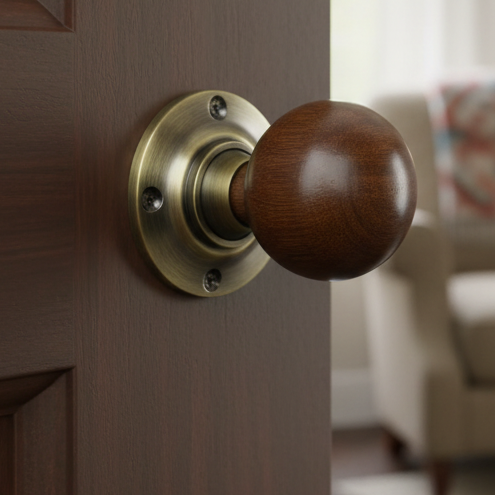
The Antique Brass and Rosewood Mushroom Door Knobs take a completely different approach from an all-metal lever. A timber knob sits on an antique brass rose, allowing the hardware to relate directly to the colour and character of the door.
This can be particularly effective on darker traditional doors because the brass is reduced to a smaller accent around the base of the knob. The result feels less decorative than a large brass backplate but still gives enough contrast to define the fitting.
For more texture, the reeded rosewood version introduces concentric detailing into the timber itself.
Which woods work particularly well with antique brass?
Walnut
Walnut is perhaps the most naturally luxurious pairing. Its deep brown colouring can make the brighter brushed areas of antique brass appear warmer, while the darker patinated areas stop the handle looking overly polished.
Dark stained oak
Oak grain remains visible even under deeper stains, which makes simple handles particularly effective. Consider long, clean backplates or lever-on-rose designs that leave plenty of timber visible.
Mahogany & red-brown timber
Warmer red-brown woods tend to suit antique finishes better than very bright yellow brass. The aged colouring creates a gentler transition between the timber and the metal.
Ebonised & near-black wood
On almost-black timber, antique brass becomes much more prominent. Keep the surrounding room restrained if you want the handle to act like a small piece of jewellery on the door.
Traditional dark timber needs restraint too
A period-style timber door does not necessarily require the most ornate handle available. In fact, dark wood already brings a great deal of visual weight to a room. A handle with a shaped backplate and gentle lever can give enough traditional character without making the door feel over-decorated.
A softer heritage option
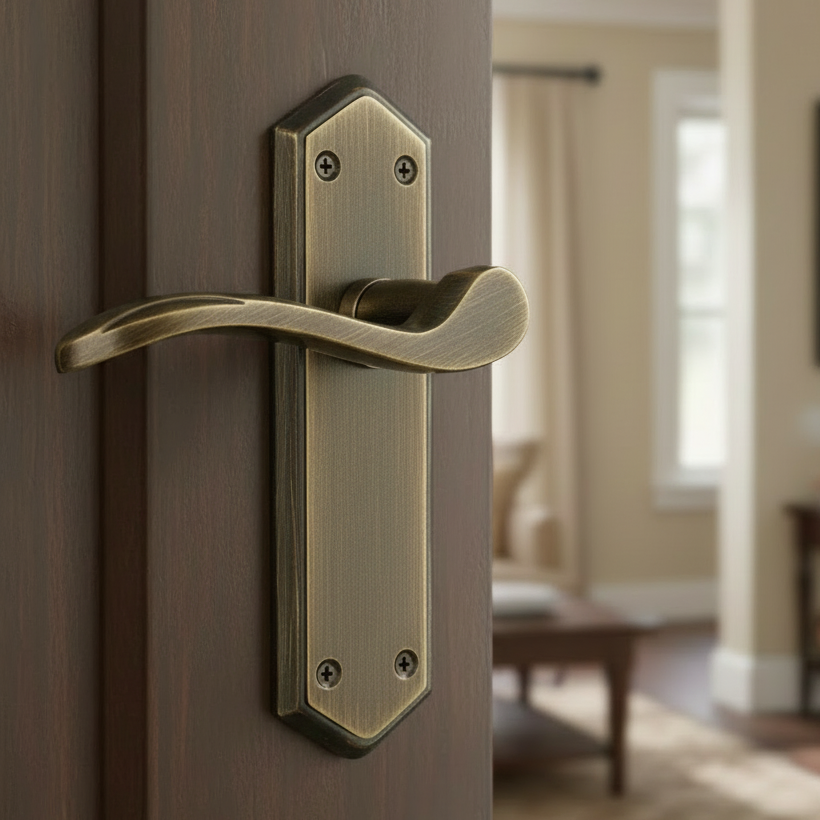
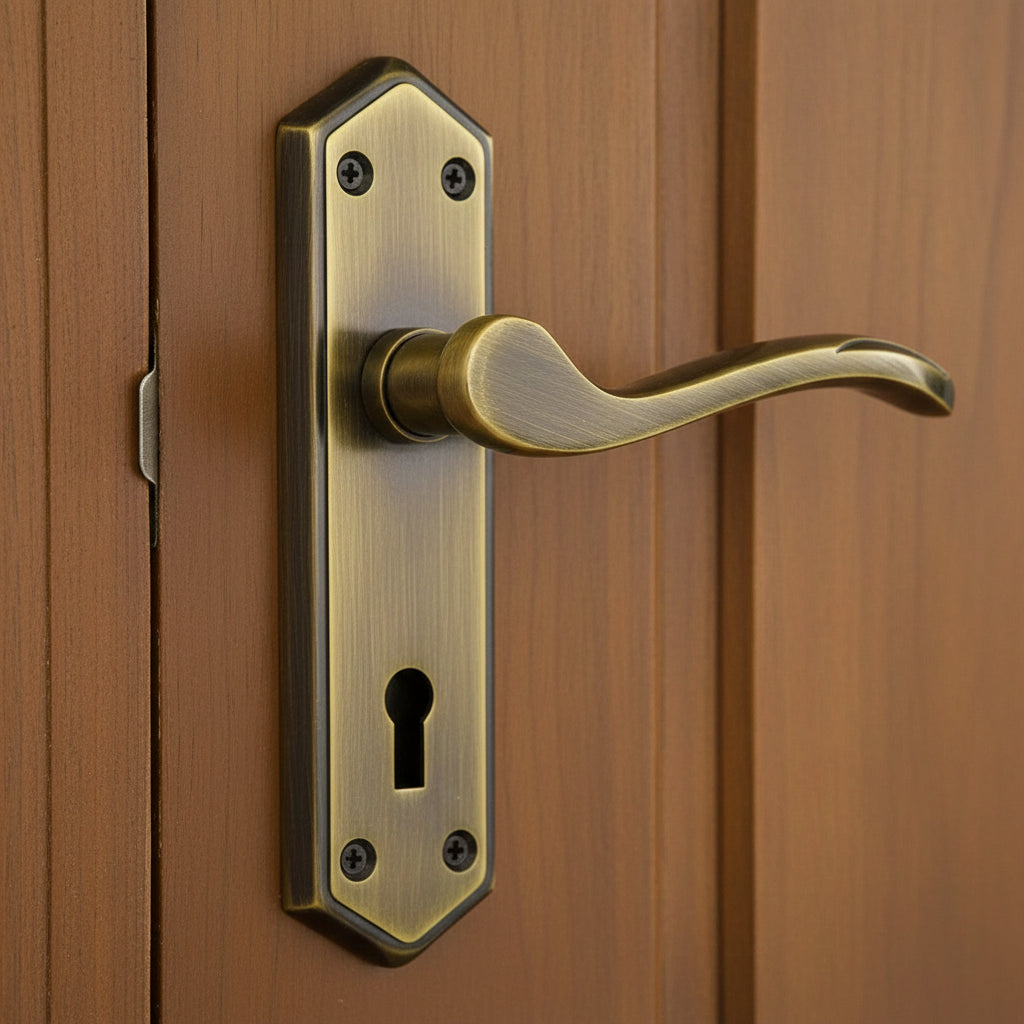
The Howard Antique Brass Lock Handle uses a shaped, tiered backplate with a gently curved lever. On a traditional dark-oak or mahogany-coloured door, those details would add period character without competing with the grain.
This kind of handle suits a study, formal dining room, older hallway or bedroom where the room contains classic detailing but is not being treated as a strict period restoration.
If the door does not require a key-operated lock, you can also browse the wider Antique Brass Howard range for other functions.
How to stop a dark wood interior feeling too heavy
Dark timber doors can look exceptional, but using too many deep colours around them can make a hallway or smaller room feel enclosed. The door hardware is only one part of the solution. Consider the balance of light, wall colour and flooring around the door as well.
Bring in a pale wall colour
Warm white, chalk, soft stone or a light mushroom shade will give a dark wood door breathing space without creating the cold contrast of a brilliant white.
Use antique brass sparingly
You do not need brass everywhere. Repeating it in the door handles and perhaps one or two lighting or cabinet details is often enough to create continuity.
Add a lighter floor
Limestone tones, pale oak or a warm neutral carpet can stop dark timber doors and furniture merging into one large block of colour.
Should the wood grain run vertically or horizontally?
If you are choosing veneered or bespoke doors, grain direction changes the way the hardware feels on the surface. Vertical grain tends to emphasise the height of a door and works naturally with long backplates such as the Gio Reeded range. A horizontal or more expressive grain can make a plain lever-on-rose or simpler backplate a better choice because the hardware interrupts less of the pattern.
There is no strict rule, but it helps to view the handle as part of the composition rather than choosing it in isolation. If the wood is heavily figured, simplify the hardware. If the timber is very uniform, you have more freedom to introduce reeding, knurling or a decorative plate.
Use antique brass to connect timber doors with the rest of the room
A dark wood door does not need matching dark wood furniture everywhere else. Antique brass can act as the bridge between the door and other materials in the interior. For example, walnut doors can sit comfortably beside cream walls and stone floors when the same warm metallic note appears in the handles, a lamp base or discreet cabinet hardware.
Likewise, a room with painted fitted cabinetry can still use dark timber doors. Repeating antique brass on cabinet knobs or pulls creates a relationship between the two even though the underlying surfaces are different.
Explore our antique brass cabinet furniture if you are coordinating fitted cupboards, wardrobes or cabinetry with the door hardware.
A simple material recipe
Use walnut or dark oak as the deepest material, antique brass as the warm highlight, and then give both some contrast with stone, cream, linen and other pale natural finishes. The result feels rich without becoming dark from floor to ceiling.
What about matching hinges, latches and keyhole fittings?
On a dark timber door, smaller pieces of hardware are often more noticeable than they are on a painted door, particularly when the door is open. A bright silver latch face or hinge next to an antique brass handle can break the effect, so it is worth planning the complete door before ordering.
Depending on the handle and door function, consider matching antique brass hinges, locks and latches, keyhole escutcheons and bathroom thumbturns.
Do bear in mind that antique brass is an aged decorative finish and its exact tone can vary between manufacturers and finishing processes. Where several pieces of hardware sit close together, choosing coordinating products from the same range or manufacturer is usually the simplest way to achieve a harmonious result.
Door handles or door knobs on dark wood?
Both work, but they create quite different impressions. Lever handles give a dark timber door a clearer architectural line and are the natural choice for many contemporary and transitional interiors. Door knobs tend to make the door feel more traditional, crafted or furniture-like.
If you have original-style panelled doors or are trying to create the atmosphere of an older study, library or bedroom, browse our antique brass door knobs. If the architecture is cleaner and the timber is being used in a more modern way, start with our antique brass internal lever handles.
Should antique brass match other metals in the room?
Not necessarily. A room can contain more than one metal finish, particularly if one of them is used consistently for a specific purpose. You might keep all door furniture antique brass while using black for window frames or lighting, for example. What usually makes a scheme feel confused is not mixed metals themselves, but too many finishes appearing randomly in the same small area.
On dark timber, antique brass is already a fairly subtle finish, so there is no need to repeat it on every object in the room. Two or three deliberate references are generally enough.
Can antique brass work with very dark or almost black timber?
Yes, and the effect becomes noticeably more dramatic as the timber gets darker. On an ebonised or near-black door, antique brass behaves almost like jewellery: the outline and texture of the fitting become much easier to see.
If you like that stronger contrast, consider a handle with a substantial backplate or clearly defined geometry. If you want something quieter, a timber knob with an antique brass rose can reduce the amount of visible metal while keeping the same warm finish.
Choosing hardware before staining a door
If your new doors are going to be stained rather than supplied in a finished timber, it can be useful to have your preferred handle finish in mind before you approve the final stain. Small differences in depth and warmth can change the relationship between the brass and the wood considerably.
A warmer walnut or mid-brown stain tends to create a softer, more blended look. A very dark smoke or espresso stain gives much stronger contrast. Neither is better — they simply produce different interiors.
Bring the materials together
Find the right antique brass handle for your timber door
Start with the character of the wood. Strong grain usually benefits from quieter hardware; simpler timber gives you more freedom to introduce reeding, shaped backplates or geometric levers. Above all, look for a handle that complements the door rather than covering up the feature that made you choose timber in the first place.
Shop Antique Brass Door Handles Shop Antique Brass Door Knobs
For more ideas, browse the complete antique brass door furniture collection for handles, knobs and coordinating fittings, or return to our door handle inspiration area to explore other ways of matching your door furniture to the materials and colours around your home.