Antique Brass Handles on Green Doors
Green doors and antique brass door handles are a natural pairing. The richness of a painted green door brings out the warmer, aged tones in antique brass, creating a look that can feel traditional, contemporary or somewhere comfortably between the two. Deep forest and bottle greens give the strongest contrast, while softer olive and sage shades create a calmer, more relaxed scheme.
It is also a combination that is surprisingly easy to use throughout the home. Antique brass works beautifully with painted timber, natural wood, warm neutrals and period detailing, while the right handle design can completely change the character of the door. A decorative lever can lean towards a classic Victorian or country-house look, while a straight, knurled or reeded handle makes the same antique brass finish feel much more contemporary. Explore our full range of antique brass door handles and door knobs as you browse the ideas below.
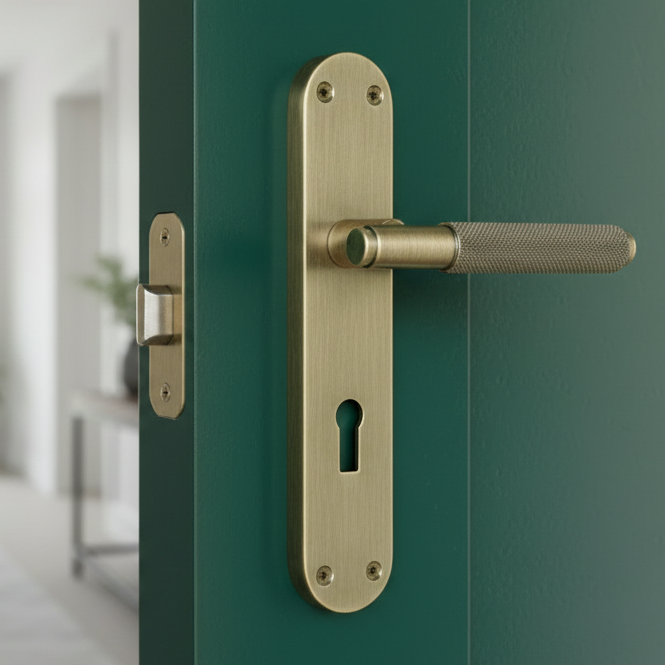
A deep green painted door gives the warm antique brass finish plenty of contrast. Shown here: Connaught Antique Brass Knurled Lock Door Handles.
The look: antique brass & green
Think warm metal, rich painted timber and natural materials. These tones work particularly well together because none of them feels overly bright or clinical.
Forest Green
Rich & traditional
Olive Green
Warm & relaxed
Sage Green
Soft & understated
Antique Brass
Warm & characterful
Warm Neutral
For walls & trim
Why do antique brass handles work so well on green doors?
Green sits very comfortably alongside the warm brown and golden undertones found in antique brass. On a dark green door, the handle becomes a noticeable feature without having the brightness of polished brass or chrome. On a lighter sage or olive door, the contrast is softer and the overall effect feels more natural and understated.
The combination also gives you plenty of freedom elsewhere in the room. Warm white or stone-coloured walls stop a deep green door from making a hallway feel too dark, while oak, walnut and other natural woods reinforce the warmth of the antique brass. If the room already contains traditional details such as panelled doors, cornicing or timber flooring, antique brass helps those features feel intentional rather than overly restored or formal.
For a modern interior, the secret is usually to keep the handle itself simpler. A clean backplate, geometric lever or textured knurled grip adds contemporary detail while the antique brass prevents the scheme from becoming too stark.
For a contemporary green door
If you like green doors but do not want the finished room to feel overtly traditional, look for a handle with a cleaner shape or interesting texture.
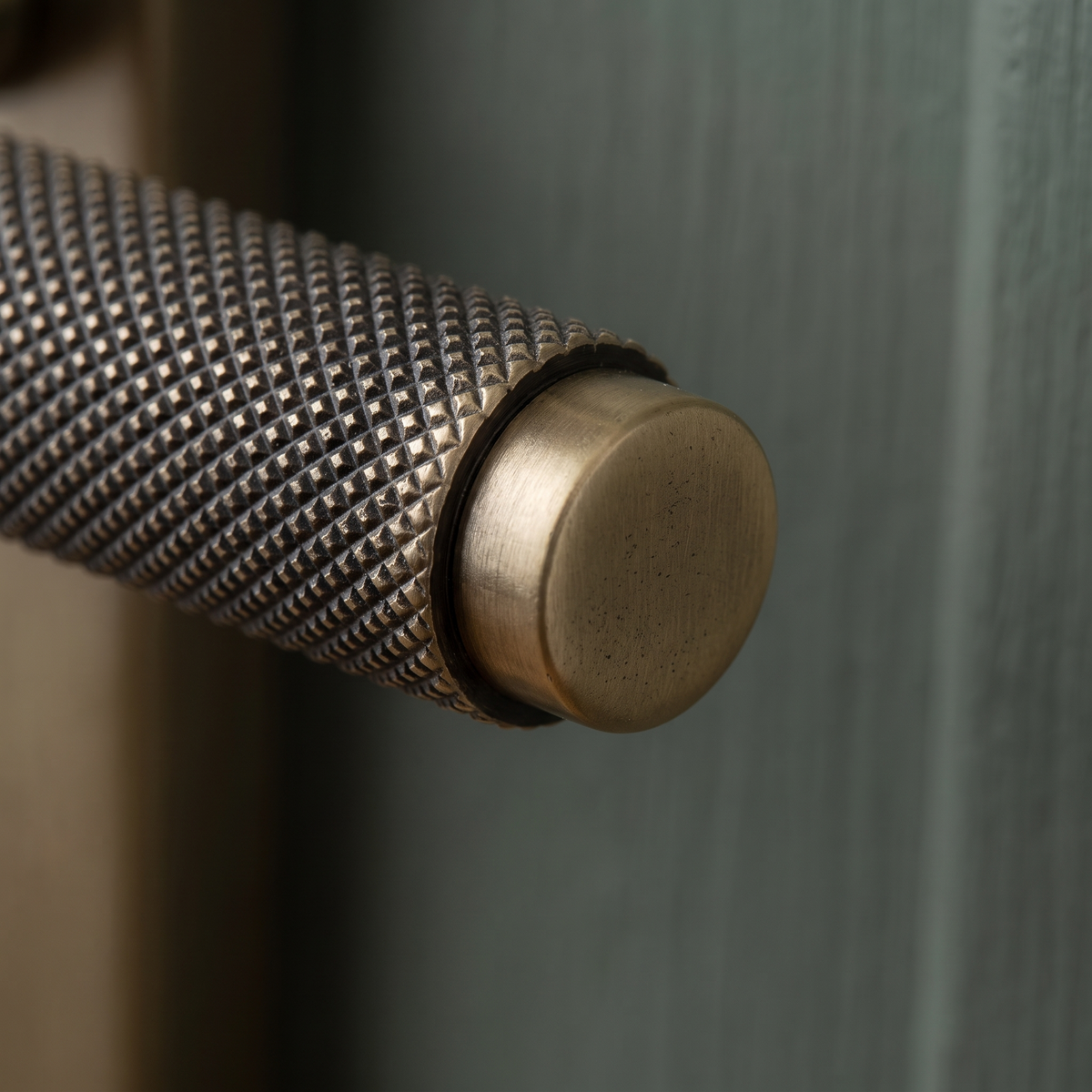
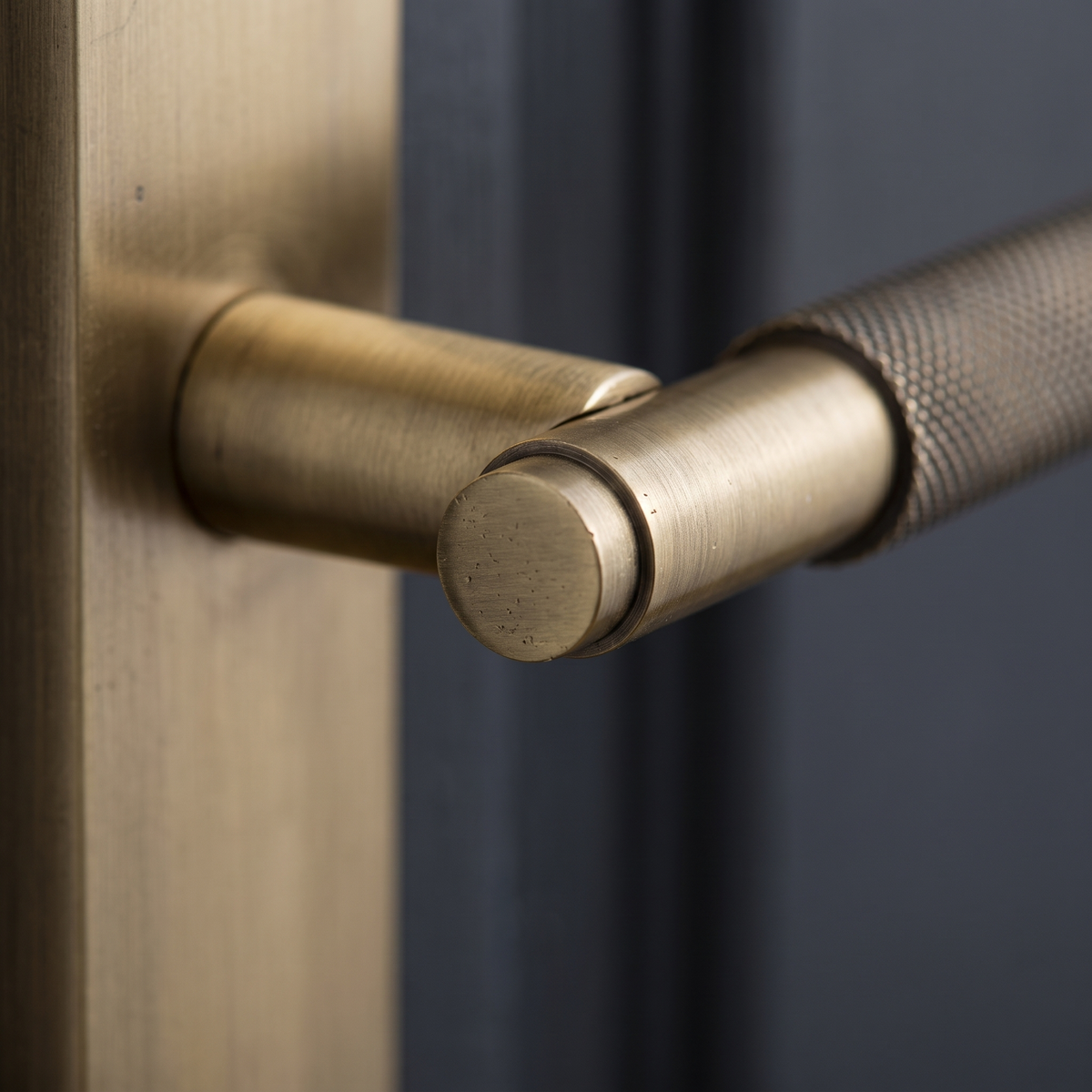
The Connaught Antique Brass Knurled Latch Door Handles combine a simple rounded backplate with a diamond-knurled lever. The texture gives the handle a strong design detail, while the subdued antique brass finish works especially well against deeper greens.
This is a particularly good direction for renovated Victorian or Edwardian houses where you want to acknowledge the age of the building without filling every room with reproduction-style fittings. It also works in newer properties with panelled or moulded internal doors.
Choosing the right shade of green
There is no single green that you need to use with antique brass. The important thing is deciding whether you want the door to become a feature in its own right or sit more quietly within the room.
Deep forest & bottle green
Best when you want the door to make an impact. The darker background makes antique brass stand out clearly and is particularly effective on traditional panelled doors. Pair it with warm white walls, timber flooring and simple neutral furnishings so the door remains the main feature.
Olive & heritage green
A good middle ground. Olive greens tend to contain warmer undertones, so they sit naturally beside aged brass, oak and cream. This palette suits country homes, traditional kitchens and relaxed period interiors particularly well.
Sage & soft green
Ideal if you want a lighter scheme. Antique brass introduces enough warmth to stop pale green feeling washed out. Try it with limestone tones, off-white walls, light oak and natural fabrics for a softer interior.
Three different ways to style antique brass on a green door
The finish is only part of the decision. Changing the shape of the lever or backplate can move the same green-and-brass colour scheme from period and traditional to much more contemporary.
1. Traditional & characterful
The curved scroll lever of the Heritage Bedford Antique Brass Latch Handle feels at home on a panelled green door in a Victorian, Edwardian or traditionally styled property.
Try it with: forest green, warm cream walls, oak flooring and traditional joinery.
2. Refined & transitional
The Charlbury Reeded Antique Brass collection introduces fine linear detailing without feeling overly ornate. It is an excellent option when the room mixes traditional architecture with newer furniture and finishes.
Try it with: olive green, walnut furniture, warm white walls and subtle brass lighting.
3. Simple & understated
The straighter lever and plain backplate of the Heritage Windsor Antique Brass Latch Handle are a useful choice when you want the green colour to do most of the talking.
Try it with: sage or muted green, simple painted doors, light oak and relaxed neutral interiors.
View All Antique Brass Internal Door Handles
Use the same look from room to room
If several doors are visible from the same hallway or landing, keeping the hardware consistent is one of the easiest ways to make the interior feel considered. That does not mean every door has to perform the same function. Most handle ranges are available in different versions, allowing the appearance to remain consistent while the mechanism changes to suit the room.
Living rooms & kitchens
For a door that simply needs to open and close, choose a latch handle. A plain backplate keeps the door uncluttered because there is no keyhole or privacy turn.
Bedrooms & studies
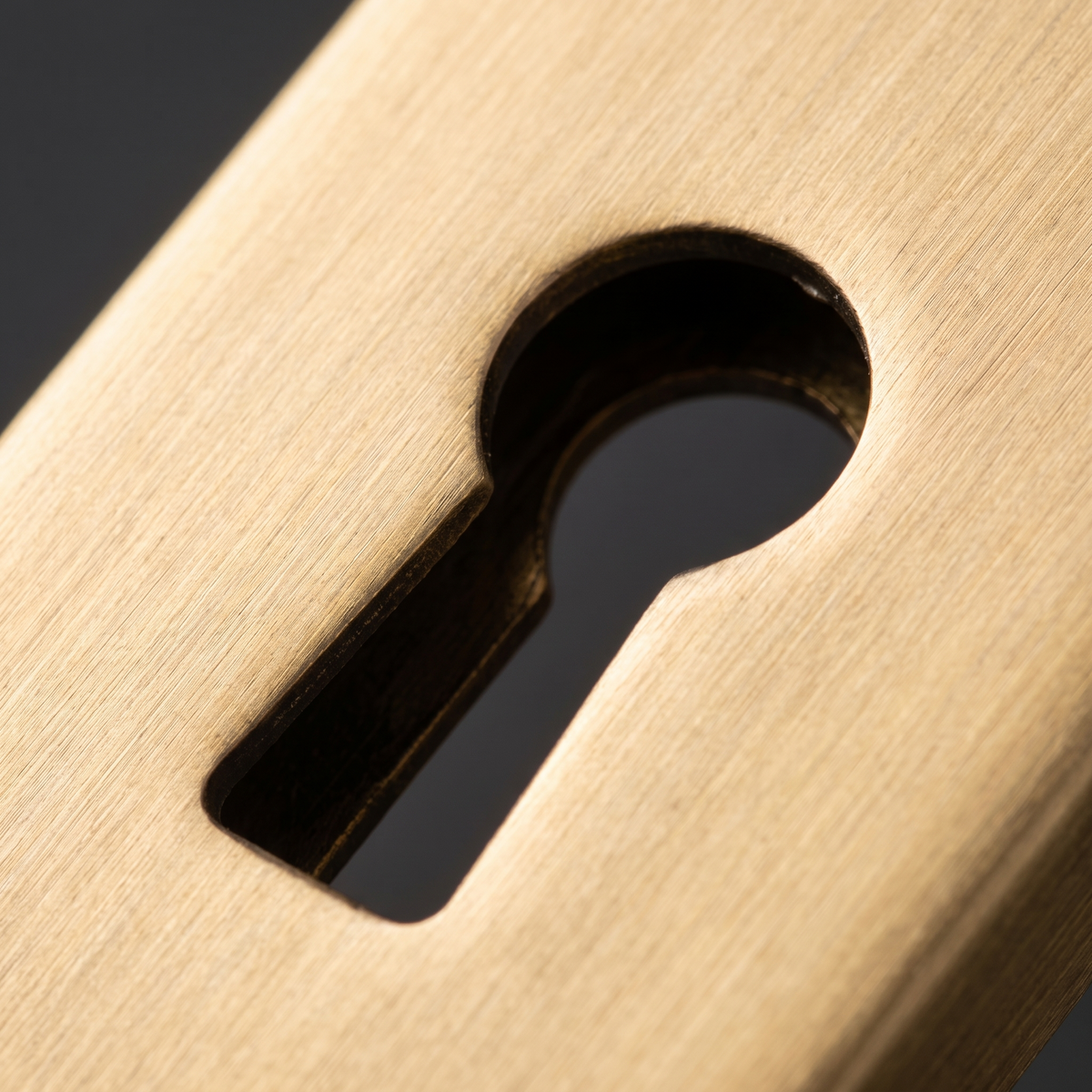
Where the door needs to lock with a key, choose a lock handle with a suitable mortice sashlock. The keyhole can become a decorative part of the backplate rather than an afterthought.
Bathrooms & ensuites
A bathroom handle allows the same design language to continue onto a privacy door. Match it with the correct bathroom lock and check the individual product dimensions before fitting.
You do not have to paint every door green
A successful whole-house scheme does not require every internal door to be identical. You could use a rich green on the hallway and main reception-room doors, then continue the antique brass hardware onto natural timber, cream or neutral painted doors elsewhere.
This is particularly useful for bathrooms and bedrooms, where the materials and colour palette may change. Repeating the metal finish gives the rooms a connection even when the door colours are different.
The Charlbury Reeded range, for example, is available in different handle functions, so the same decorative backplate can be carried from general living areas through to privacy doors.
Complete the door, not just the handle
Once you have chosen the handle, look at the smaller pieces of hardware that remain visible when the door is open. Matching these details is what makes a finished door look properly planned. Antique brass hinges, latch faceplates, strike plates, keyhole escutcheons and bathroom fittings can all help carry the same warm finish around the edge and face of the door.
A useful detail to remember: antique brass is an aged decorative finish rather than one universal colour. The precise depth and tone can vary between manufacturers and finishing processes. If several fittings sit close together and you want the closest possible match, choosing handles and accessories from the same manufacturer or coordinated range is usually the safest approach. You can also read our guide to what antique brass is before choosing your finish.
Interior ideas to finish the look
Dark green door + antique brass + warm white
Use the door as the main colour statement and keep the surrounding walls warm and pale. This works especially well in hallways where several green doors may be visible together.
Green door + antique brass + natural oak
Oak flooring, timber furniture or a wooden console table adds another warm element and prevents a dark green scheme from feeling overly formal.
Sage green + antique brass + stone
For a softer look, combine a muted sage door with antique brass handles, limestone-inspired flooring and off-white walls. The result feels lighter but still has enough warmth and character.
Green + antique brass + restrained black accents
You do not have to make every metal fitting brass. A small amount of black in lighting, furniture legs or window frames can add definition, while keeping the door furniture consistently antique brass maintains a clear visual thread.
Should the skirting boards and architraves be green too?
Both approaches can work. Painting the door and architrave in the same green creates a stronger, more architectural block of colour, especially in a hallway. Keeping the architrave and skirting in an off-white or warm neutral creates more contrast and makes the green door stand out individually.
If you have several doors close together, using one consistent treatment usually looks calmer. For example, deep green doors with warm-white architraves throughout the hall can look very deliberate, particularly when each door is finished with the same antique brass handle.
Are antique brass handles suitable for modern green doors?
Absolutely. Antique brass does not have to mean ornate or traditional. The finish itself adds warmth, while the shape of the handle determines much of the overall style. Choose a simple lever, a clean rectangular backplate or a textured knurled antique brass handle if you want a more contemporary result.
Will antique brass work with pale sage green?
Yes. The contrast is gentler than it is with forest green, but that is often the appeal. Pale sage and antique brass work particularly well with warm whites, beige, natural stone and light timber. If the green is very grey or cool, adding timber or another warm neutral elsewhere in the room helps tie it back to the brass.
What type of antique brass handle should I choose for a period property?
Look at the character of the door as well as the age of the building. A panelled period door can take a more decorative lever such as the Bedford, while a plainer design such as the Windsor gives a more restrained traditional finish. Reeded designs such as the Charlbury are useful when you want a heritage influence without choosing an obviously reproduction-style handle.
Keep antique brass looking its best
The aged appearance is part of the appeal, so antique brass should not normally be polished until it becomes bright and shiny. Gentle cleaning is best. Wipe away dust and fingerprints with a soft cloth and avoid abrasive cleaners or metal polishes that could damage the decorative finish. For more detailed advice, see our guide on how to clean antique brass.
Create the green & antique brass look
Start with the door colour, then choose the handle style that best matches the character you want to create. Whether that is a traditional scroll lever, a reeded backplate or a contemporary knurled handle, keeping the antique brass finish consistent across the smaller door fittings will help bring the whole scheme together.
Shop Antique Brass Door Handles More Door Handle Inspiration
Browse our antique brass door handles and knobs to compare traditional, reeded, knurled and contemporary designs, or explore the wider antique brass door furniture collection for coordinating hinges, locks, latches and finishing details.