

An antique brass letter box, inside and out
How to size a letter plate to your door, and what to fit on the inside to stop the draught, all on a soft grey-green cottage door.
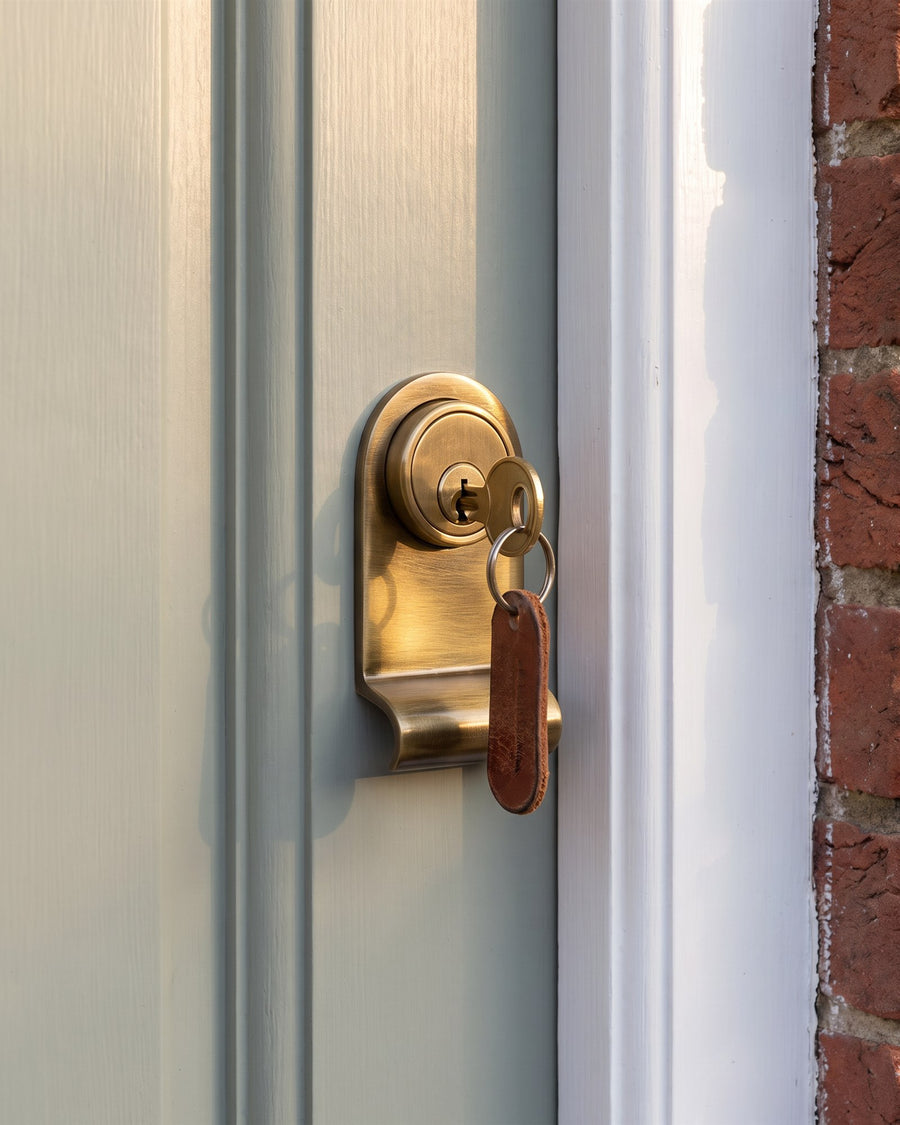
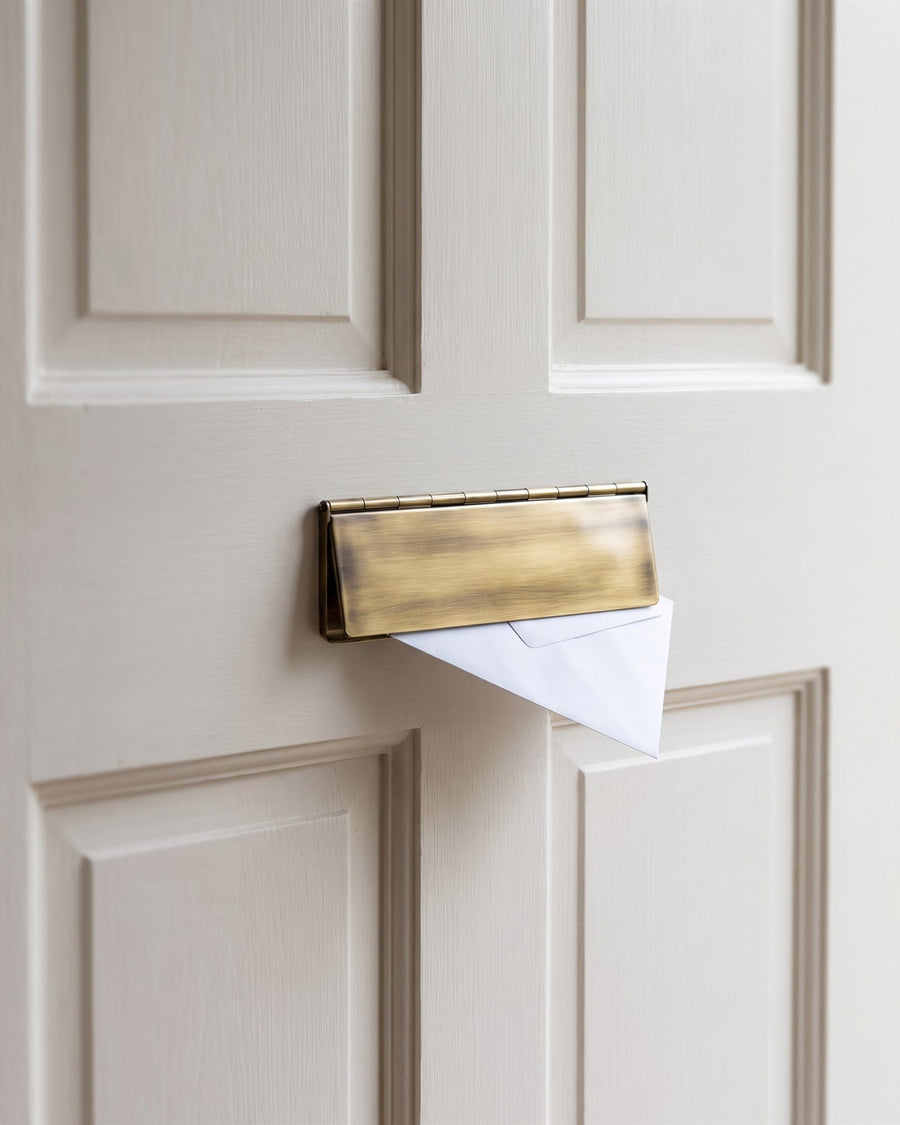
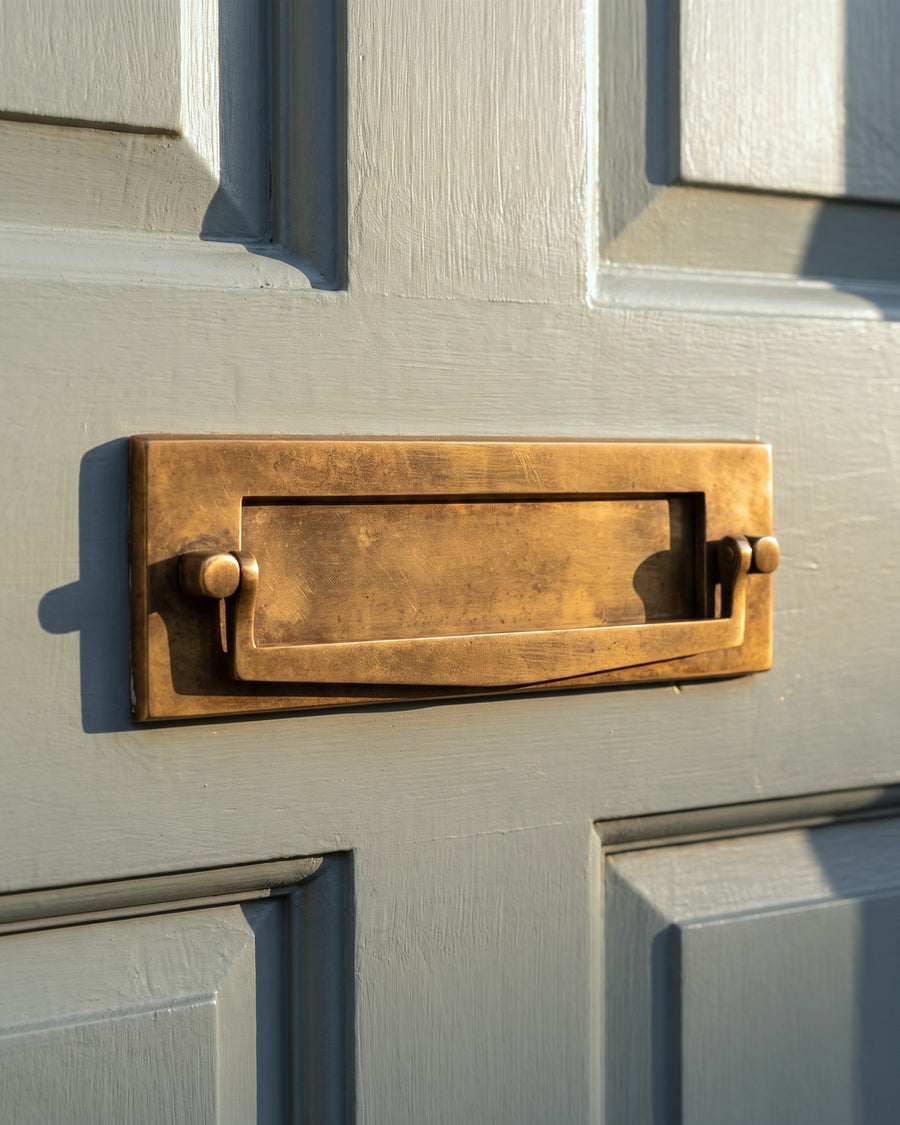
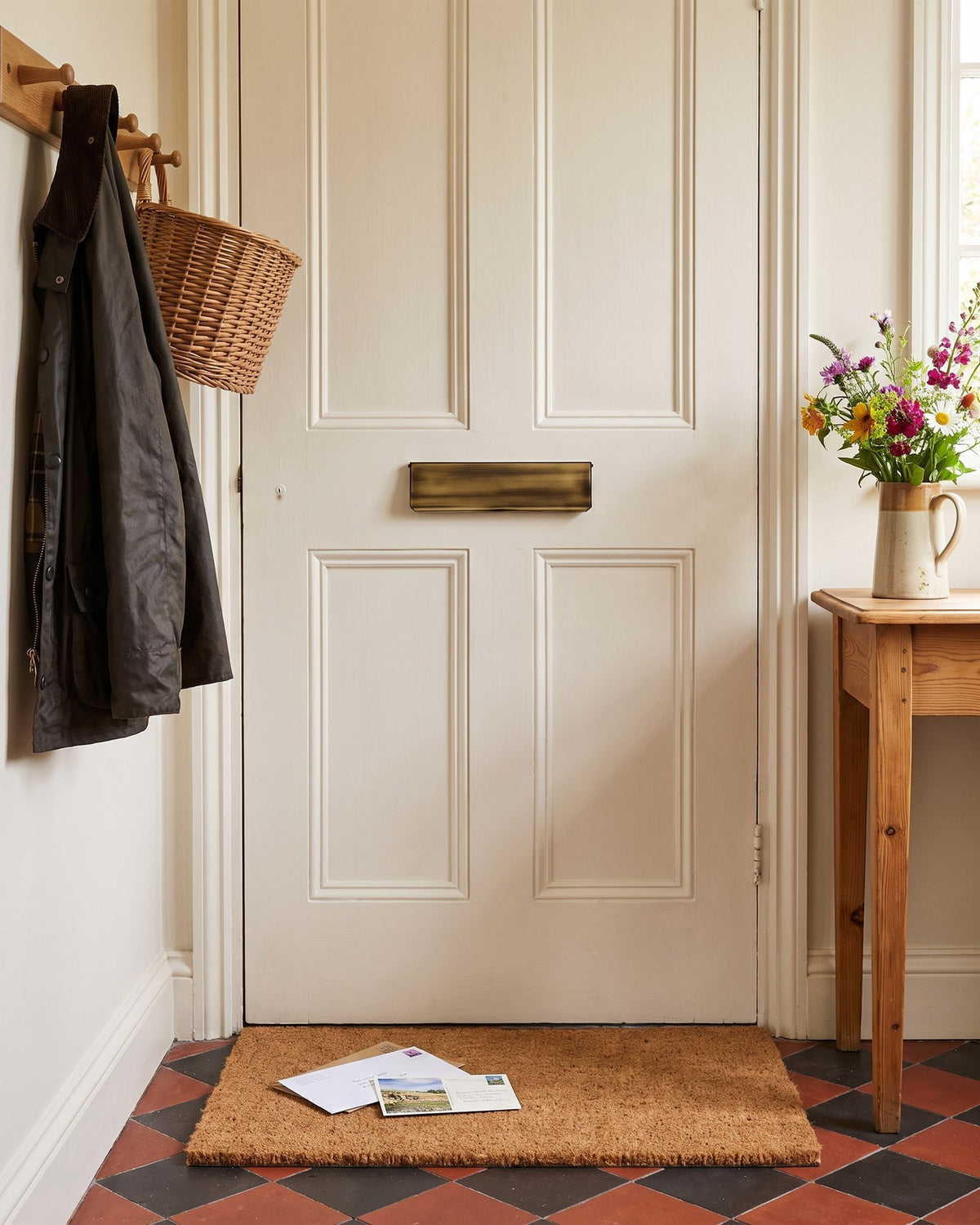
A small Victorian cottage in soft red brick, with a tiled timber porch, a worn stone step and pots of lavender. The four-panel door is painted a muted grey-green, and its antique brass fittings are kept simple: a plain letter box sized to sit neatly on the middle rail, a round centre knob and a cylinder pull. Inside, a matching flap covers the letter cut-out, so the hall stays warm and the post lands quietly on the mat.

Antique brass for a cottage door, inside and out


Every antique brass letter box size, plus flaps and tidies
-
Antique Brass Letter Box 203x76mm

-
Antique Brass Letter Box 254x102mm

-
Antique Brass Letter Box 305x102mm

-
Antique Brass Letter Box 331x80mm

-
Antique Brass Gravity Flap Letter Plate

-
Antique Brass Interior Flap 299mm

-
Antique Brass Interior Tidy 400mm
-
Antique Brass Tidy with Draught Excluder 260mm

-
Antique Brass Ring Knocker

-
Antique Brass Slim Knocker

-
Antique Brass Door Numbers 76mm

-
Antique Brass Door Numbers 51mm

-
Antique Brass Square Cylinder Pull

-
Antique Brass Octagonal Centre Knob

-
Antique Brass Reeded Centre Knob

Choosing a letter plate that fits
Measure the rail first
A letter plate should sit on the door's middle rail with a little painted timber showing above and below it. Measure the height of that rail before choosing: the 79mm and 80mm high plates suit the narrower rails found on most cottage and terrace doors, while 102mm high plates need a deeper rail. A plate that overhangs the panel mouldings never looks right.
Width and the cut-out
If you are replacing an old plate, measure the hole in the door as well as the plate. The new plate must cover the existing cut-out with a margin all round. A 254mm plate is the usual choice; 305mm and 331mm plates take magazines and large envelopes more easily and suit wider doors.
The inside matters too
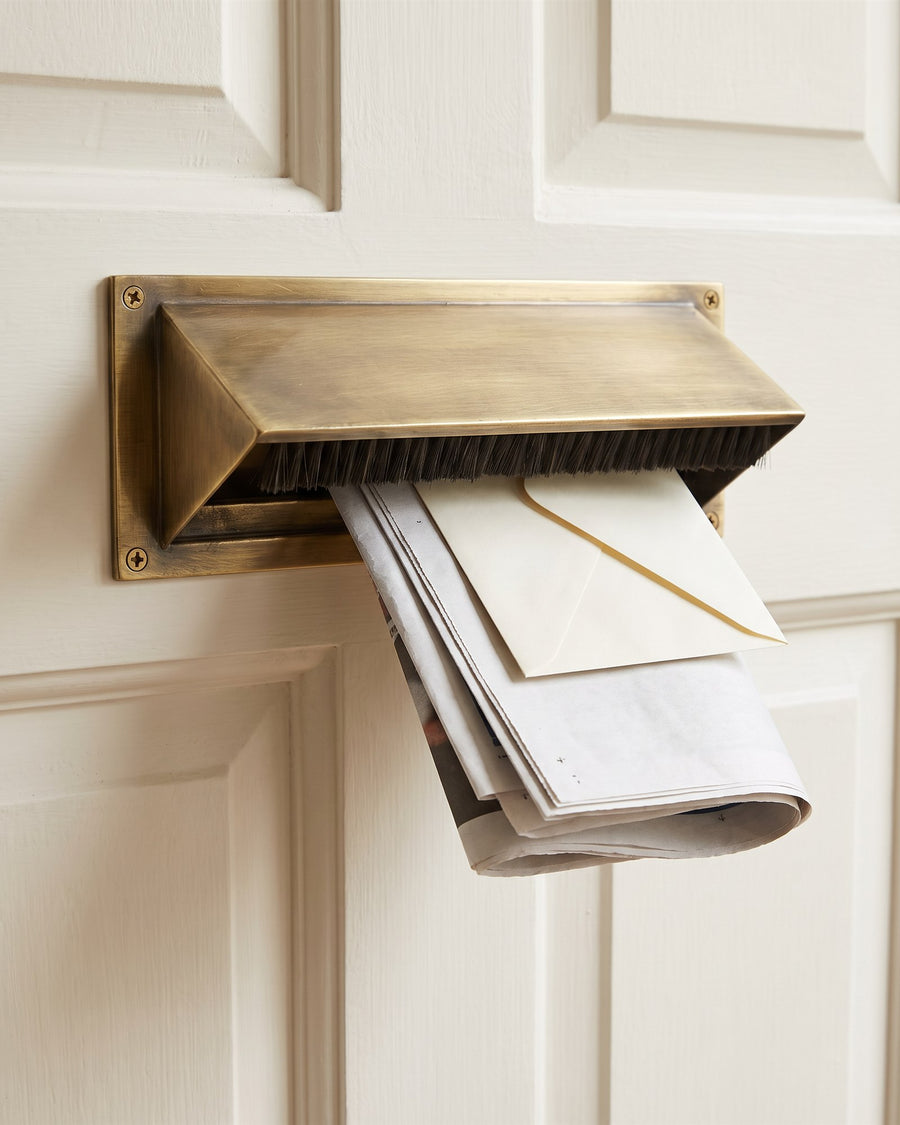
Without anything on the inside, a letter box is a hole in the door. An interior flap closes over the cut-out to stop the draught and anyone peering in. A tidy goes further: it is a deep hood that catches the post and drops it down, and the version with a brush draught excluder seals the gap even when the outside flap is pushed open.
Getting it right
Pair the sizes
Choose an inside cover a little wider than the outside plate so it hides the whole cut-out. The 280mm interior flap is made to sit behind a 254mm letter box.
Mind the height
Postal guidance recommends fitting a letter plate at least 700mm above the ground, which saves the postman from stooping and keeps the post off the step.
Fewer fittings with a postal knocker
On a narrow cottage door, a postal knocker letter box does two jobs at once: its heavy flap is the knocker. It saves space and avoids a crowded door.
Check the door thickness
Letter plates are fixed with bolts through the door. Measure the thickness of your door before ordering, especially on thick period doors, so the bolts are long enough.
