
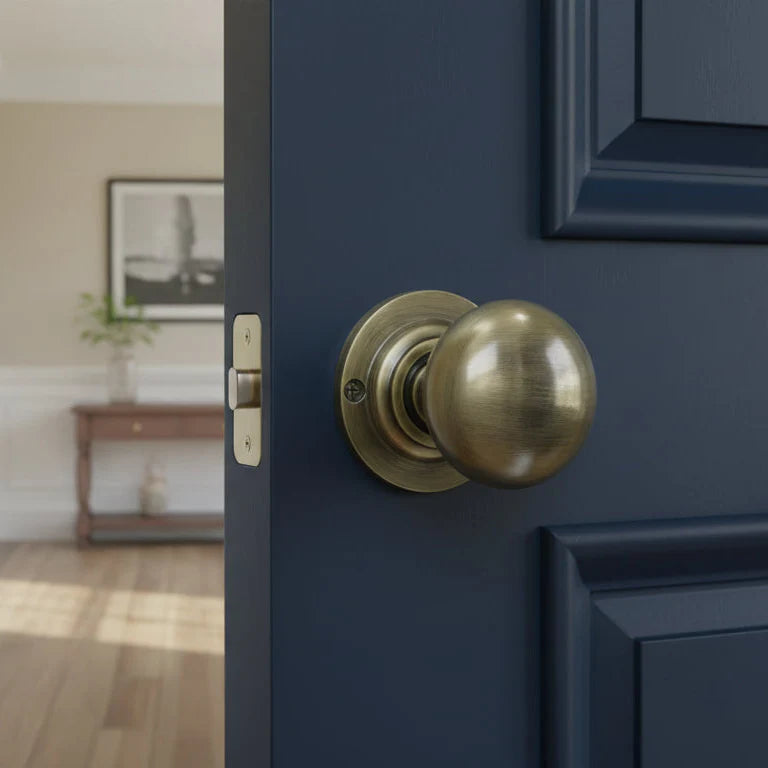
Navy doors with a plain brass knob
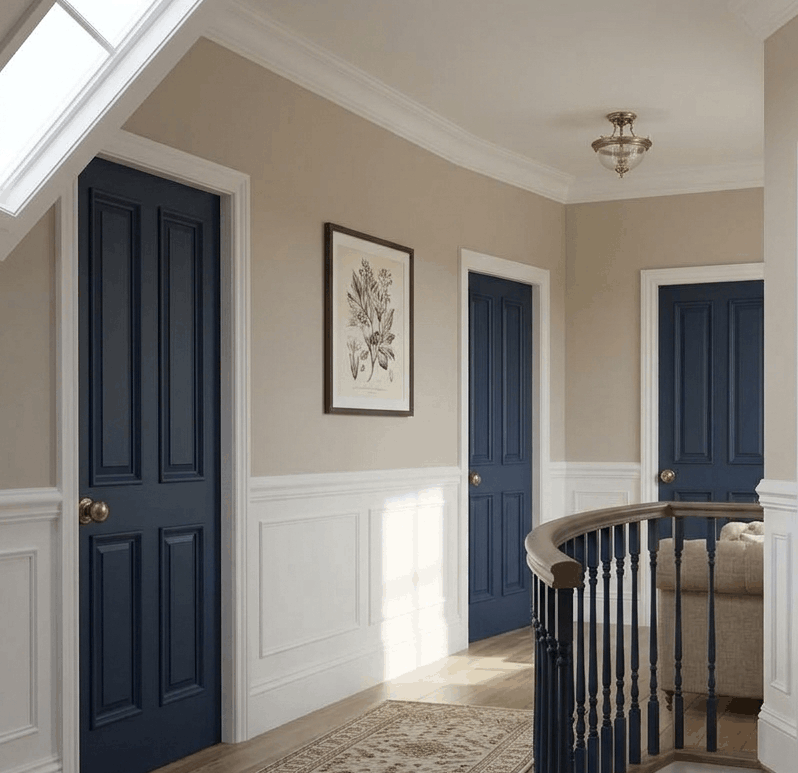
Deep navy panelled doors in a pale putty hall, each with the simplest knob there is: a smooth antique brass mushroom on a stepped rose.
Flat navy paint on the doors, warm putty walls over crisp white panelling and architraves, light oak boards and an ivory rug, with antique brass taking the edge off all that blue.
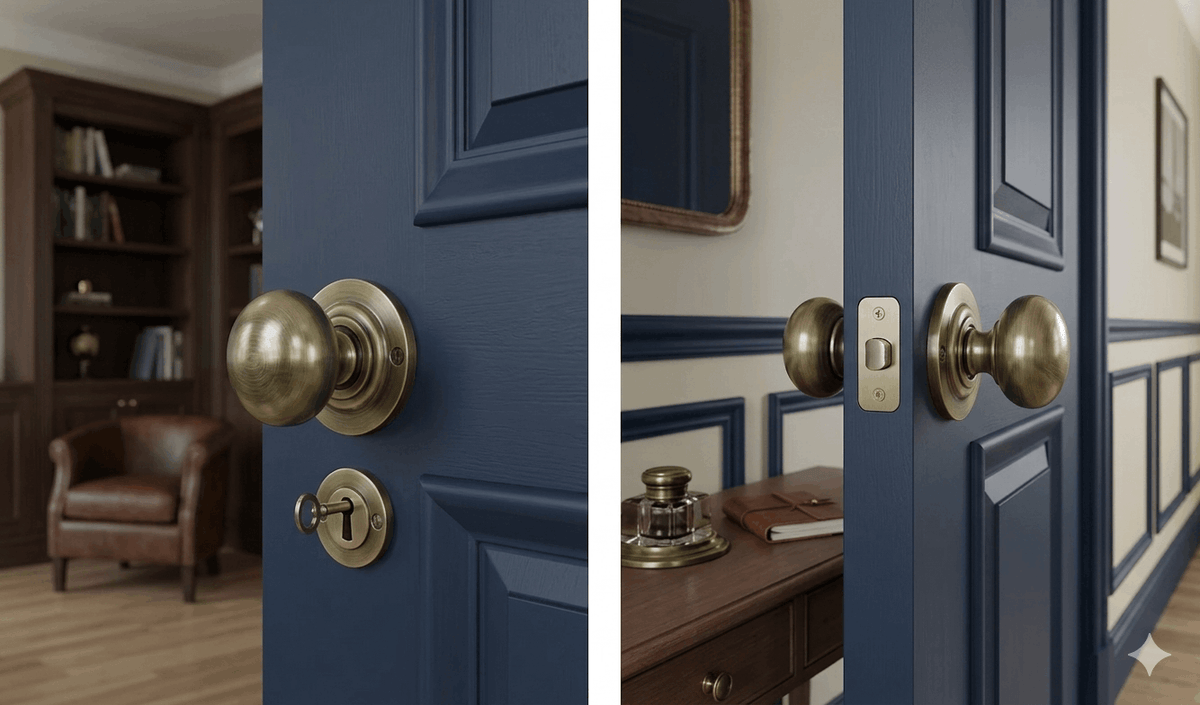
Dressing a navy door


Other knob shapes, and mushroom knobs in other finishes
-
Antique Brass Mushroom Mortice Knobs 54mm

-
Antique Brass Mushroom Rim Knobs 50mm

-
Ebony Mushroom Knobs on Antique Brass Roses

-
Rosewood Mushroom Knobs on Antique Brass Roses

-
Antique Brass Victoria Mortice Knobs 57mm

-
Antique Brass Oval Mortice Knobs 50mm

-
Antique Brass Reeded Mortice Knobs 60mm

-
Antique Brass Step Mortice Knobs 60mm

-
Antique Brass Classic Mortice Knobs 60mm

-
Antique Brass Ribbon Mortice Knobs 60mm

-
Antique Brass Cog Mortice Knobs 60mm

-
Mushroom Mortice Knobs 60mm in Unlacquered Brass

-
Mushroom Mortice Knobs 60mm in Dark Bronze

-
Mushroom Mortice Knobs 60mm in Matt Black

-
Mushroom Mortice Knobs 57mm in Polished Nickel

-
Mushroom Mortice Knobs 57mm in Satin Nickel

Why a plain knob suits a dark door
Where it comes from
The plain round knob is the workhorse of the British house. Victorian, Edwardian and inter-war homes fitted them to almost every internal door, usually in brass because a simple rounded shape is comfortable to grip and suits any room.
Why antique brass on navy?
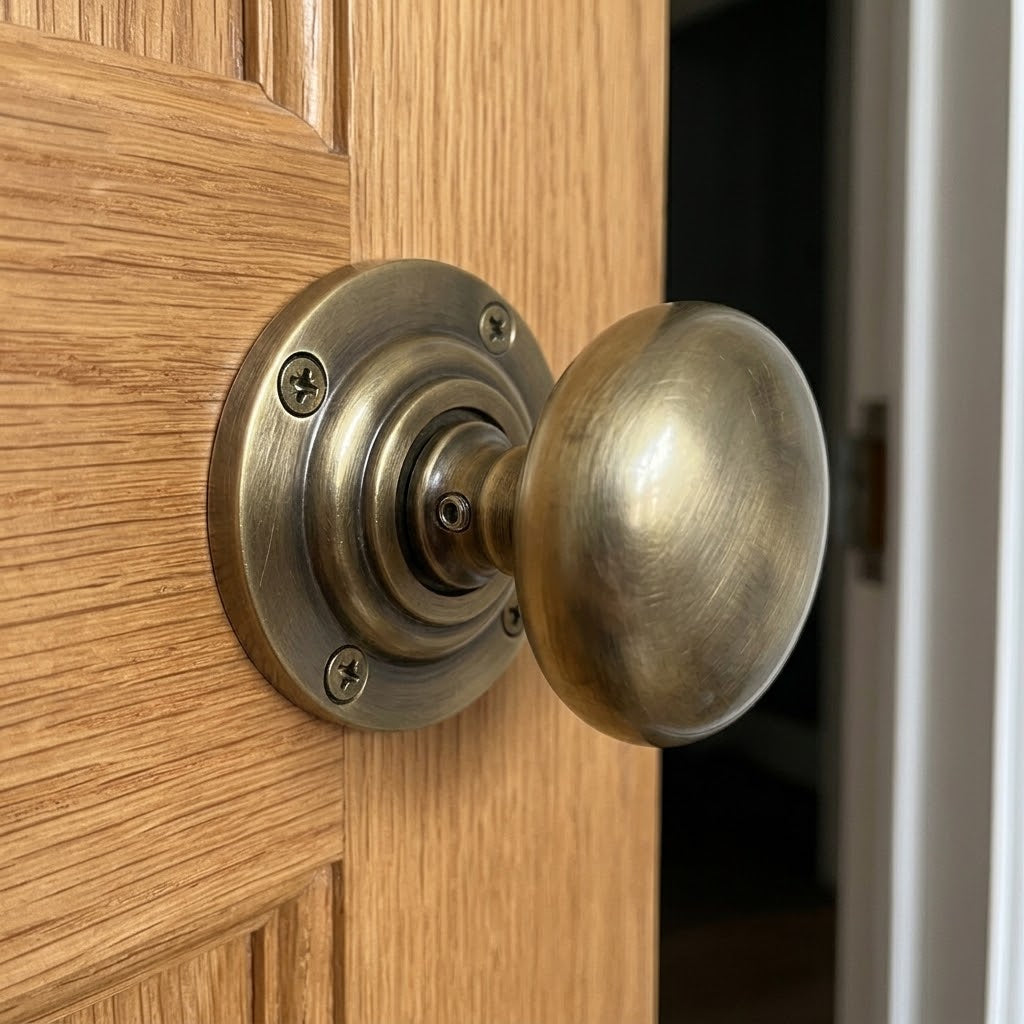
Bright brass against dark blue can look a little nautical. Antique brass is darkened and lacquered, so it sits closer in tone to the paint: the knob still stands out, but softly, and the stepped rings of the rose pick up a thin line of light.
Why it still works
When the door itself is the bold colour, the hardware doesn't need to compete. A smooth mushroom knob is the quietest option there is, and keeping it the same on every door lets a run of navy doors read as one scheme against the pale walls.
Getting it right
Knobs need a 3in latch
Mortice knobs work with a tubular latch fitted in the door edge. Choose a 3in (76mm) latch, not the common 2.5in, so your knuckles clear the frame as you turn. The knobs are half sprung and come in pairs with the spindle and screws.
Know the sizes
Each knob is 60mm across on a 63mm rose and projects 63mm from the door. If your doors have narrow stiles or you prefer a lighter look, the same knob comes in a smaller 54mm-rose version.
Locking doors
On a study or a door you lock with a key, add the 53mm round key escutcheon below the knob; it has a concealed fixing, like the rose. On the bathroom, fit the 53mm turn and release with a bathroom lock.
Paint first, then fit
Paint the doors before fitting the knobs and hinges, and swap plain steel hinges for antique brass butt hinges. A projection door stop at 76mm sticks out further than the knob, so the knob never meets the wall.
