
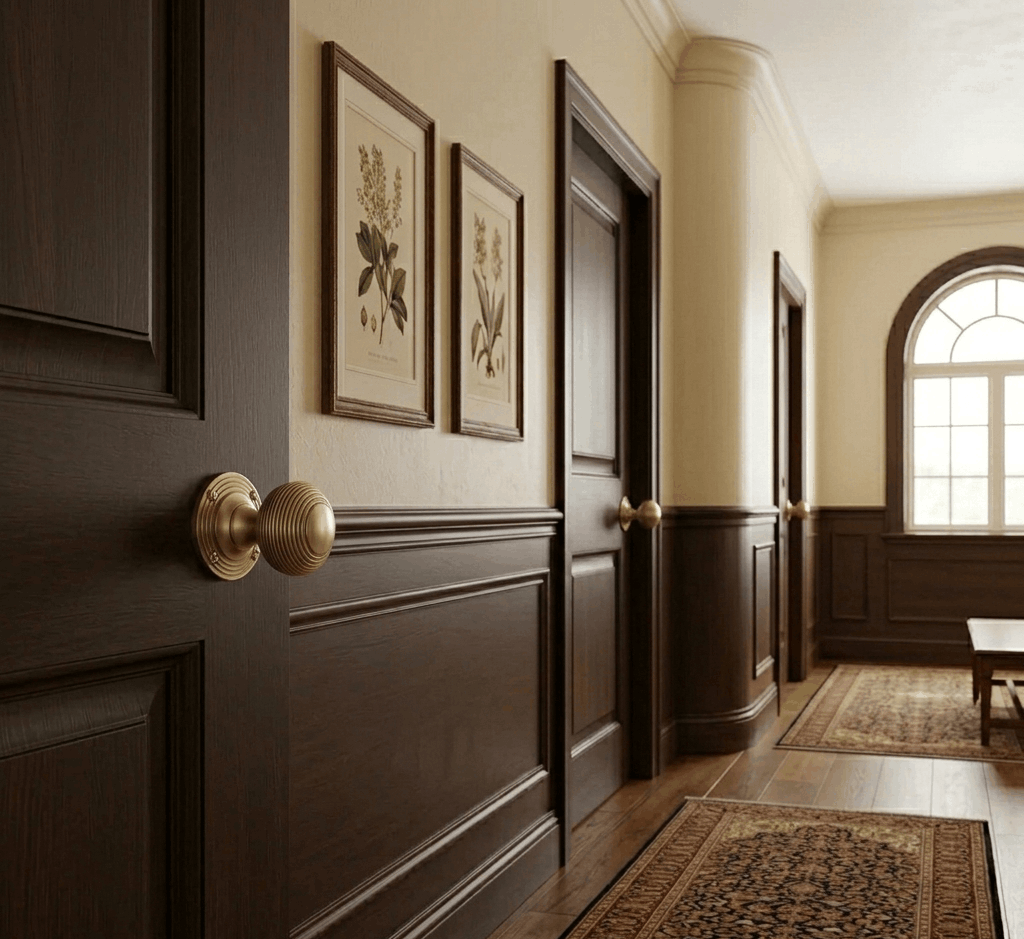
Reeded antique brass on dark wood doors
A long hallway of dark stained doors and dado panelling, with the same ribbed antique brass knob repeated on every door.
Near-black walnut on the doors and dado panels, warm cream plaster above, oak boards and a rust and indigo runner underfoot, with the soft gold of antique brass at hand height on every door.
Everything for a dark wood door


Other knobs, plates and finishes
-
Antique Brass Reeded Mortice Knobs 50mm

-
Ebony Reeded Knobs on Antique Brass Roses

-
Rosewood Reeded Knobs on Antique Brass Roses

-
Antique Brass Reeded Rim Knobs 60mm

-
Antique Brass Beehive Knob on Reeded Plate

-
Antique Brass Victoria Knob on Reeded Plate

-
Antique Brass Victoria Knob, Reeded Bathroom Plate

-
Antique Brass Gio Reeded Lever on Backplate

-
Antique Brass Victoria Mortice Knobs 57mm

-
Antique Brass Mushroom Mortice Knobs 60mm

-
Antique Brass Reeded Covered Escutcheon 33mm

-
Antique Brass Reeded Turn and Release 53mm

-
Antique Brass Reeded Cupboard Knob 38mm

-
Reeded Mortice Knobs 60mm in Satin Brass

-
Reeded Mortice Knobs 55mm in Polished Brass

-
Reeded Mortice Knobs 60mm in Matt Bronze

Why reeded brass suits dark wood
Where it comes from
Ribbed brass knobs, often called beehive knobs, were fitted throughout Victorian and Edwardian houses, where stained pine or mahogany doors and dark dado panelling were the norm in halls and landings. Knobs, not levers, were the standard on internal doors well into the twentieth century.
Why reeded antique brass?
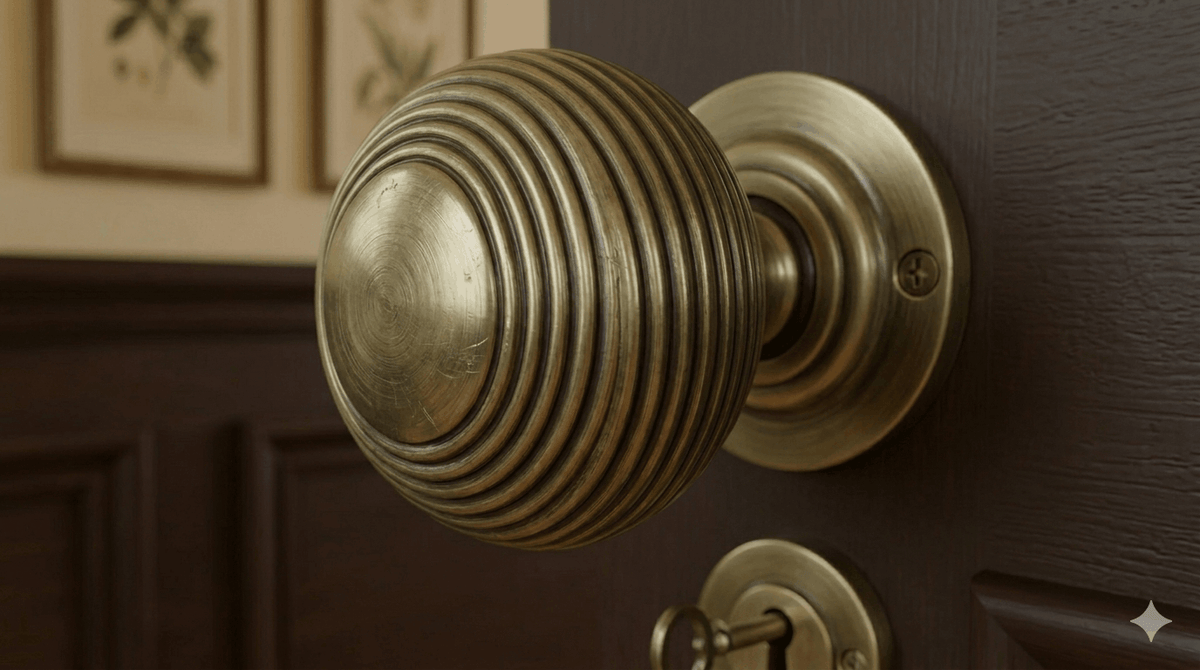
The rings of reeding catch light on their edges and fall dark in the grooves, so the knob reads clearly against a dark door instead of disappearing into it. Antique brass is darkened and lacquered, so it has the mellow colour of old brass from the start and won't look brand new against aged-looking wood.
Why it still works
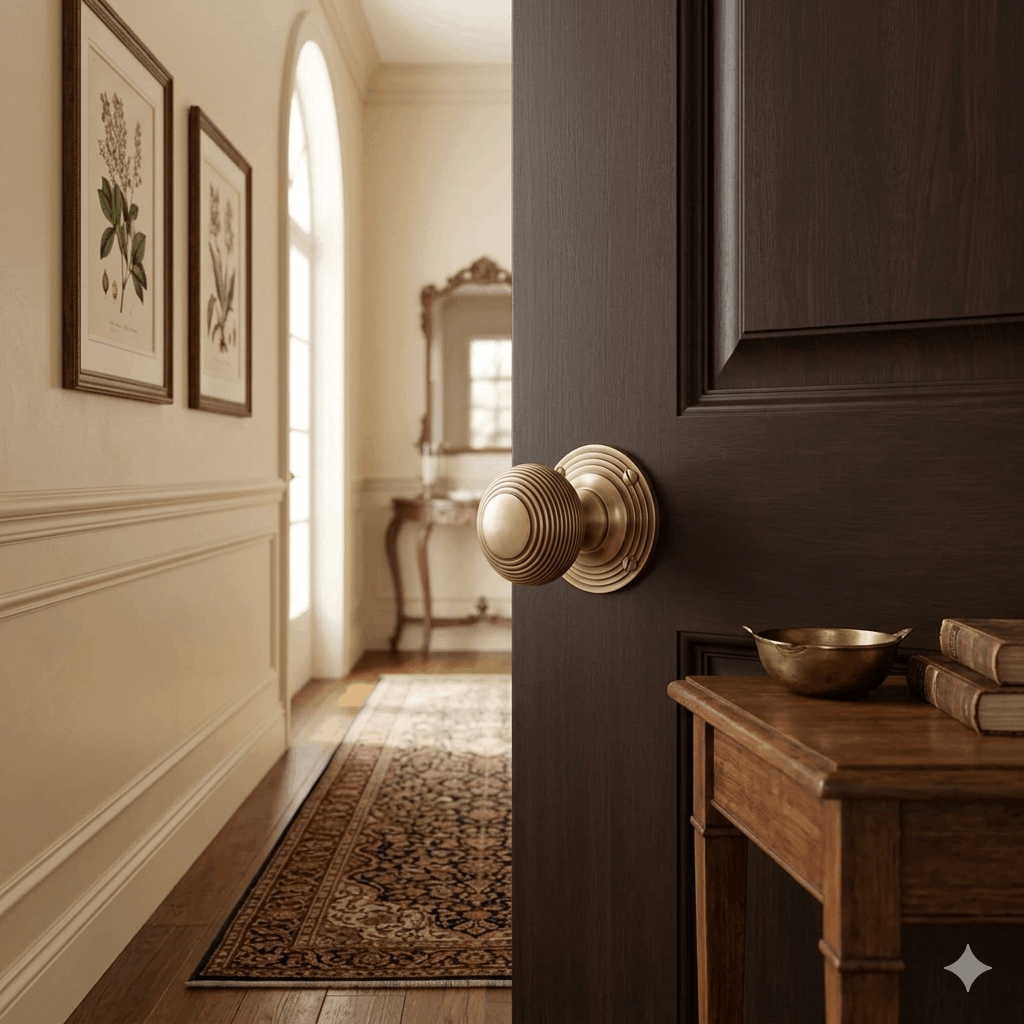
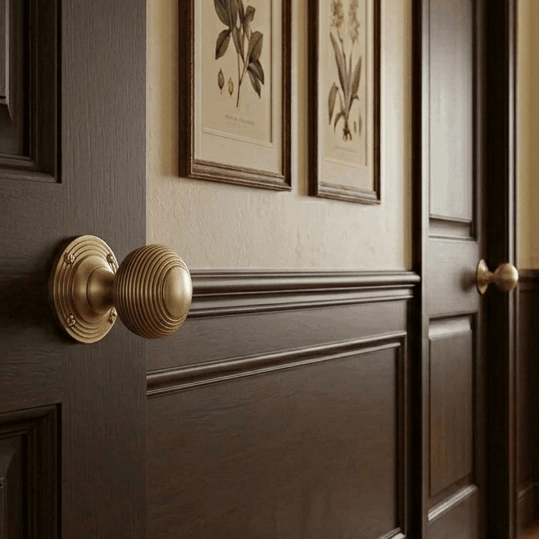
Dark doors can feel heavy, and a small point of warm metal on each one breaks them up. Repeated down a corridor, the same knob gives the hall a rhythm, and the cream walls above the panelling keep the space light.
Getting it right
Fit a 3in latch
These are mortice knobs, so each door needs a tubular latch. Use a 3in (76mm) latch rather than the usual 2.5in, so your knuckles clear the frame as you turn the knob. The knobs are half sprung: 55mm across on a 60mm rose, projecting 85mm.
Keyholes and bathrooms
Where a door locks with a key, add the 53mm key escutcheon on the same plain round rose. On the bathroom, the 53mm turn and release locks from inside and opens from outside with a coin in an emergency.
Swap the hinges too
Bright steel hinges stand out on dark wood. Antique brass butt hinges, 102x67mm and sold in pairs with screws, match the knobs; use three on a heavy door.
Protect the panelling
A knob projecting 85mm will dent plaster or panelling. Fit the projection door stop to the skirting or wall, or the small oval floor stop where the door swings over open floor. A finger plate on the push side saves the finish on a dark stained door.
