
The 1930s house: satin nickel on a sunburst door
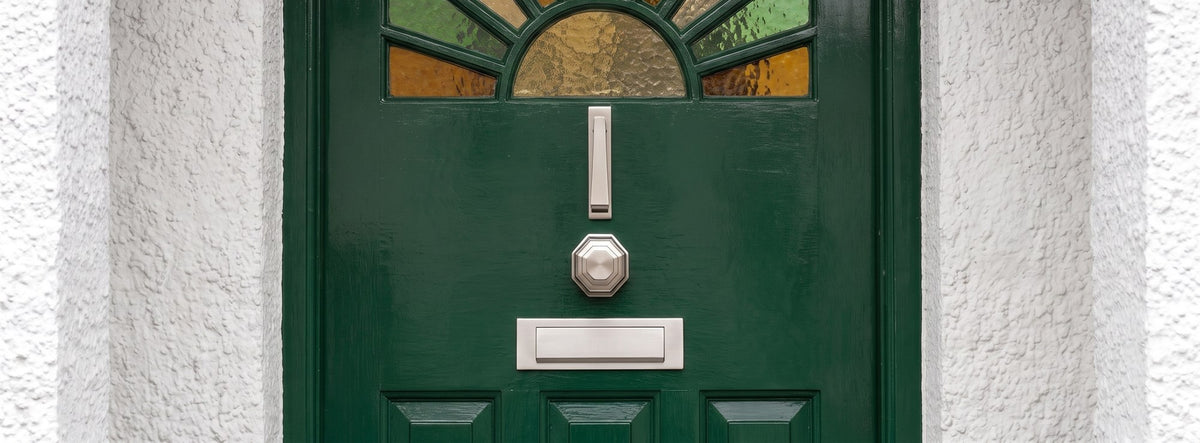
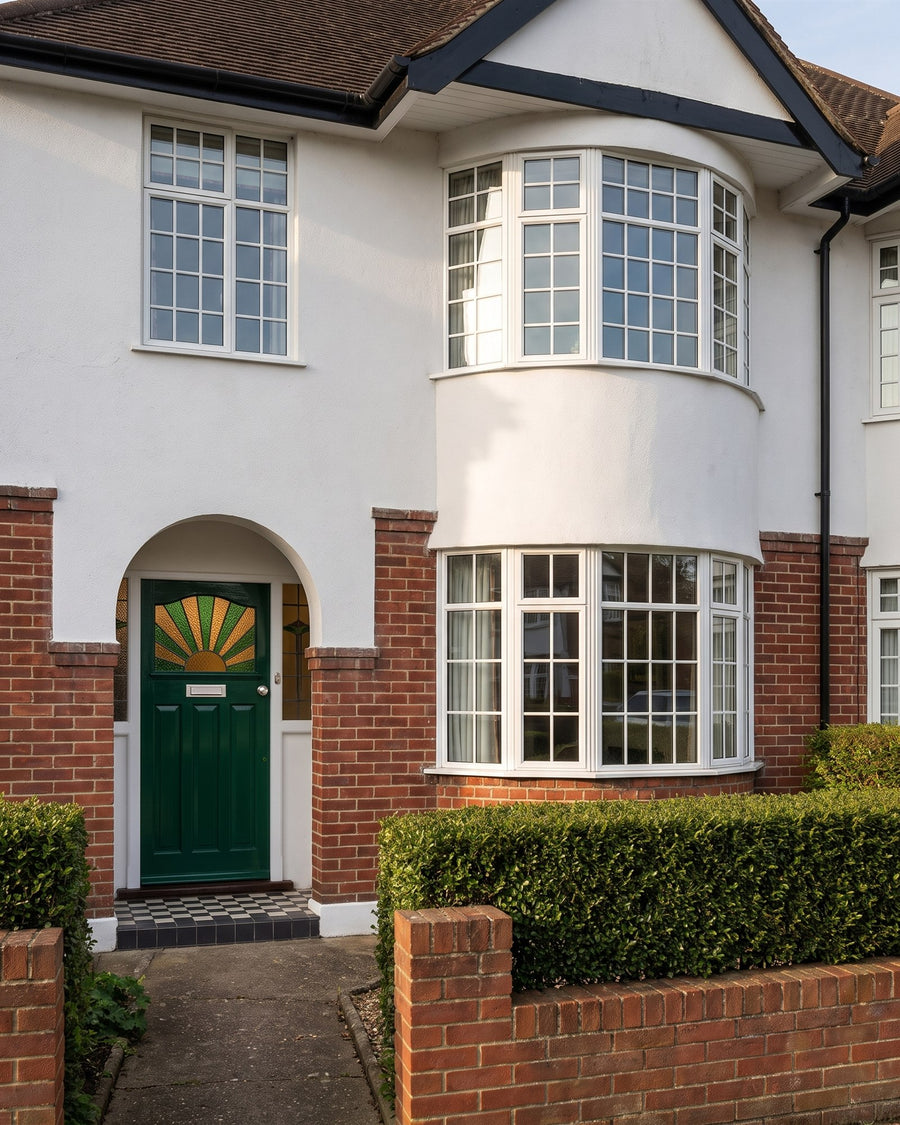
A gloss green sunburst door, geometric tiles and stepped Art Deco levers in soft satin nickel, the modern metal of the 1930s.
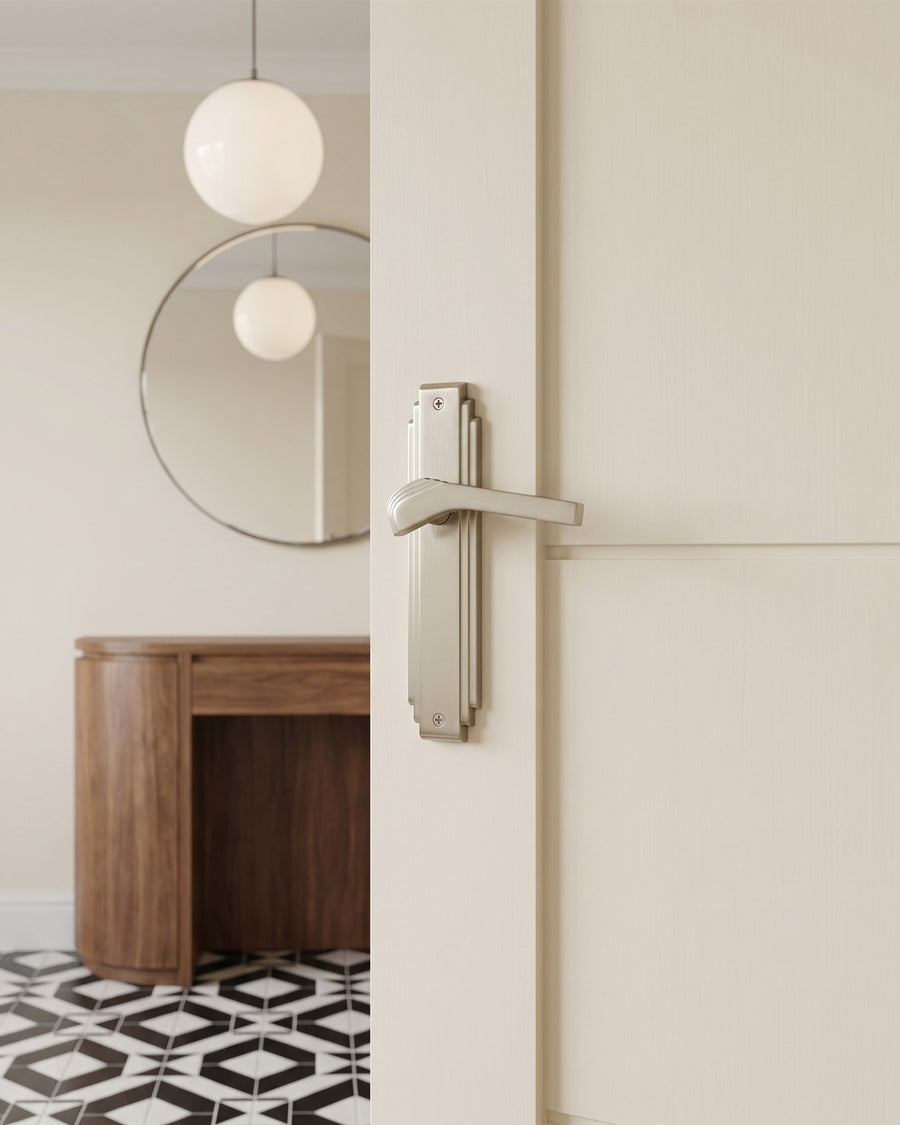
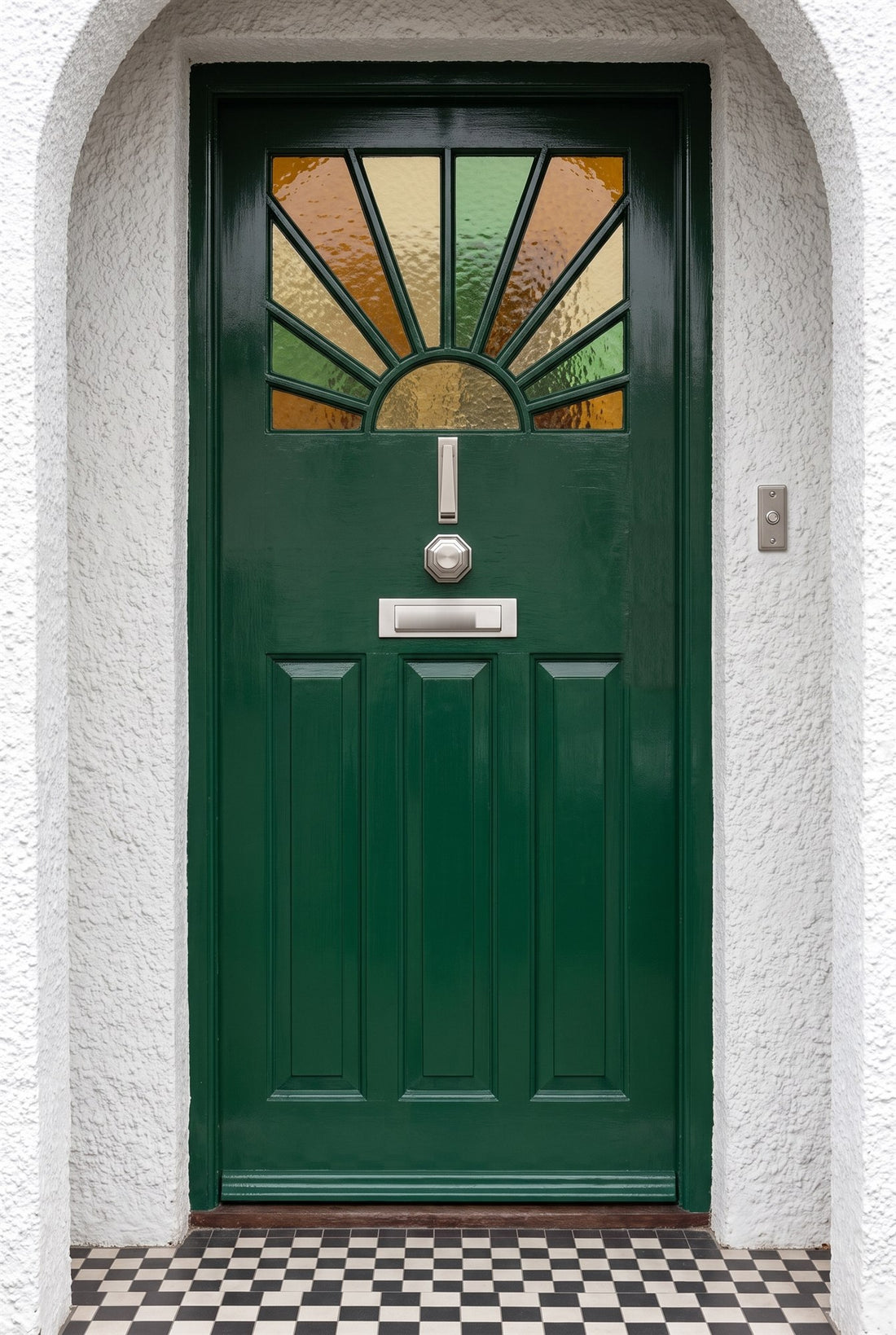
A gloss green sunburst front door with amber and green stained glass in a white rendered porch, then cream doors throughout, black and white tiles, walnut, jade and a hint of soft pink inside, all finished in satin nickel.
From the sunburst door to the bathroom
-
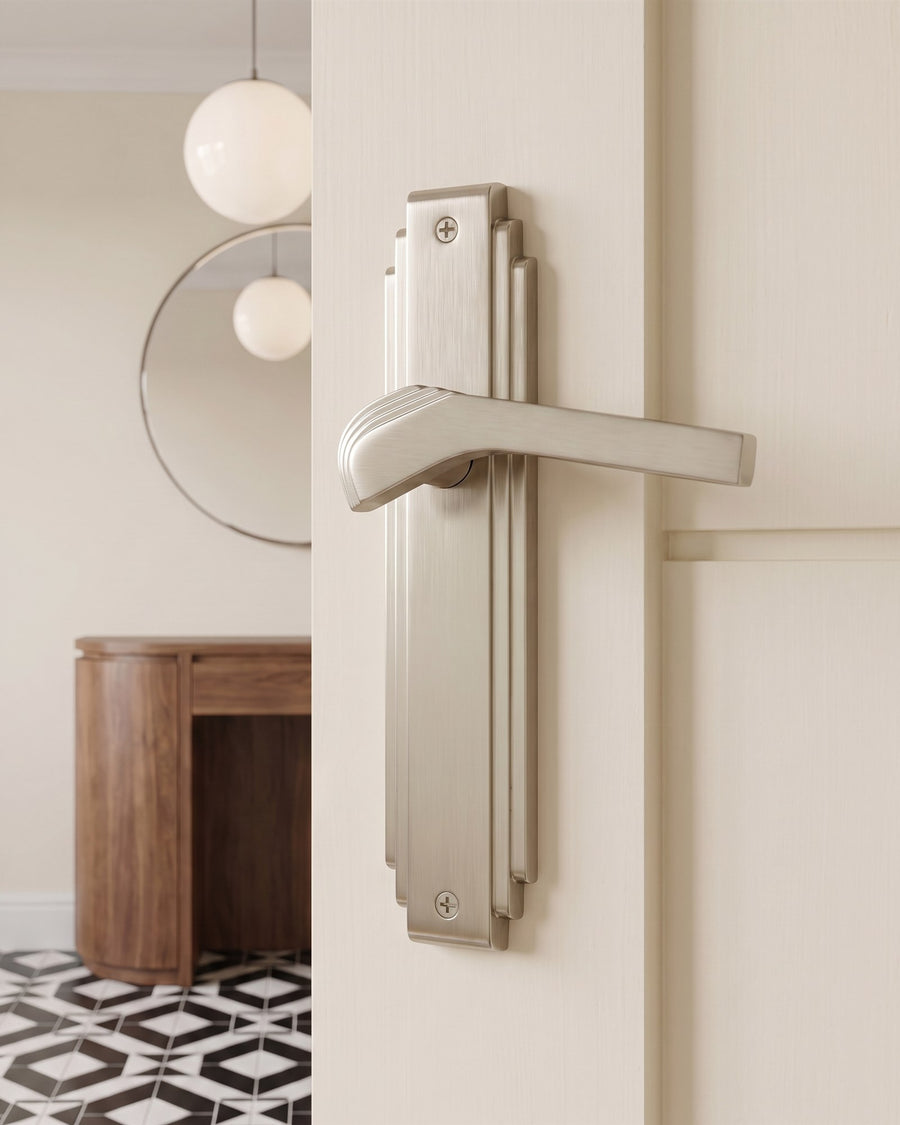
1Tiffany Satin Nickel Art Deco Lever Latch Handles

-
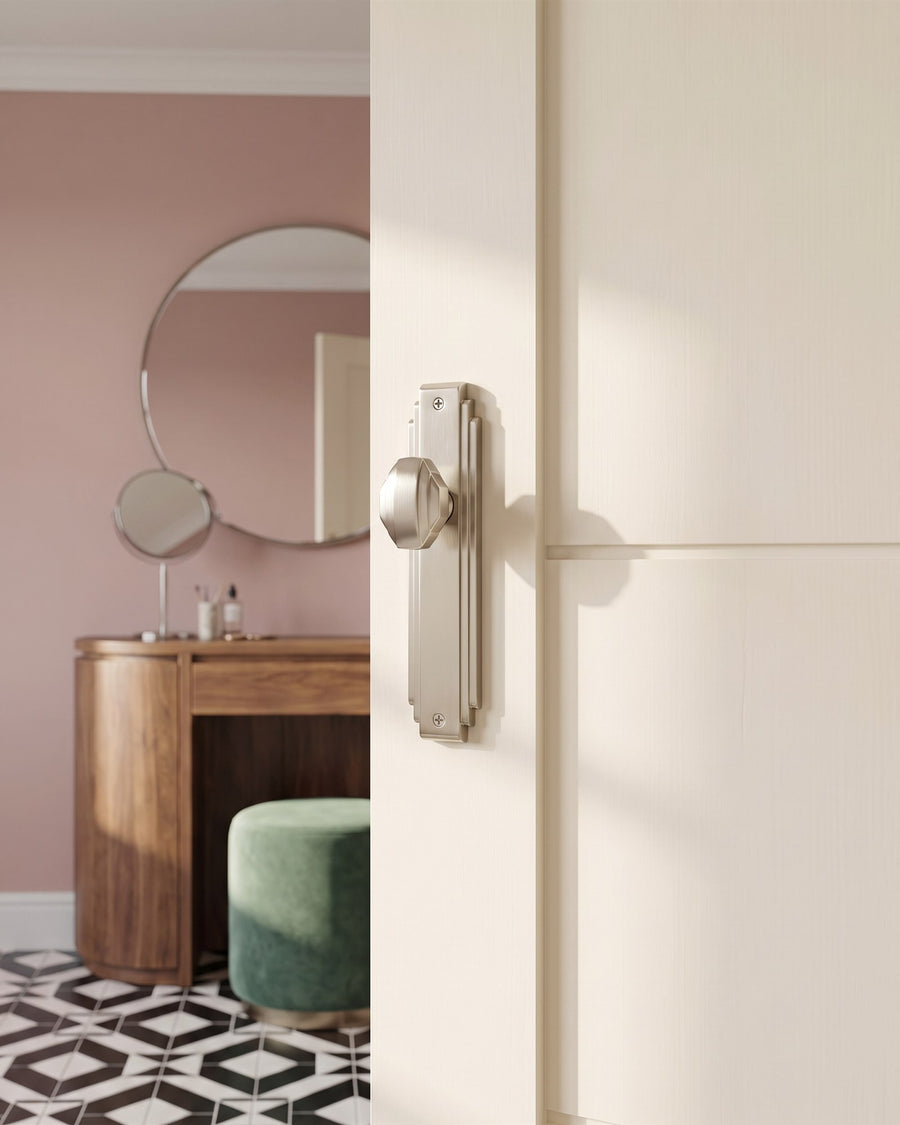
2Satin Nickel Art Deco Knob on Latch Plate

-
3Satin Nickel Octagonal Centre Door Knob 82mm

-
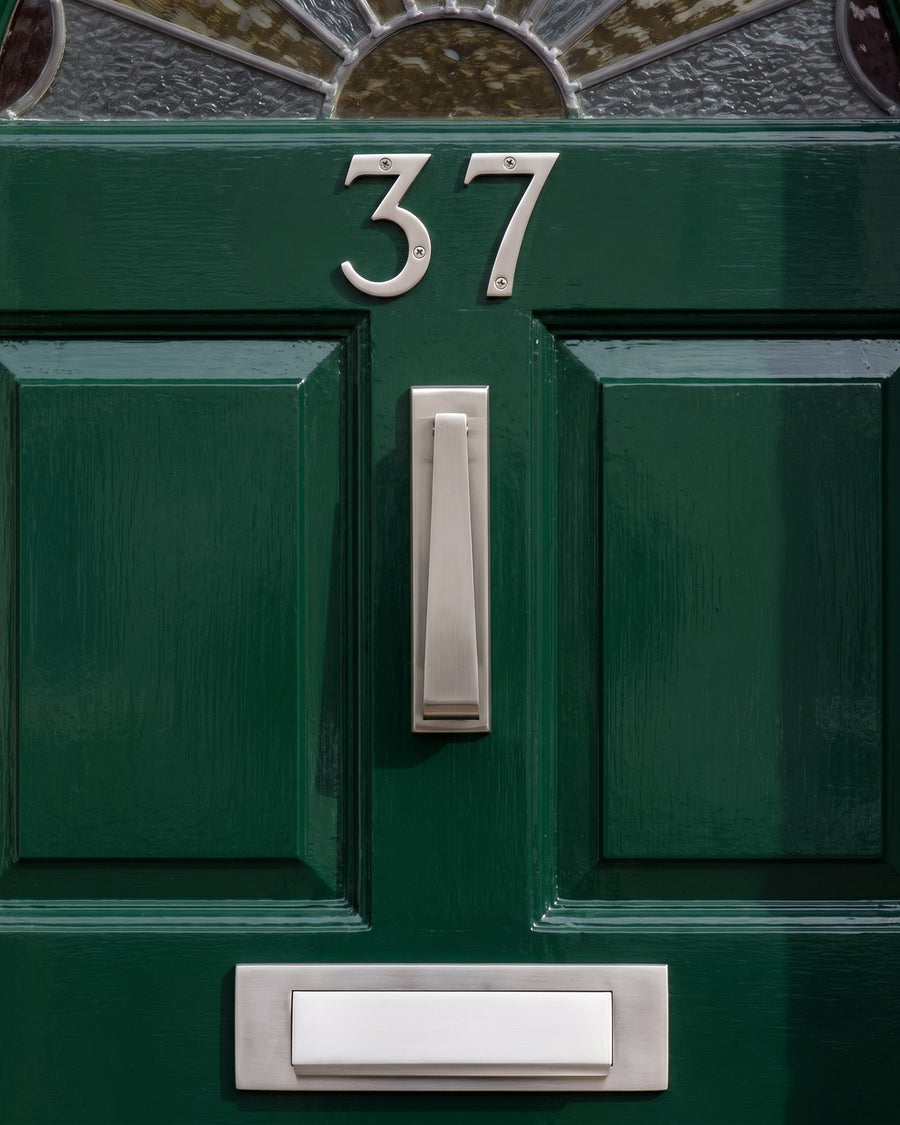
4Satin Nickel Slim Door Knocker 165mm

-
5Satin Nickel Gravity Flap Letter Plate 280x80mm

-
6Satin Nickel House Numbers 76mm (3in)

-
7Satin Nickel Stepped Bell Push 83x33mm

-
8Satin Nickel Square Edge Cylinder Pull

-
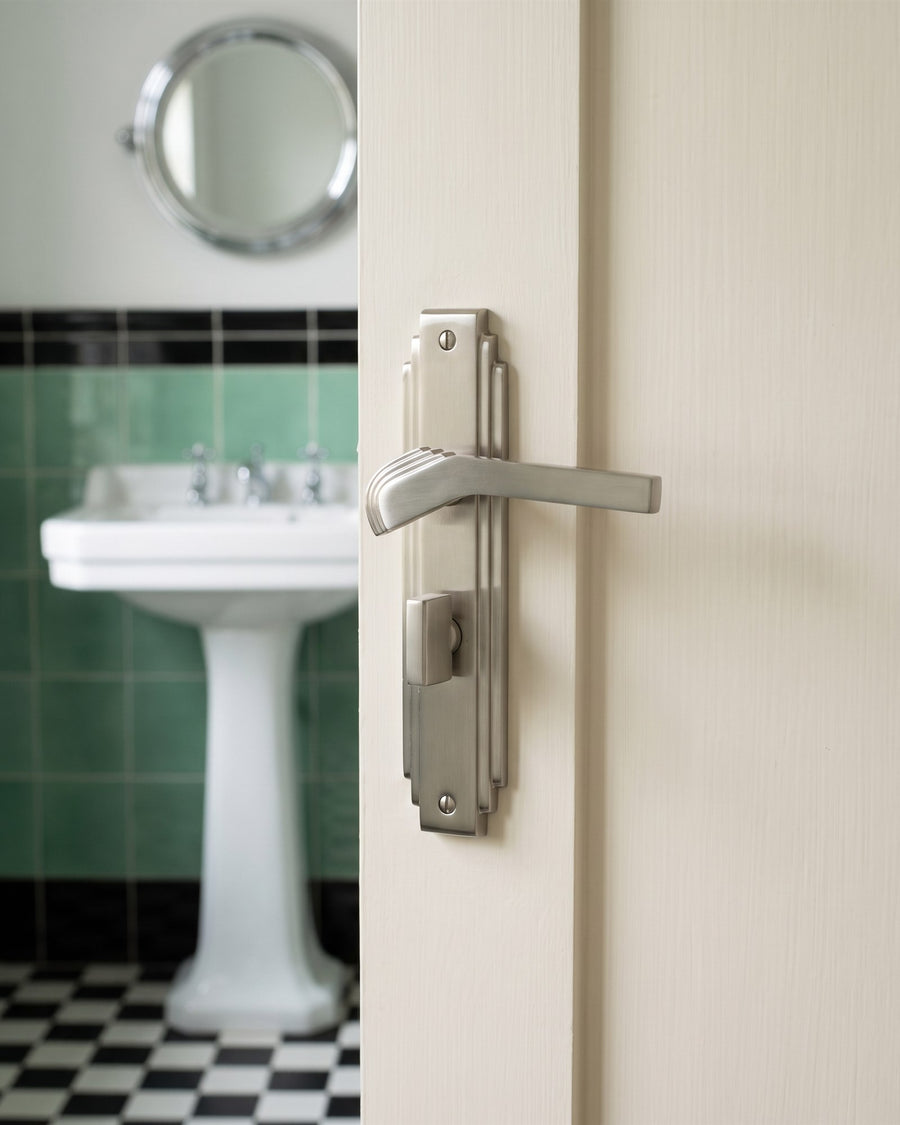
9Tiffany Satin Nickel Art Deco Bathroom Handles

-
10Satin Nickel Parliament Hinges (Pair)

More Deco handles in nickel and chrome
-
Tiffany Satin Nickel Art Deco Keyhole Handles

-
Tiffany Satin Nickel Art Deco Euro Handles

-
Satin Nickel Art Deco Knob on Bathroom Plate

-
Satin Nickel Art Deco Knob on Keyhole Plate

-
Satin Nickel Art Deco Stepped Lever Handles

-
Satin Nickel Art Deco Stepped Bathroom Handles

-
Charlston Polished Chrome Deco Knob on Plate

-
Charlston Polished Chrome Deco Bathroom Knob Set

-
Waldorf Polished Chrome Art Deco Lever Handles

-
Waldorf Polished Chrome Art Deco Bathroom Handles

-
Waldorf Satin Chrome Art Deco Lever Handles

-
Polished Chrome Art Deco Knob on Latch Plate

-
Tiffany Polished Chrome Art Deco Lever on Rose

-
Cut Glass Mortice Door Knobs

-
Satin Nickel Keyhole Escutcheon 53mm

-
Satin Nickel House Numbers 51mm (2in)

What makes a door handle Art Deco
The look of the 1930s
The houses built between the wars mixed traditional brick with new ideas: curved bays, steel windows, sunburst doors and stepped details borrowed from cinemas and liners. By then levers had largely replaced knobs indoors, and bright nickel and chrome had overtaken brass as the fashionable finish.
Why satin nickel
Satin nickel is softer and slightly warmer than chrome, so it suits the cream and walnut of a 1930s interior without looking clinical. It also hides fingerprints. For a sharper, more glamorous look the Waldorf and Charlston designs come in polished chrome.
Steps and tiers
Look for the details that define the style: stepped, tiered backplates like a skyscraper outline, levers with stacked rings at the base, octagonal knobs and squared-off ends. Repeat one design on every door and the whole house feels of a piece.
Getting it right
Lever or knob?
Use the Tiffany lever on most doors and the Deco knob on plate where you want something softer, such as bedrooms. Both come in latch, keyhole and bathroom versions.
Parliament hinges
Choose parliament hinges only where a door has to swing clear of a deep architrave or picture rail; they throw the door further out when open.
Keep the sunburst
If your original stained glass survives, keep the front door furniture simple: a slim knocker, an octagonal centre knob and a plain letter plate let the glass take centre stage.
Check the plate size
The Tiffany backplate is 204 x 49 mm; measure the marks left by your old handles so the new plate covers them neatly.
