
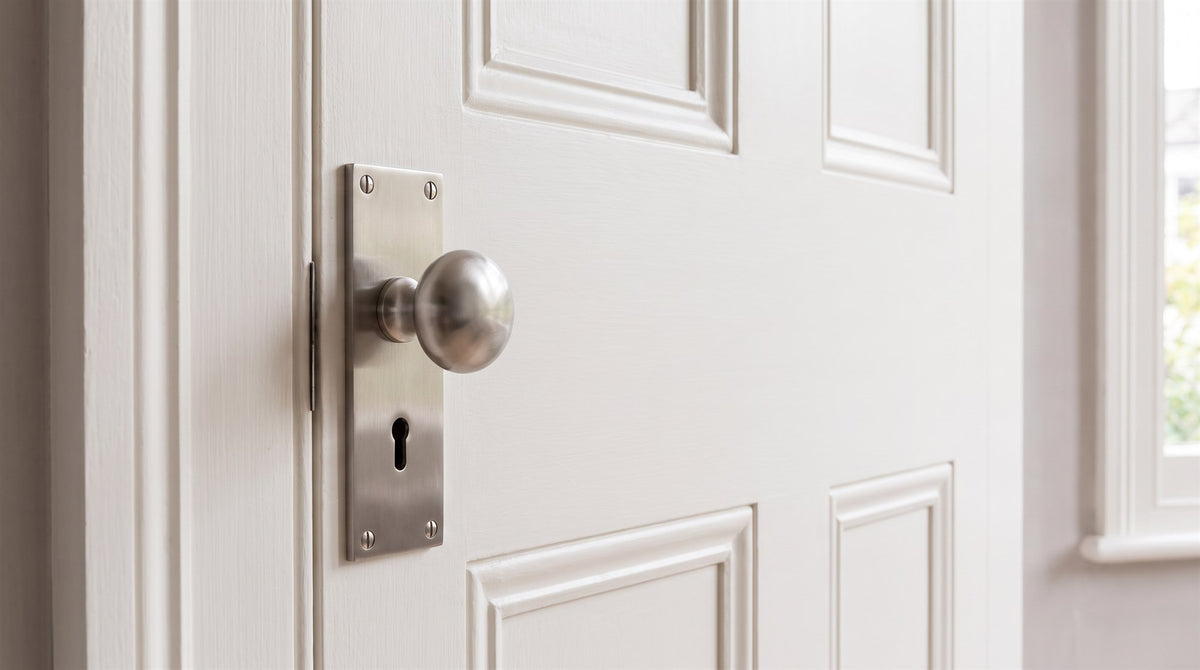
Satin nickel knobs on warm white doors
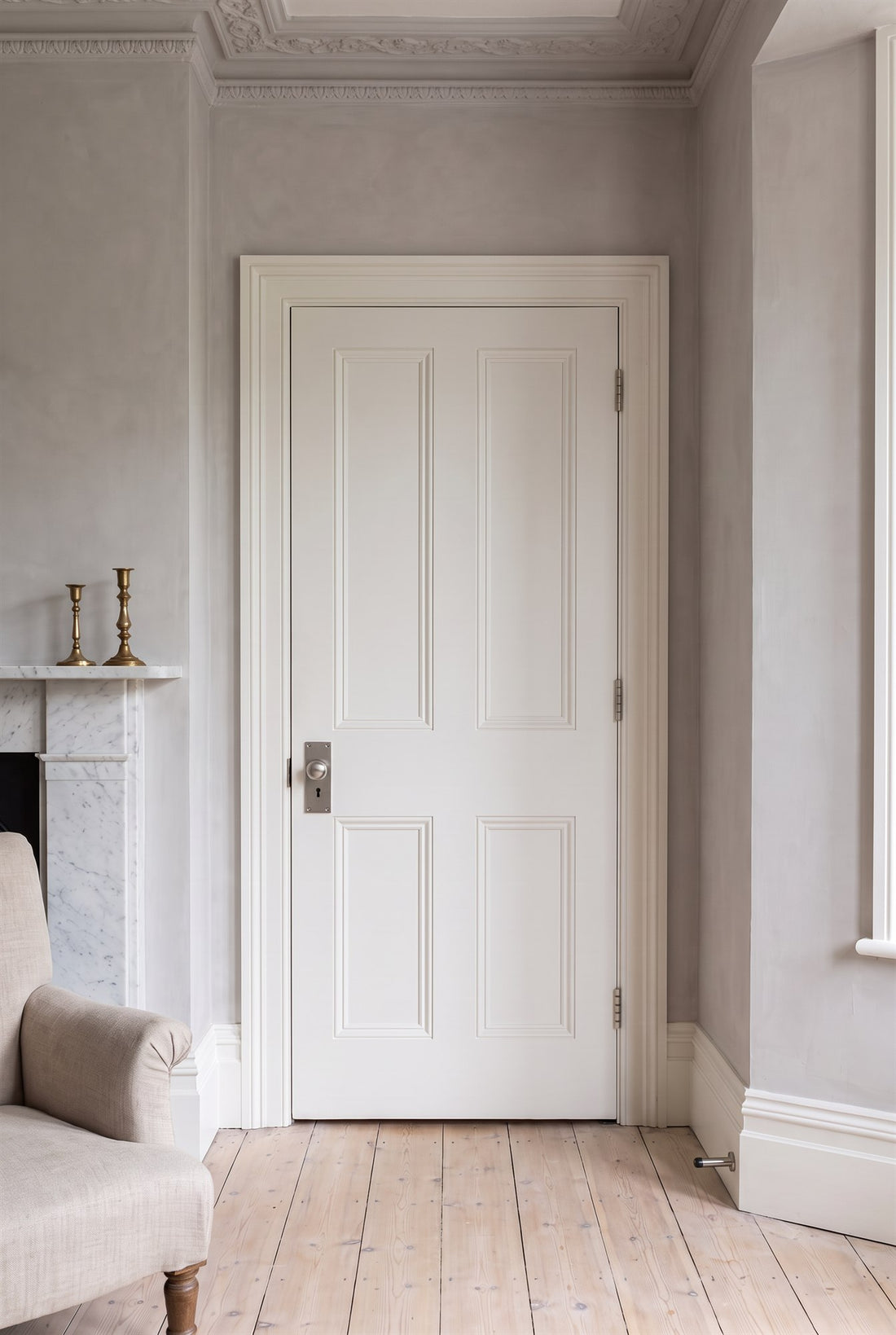
A soft brushed nickel knob on a plain plate: a quieter, cooler alternative to brass for a Victorian house painted in warm whites.
A Victorian terrace where the woodwork has all been painted one soft warm white and the walls are a pale putty limewash, with limed pine floors and a white marble fireplace. Brass would add warmth, but here the owners wanted something calmer. The Balmoral knob in satin nickel has a gentle silvery sheen that sits quietly against warm white paint, and its plain rectangular plate is right for a Victorian door without being fussy.
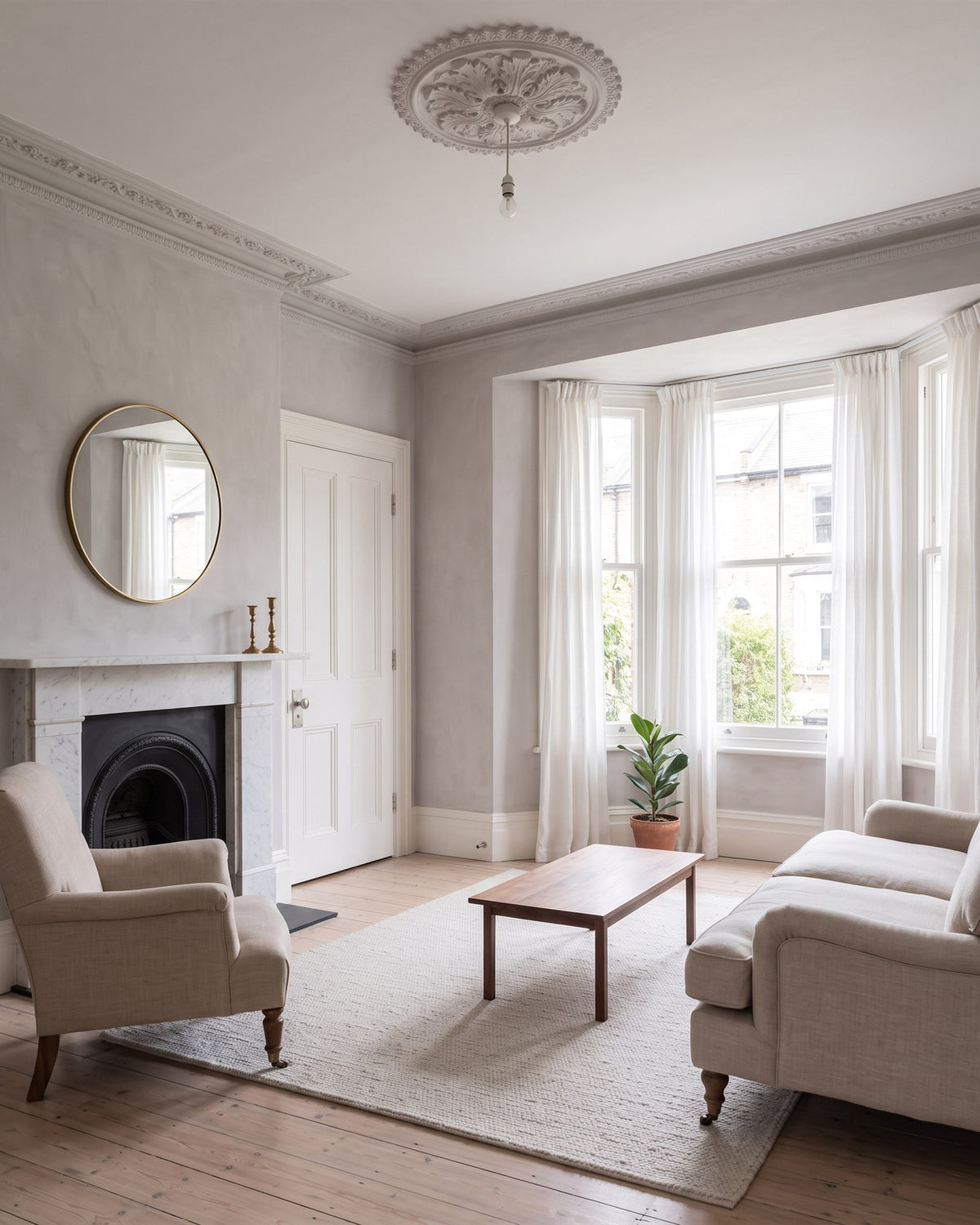
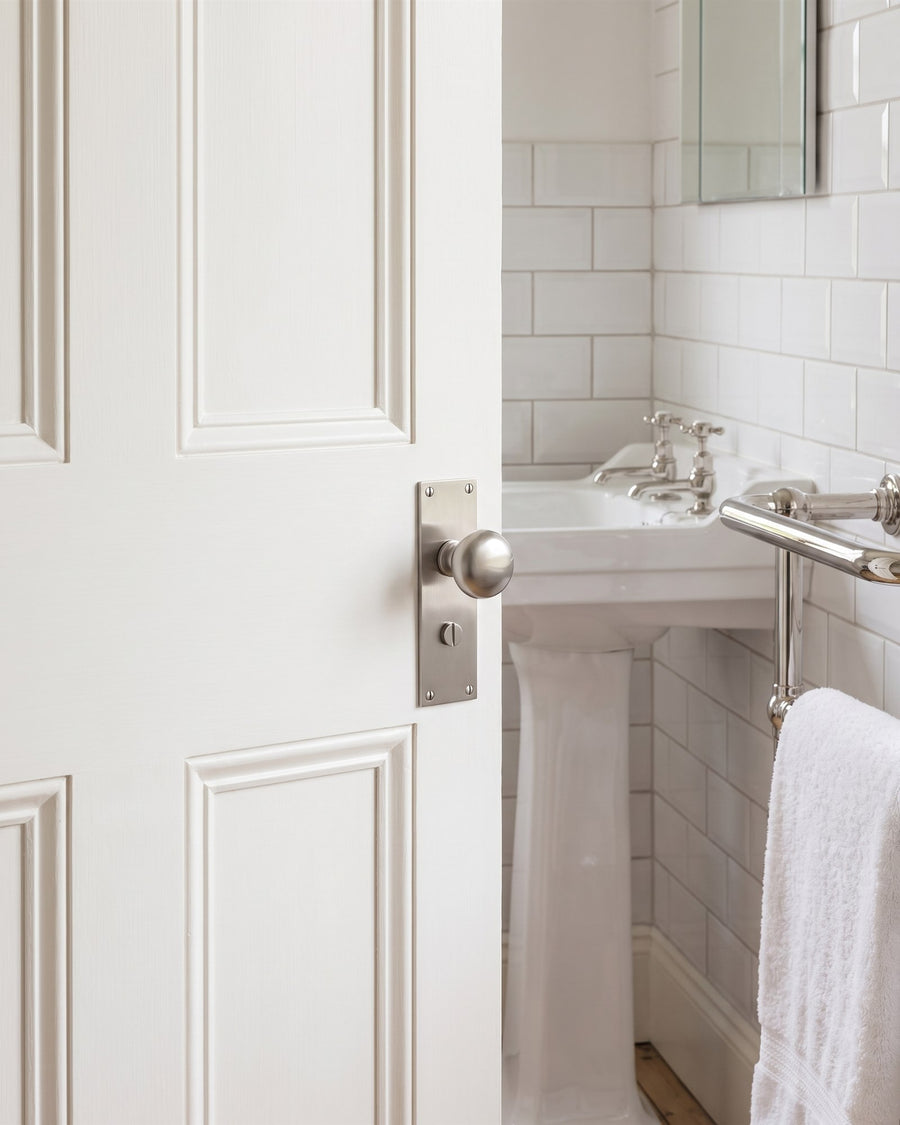
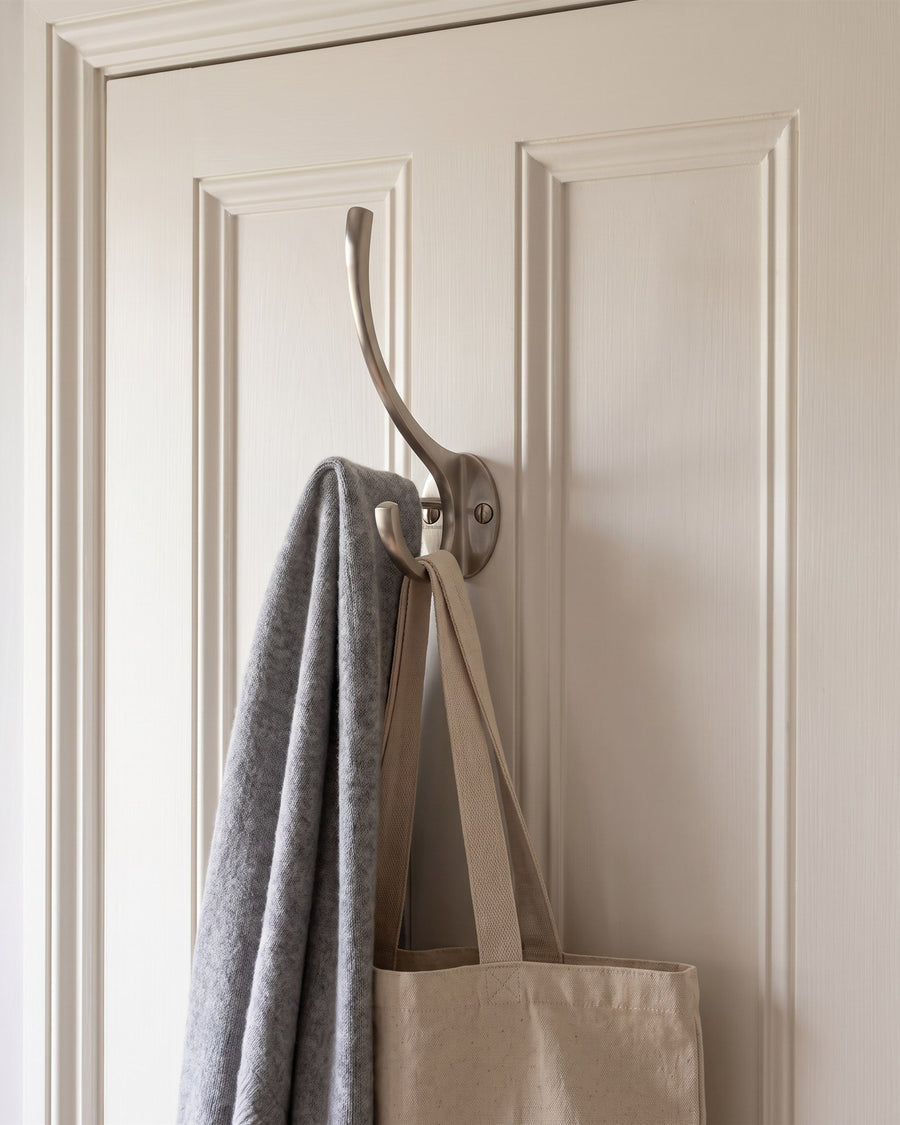

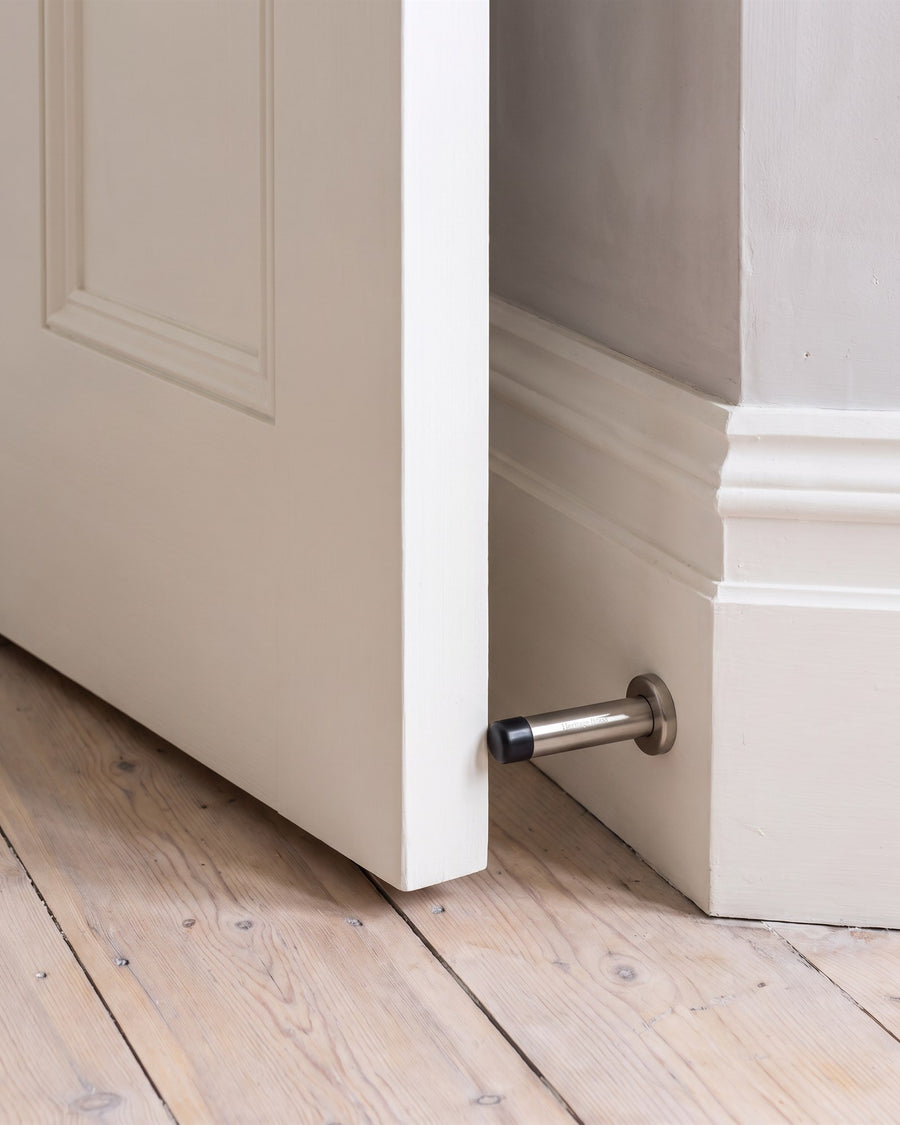
Satin nickel Balmoral for every door


More knobs on plates and satin nickel accessories
-
Victoria Knob on Reeded Latch Plate

-
Victoria Knob on Reeded Bathroom Plate

-
Beehive Knob on Latch Plate

-
Beehive Knob on Bathroom Plate

-
Balmoral Latch Plate, Polished Chrome

-
Balmoral Latch Plate, Polished Brass

-
Balmoral Latch Plate, Satin Brass

-
Balmoral Latch Plate, Matt Bronze

-
Satin Nickel Reeded Covered Escutcheon

-
Satin Nickel Key Escutcheon

-
Satin Nickel Double Hook

-
Satin Nickel Hooded Floor Stop

-
Satin Nickel Reeded Turn and Release

Why satin nickel works with warm whites
A cooler metal for a calm house
Warm whites have a hint of yellow or pink, so a cool metal stops a room feeling too creamy. Satin nickel is brushed rather than shiny and has a slightly warm grey tone, so it doesn't look cold. It is a good choice if you want period shapes but not the gold of brass.
Lock, latch or bathroom
The Balmoral comes on three plates. The lock plate has a keyhole for doors with a mortice lock, the latch plate is plain for doors that only need to close, and the bathroom plate adds a turn. Using all three keeps every door in the house the same.
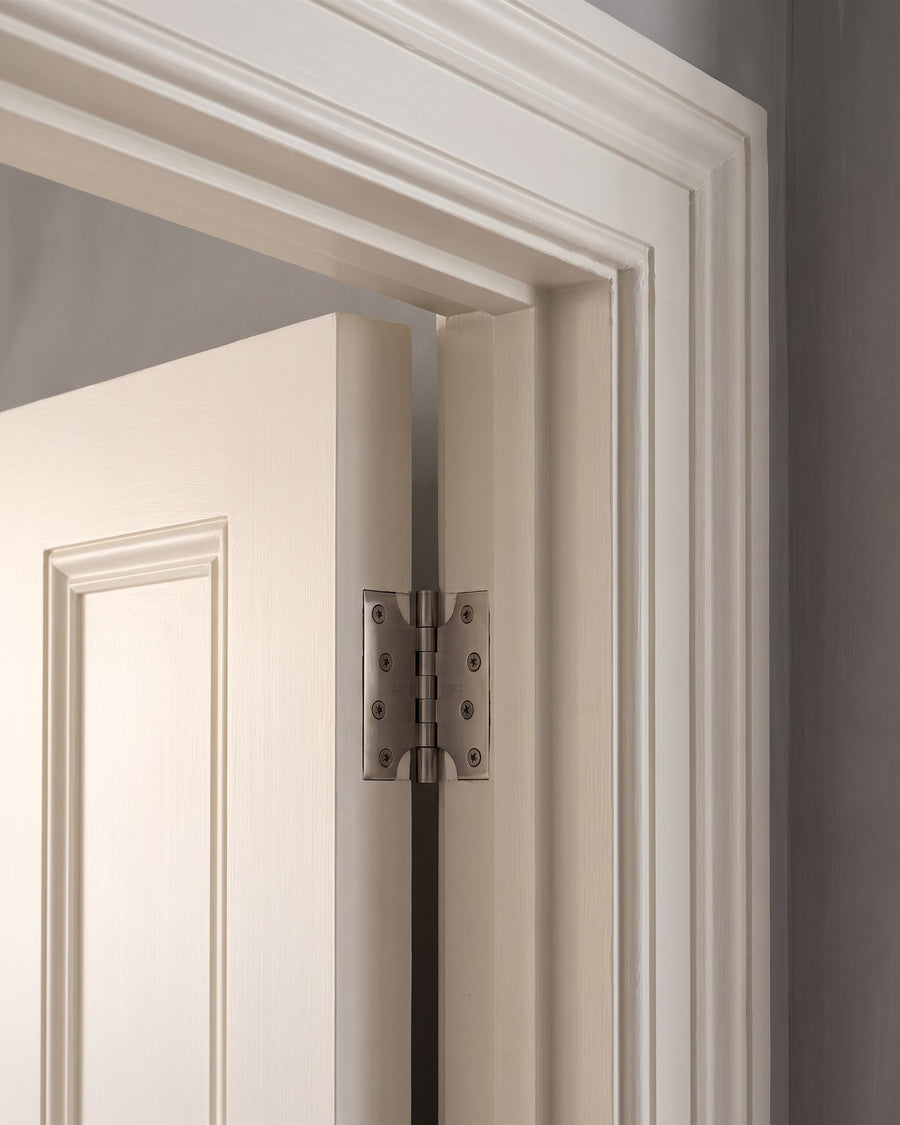
Parliament hinges for deep architraves
Victorian architraves and skirtings are often deep and moulded, which can stop a door opening fully. Parliament hinges have wide leaves that move the door out from the frame, so it can swing right back past the mouldings.
Planning notes
Check the lock centres
Lock and bathroom plates must match the distance between the spindle and the keyhole or turn on your mortice lock. Measure an existing lock before ordering.
Knobs need room
Knobs sit close to the door frame, so on doors with a deep architrave choose a lock or latch with a longer backset so your knuckles clear the moulding.
Stop the knob marking the wall
A cylinder door stop on the skirting holds the door just short of the wall, so the knob doesn't dent fresh plaster.
Hooks to match
A satin nickel hat and coat hook on the back of a bedroom door or in the hall keeps the finish consistent.
