
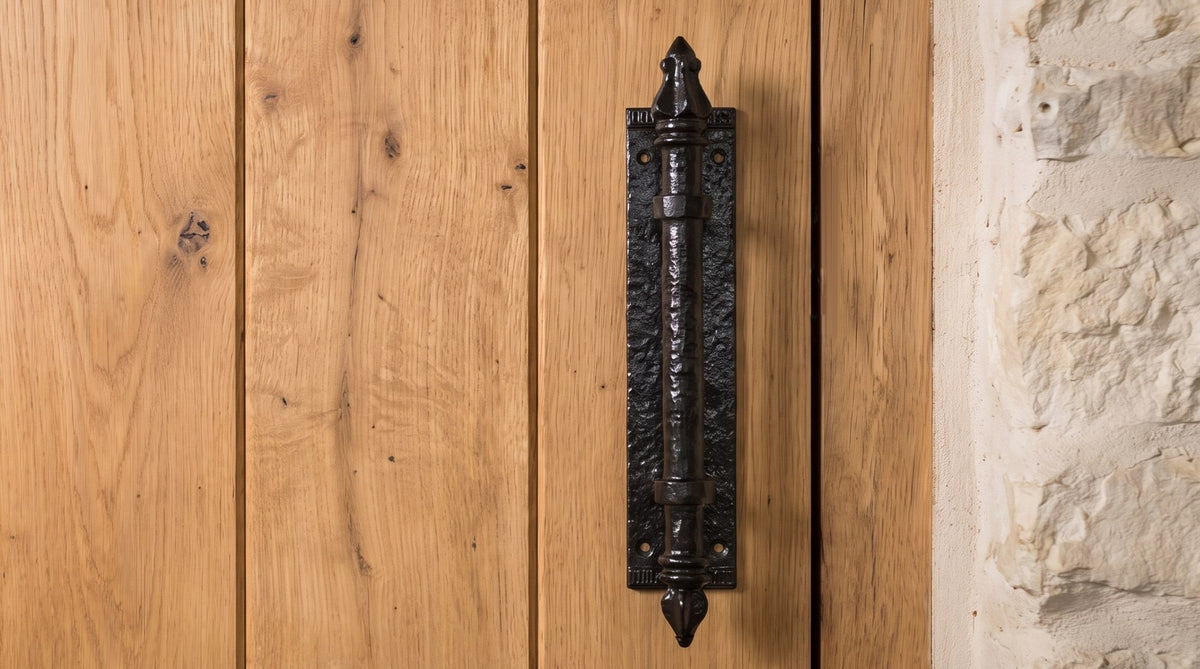
Pull handles and tee hinges for plank doors
Honey oak ledged doors, limewashed stone and forged black iron: the hardware that suits a barn conversion, with warm pewter as a softer alternative.
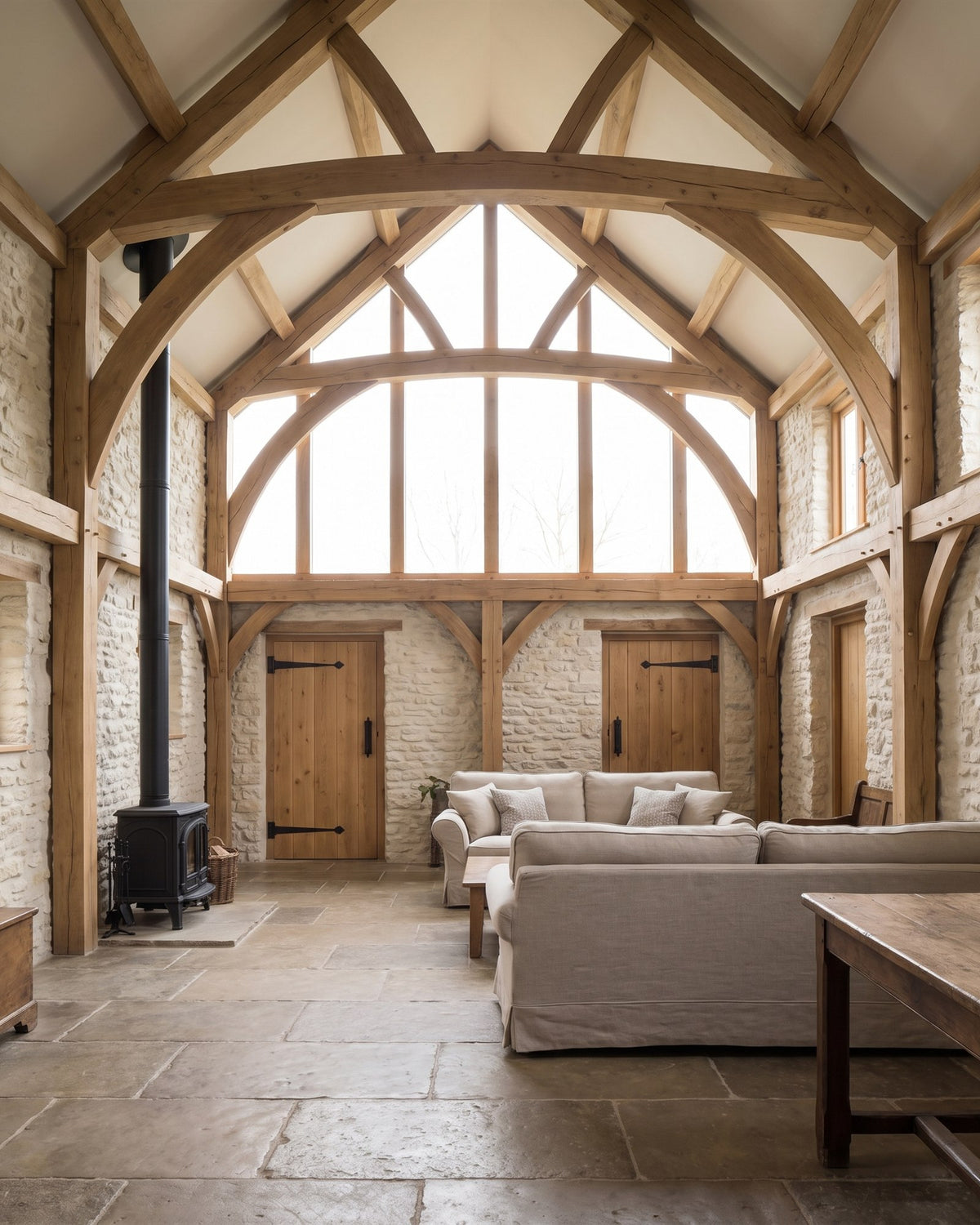
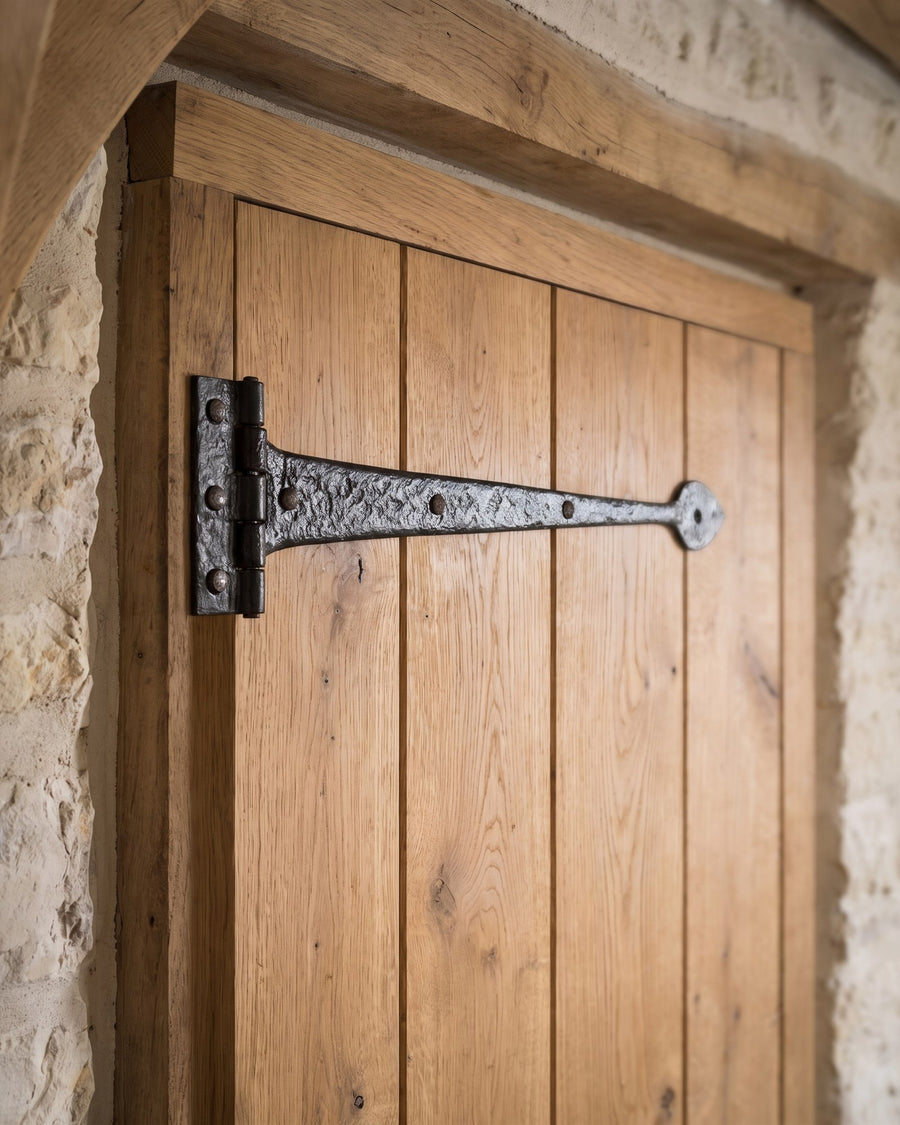
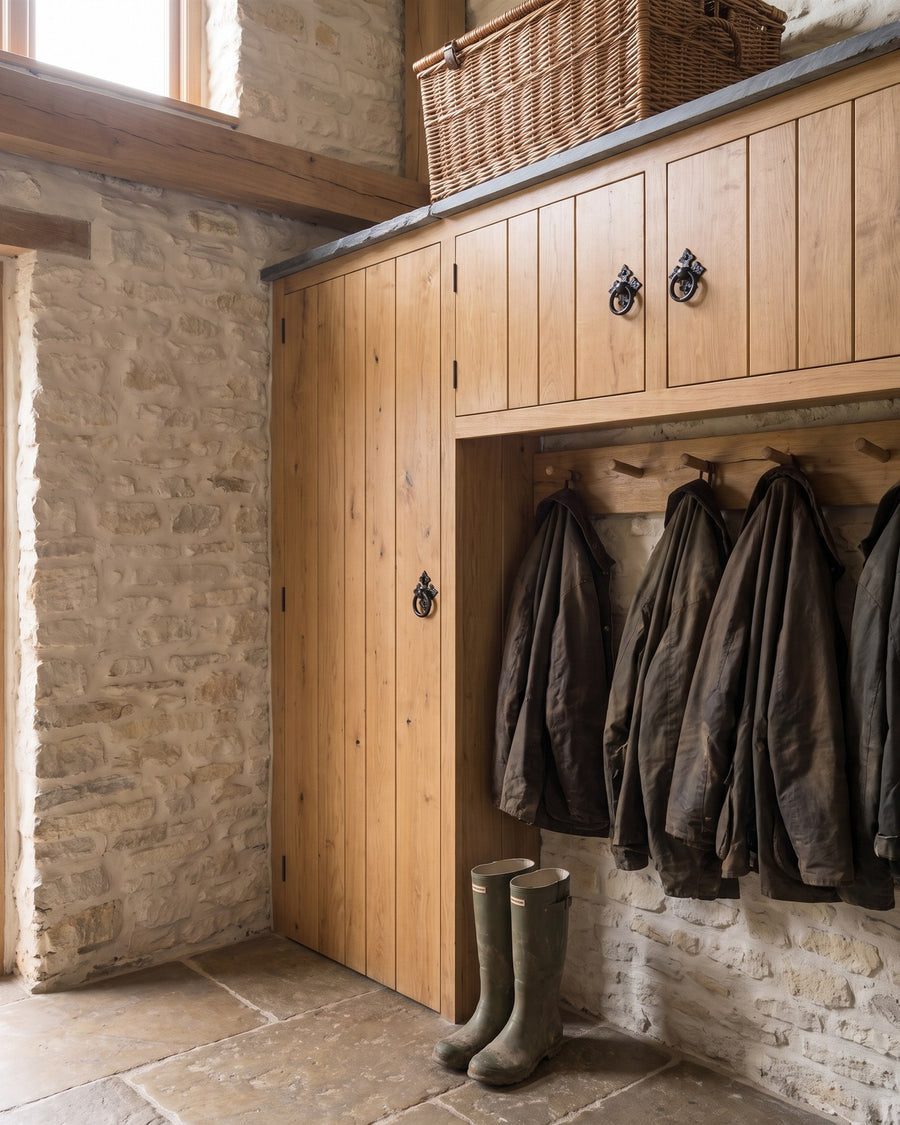
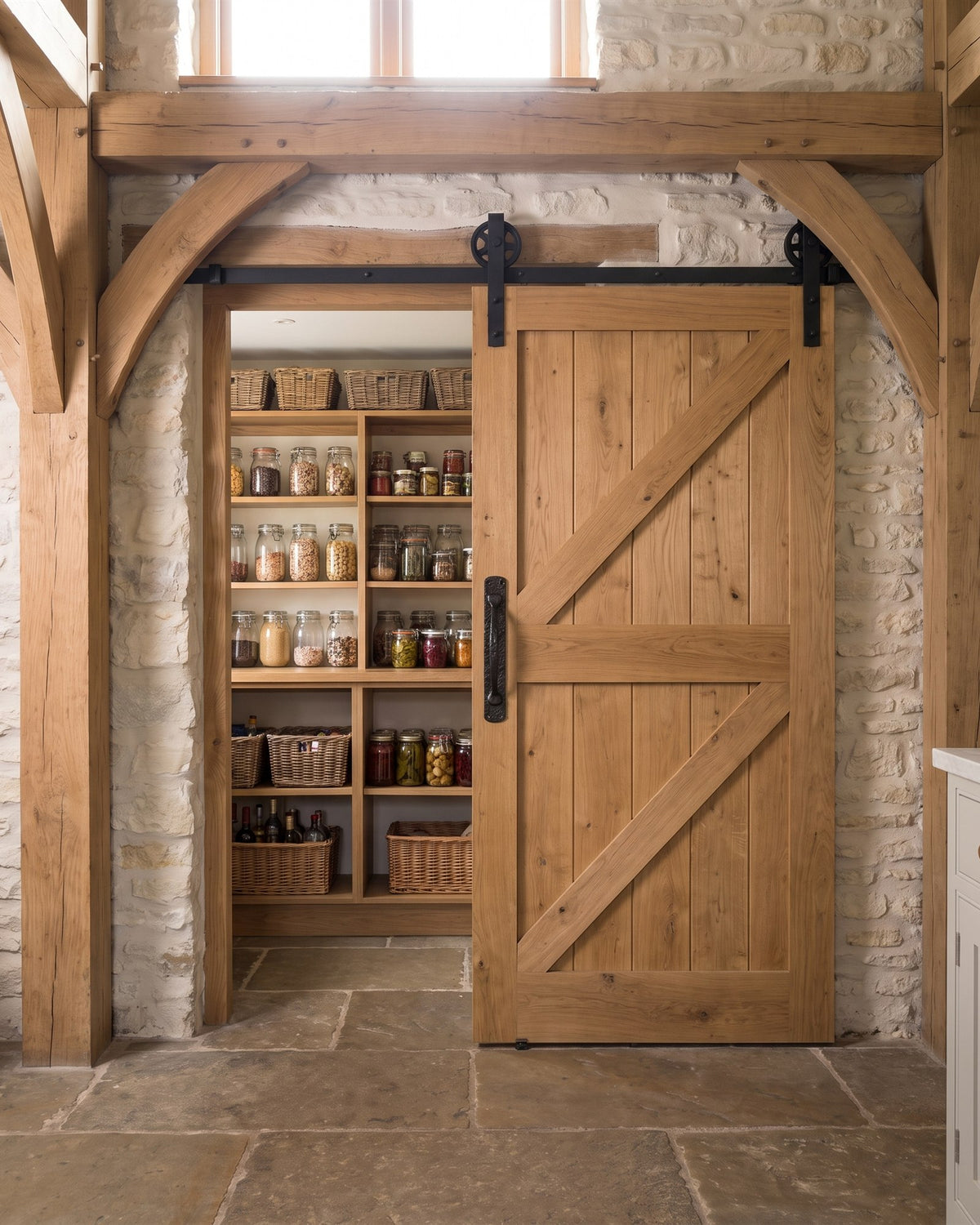
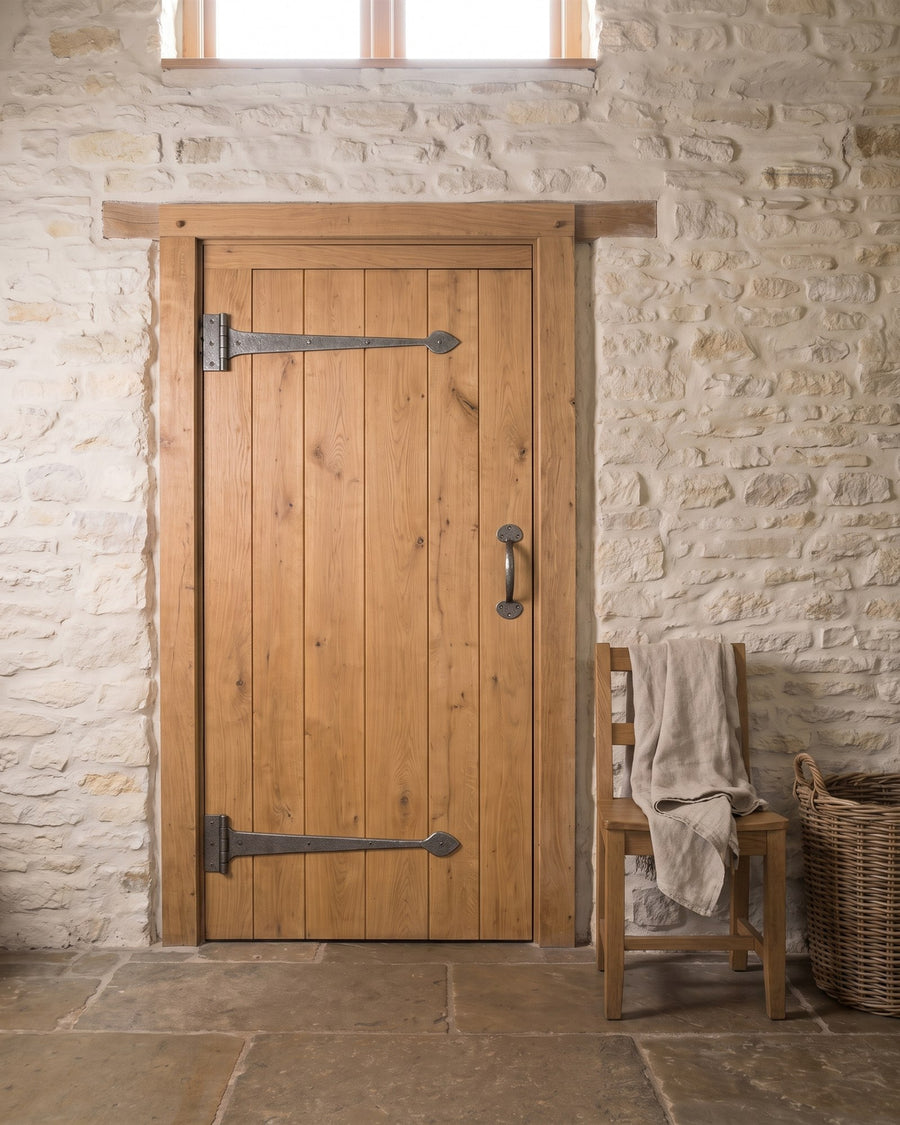
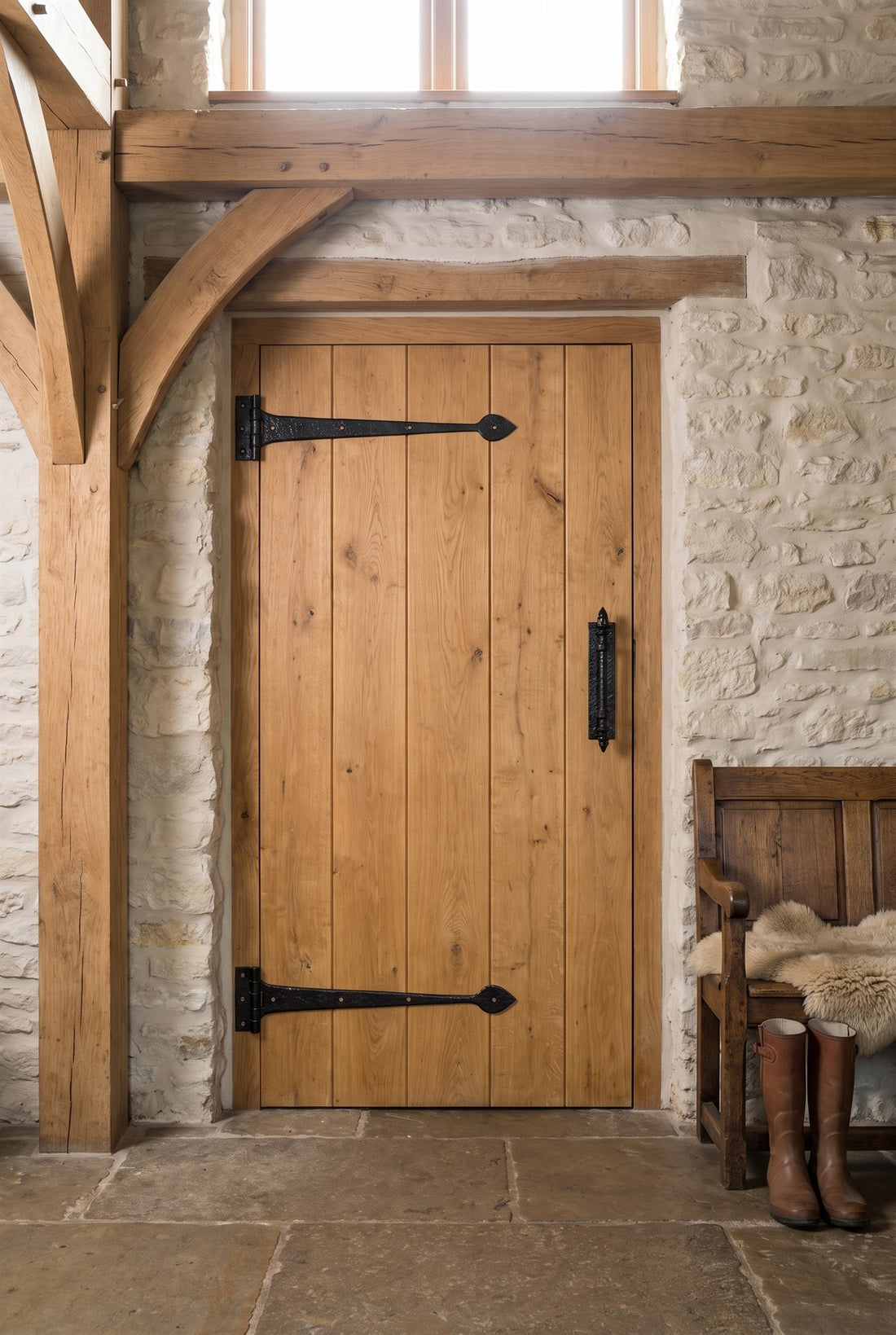
A stone barn with a full oak frame, a glazed gable and worn Yorkstone flags underfoot. Every internal door is a natural oak ledged plank door with long tee hinges and a forged pull, black iron in the living spaces and soft pewter on the bedroom, with matching ring pulls on the boot room cupboards.

Black iron for a plank door
-
1Black Iron Door Pull Handle 304mm

-
2Black Iron Tee Hinges 456mm (Pair)

-
3Black Iron Offset Pull Handle 381mm

-
4Valley Forge Pewter Pull Handle 165mm

-
5Valley Forge Pewter Tee Hinges 380mm (Pair)

-
6Black Iron Tudor Ring Cupboard Pull

-
7Black Iron Projection Door Stop

-
8Black Iron Door Pull Handle 444mm

-
9Black Iron Heavy Tee Hinges 381mm (Pair)

-
10Black Iron Fleur de Lys Pull Handle 152mm

More pulls, hinges and hooks for plank doors
-
Rustic Pewter Offset Pull Handle

-
Rustic Pewter Cranked Pull Handle

-
Rustic Pewter Heavy Pull Handle

-
Valley Forge Pewter Tee Hinges 250mm

-
Valley Forge Pewter Bow Handle

-
Rustic Pewter Projection Door Stop

-
Black Iron Door Pull Handle 215mm

-
Black Iron Door Pull Handle 152mm

-
Black Iron Door Pull Handle 127mm

-
Black Iron Offset Pull Handle 266mm

-
Black Iron Tudor Pull Handle 204mm

-
Black Iron Tudor Fleur de Lys Pull

-
Black Iron Tee Hinges 513mm (Pair)

-
Black Iron Decorative Hinge Fronts 457mm

-
Black Iron Tudor Hat and Coat Hook

-
Black Iron Hook 45mm

Hardware for ledged doors
Why pulls and tee hinges
Ledged and braced doors are made from vertical boards held by horizontal ledges on the back, so there are no panels or stiles for a lever on a backplate. A long pull handle fixes straight through the boards, and tee hinges spread the weight of a heavy oak door across several planks, which is exactly what they were invented for.
Black iron or pewter
Forged black iron gives the strongest contrast against honey oak and limewash, and suits the scale of a big barn space. Pewter is softer and slightly warmer, and works well on bedrooms or anywhere you want the hardware to recede. Mixing the two room by room is fine, as long as each door is consistent.
Sliding barn doors
Where there isn't room for a door to swing, a sliding plank door on a top track is the obvious answer. An offset pull handle sits out from the face, so your knuckles clear the wall as the door slides back. A plank door that swings still needs a latch to hold it shut, so plan for one when you choose the pull.
Choosing sizes
Hinge length
Tee hinges should reach at least a third of the way across the door. On a standard internal door, 380 to 456mm hinges look right and carry the weight.
Pull length
Use a 300mm pull on full-height doors and a smaller 150mm pull or ring on cupboards, so the scale steps down with the joinery.
Screw it properly
Fix tee hinges into the ledges on the back of the door, not just the boards, for a door that won't drop over time.
Stop the swing
A projection door stop on the skirting keeps a heavy plank door from hitting the stone wall.
