

Polished brass on an inky blue Edwardian door
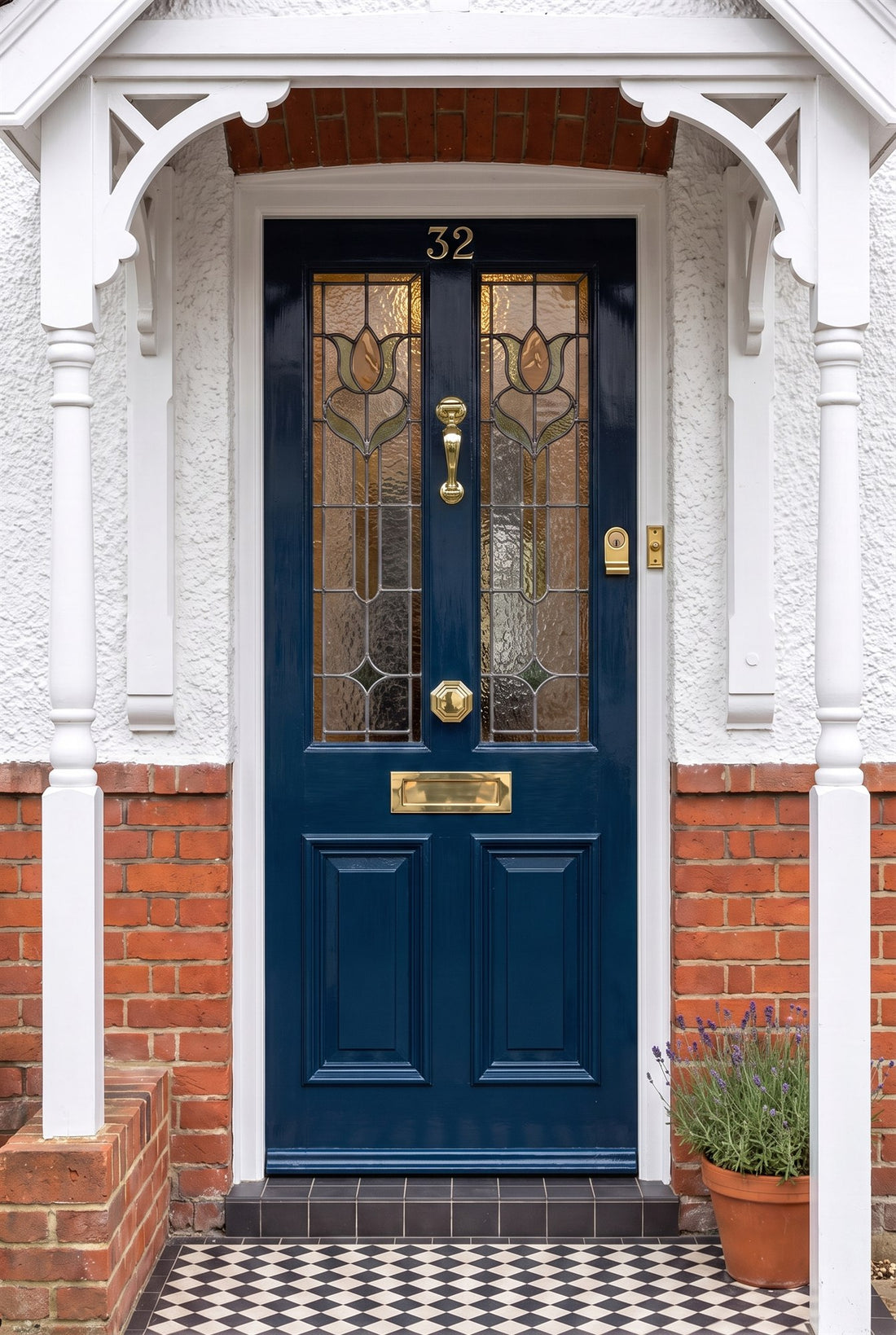
Gloss blue paint, Art Nouveau stained glass and bright polished brass: the confident, cheerful front door of a 1900s semi.
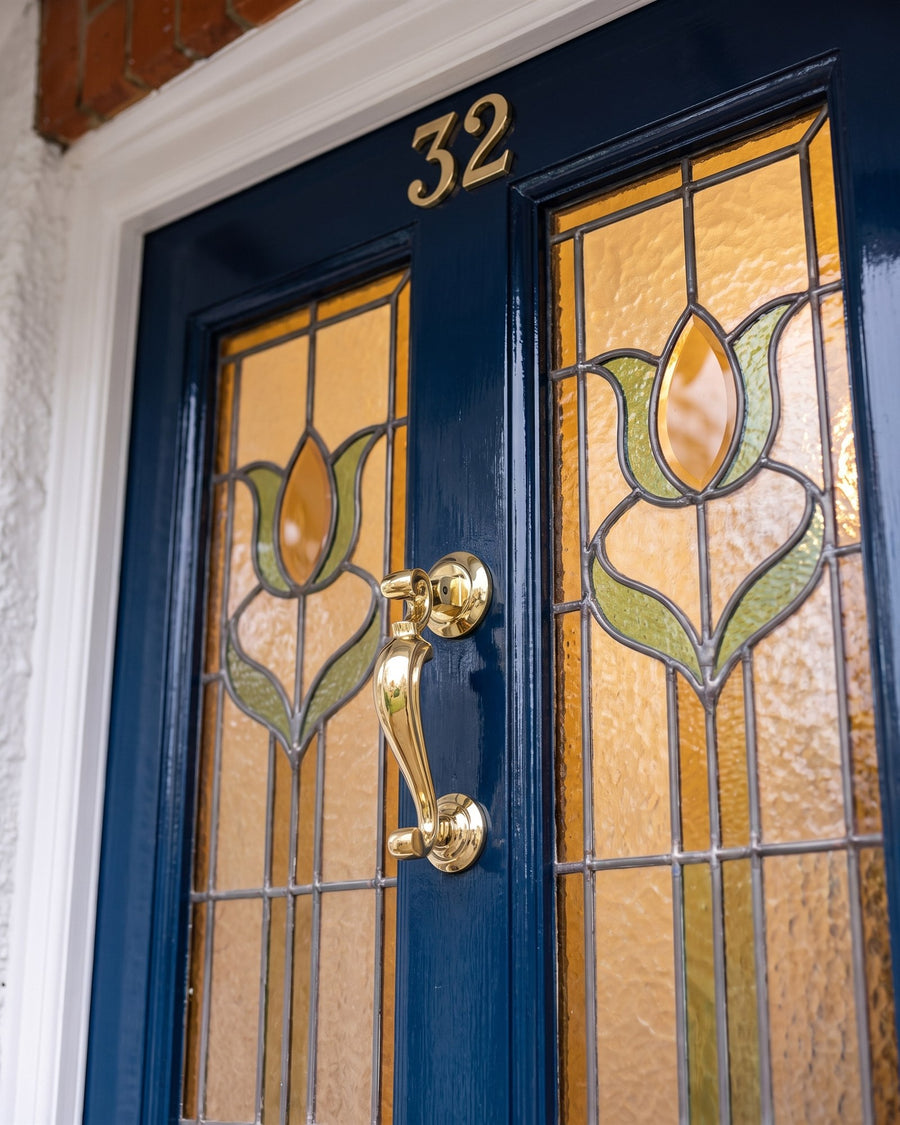
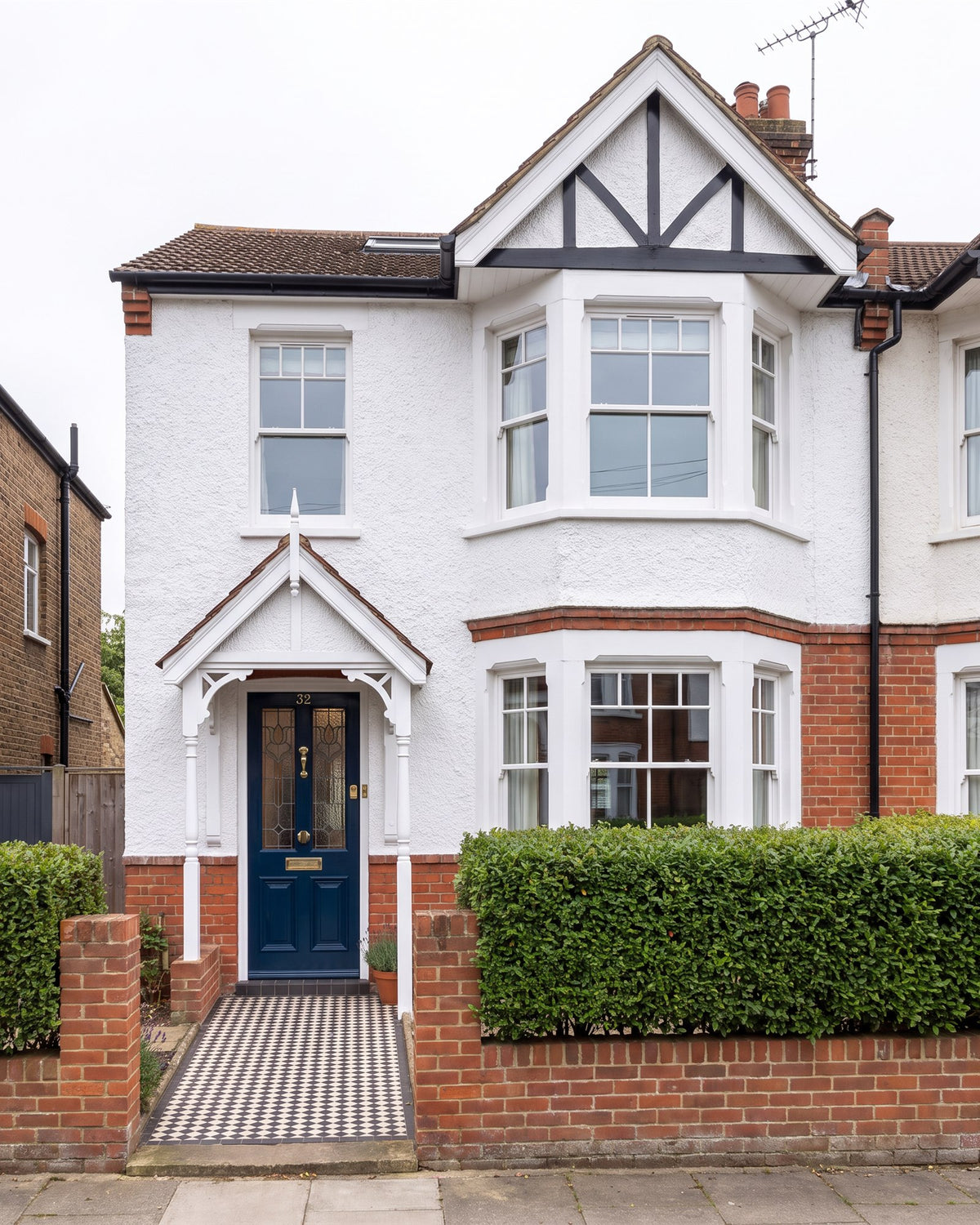
An Edwardian semi with red brick below, white roughcast above and a timber porch with fretwork brackets over a chequerboard path. The door keeps its original stained glass, tulips in clear, amber and green, and is painted an inky blue in high gloss. Polished brass suits the era's love of shine and colour: the octagonal knob, the slim profile knocker and the numbers all pick up the amber in the glass.
Polished brass for an inky blue door
-
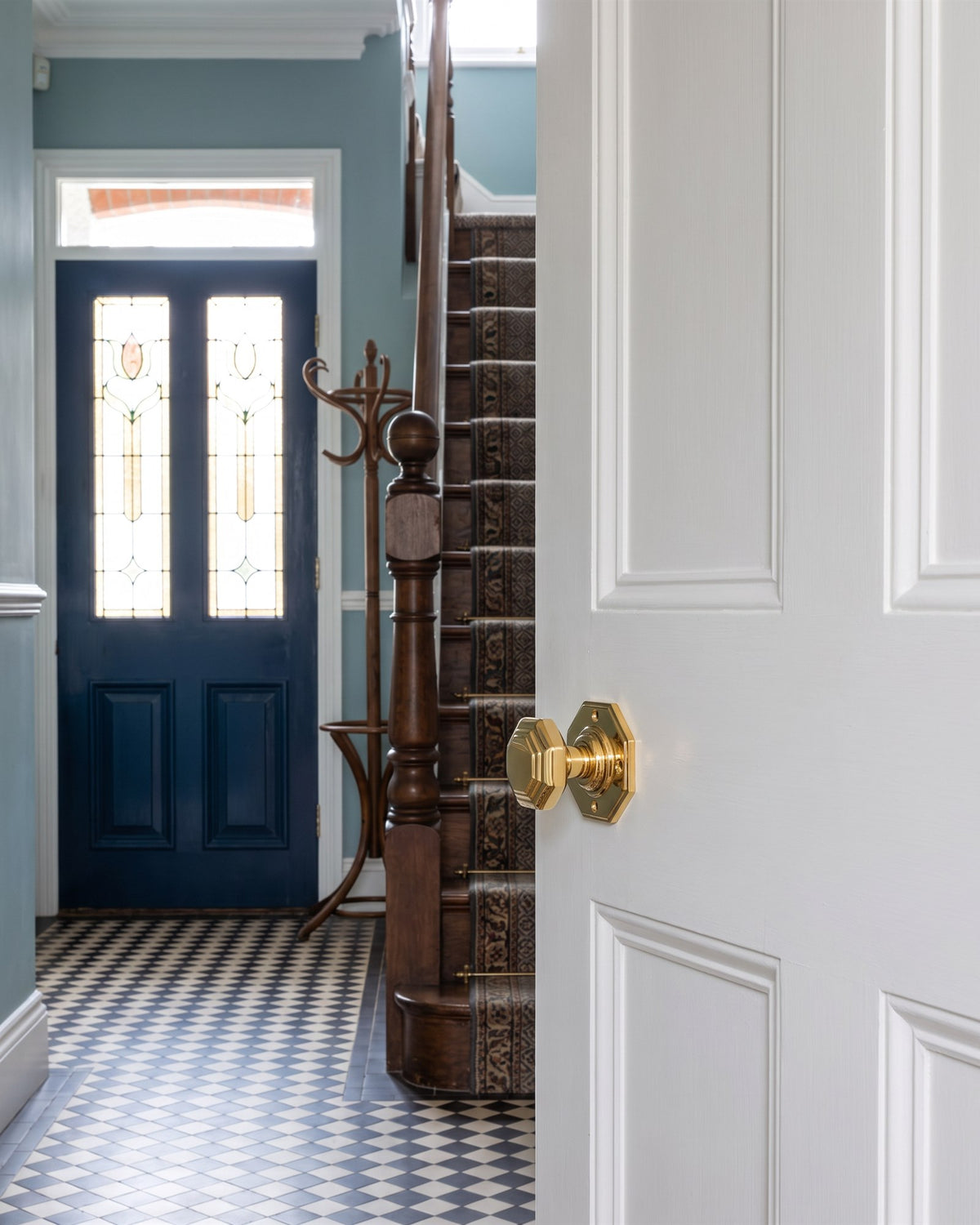
1Polished Brass Octagonal Centre Knob

-
2Polished Brass Profile Doctor Knocker

-
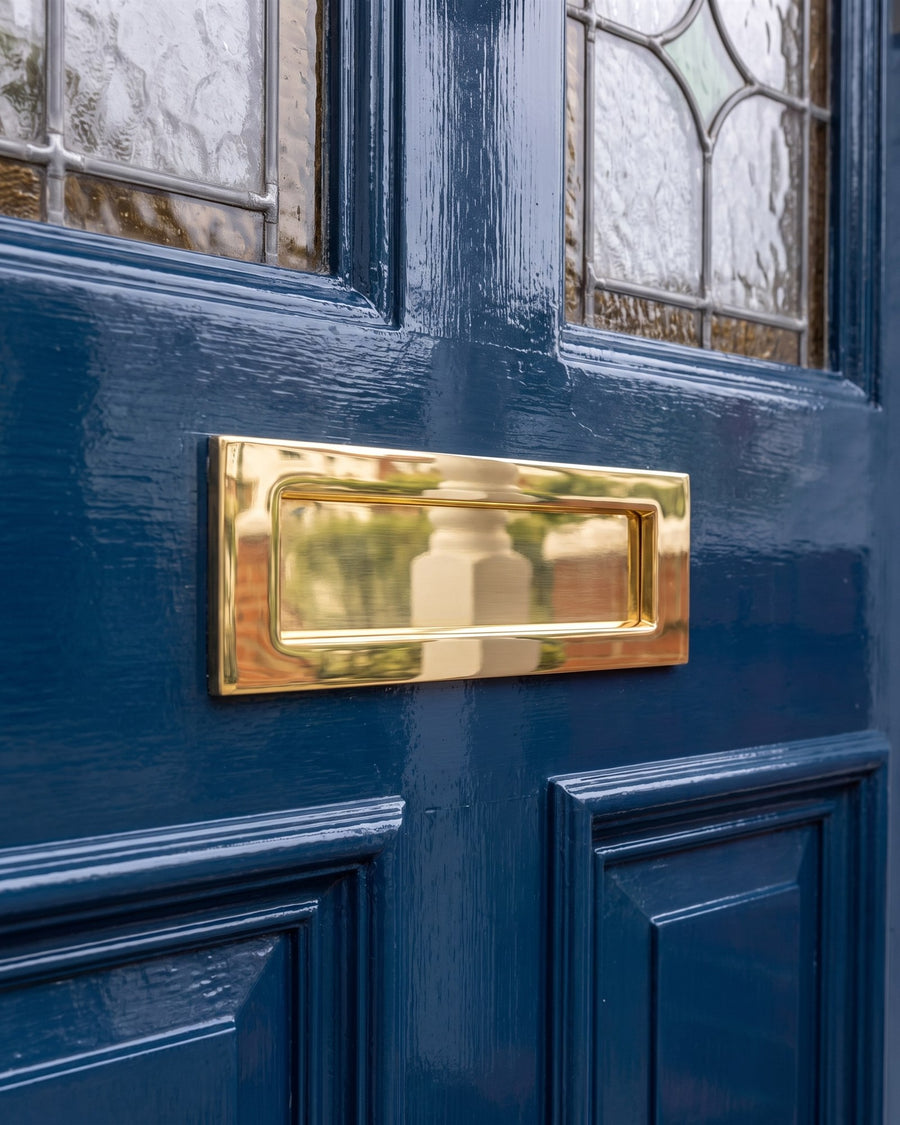
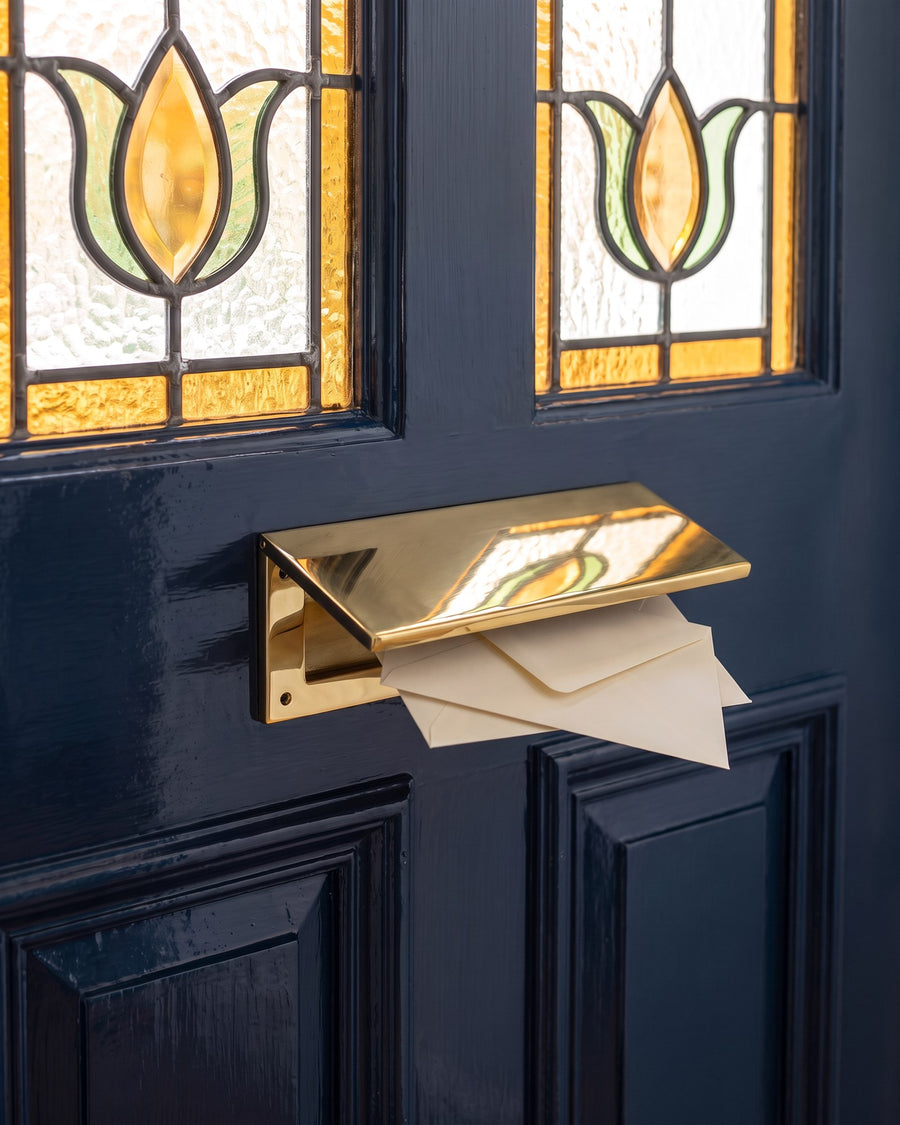
3Polished Brass Victorian Letter Plate 254mm

-
4Polished Brass House Numbers 76mm

-
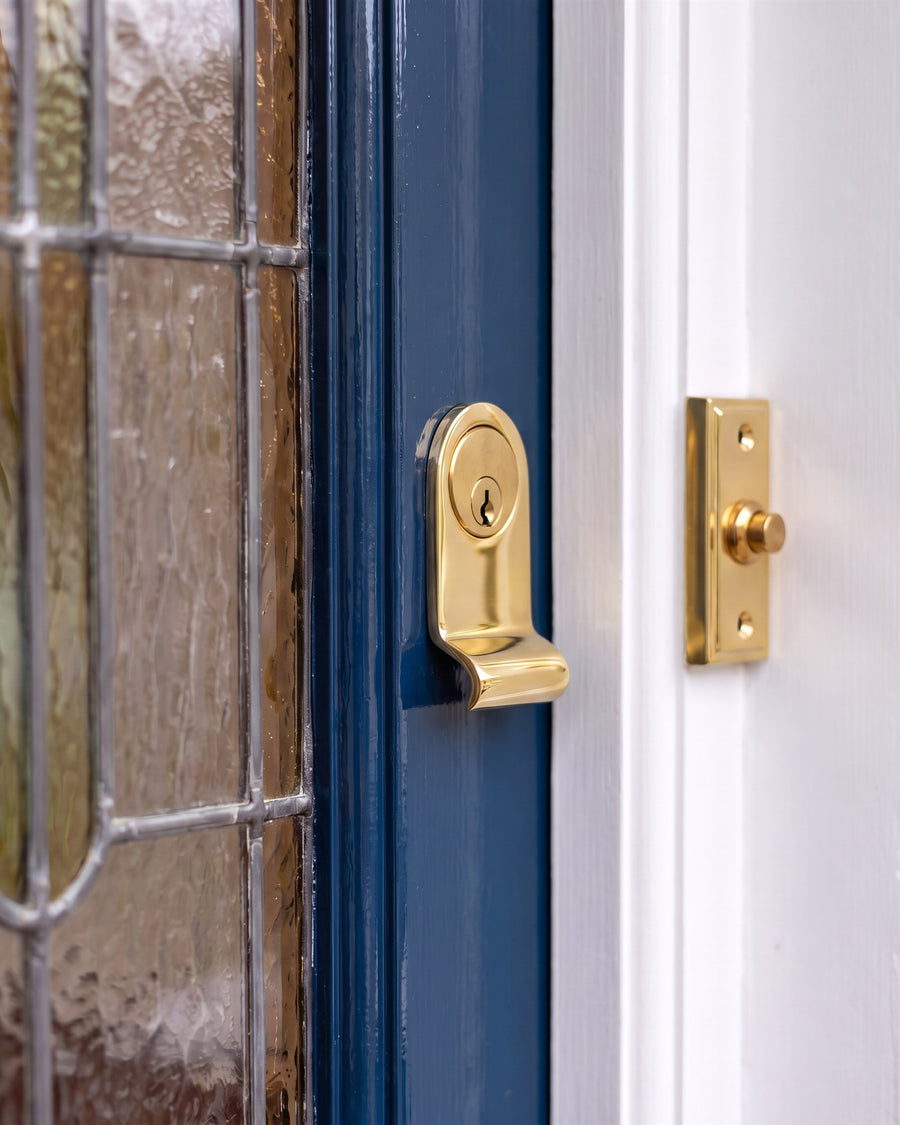
5Polished Brass Radiused Cylinder Pull

-
6Polished Brass Rectangular Bell Push

-
7Polished Brass Tidy with Draught Excluder

-
8Polished Brass Octagonal Door Knobs

More polished brass knockers, knobs and letter plates
-
Polished Brass Lion Knocker

-
Polished Brass Doctor Knocker

-
Polished Brass Urn Knocker

-
Polished Brass Round Centre Knob

-
Polished Brass Stepped Centre Knob

-
Polished Brass Victorian Letter Plate 305mm

-
Polished Brass Sprung Flap Letter Plate

-
Polished Brass Square Cylinder Pull

-
Polished Brass Cylinder Pull

-
Polished Brass Stepped Bell Push

-
Polished Brass Circular Bell Push

-
Polished Brass House Numbers 51mm

-
Polished Brass Tidy 260mm

-
Polished Brass Keyhole Escutcheon

-
Polished Brass Projection Door Stop

-
Polished Brass Butt Hinges 3in

Why polished brass suits an Edwardian door
An era that liked shine
Edwardian builders favoured brighter colours, glazed doors and generous ironmongery, a step away from heavy Victorian browns. High-gloss blue and polished brass catch the light the same way the stained glass does, so the whole door looks lively rather than formal.
Octagonal shapes
The octagonal centre knob has flat facets that flash as you walk past, and its stepped octagonal base suits the wide middle rail of an Edwardian door. Carry the shape inside with octagonal mortice knobs on the hall doors and the house feels designed from the front step in.
Working around stained glass
With glass in the upper panels, the knocker sits on the centre muntin between them, and the knob and letter plate share the middle rail below. Keep fixings clear of the glazing beads and leaded panels, and choose a slim knocker so it doesn't crowd the glass.
Getting the door right
Keeping polished brass bright
Lacquered polished brass only needs a soft dry cloth. Avoid metal polish, which strips the lacquer and leaves the brass to tarnish in patches.
Middle-rail spacing
The 254x100mm letter plate fits the middle rail of most Edwardian doors with room for the knob above it. Check the rail depth first if your door has a narrower rail.
Behind the letter plate
Fit the polished brass tidy with draught excluder on the inside. It covers the cut edges of the opening and its foam strip stops cold air under the flap.
A cylinder pull for the key side
The radiused cylinder pull frames the nightlatch cylinder outside and gives you something to pull on as you turn the key. Fit it on the lock stile at chest height.
