
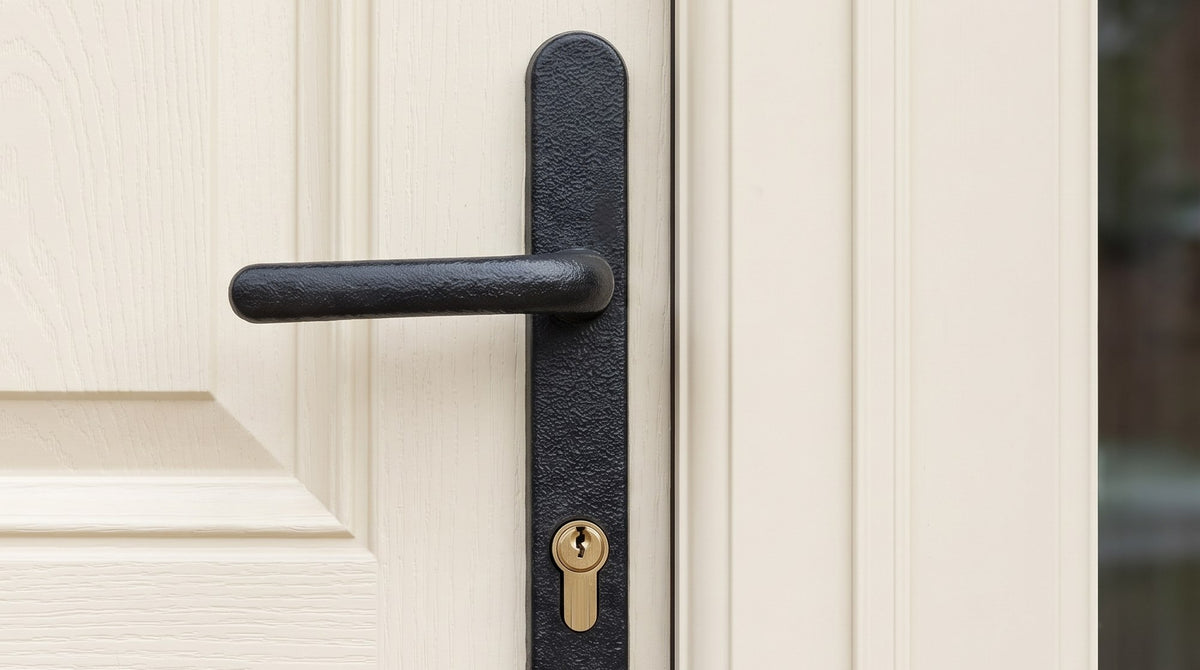
Antique black on a cottage composite door
A cream composite door with the look of forged iron: textured antique black handles, knocker, letter plate and hinge covers made to fit modern doors.
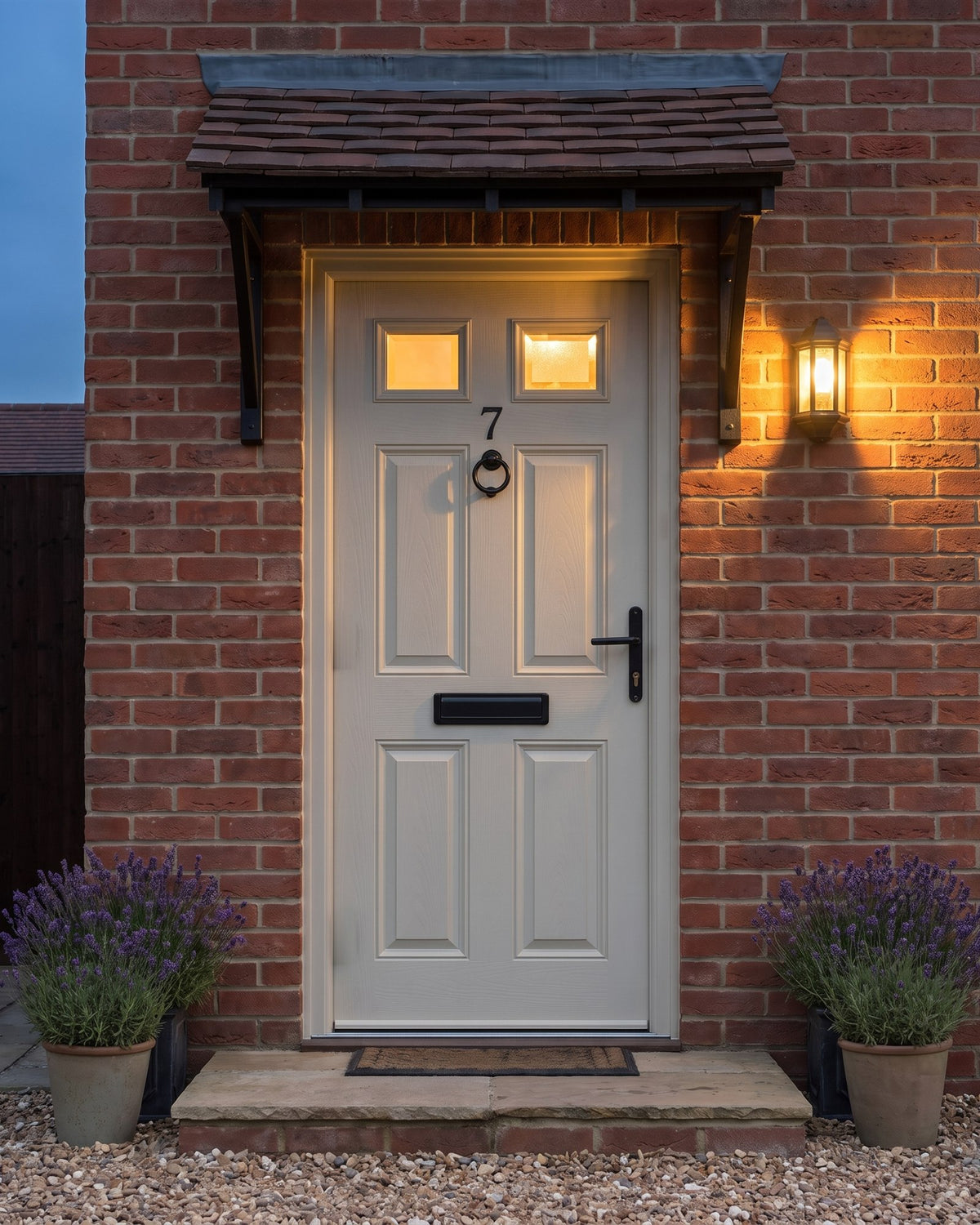
A cottage-style new build in soft red brick, with a cream composite front door, small bevelled glass panes and a tiled canopy on black brackets. Antique black fittings and a black lantern give it a traditional, hand-forged feel, and gravel, lavender and box finish the cottage look.

Antique black for a composite door

-
1Windsor Antique Black uPVC Door Handles

-
2Antique Black uPVC Centre Door Knob 100mm

-
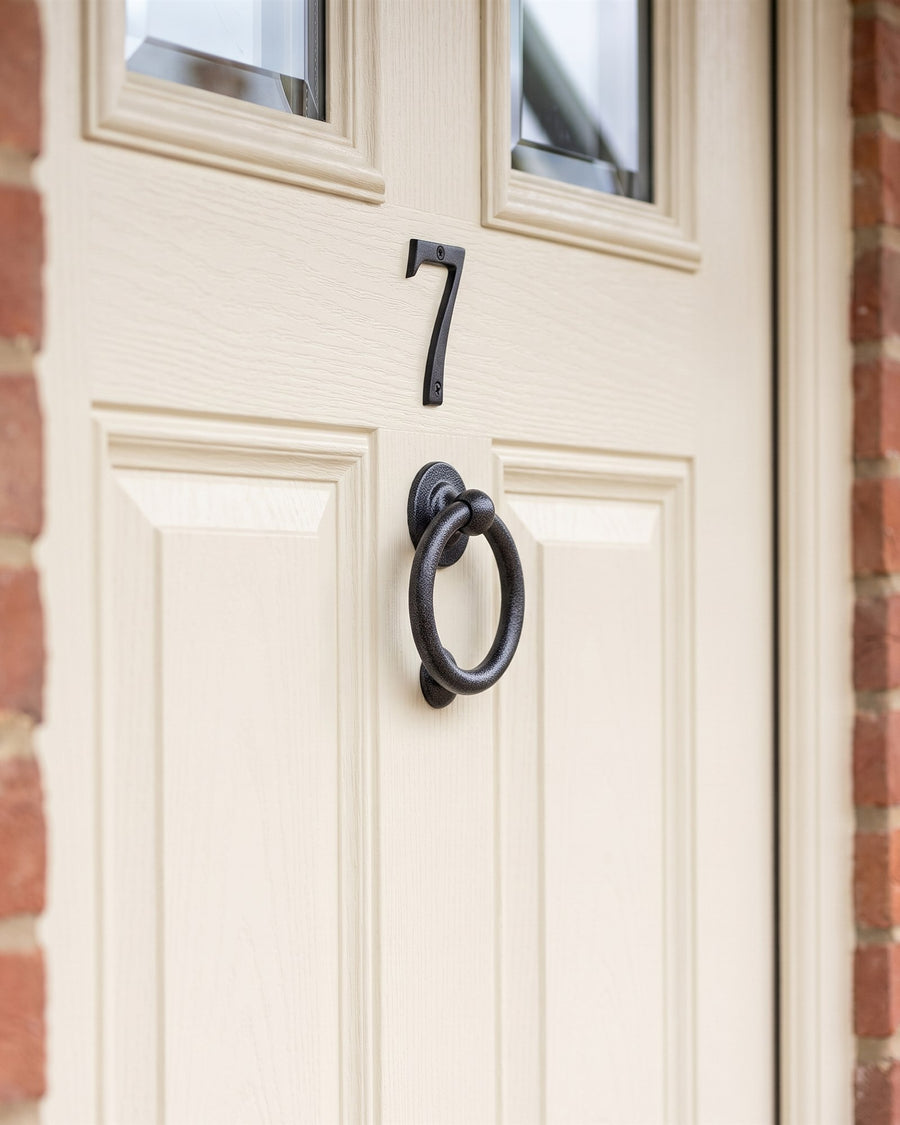
3Antique Black Bull Ring uPVC Knocker

-
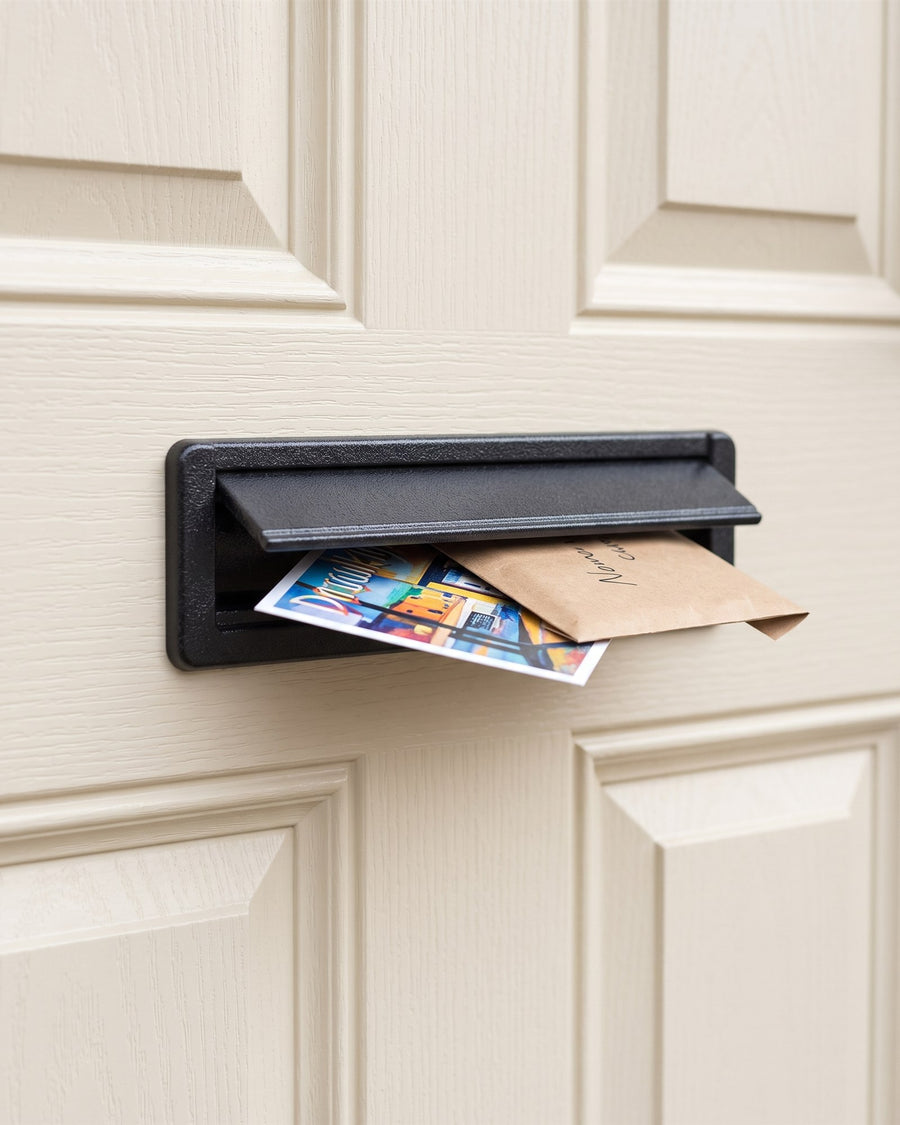
4Antique Black Telescopic Letter Plate

-
5Antique Black uPVC House Numbers 80mm

-
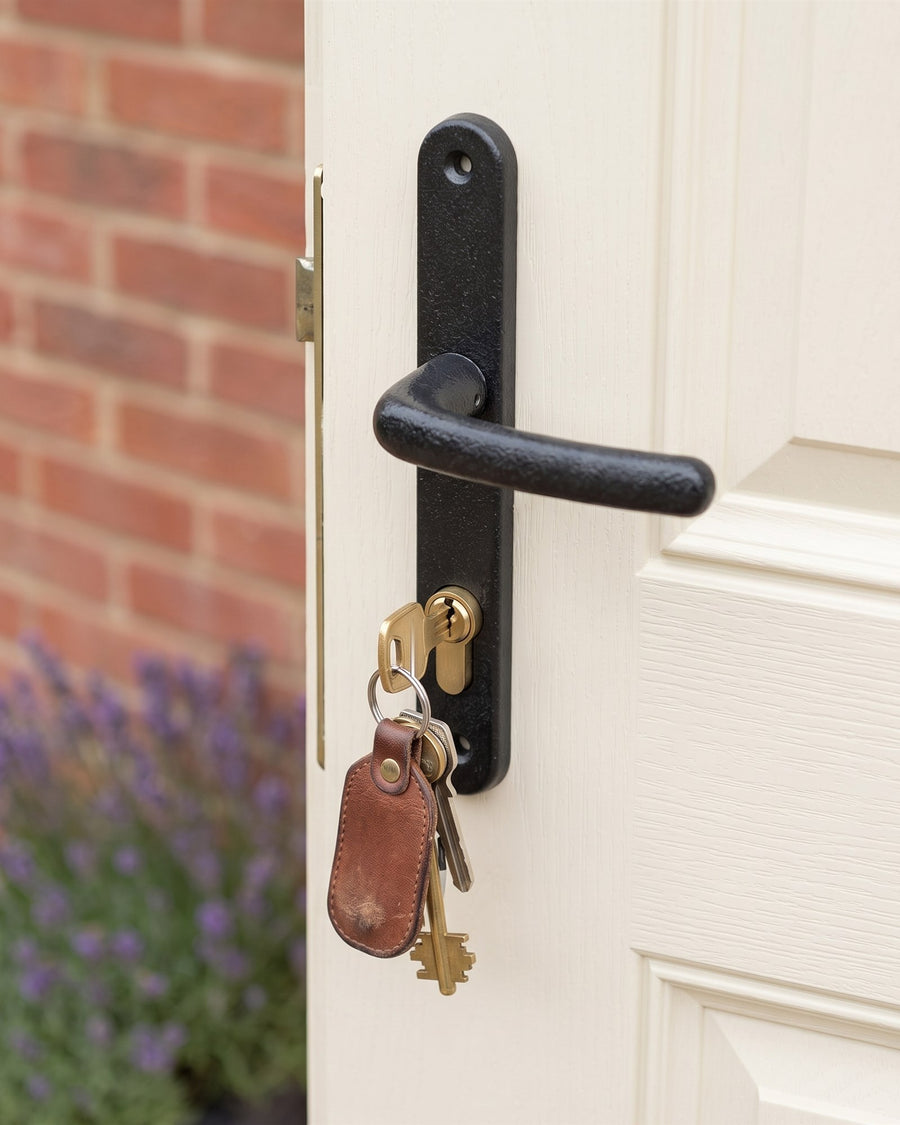
6Antique Black Cylinder Pull and Escutcheon

-
7Antique Black Euro Cylinder Pull Set

-
8Balmoral Antique Black uPVC Door Handles

-
9Antique Black Internal Letter Shield

-
10Heritage Antique Black uPVC Door Handles

More antique black for composite and uPVC doors
-
Berwick Antique Black Security Handles

-
Windsor Antique Black Dummy Handles

-
Balmoral Antique Black Dummy Handles

-
Antique Black Decorative Centre Knob 75mm

-
Antique Black Centre Knob 100mm Through Fix

-
Antique Black Lion Head uPVC Knocker

-
Antique Black Horsetail uPVC Knocker

-
Antique Black Victorian Urn uPVC Knocker

-
Antique Black Architectural uPVC Knocker

-
Antique Black Heritage Telescopic Letter Plate

-
Antique Black Nu Mail Edge Letter Plate

-
Antique Black Nu Mail Shield Letter Plate

-
Antique Black Heritage Internal Shield

-
Antique Black Architectural Letter Plate

-
Antique Black uPVC Euro Escutcheons

-
Antique Black Contemporary uPVC Knocker

Fitting a composite door
Why composite needs its own hardware
Composite and uPVC doors are thicker than most timber doors and use a multipoint locking strip down the edge, so ordinary period hardware rarely fits. Handles are made on a long backplate with set centres between the lever and cylinder, letter plates telescope to suit the door's depth, and knockers and centre knobs come with fixings designed for a hollow or foam-filled door.
Getting the forged look
Antique black has a slightly textured, hammered finish rather than a flat powder coat, which gives a plain composite door the character of old ironwork. Against cream or soft green, it reads as traditional without looking fussy, and it's practical: marks and fingerprints barely show.
The details that finish it
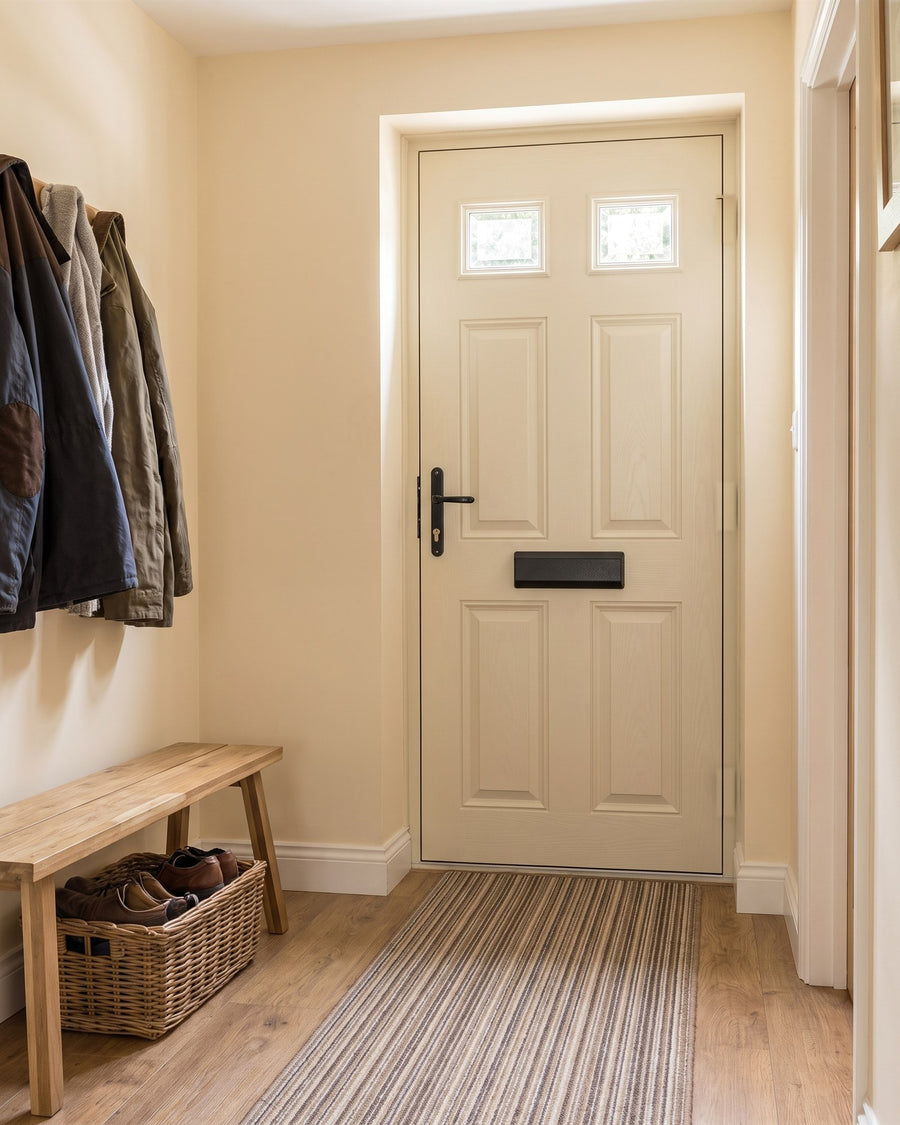
Matching numbers and a knocker in the same antique black pull the look together from the path. On the inside, an internal letter shield covers the back of the letter opening, tidies the cut edges and helps keep draughts out of the hall.
Measure before you order
Check the centres
Measure from the middle of the lever spindle to the middle of the cylinder hole on your existing handle. The Windsor, Balmoral and Heritage handles here are 92mm centres, the most common size.
Door thickness
Telescopic letter plates adjust to fit, but check the range against your door; most composite doors are around 44 to 48mm thick.
Keep the cylinder
If your lock works, you can usually reuse the existing euro cylinder with new handles, as long as the centres match.
Knob or lever
Some composite doors are fitted with a centre knob and a separate cylinder pull instead of a lever; the antique black versions here suit that layout too.
