

A front door ready for winter
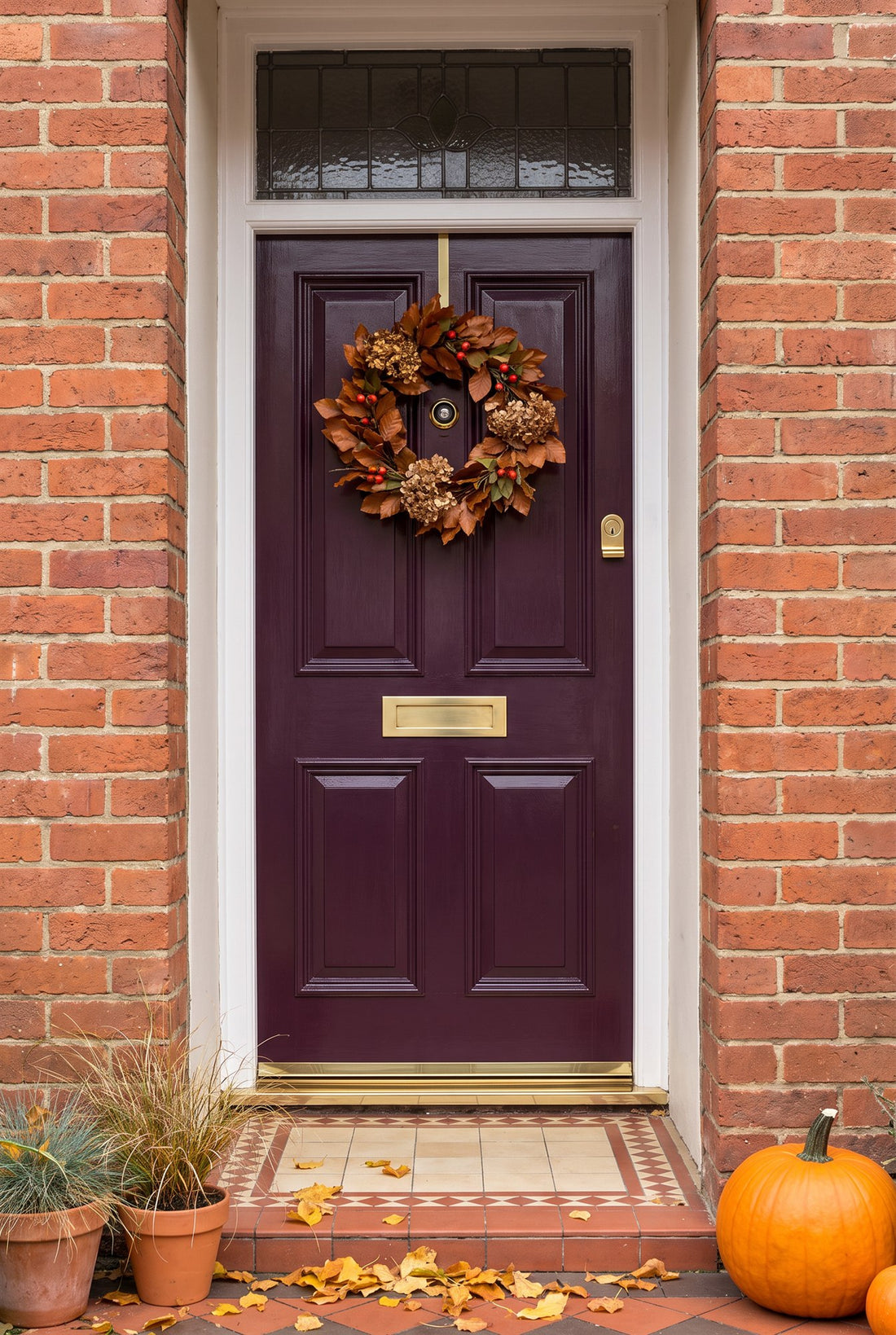
Polished brass that does a job: a threshold strip and rain deflector at the foot of the door, a brush tidy behind the letter plate and a viewer for dark evenings.
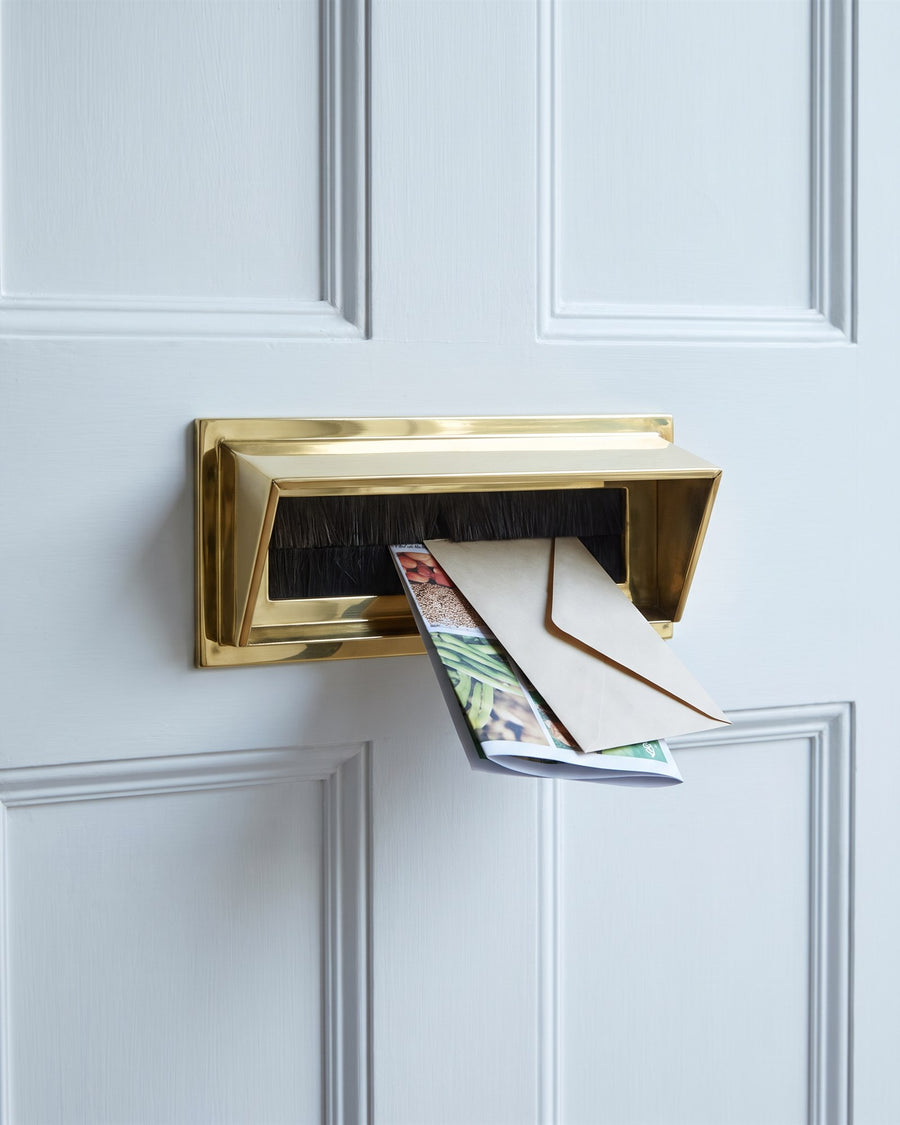
An Edwardian semi in late October, with a leaded fanlight, a tiled porch floor and a deep aubergine door. The polished brass here is practical as well as handsome. A threshold strip protects the step and gives the door something to close against, a gold rain deflector throws water clear of the gap underneath, and a viewer lets you see who is calling once it is dark at five. Inside, a tidy with a brush strip seals the letter opening against the wind.
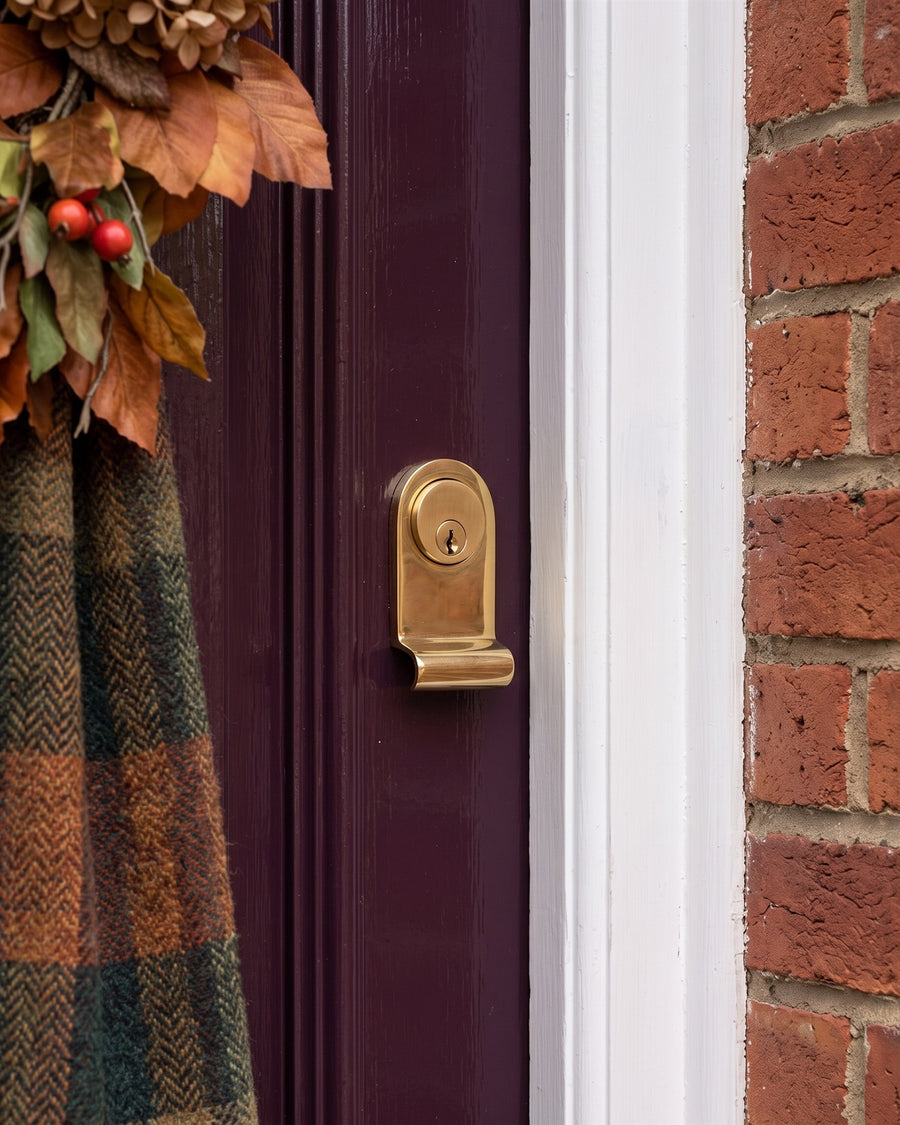
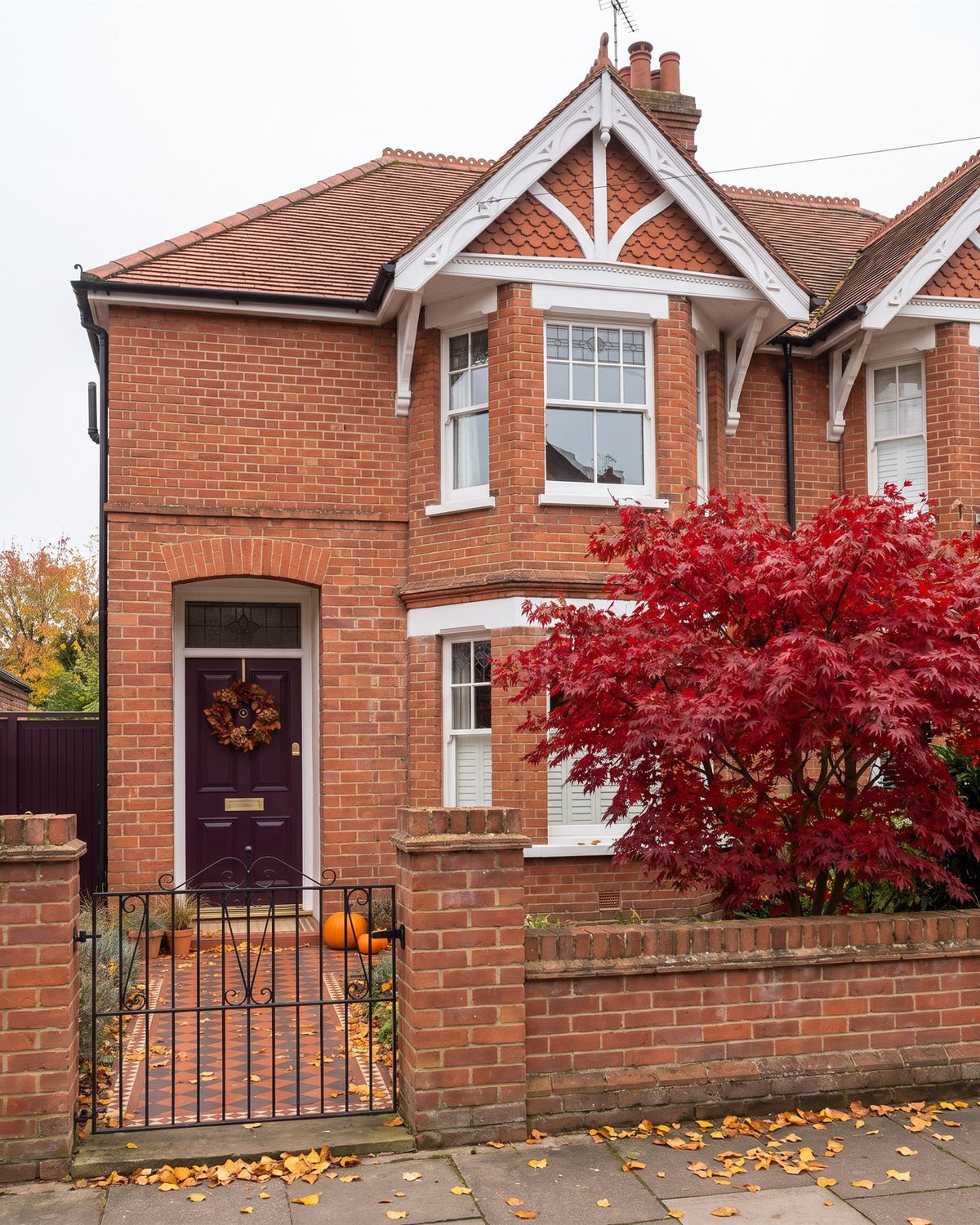


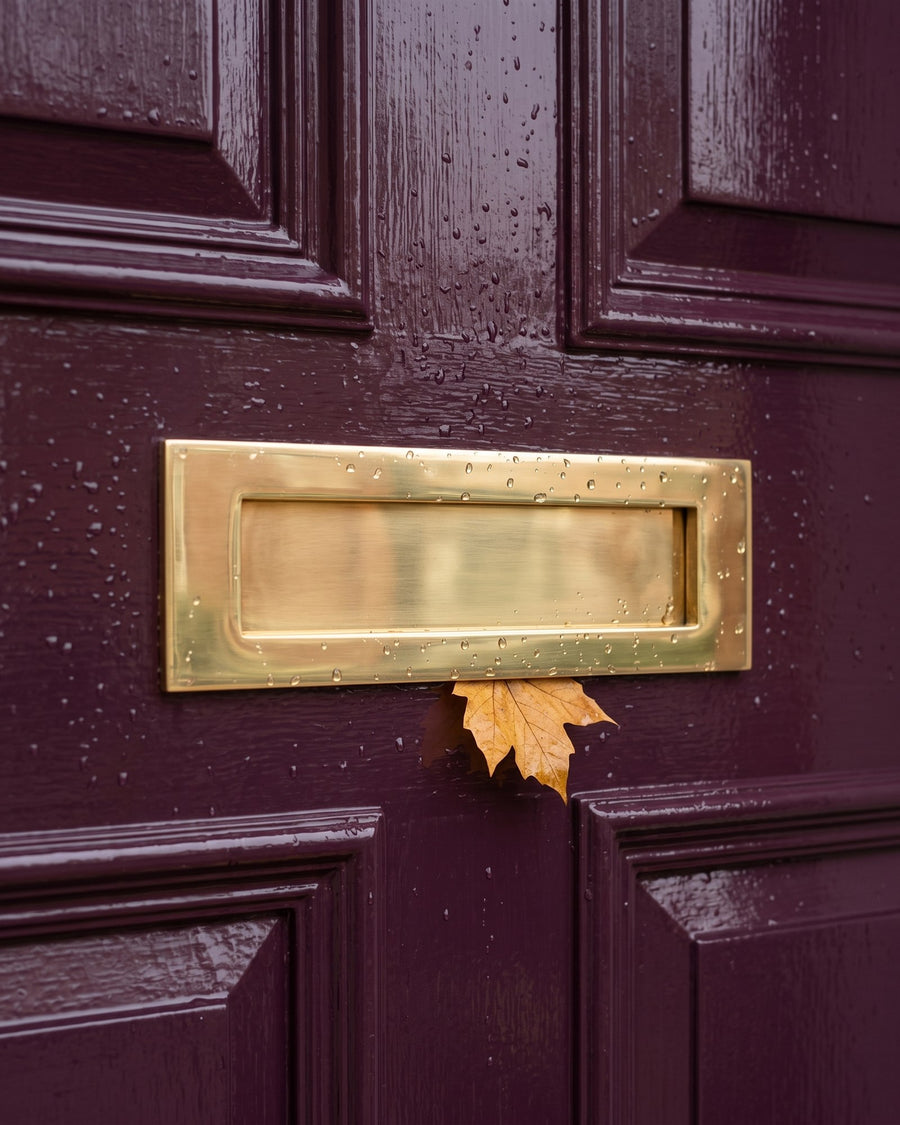
Polished brass to keep winter out


More thresholds, viewers and draught-proof tidies
-
Satin Stainless Threshold Strip 100mm

-
Satin Stainless Threshold Strip 75mm

-
Polished Brass Threshold Strip, 2 Bevels

-
Brass Bull Nose Threshold Plate

-
Gold Brush Threshold 914mm

-
Gold Lowline Threshold Sill

-
Aluminium Rain Deflector 914mm

-
Satin Stainless Crystal Lens Viewer

-
Chrome Door Viewer 160°

-
Black Door Viewer

-
Polished Brass Tidy with Draught Excluder 260mm

-
Polished Brass Interior Tidy 280mm

-
Polished Brass Sprung Flap Letter Plate

-
Polished Brass Urn Knocker

-
Polished Brass Doctor Knocker

Small fittings that keep the weather out
Start at the bottom
Most of the cold air and rain that gets past a front door comes in underneath it. A rain deflector on the outside of the bottom rail throws water forward, away from the gap, while a threshold strip covers the joint between the step and the hall floor and protects the edge of the tiles from wear. Together they make the foot of the door far tighter.
Then the letter box
A letter plate is a hole through the door, and in a wind the flap rattles and lets the draught straight into the hall. A tidy with a brush draught excluder fixes behind the letter plate: the bristles close the opening when the flap is shut and still let post through.
And a viewer for dark evenings
From late October it is dark before many people get home. A 160-degree door viewer lets you see who is at the door without opening it. In polished brass it sits neatly with the rest of the furniture and suits doors 35 to 55mm thick.
Fitting notes
Choose the threshold width
Measure the depth of the step or the gap between floor finishes. The single-bevel strip comes in several widths: fit it with the bevelled edge facing out so nothing catches a foot, and the square edge against the door frame.
Cut the deflector to fit
Rain deflectors are supplied long and cut to the width of the door. Fix it to the outside of the bottom rail and check the door still clears the threshold when it opens.
Size the tidy to the letter plate
The 310mm tidy covers the opening behind a standard 250mm letter plate with room to spare. Fix it centred over the cut-out on the inside face of the door.
Viewer height
Drill the viewer hole on the door's centre line at the eye height of whoever answers the door most often, usually 1500 to 1600mm from the floor.
