
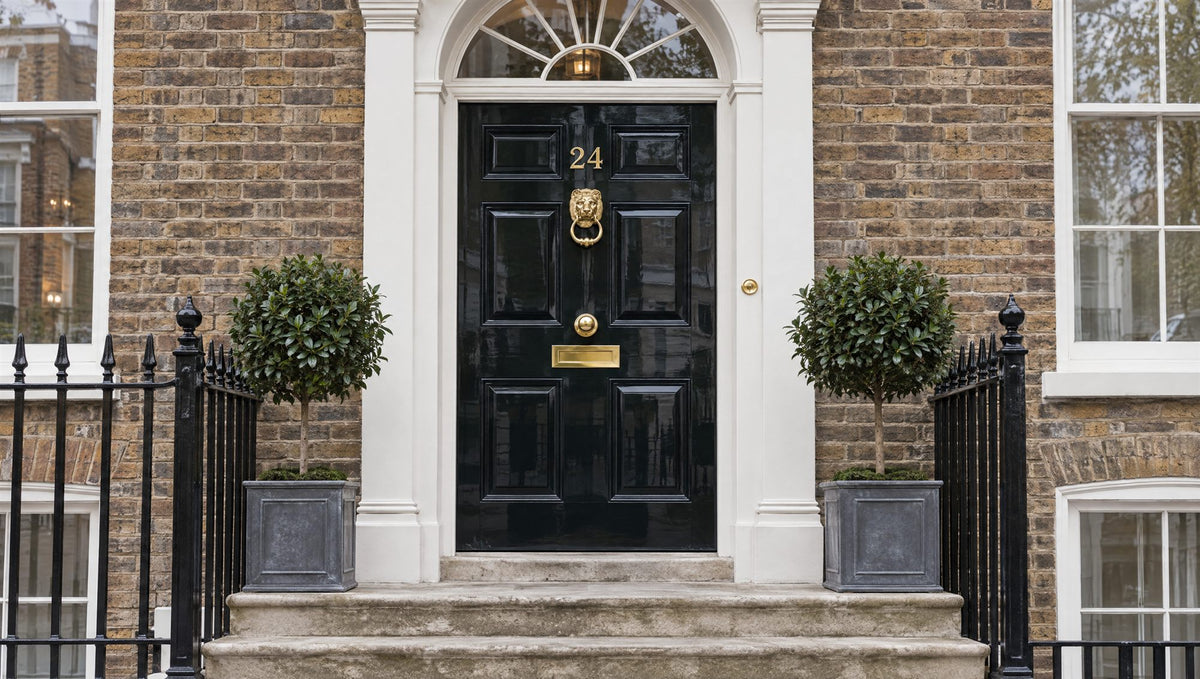
The Georgian front door: gloss black & polished brass
A six-panel door, a fanlight and gleaming brass. The look of Britain's finest townhouses.
Near-black gloss against white stucco and warm stock brick, with polished brass on the door's centre line: numbers, lion knocker, centre knob and letter plate. Inside, an off-white door over a black and white marble hall.

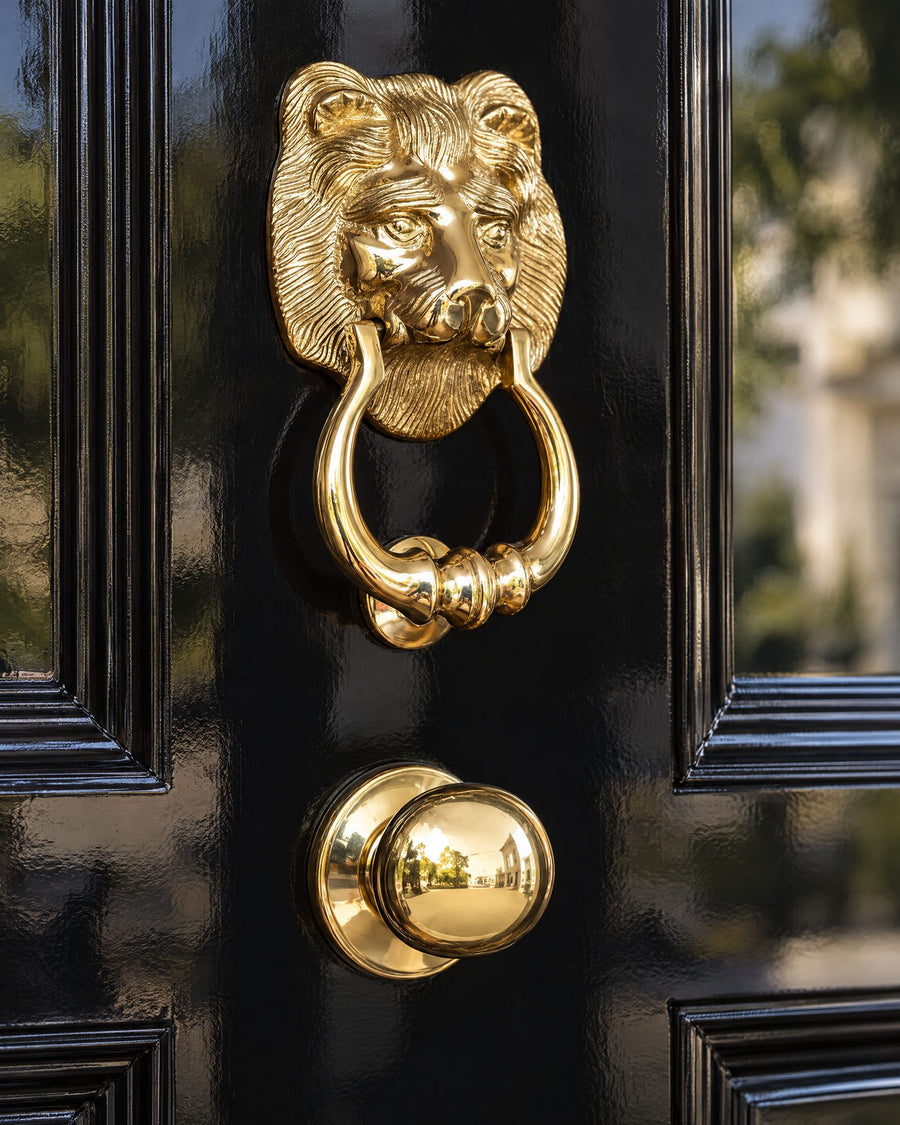
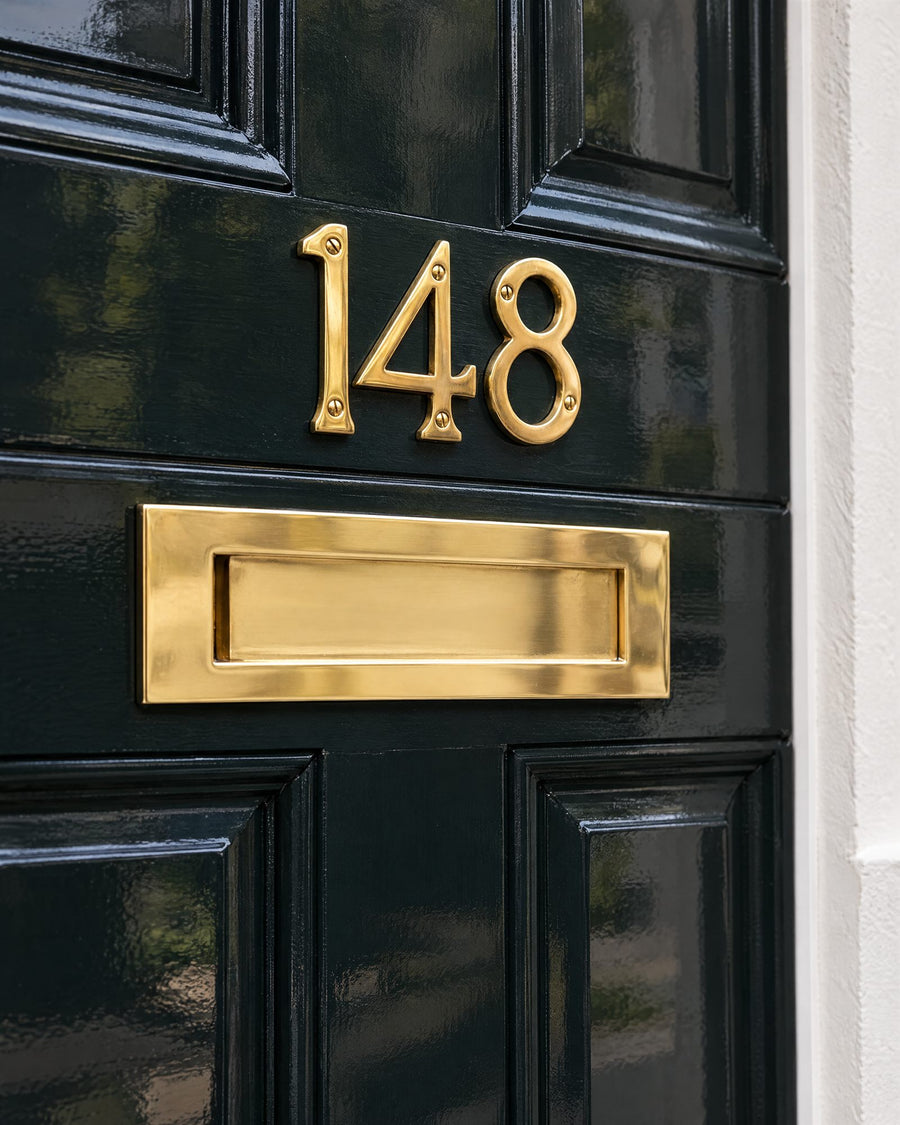
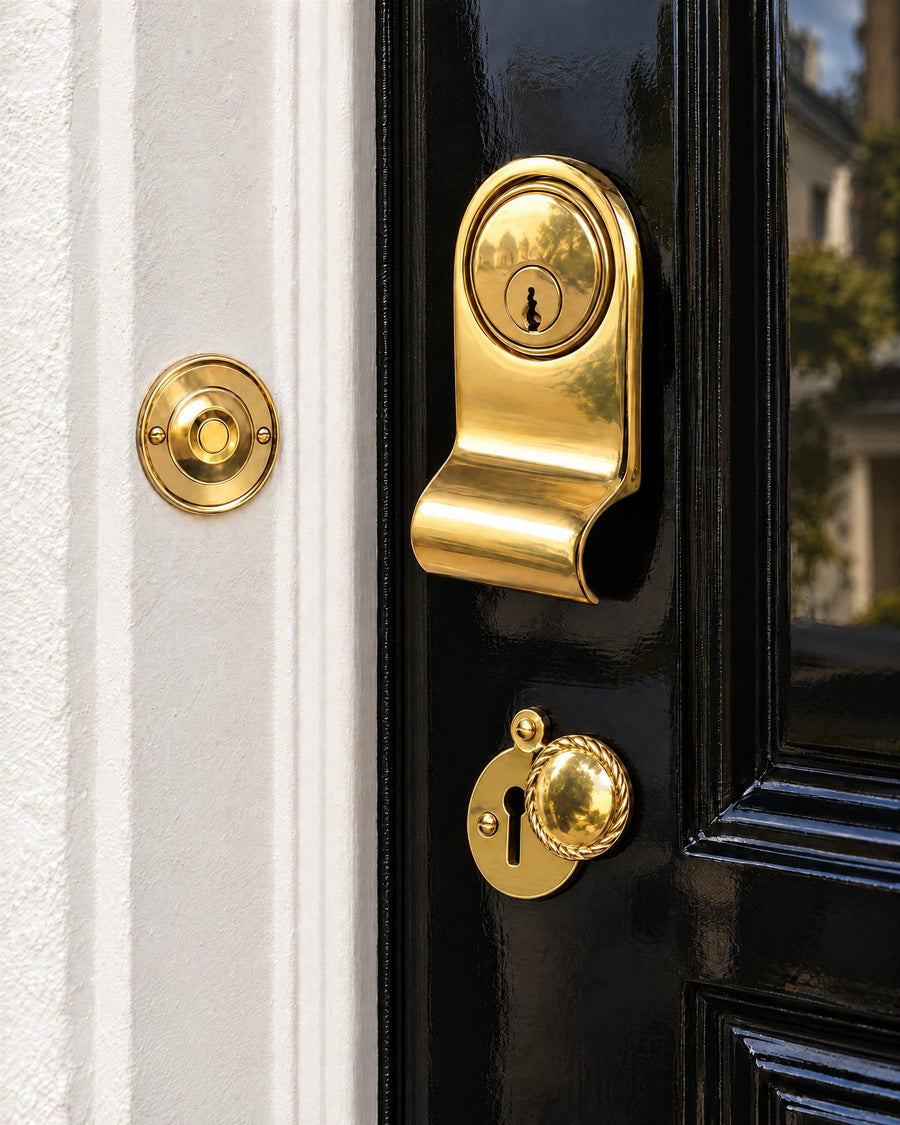
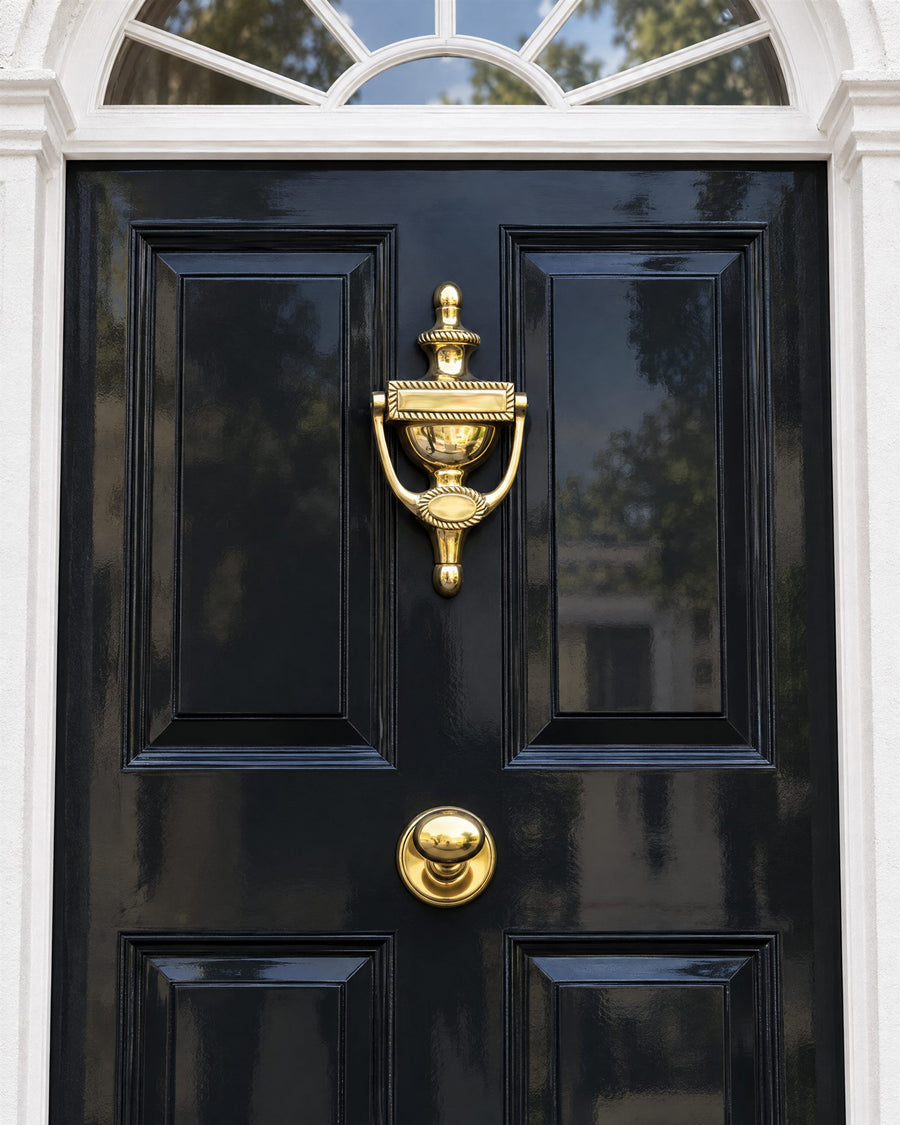

Every piece on this door

-
1Polished Brass Lion Front Door Knocker 7in (180mm)

-
2Polished Brass Round Centre Door Knob 78mm (3in)

-
3Polished Brass Letter Plate 252x76mm

-
4Polished Brass Interior Letter Tidy 299x83mm

-
5Polished Brass Front Door Numbers 3in (76mm)

-
6Polished Brass Circular Bell Push 64mm

-
7Polished Brass Cylinder Pull

-
8Polished Brass Georgian Covered Escutcheon 32mm

-
9Polished Brass Round Euro Profile Escutcheon 53mm

More polished brass that matches
-
Georgian Urn Knocker Polished Brass 165mm SB4105PB

-
Polished Brass Doctor Front Door Knocker 7.5in (193mm)

-
Polished Brass Urn Front Door Knocker 8in (195mm)

-
Polished Brass Bow Door Knocker 135x42mm

-
Polished Brass Octagonal Style Centre Door Knob 67mm

-
Heritage RR906 Polished Brass 76mm Reeded Centre Door Knob

-
Polished Brass Victorian Plain Letter Box 10x4in (254x100mm)

-
Polished Brass Lift Up Gravity Flap Letter Box 11x3in (280x78mm)

-
Heritage V830 Polished Brass Postal Knocker Letterplate 254x79mm

-
Polished Brass Stepped Bell Push 76x32mm

-
Polished Brass Internal Tidy with Draught Excluder 260x88mm

-
PVD None Tarnish Brass Centre Door Knob 80mm

-
PVD None Tarnish Brass Urn Door Knocker 196mm

-
Georgian Polished Brass Mortice Door Knobs SB2119PB

-
Fab and Fix Balmoral Hardex Gold uPVC Door Handles 92mm Centres

-
Fab and Fix uPVC Centre Door Knob 100mm Hardex Gold Concealed Fix

The story behind the Georgian front door
Where it comes from
Georgian builders borrowed the order and symmetry of classical Greek and Roman buildings, via the Palladian style. Front doors were solid six-panel timber, topped with a fanlight to bring daylight into the hall, and painted in dark, hard-wearing colours finished in gloss.
Why brass?
Brass was the metal of the age. Lion-head knockers became fashionable in the late Georgian and Regency years, and a fixed centre knob was used to pull the door shut. Letter plates came later: they only appeared after the Penny Post of 1840, so they sit quietly on the middle rail.
Why it still works
Nearly three centuries on, this is still the door most people picture when they think of a London townhouse. Near-black shades like Farrow & Ball Railings stay enduringly popular because they suit brick, stucco and stone, and polished brass gives a crisp contrast that never dates.
Getting it right
Keep to the centre line
Numbers, knocker, knob and letter plate all sit on the door's vertical centre line. Symmetry is what makes it Georgian.
Finish in full gloss
Georgian doors were glossed to protect the timber. A deep gloss also reflects the brass, which is a big part of the look.
Polished or unlacquered?
Polished brass is lacquered, so it stays bright with a wipe. For brass that darkens and develops a patina, choose unlacquered.
Listed or conservation area?
Period frontages often need a solid timber door. Brass furniture like this is in keeping, but check with your planning team before replacing the door.
