
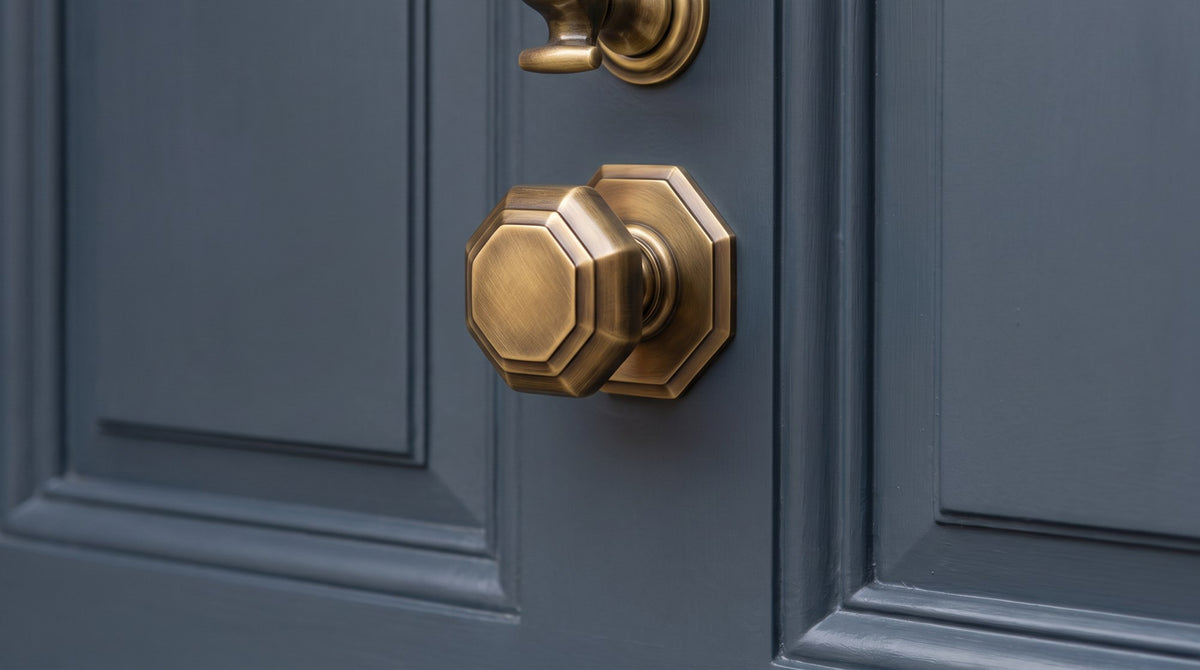
Antique brass on a lead-grey Victorian door
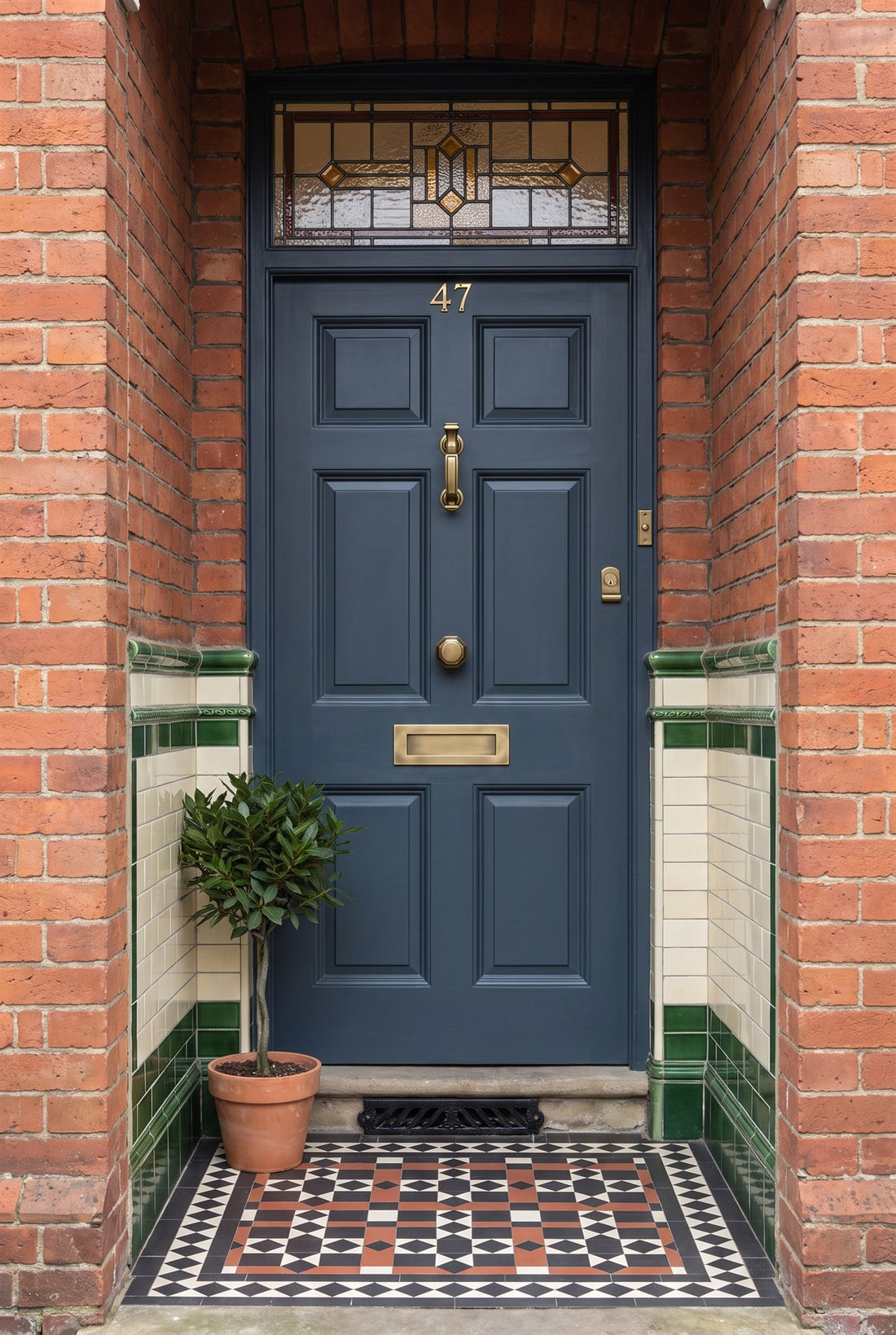
An octagonal knob, a doctor knocker and a wide letter plate in warm aged brass, set in an original tiled porch on a red-brick terrace.
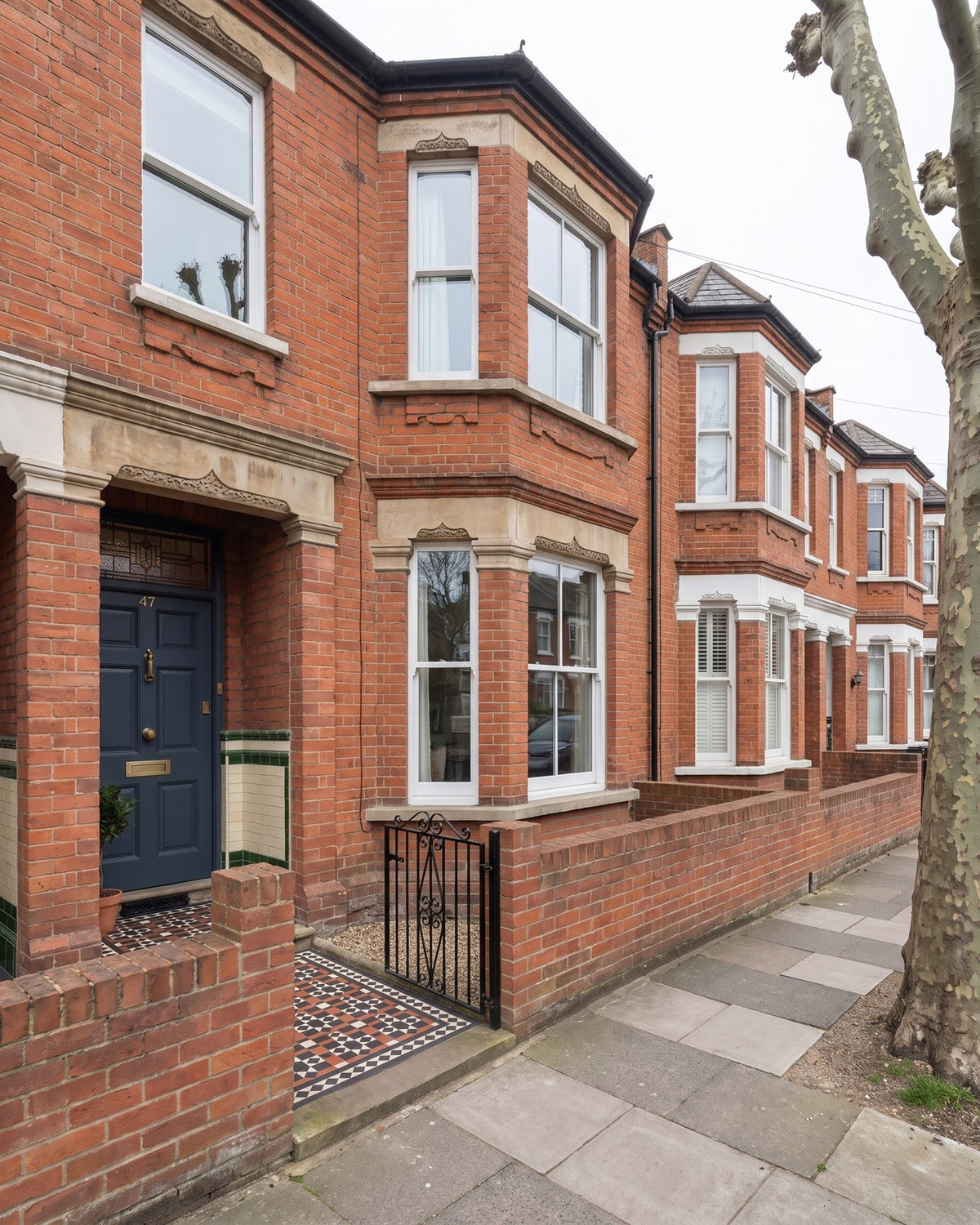
A late-Victorian bay-fronted terrace in red brick, with the front door set back in a porch lined with cream and bottle-green glazed tiles above an encaustic path. The door is painted a lead grey with a cool blue undertone, close to Farrow & Ball's Down Pipe. It's dark enough to make aged brass glow, but softer than black against the warm brick. Every fitting is antique brass, a darkened, brushed finish that already looks decades old rather than freshly polished.
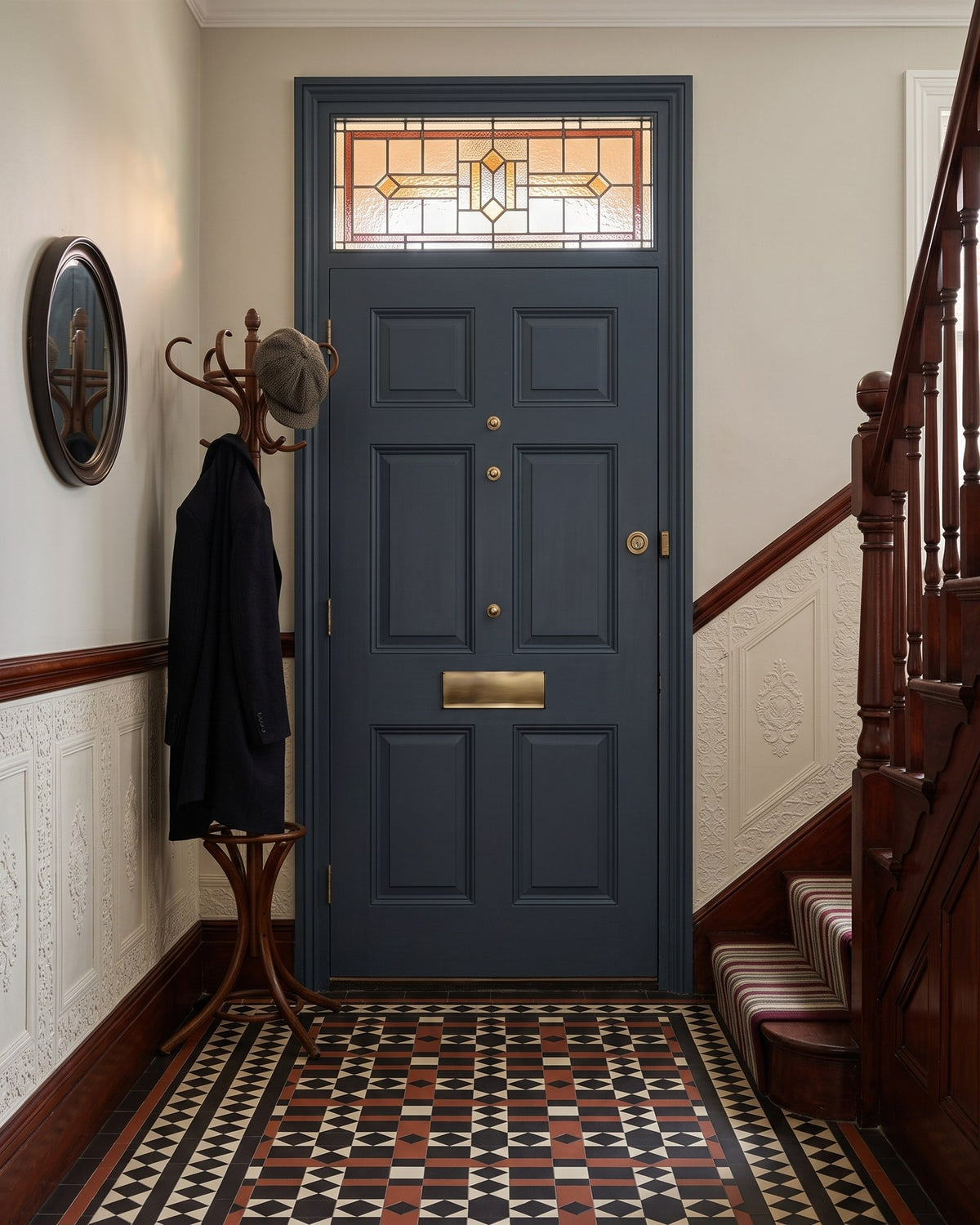
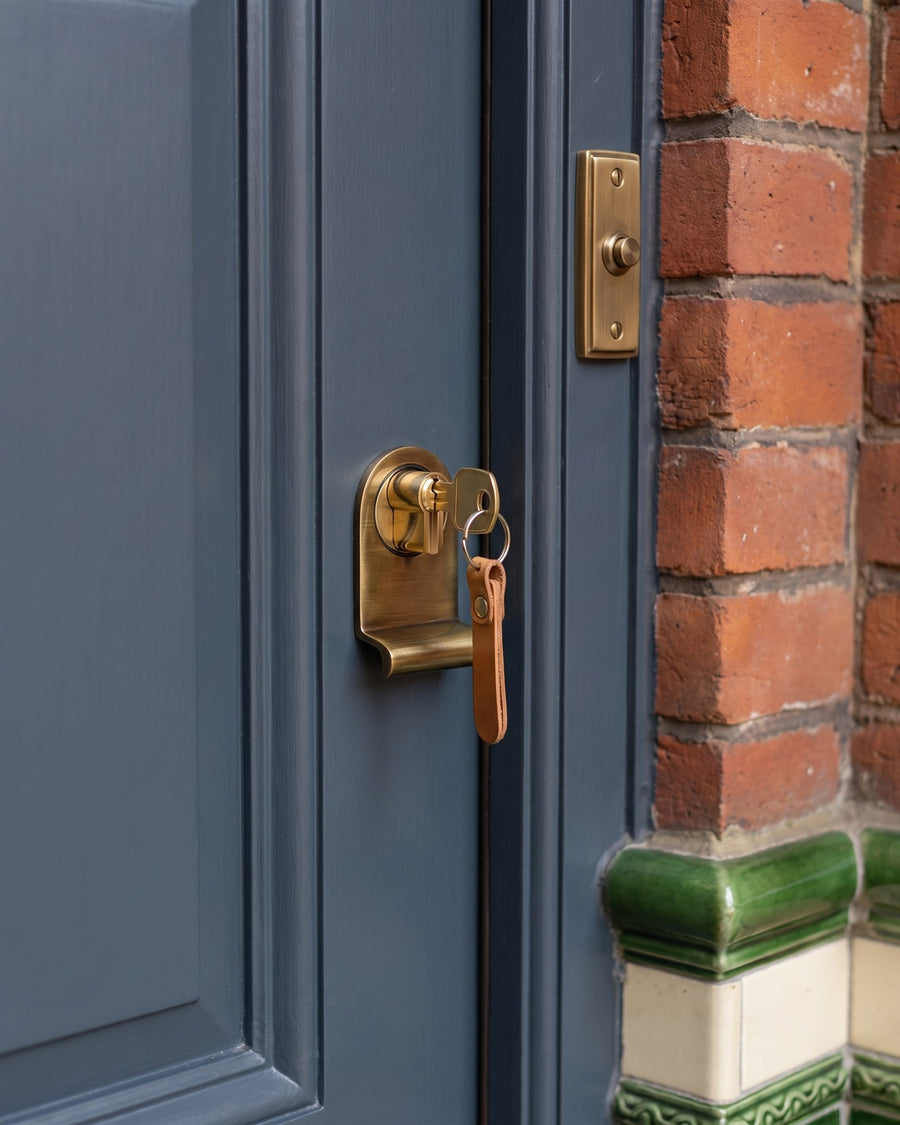
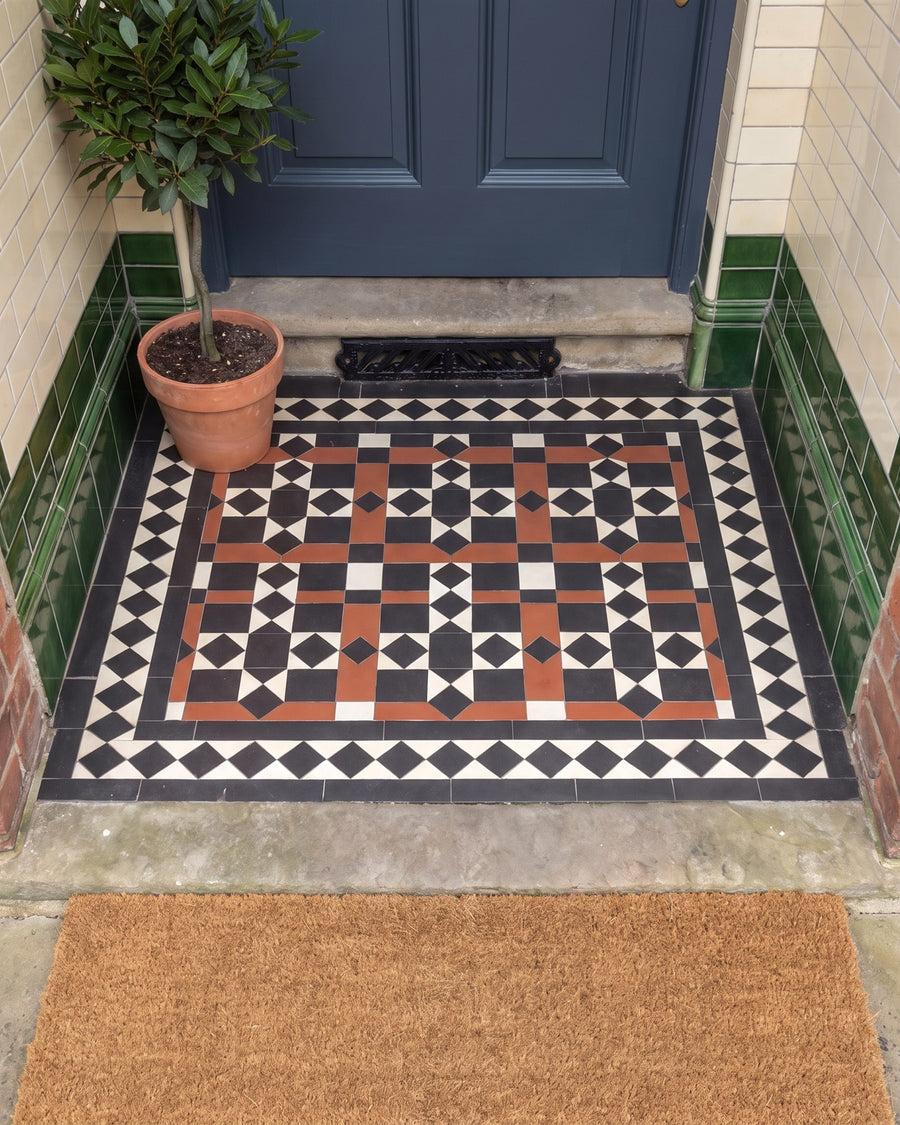
Antique brass for a grey Victorian door


Other antique brass knobs, knockers and letter plates
-
Antique Brass Faceted Centre Knob

-
Antique Brass Round Centre Knob

-
Antique Brass Urn Knocker 195mm

-
Antique Brass Urn Knocker 152mm

-
Antique Brass Ring Knocker

-
Antique Brass Lion Knocker

-
Antique Brass Postal Knocker

-
Antique Brass Letter Plate 254x102mm

-
Antique Brass Letter Plate 254x79mm

-
Antique Brass Letter Plate 331mm

-
Antique Brass Circular Bell Push

-
Antique Brass Victorian Bell Push

-
Antique Brass Square Bell Push

-
Antique Brass House Numbers 51mm

-
Antique Brass Tidy with Draught Excluder

-
Antique Brass Interior Flap 280mm

Why antique brass suits a grey door
A cooler door, a warmer metal
Mid and dark greys have been a favourite on period doors for over a decade because they flatter red brick without fighting it. Bright polished brass can look brash against grey; antique brass is darker and more muted, so it reads as part of the house rather than something new screwed onto it.
Why an octagonal knob
A centre knob is what you pull a heavy Victorian door closed with, so it needs some size. This one sits on a 76mm octagonal base, which suits a full-height four-panel door. The flat facets also catch the light differently as the day moves round, something a round knob can't do.
The porch does half the work
Original glazed porch tiles and an encaustic path are worth keeping, or reinstating with reproduction tiles. Their cream, green and terracotta all sit happily beside aged brass, which is why this combination looks so settled. Repainting the door is the cheapest way to refresh the whole entrance.
Getting the proportions right
Measure the middle rail
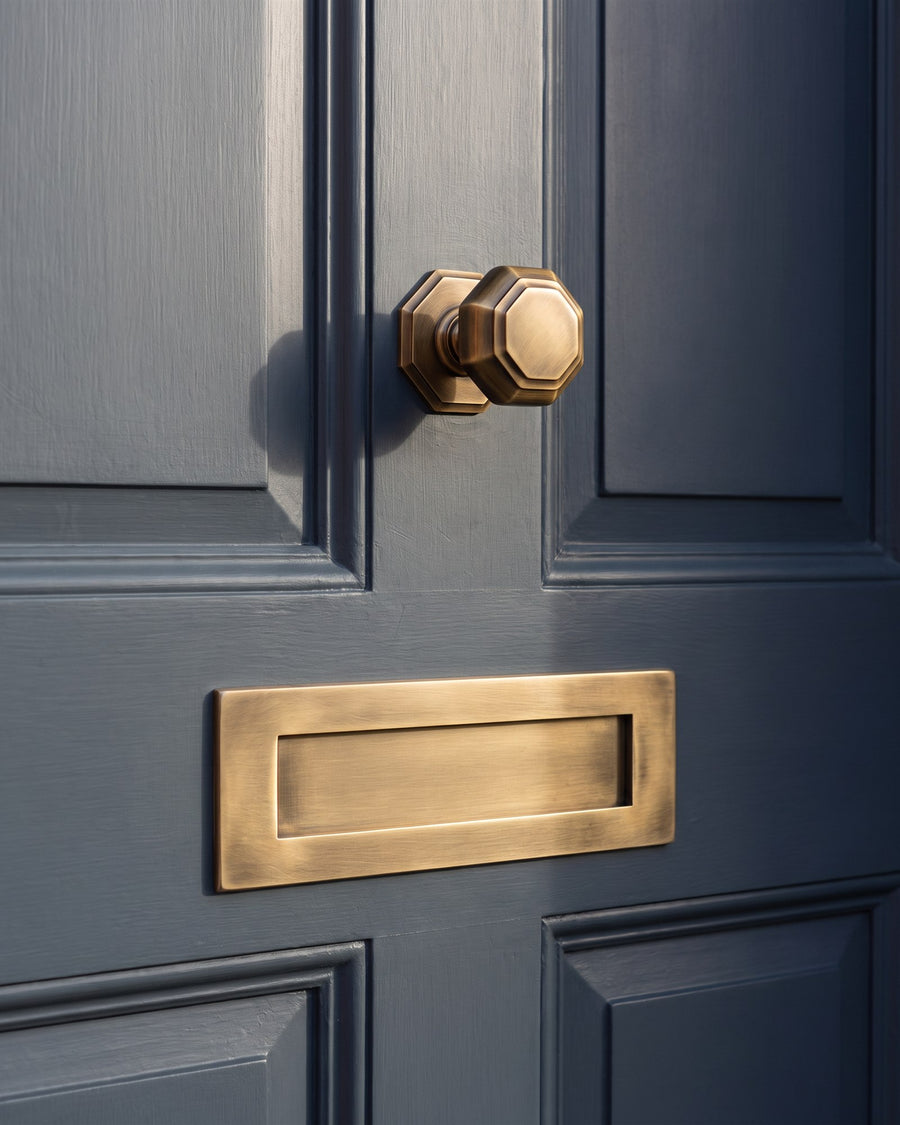
The 305x102mm letter plate suits the deep middle rail of a Victorian door. If yours is slimmer, the 254x79mm plate in the same finish keeps a sensible margin above and below.
Knocker above the knob
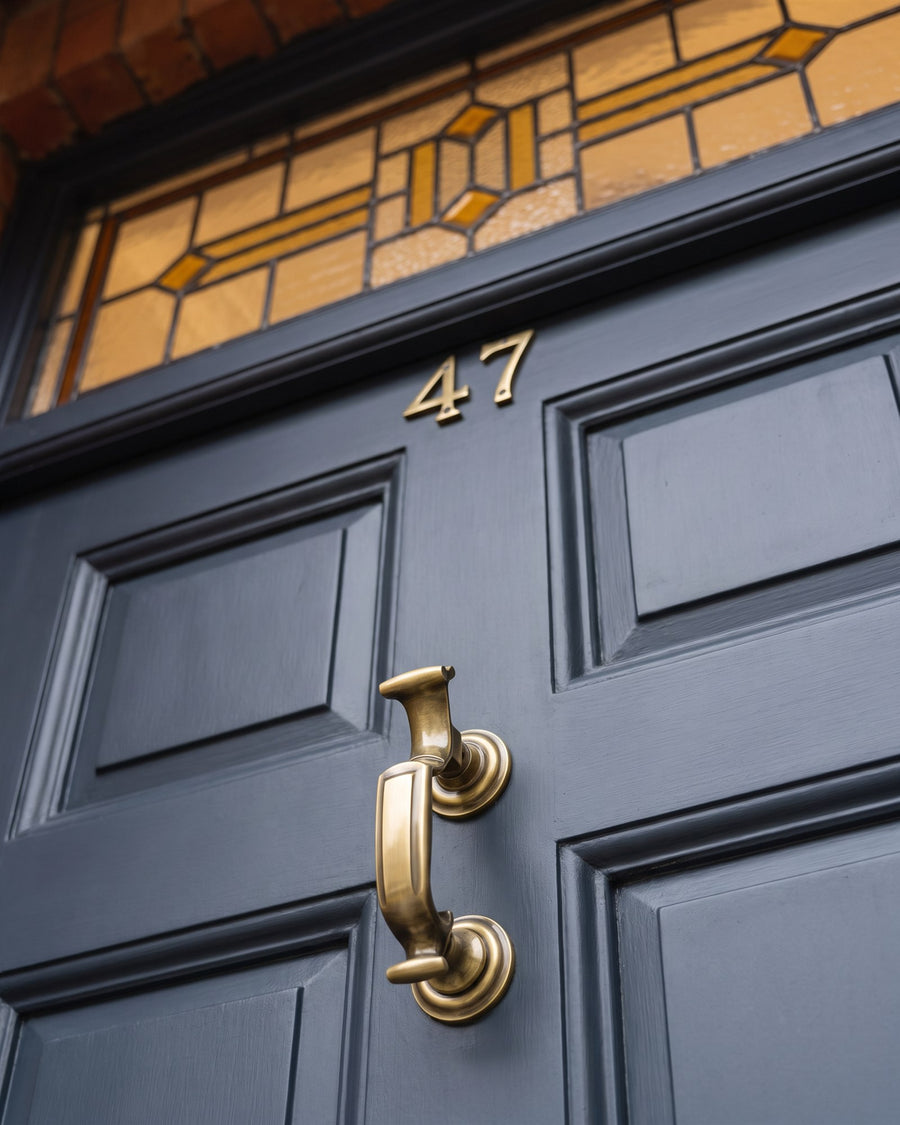
Fix the doctor knocker on the door's centre line with its striking point at about shoulder height. Set too low, it starts to look like a second handle; too high and it's awkward to use.
Cover the cut-out inside
Choose the interior flap closest in width to the outside plate so the cut-out is fully hidden from the hall. The 299mm flap pairs with the 305mm plate shown here.
Numbers on timber, not glass
With a stained-glass fanlight above the door, screw-fixed numerals on the top rail are easier to read than painted numbers on the glass, and they won't lift the way stick-on ones can.
