
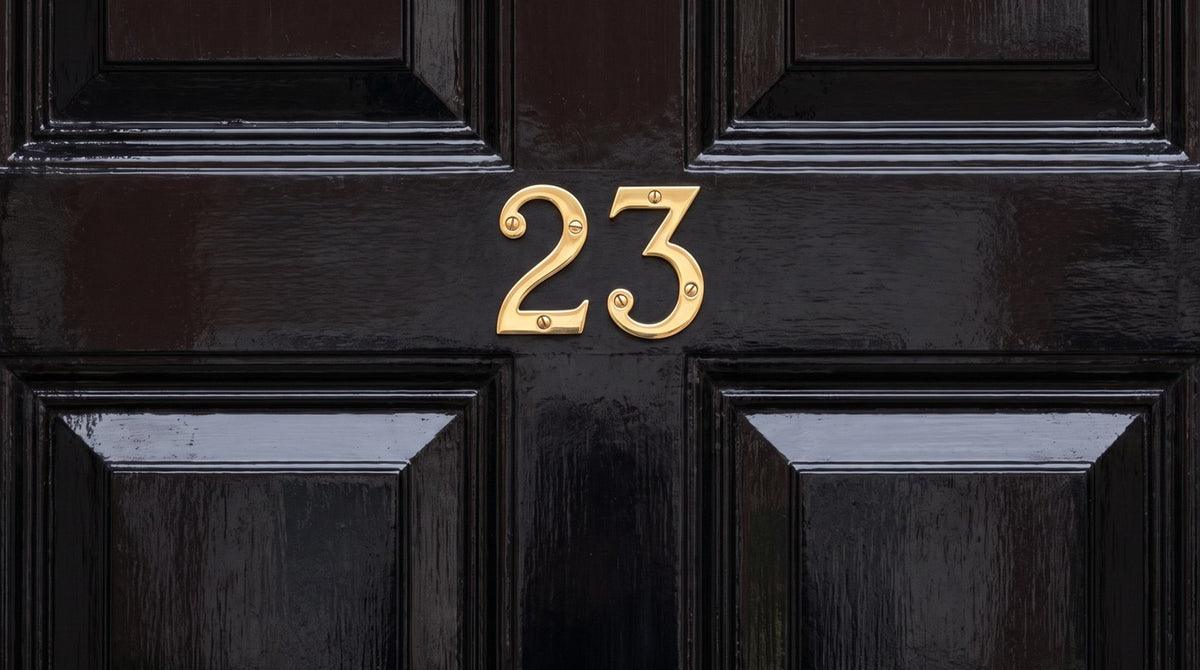
House numbers that suit the door
Five doors on one Victorian street, five different finishes. How to choose the size, style and fixing for yours, and where to put them.
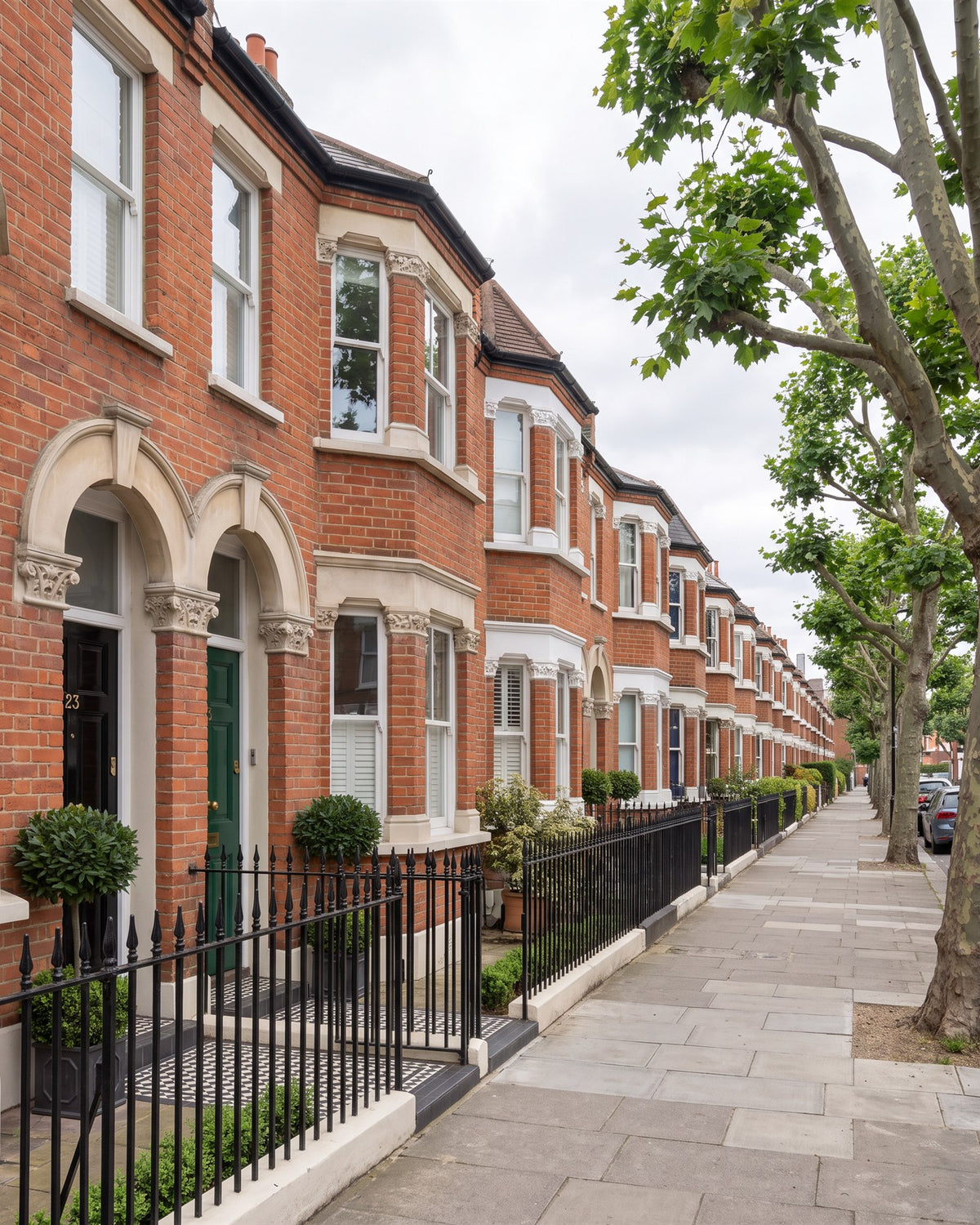
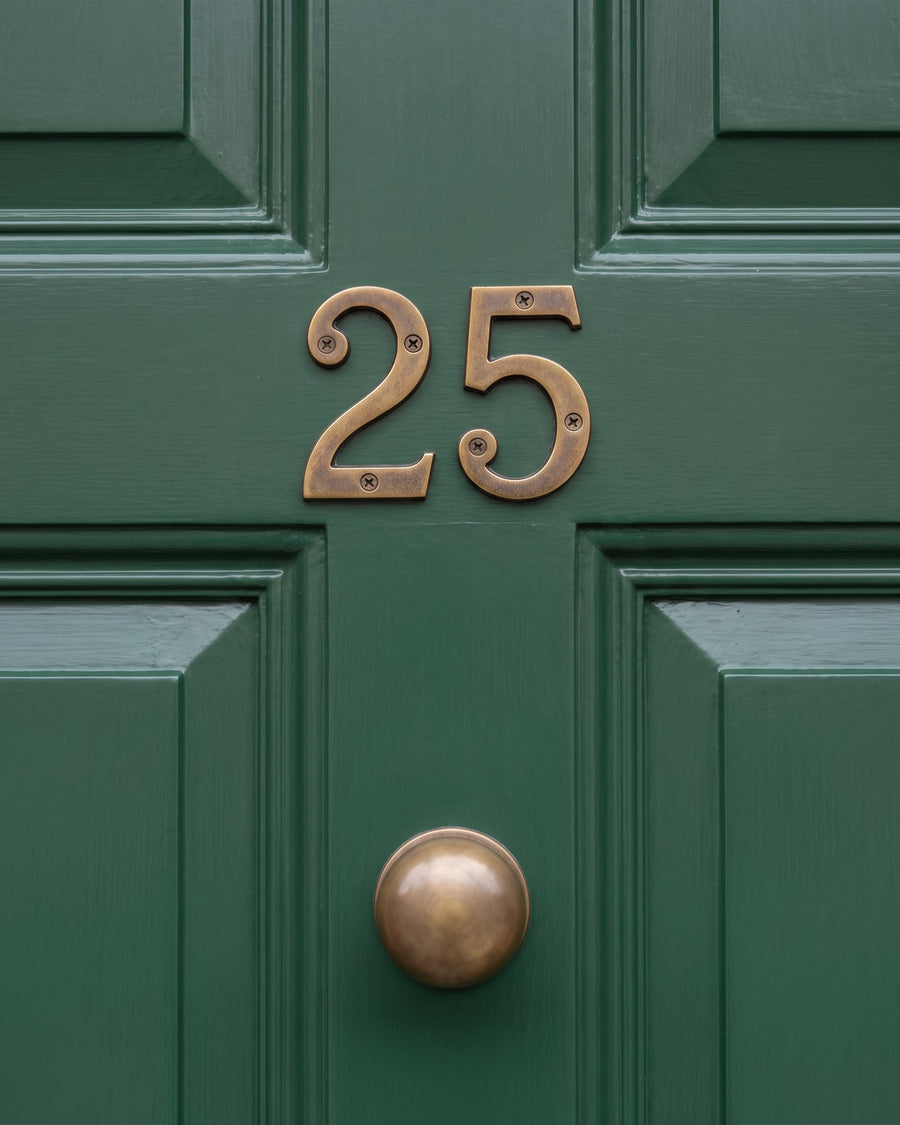
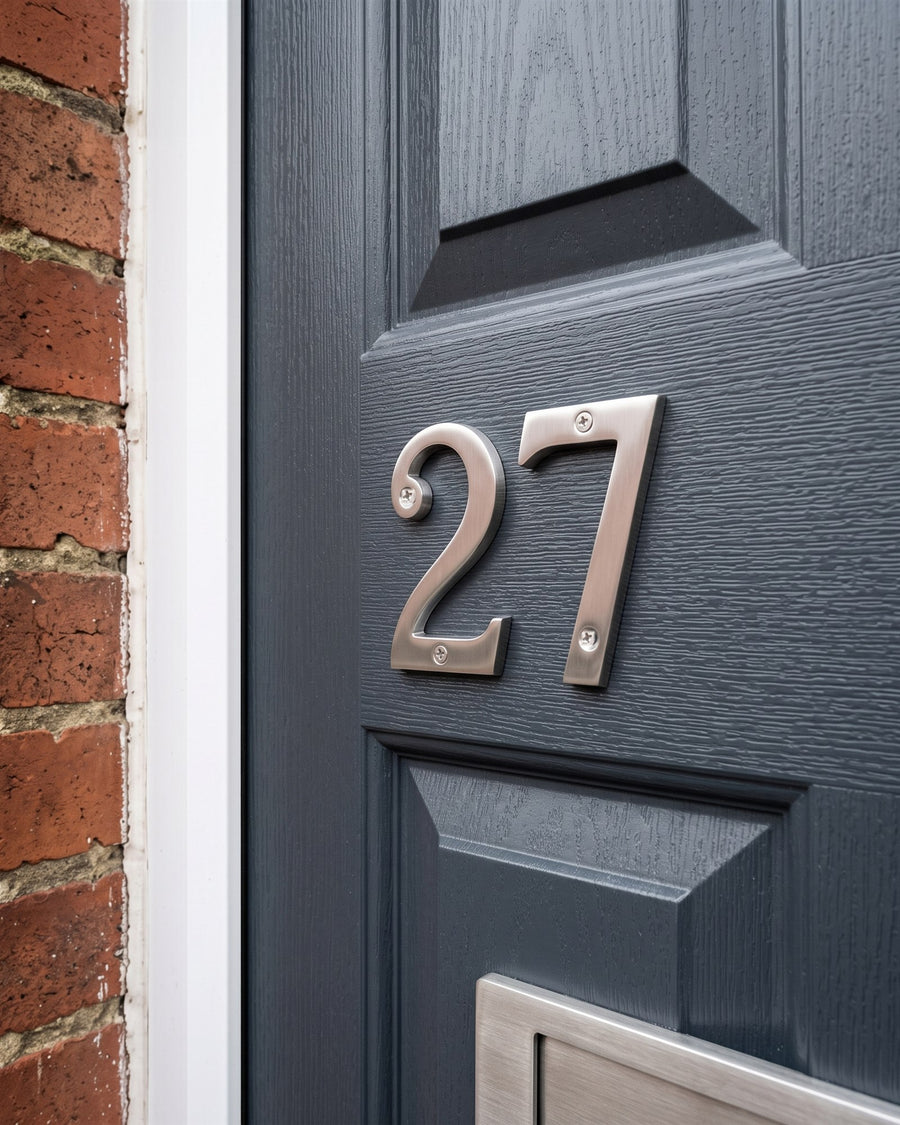
Numbers are often the last thing chosen for a front door and the first thing a visitor looks for. On this terrace, every house has made a different choice: polished brass on gloss black, antique brass on racing green, satin chrome on an anthracite composite door, gold-finish numerals on white uPVC and matt black on a pale painted door. Each one works because it matches the door's other fittings and is big enough to read from the pavement.
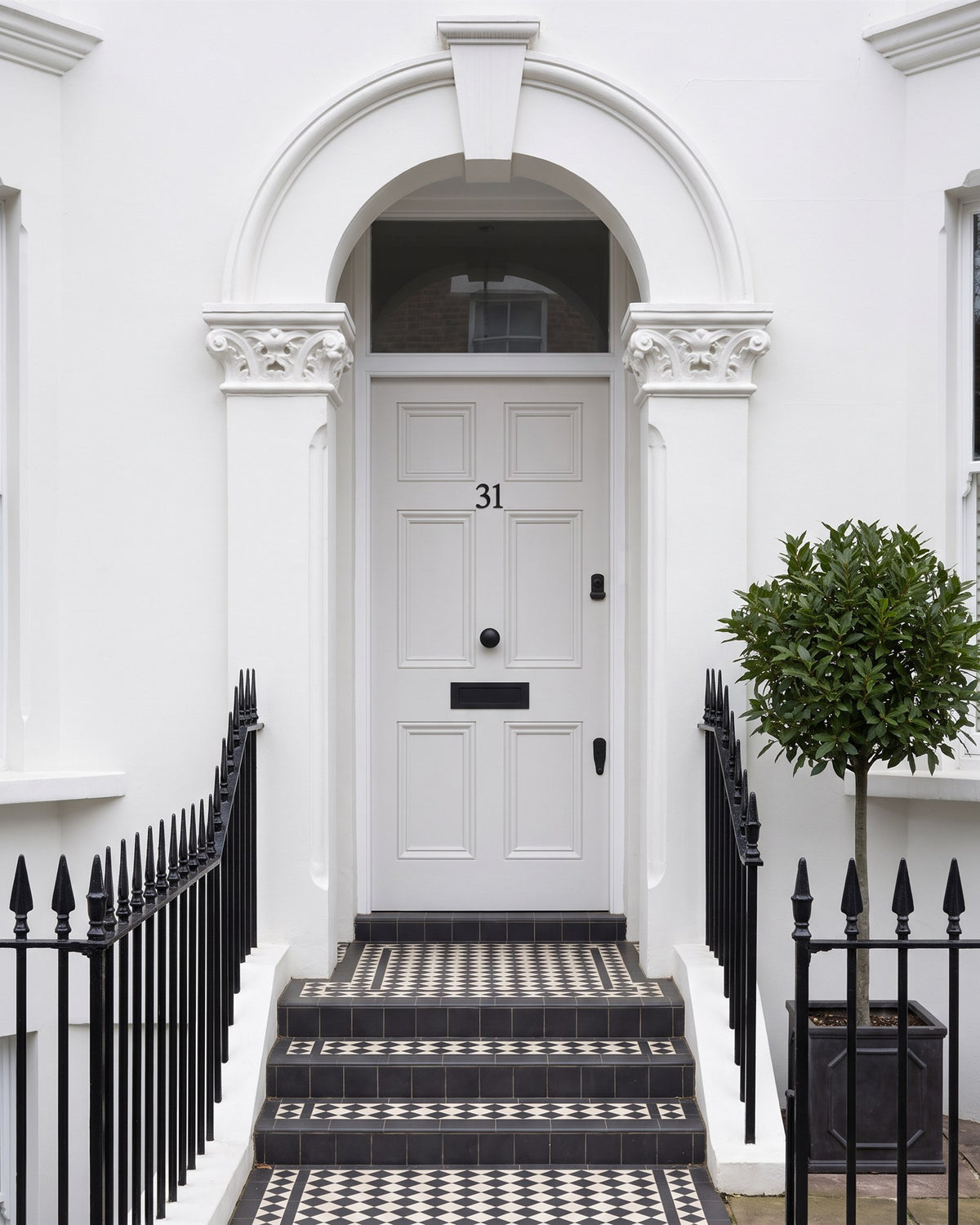
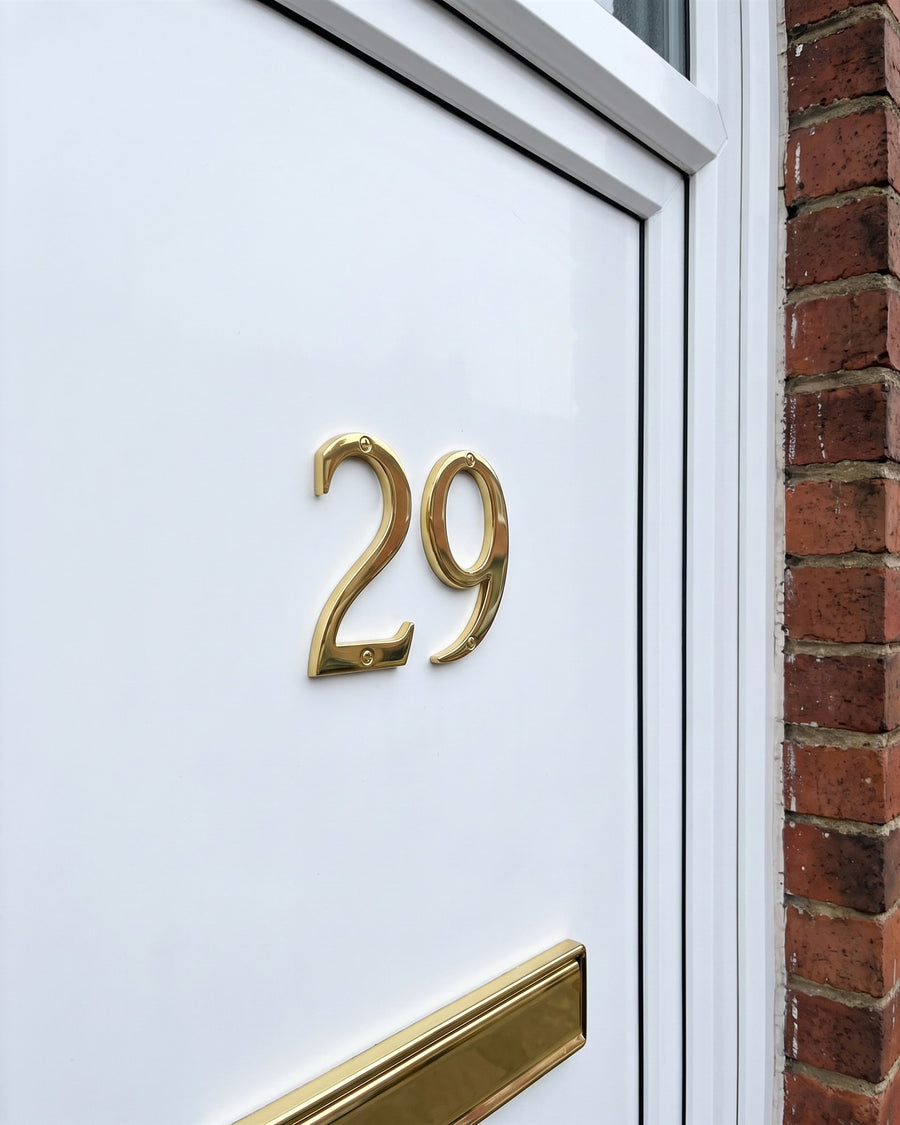
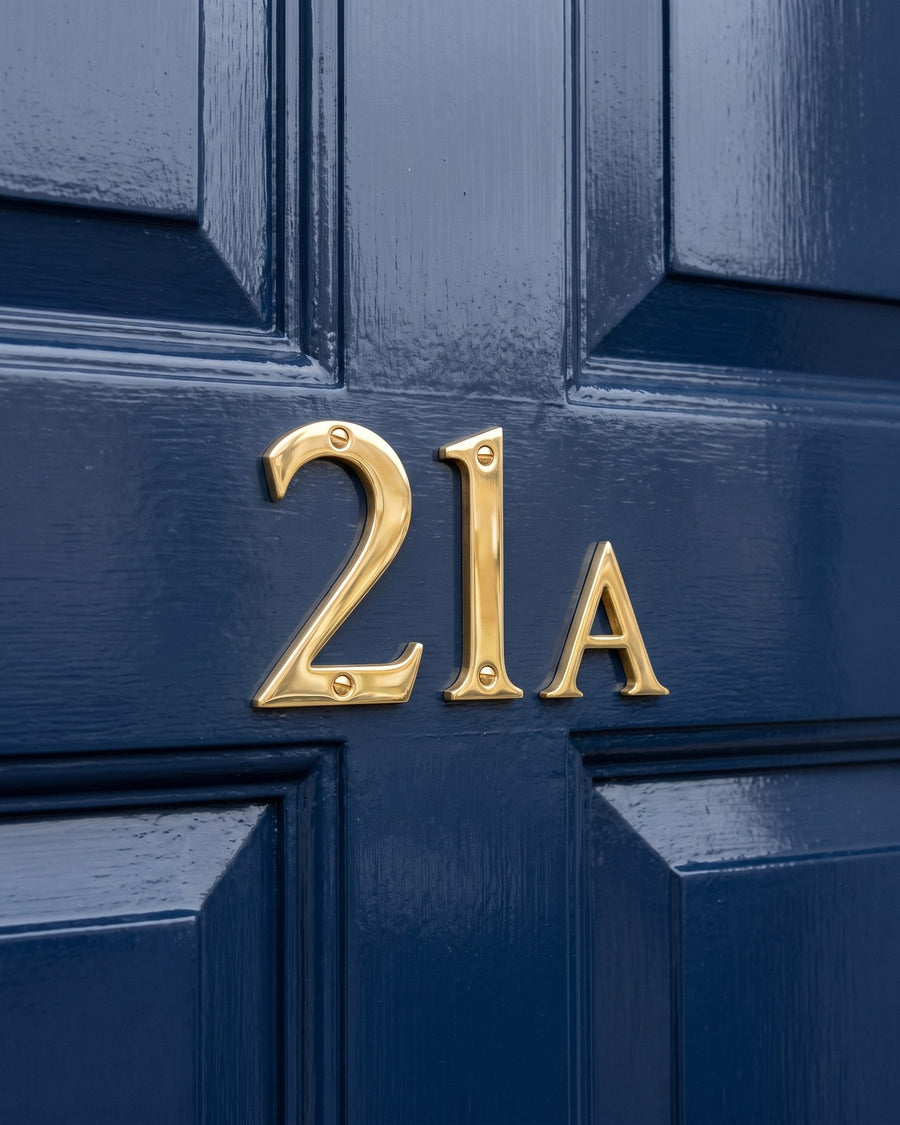
House numbers in every finish
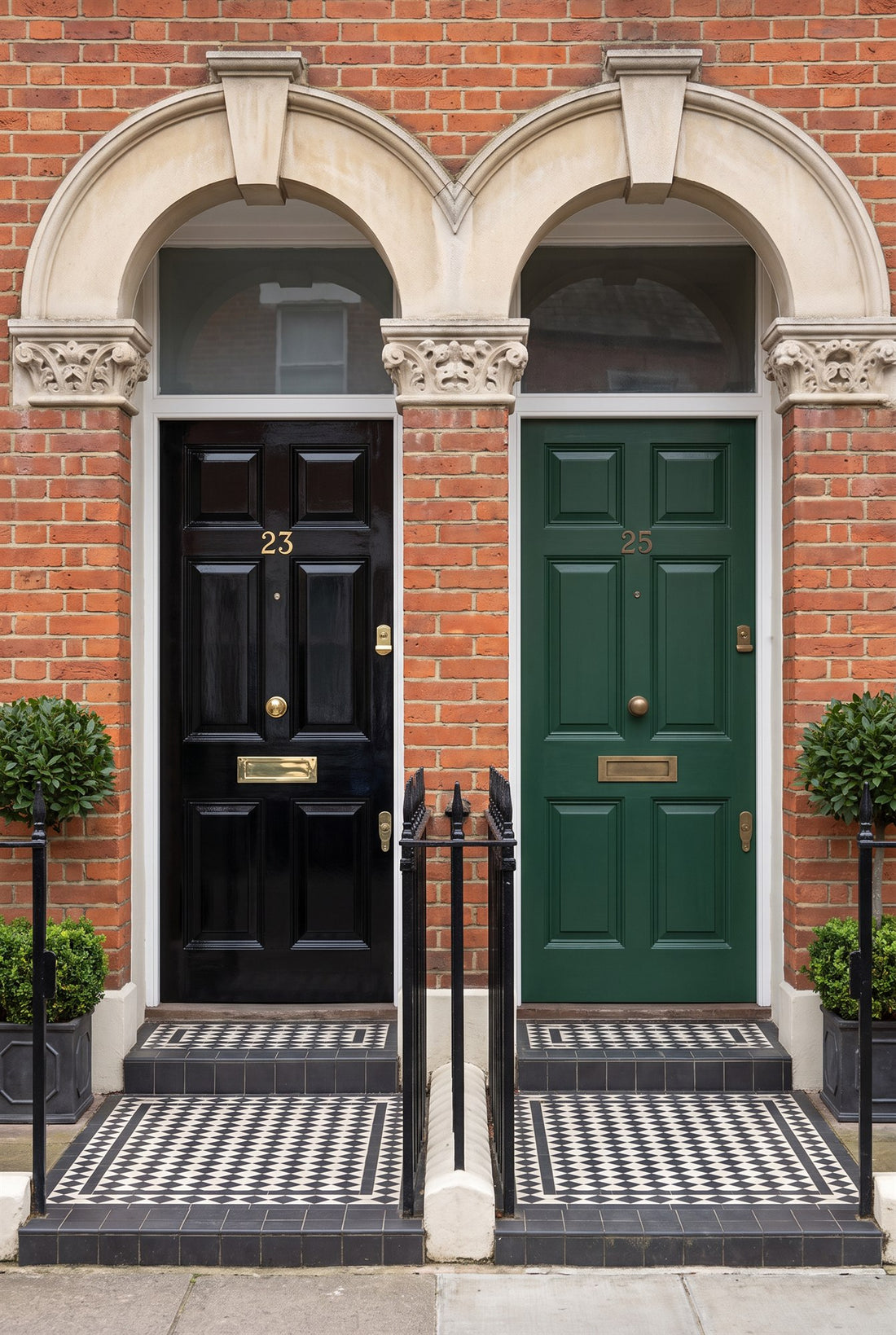


More house numbers and door letters
-
Satin Brass Door Numbers 76mm

-
Polished Chrome Door Numbers 76mm

-
Satin Nickel Door Numbers 76mm

-
Matt Bronze Door Numbers 76mm

-
Rustic Pewter Door Numbers 76mm

-
Black Iron Rustic Door Numbers 76mm

-
Foxcote Black House Numbers 4in

-
Satin Stainless Numerals 102mm

-
Polished Brass Door Numbers 51mm

-
Antique Brass Door Numbers 51mm

-
Satin Chrome Self Adhesive Numbers 51mm

-
Hoppe Black uPVC Numbers and Letters

-
Hardex Chrome uPVC Door Numbers 80mm

-
Hardex Graphite uPVC Door Numbers 80mm

-
Satin Chrome Door Letters 51mm

Choosing house numbers
Match the other fittings
The safest rule is to choose numbers in the same finish as the knocker, letter plate and handle. A door with polished brass furniture and chrome numbers looks unfinished, however good each piece is. If the door has no other metal on it, take the finish from the house: brass for warm brick, chrome or black for grey and white schemes.
Pick a size you can read
Most front doors suit 76mm (3in) numerals, which can be read comfortably from the pavement of a typical terraced street. Choose 51mm for cottage doors or narrow top rails, and 100mm or more if the house is set well back, the door is deep in a porch, or the number goes on a wall beside the door.
Know how they fix
Screw-fixed numerals have small visible screws, are the most secure and suit timber doors. Pin-fixed and concealed-fix numerals and letters press into pilot holes for a cleaner face. uPVC numerals such as the Hardex range are made to fix into plastic and composite skins, and self-adhesive numbers avoid drilling altogether.
Fitting them straight
Where to put them
The usual places are the centre of the top rail on a panelled door, or the middle rail just above the letter plate. On a door with a large glass panel, fix them to the frame or the wall beside the door at eye height instead.
Use a level line
Run a strip of masking tape along a spirit-levelled line and sit the bottom of each digit on it. Door rails are not always level with the ground, so trust the level rather than the moulding.
Space them evenly
Leave a gap of roughly a third of a digit's width between numerals, and judge it by eye as well as by ruler: a 1 always looks better slightly closer to its neighbours.
Flats and subdivided houses
For numbers like 21A, use matching concealed-fix letters. The 51mm letters sit neatly beside 76mm numerals, aligned along the bottom edge.
