

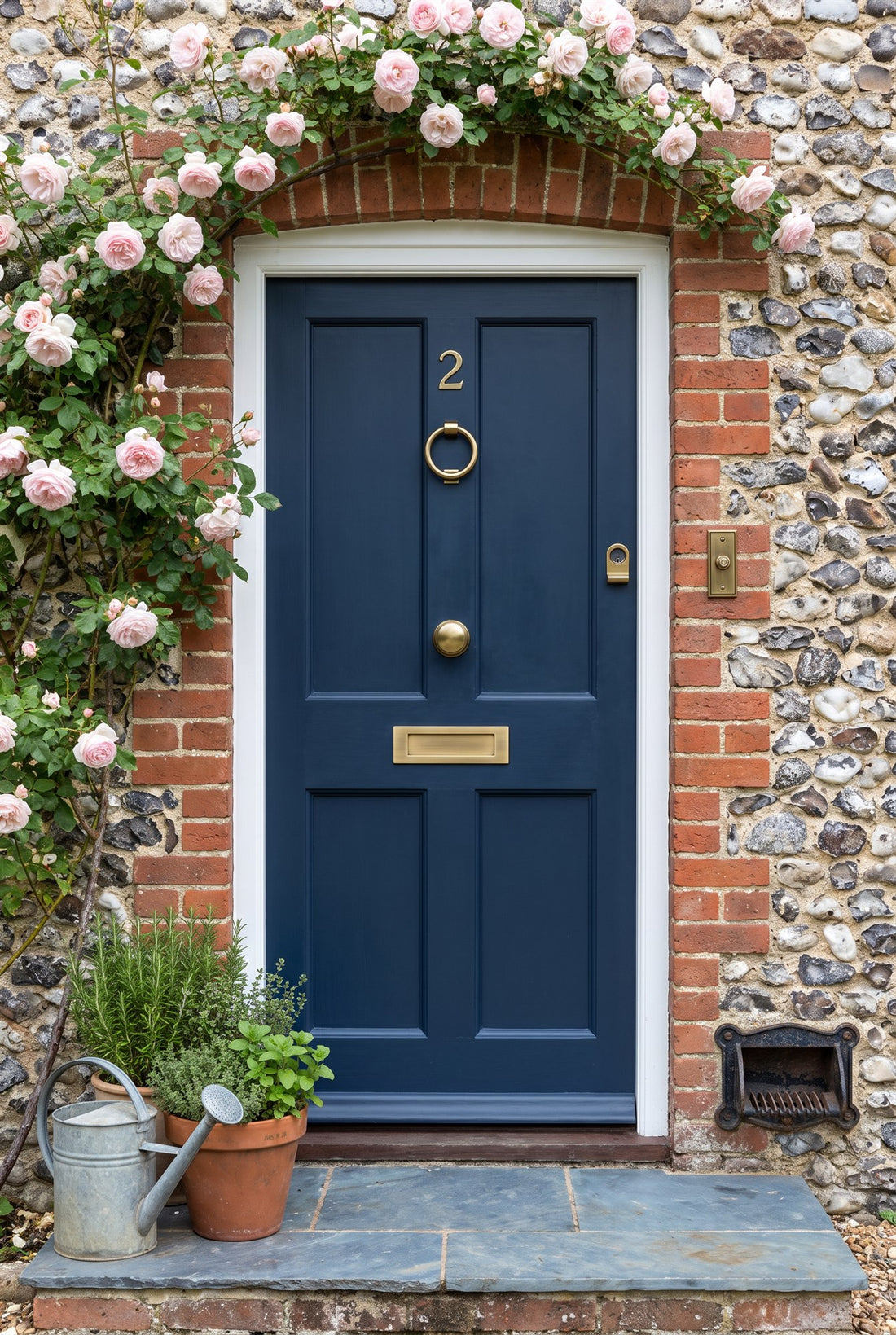
A navy cottage door with an antique brass ring knocker
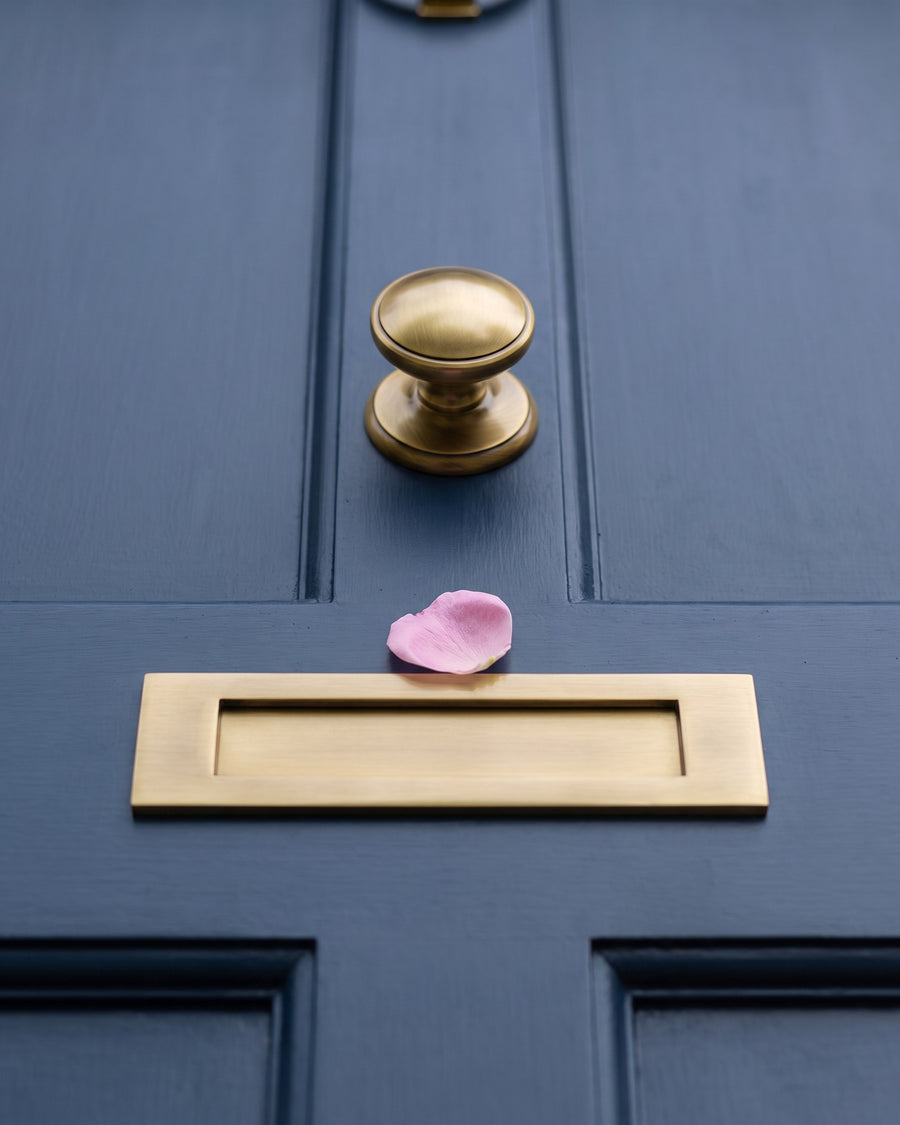
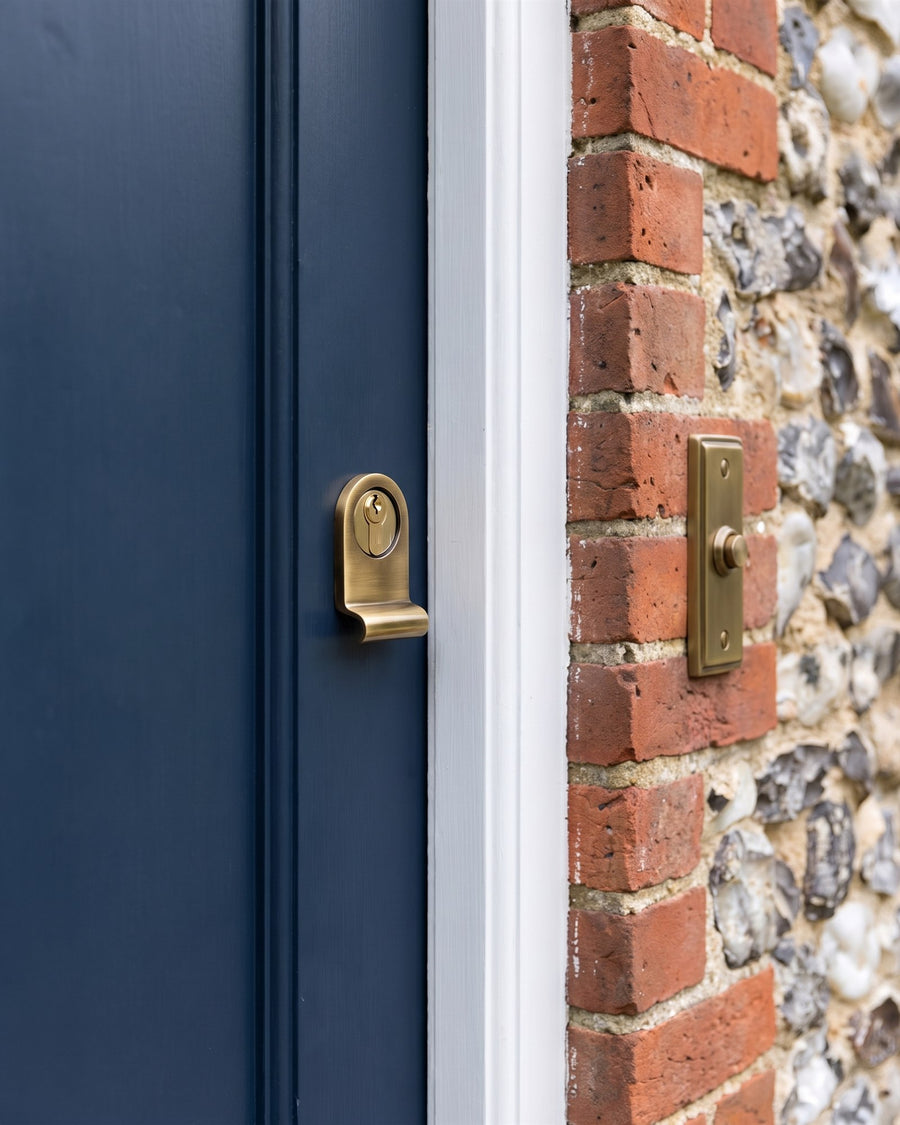
Flint walls, a climbing rose and a deep navy door, finished simply: a ring knocker, a round knob and a slim letter plate in aged brass.
A Norfolk cottage of knapped flint and red brick, with a pale pink climbing rose over the door and an old boot scraper built into the wall. The four-panel door is a deep navy, and the fittings are kept small and plain to suit a modest cottage: a ring knocker rather than an ornate one, a round centre knob, a slim letter plate and small numbers. Antique brass sits softly against the flint and doesn't shout.


Antique brass for a navy cottage door


Other antique brass knockers, knobs and letter plates
-
Antique Brass Urn Knocker

-
Antique Brass Doctor Knocker

-
Antique Brass Lion Knocker

-
Antique Brass Small Urn Knocker

-
Antique Brass Octagonal Centre Knob

-
Antique Brass Faceted Centre Knob

-
Antique Brass Postal Knocker

-
Antique Brass Letter Plate 254x102mm

-
Antique Brass Square Cylinder Pull

-
Antique Brass Circular Bell Push

-
Antique Brass Victorian Bell Push

-
Antique Brass House Numbers 76mm

-
Antique Brass Tidy with Draught Excluder

-
Antique Brass Reeded Turn and Release

-
Antique Brass Knob on Reeded Plate

-
Antique Brass Reeded Bell Push

Why a ring knocker suits a cottage door
Small doors, small fittings
Cottage doors are often narrower and lower than townhouse doors, so large, ornate furniture can overwhelm them. A plain ring knocker, a round knob and a 254mm letter plate keep the scale right and let the paint colour and the climbing plants do the talking.
Navy and flint
Deep navy looks rich against grey flint and warm brick, and it hides the wear a country door gets from muddy boots and dogs. It also sets off antique brass better than black would, giving a gentle contrast instead of a stark one.
Why antique brass here
Antique brass already looks weathered, so it doesn't look out of place on an old cottage the way bright polished brass sometimes can. It needs no polishing: just a wipe with a dry cloth.
Planning a cottage door
Check the stile widths
Cottage doors can have narrow stiles. The centre knob's base is 76mm across, so make sure the centre stile is wide enough, or choose the 64mm faceted knob instead.
Small numbers suit small doors
The 51mm numbers shown here are better proportioned on a cottage door than the larger 76mm ones, especially on a top rail with little height.
Cover the letter cut-out
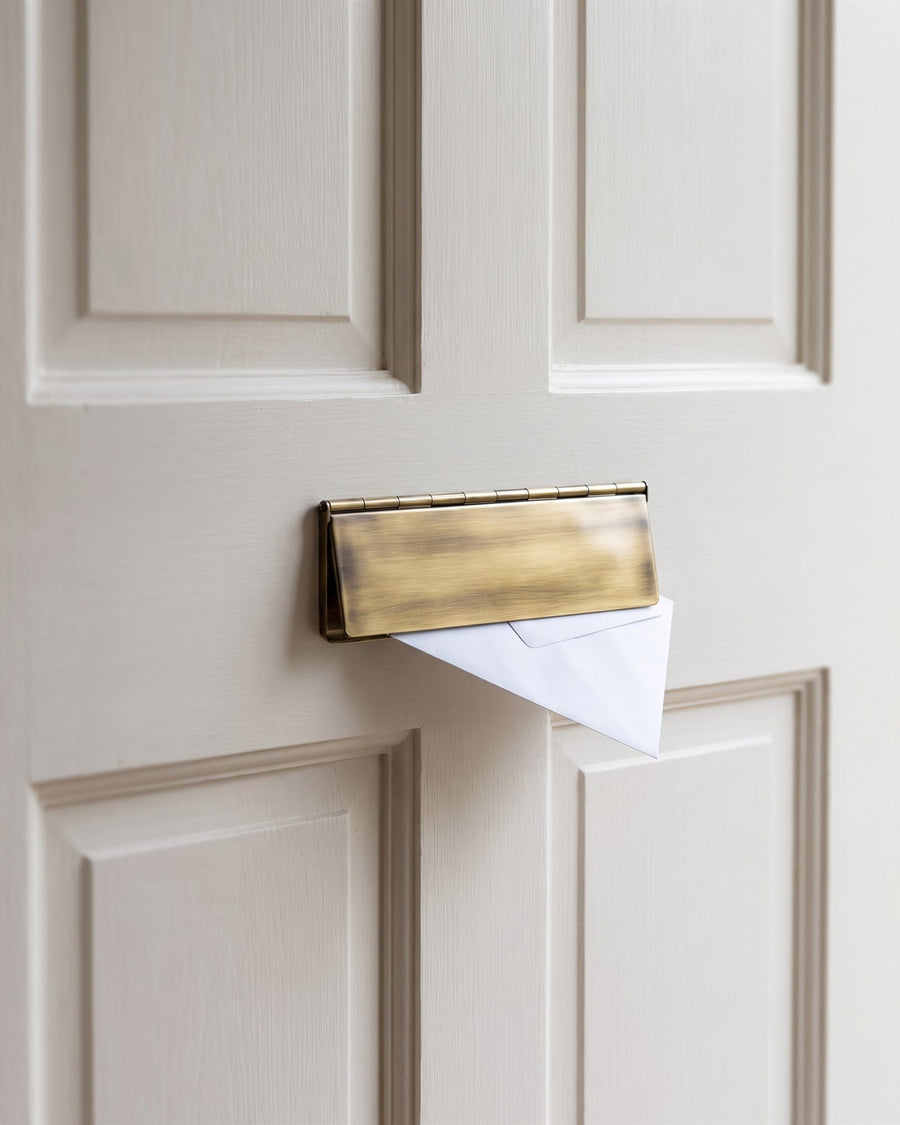
The 280mm interior flap covers the cut-out behind the 254mm letter plate and helps keep the draught out of the cottage.
Knobs inside
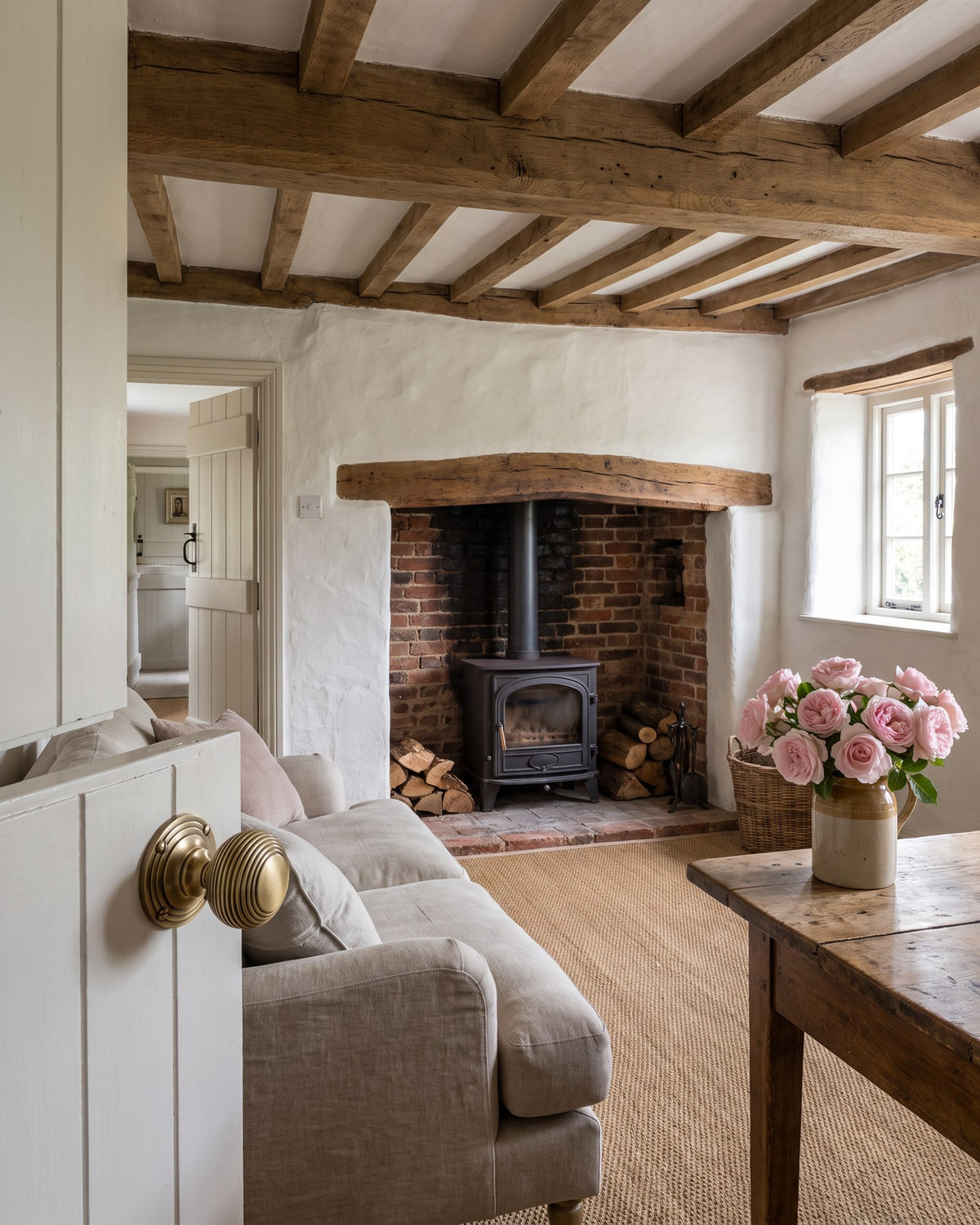
Reeded antique brass mortice knobs suit cottage interior doors that have been fitted with mortice latches; on ledged doors, fix them near the opening edge at a comfortable height.
