
The Belgravia classic: navy gloss and polished chrome
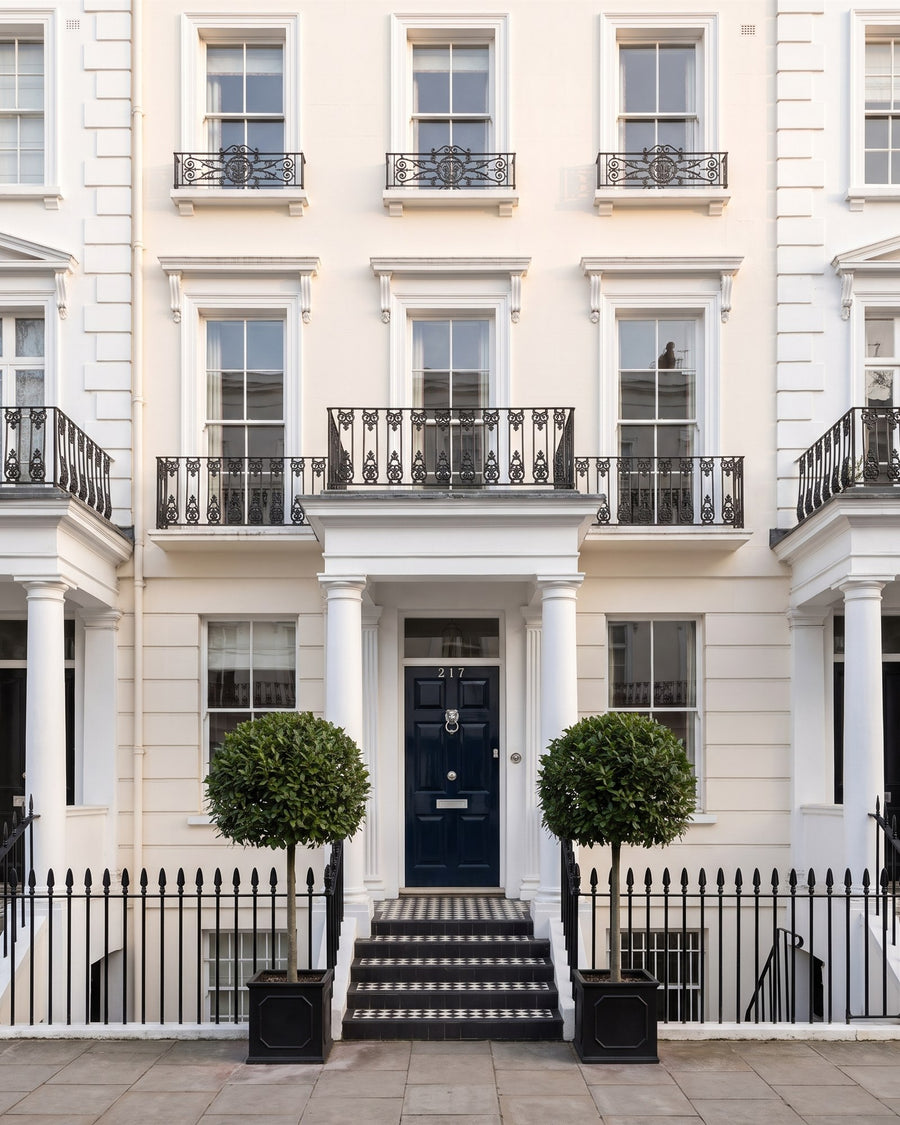
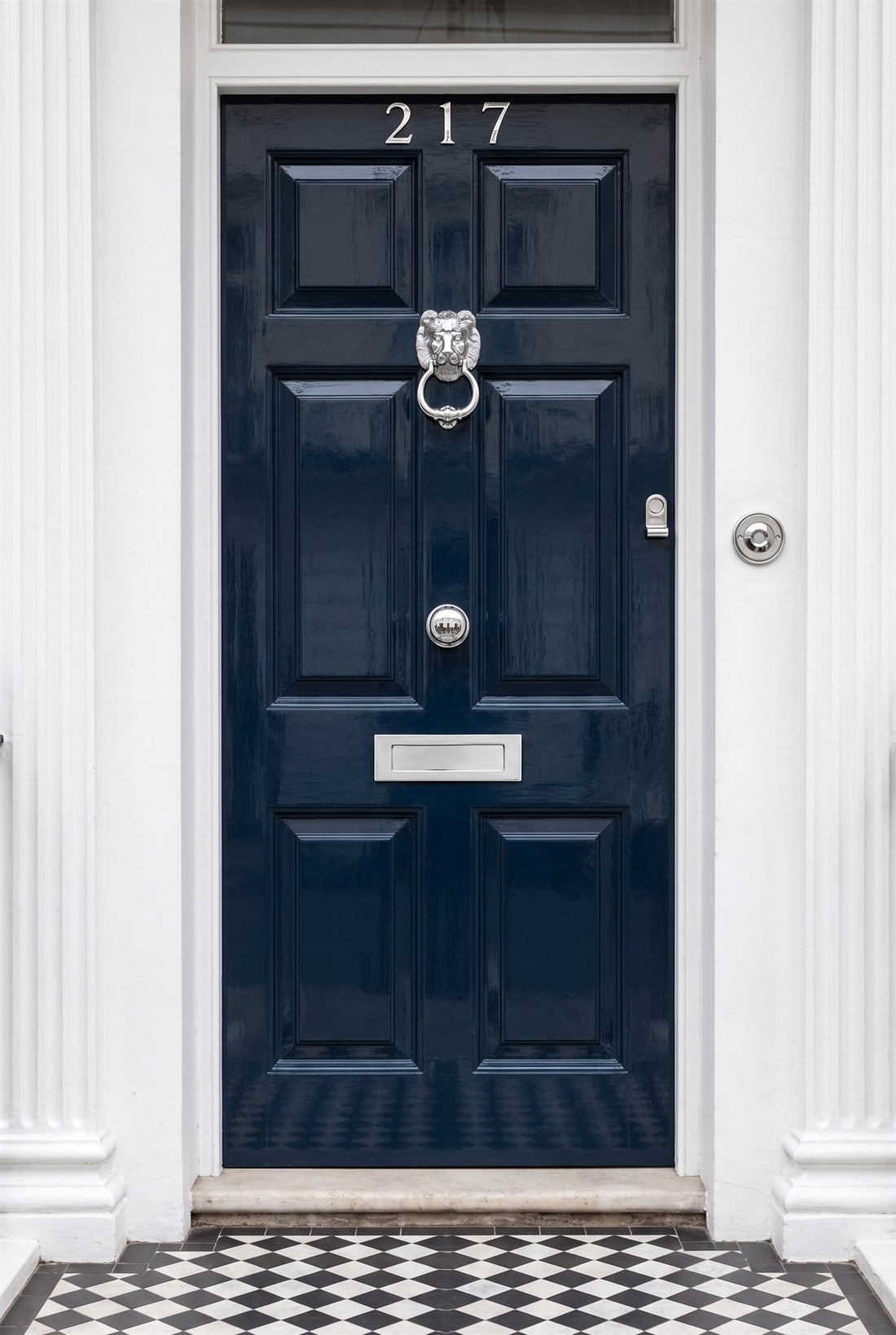
A deep navy six-panel door, white stucco and black railings, finished with bright polished chrome that catches every bit of London light.
Navy gloss against white stucco and columns, a black and white chequered step, black railings and clipped bay, with polished chrome for a crisp, cool finish.

Polished chrome for a navy door
-
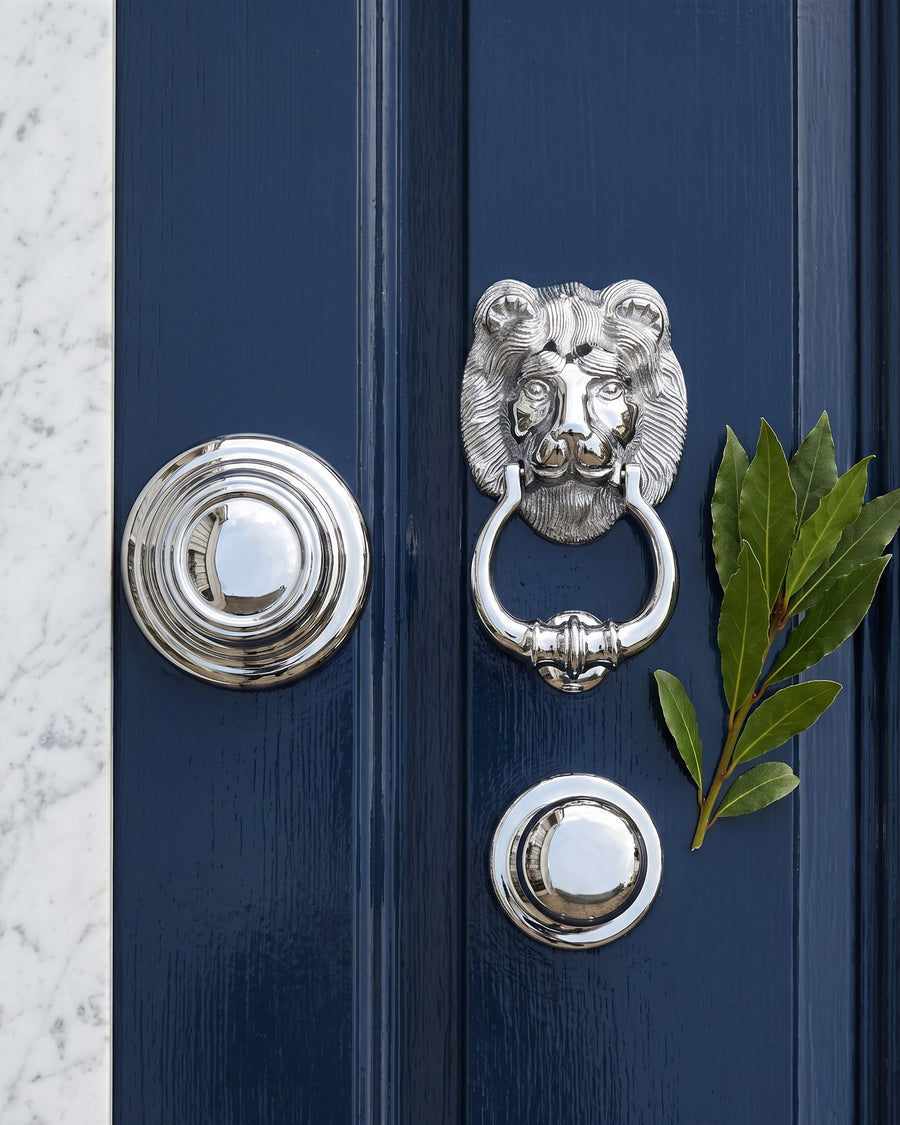
1Polished Chrome Round Centre Door Knob 78mm

-
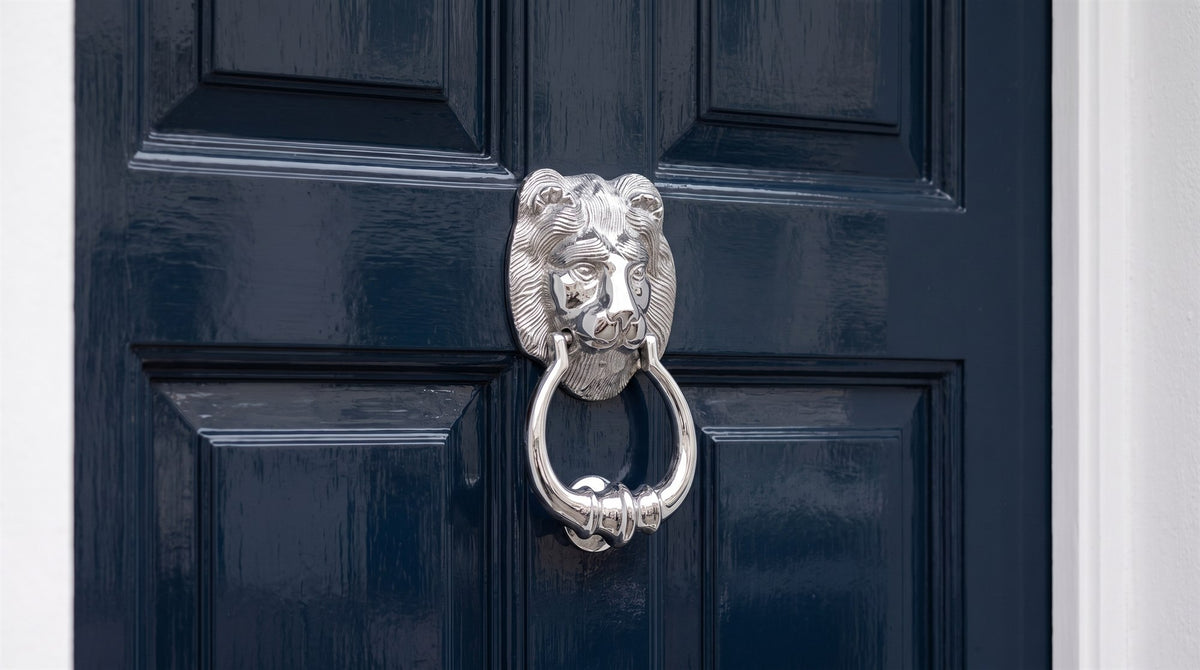
2Polished Chrome Lion Head Door Knocker 180mm

-
3Polished Chrome Victorian Letter Plate 253x97mm

-
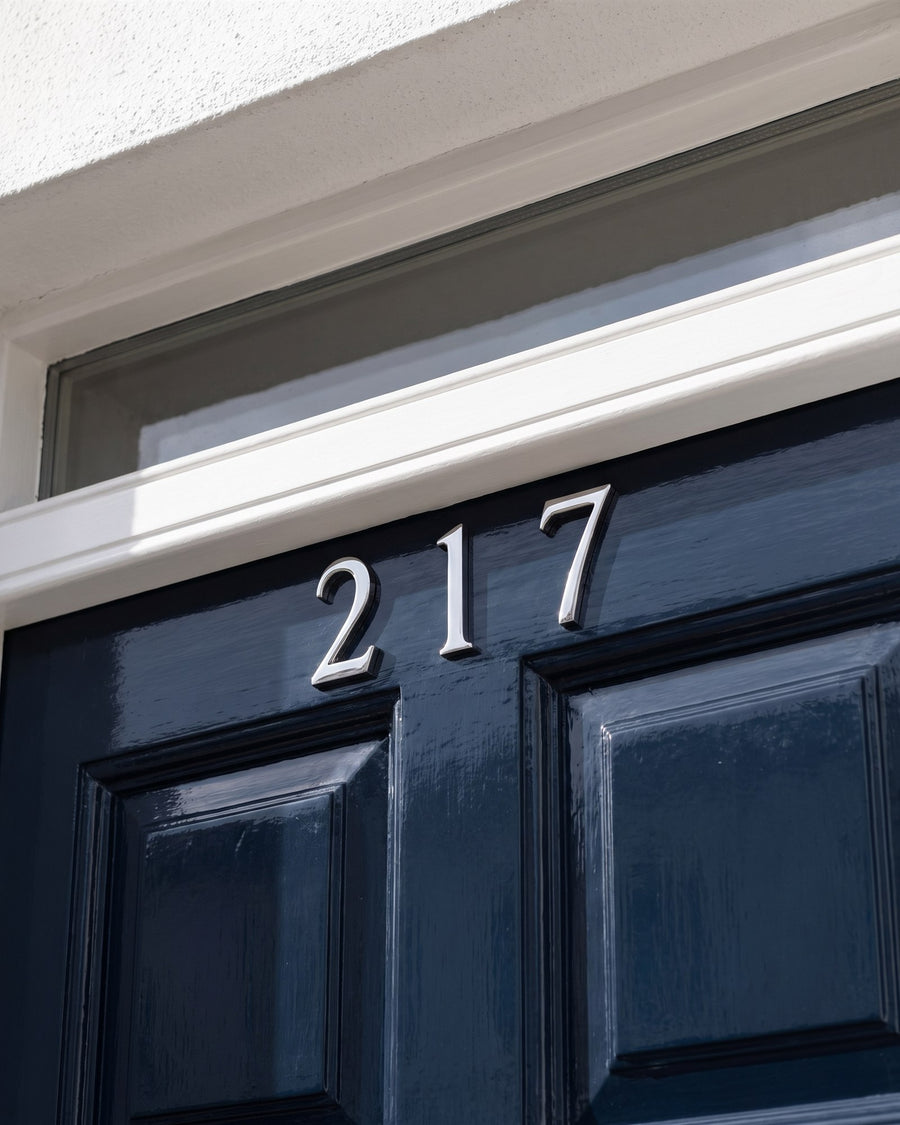
4Polished Chrome House Numbers 76mm (3in)

-
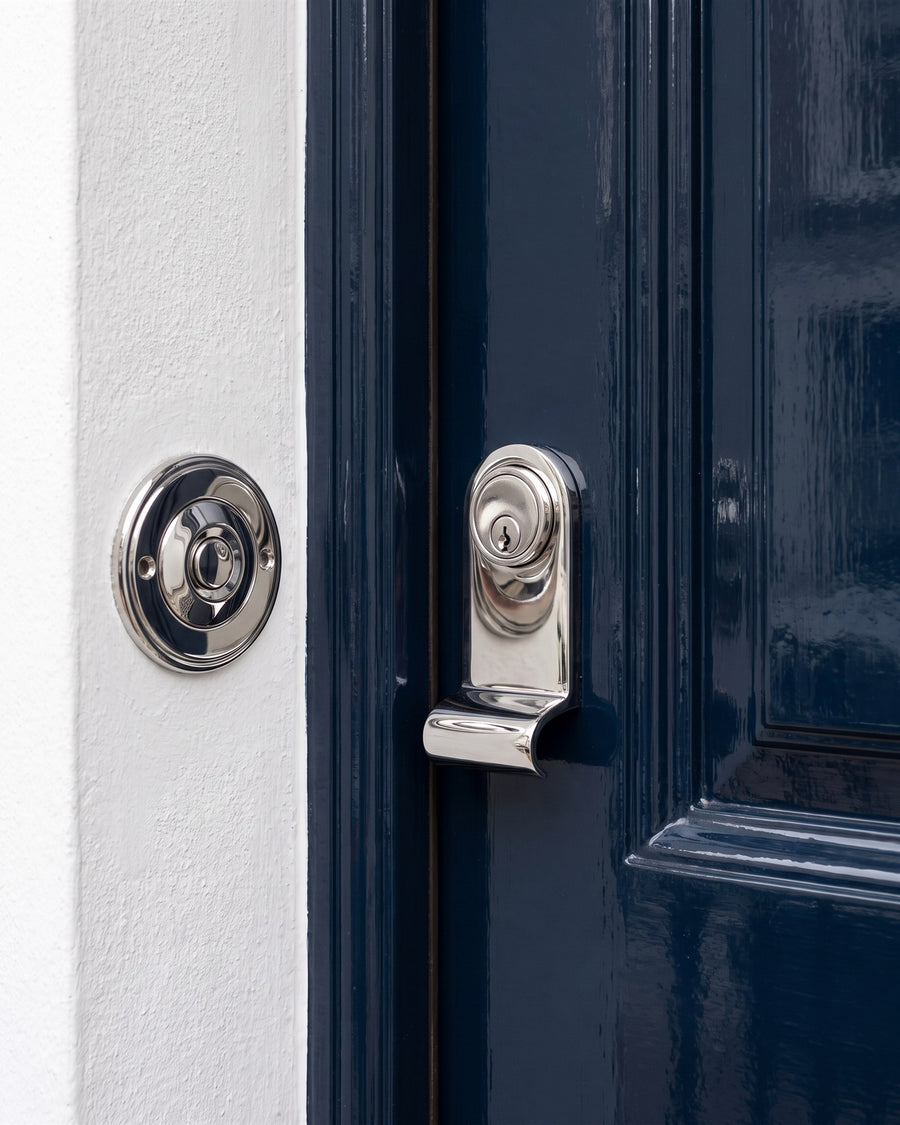
5Polished Chrome Circular Bell Push 64mm

-
6Polished Chrome Cylinder Pull

-
7Polished Chrome Interior Letter Tidy 299x86mm

-
8Polished Chrome Euro Cylinder Escutcheon 53mm

-
9Polished Chrome Covered Escutcheon 32mm

-
10Sloane Polished Chrome Centre Door Knob 102mm

More polished chrome for the front door
-
Sloane Polished Chrome Scroll Door Knocker

-
Sloane Polished Chrome Bell Push

-
Polished Chrome Doctor Door Knocker 193mm

-
Polished Chrome Urn Door Knocker 195mm

-
Polished Chrome Slim Diplomat Knocker

-
Polished Chrome Ring Door Knocker 107mm

-
Polished Chrome Profile Doctor Knocker

-
Polished Chrome Reeded Centre Door Knob 76mm

-
Polished Chrome Reeded Urn Door Knocker

-
Polished Chrome Letter Plate 305x100mm

-
Polished Chrome Victorian Letter Plate 253x77mm

-
Polished Chrome Bell Push with China Press

-
Polished Chrome Stepped Bell Push

-
Polished Chrome Letter Tidy with Draught Excluder

-
Polished Chrome Classic House Numbers 76mm

-
Polished Chrome House Letters A-Z 51mm

Why chrome suits a stucco terrace
A street of white and navy
The grand stucco terraces of Belgravia and Brighton were designed to read as one: cream or white render, columns, railings and a run of dark front doors. Navy has become the favourite of those dark colours because it feels classic but softer than black.
Why chrome here
Brass warms a door; chrome cools and sharpens it. Against white stucco and navy gloss, polished chrome gives a crisp, almost tailored finish that suits the formality of a Regency facade, and it stays bright with nothing more than a wipe.
A lion on the door
The lion head knocker has been a London favourite since the Regency. Paired with a plain round centre knob and a simple letter plate it gives the door a focal point without clutter. For something bolder, the larger Sloane knob and scroll knocker make a grander statement.
Getting it right
Centre the set
Fix the knocker on the central muntin at eye level and the knob directly below at about 1m, so the fittings line up with the panels of a six-panel door.
Size the letter plate
The Victorian plate is 253 x 97 mm. If you are replacing an older plate, choose a size that covers the old screw holes.
Mind the salt
Near the coast, wipe chrome with a damp cloth every few weeks and dry it; salt left on the surface is what causes spotting.
Inside the door
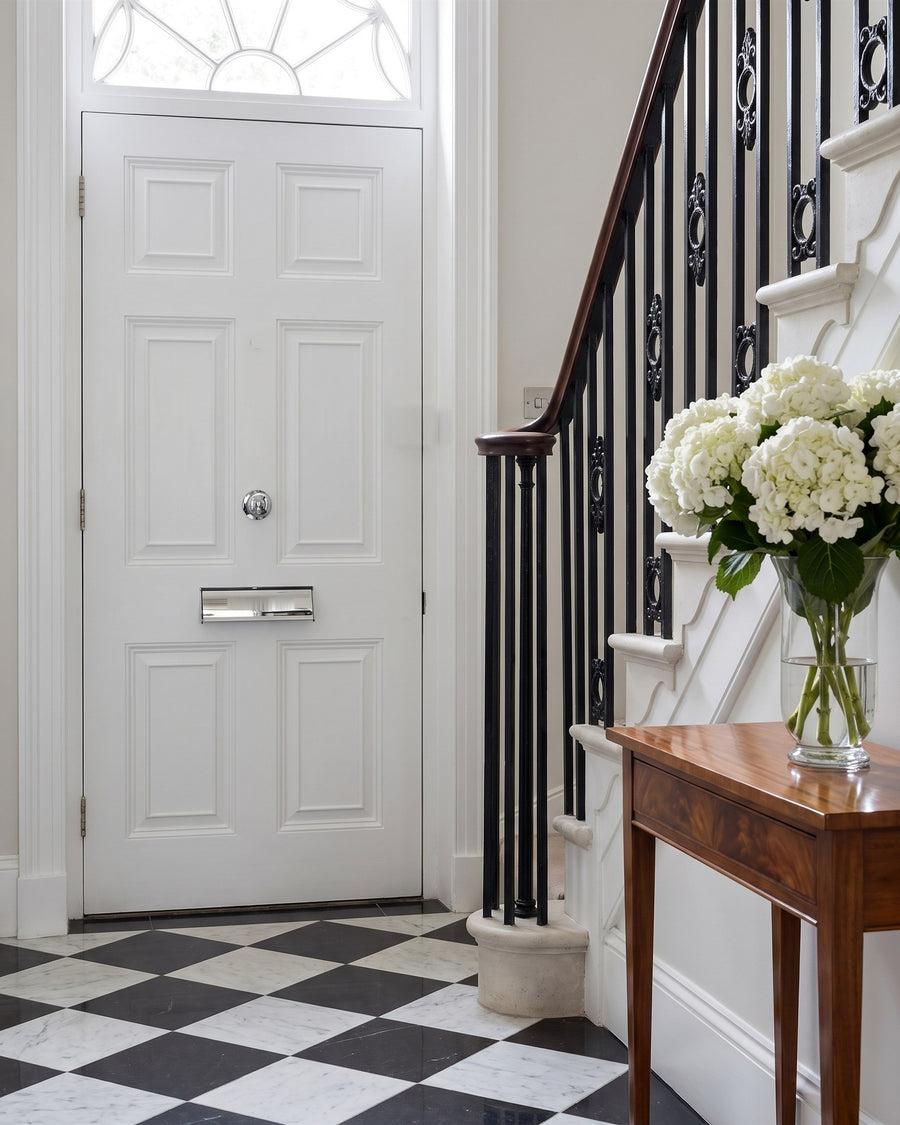
A polished chrome letter tidy and euro escutcheon keep the back of the door as neat as the front.
