

An olive green front door, dressed in antique brass
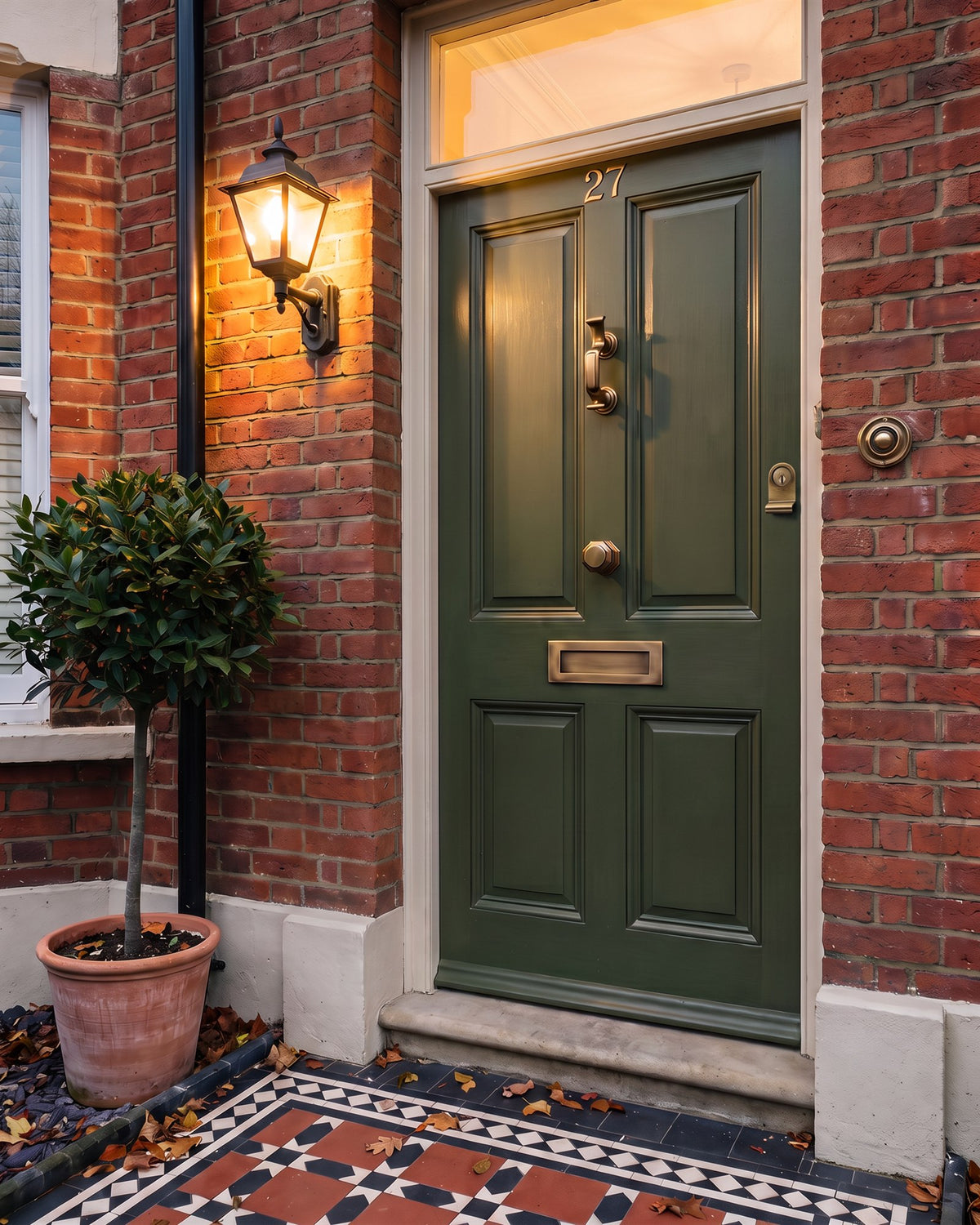
Farrow & Ball Bancha on a red-brick Victorian terrace, with an octagonal knob, a doctor knocker and the same warm brass carried on into the hall.
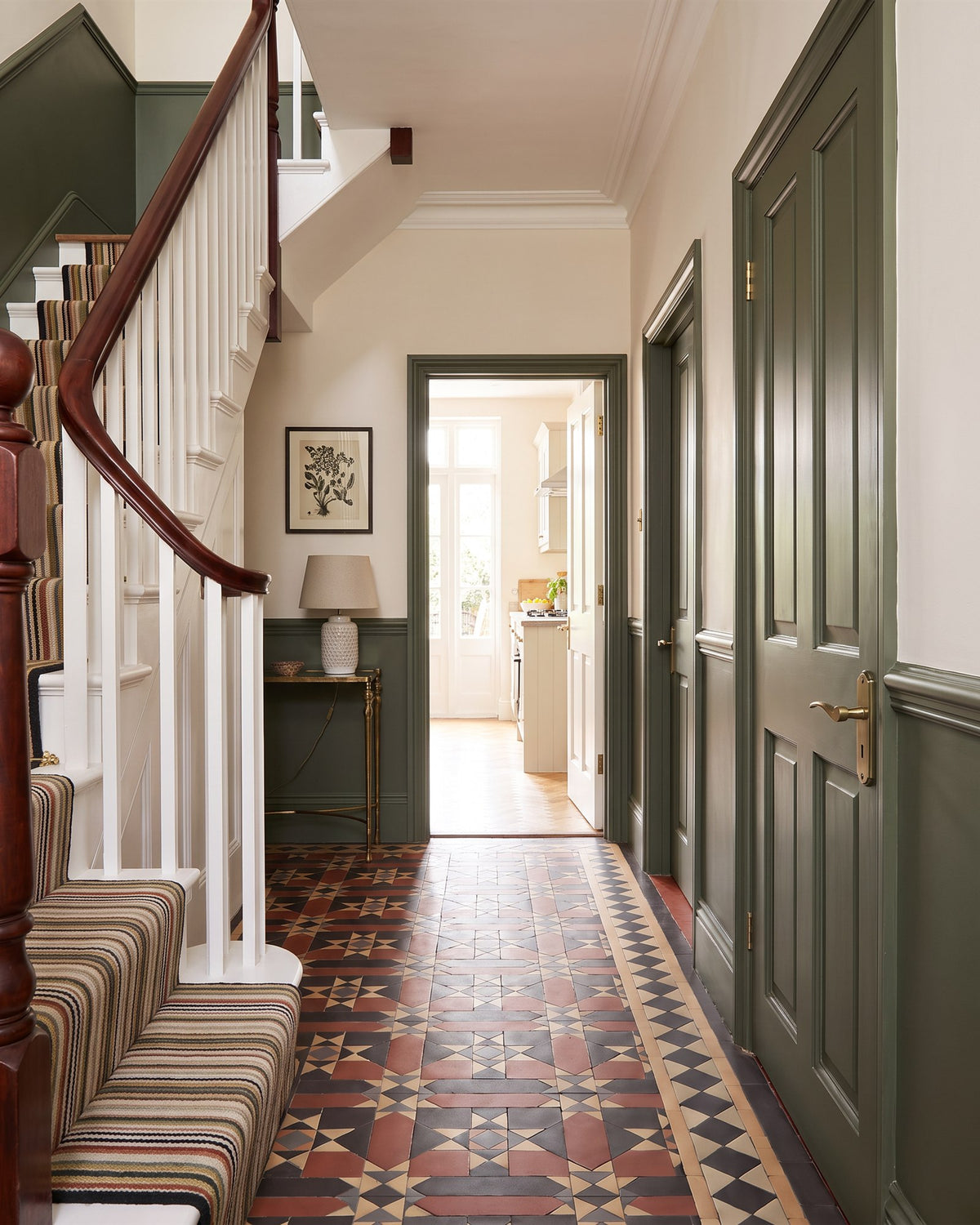
Earthy olive paint, warm red brick and a crisp off-white surround outside; inside, the same olive on the hall panelling under chalky white walls and original encaustic tiles, with antique brass on every door.




Everything on the front door


An antique brass doctor knocker on double front doors
 Customer photo
“Beautifully made, stylish and sturdy. Easy to fit and sounds great !”
Anonymous · September 2026Verified buyer

Carry the brass inside


Other knockers, knobs and letter boxes
-
Antique Brass Letter Box 254x102mm

-
Antique Brass Letter Box 254x79mm

-
Antique Brass Letter Box 331x80mm

-
Antique Brass Ring Door Knocker

-
Antique Brass Urn Door Knocker

-
Antique Brass Round Centre Door Knob

-
Antique Brass Faceted Centre Door Knob

-
Antique Brass Postal Knocker Letter Box

-
Antique Brass Interior Letter Flap 299mm

-
Antique Brass Letter Tidy 260x88mm

-
Antique Brass Door Numbers 51mm

-
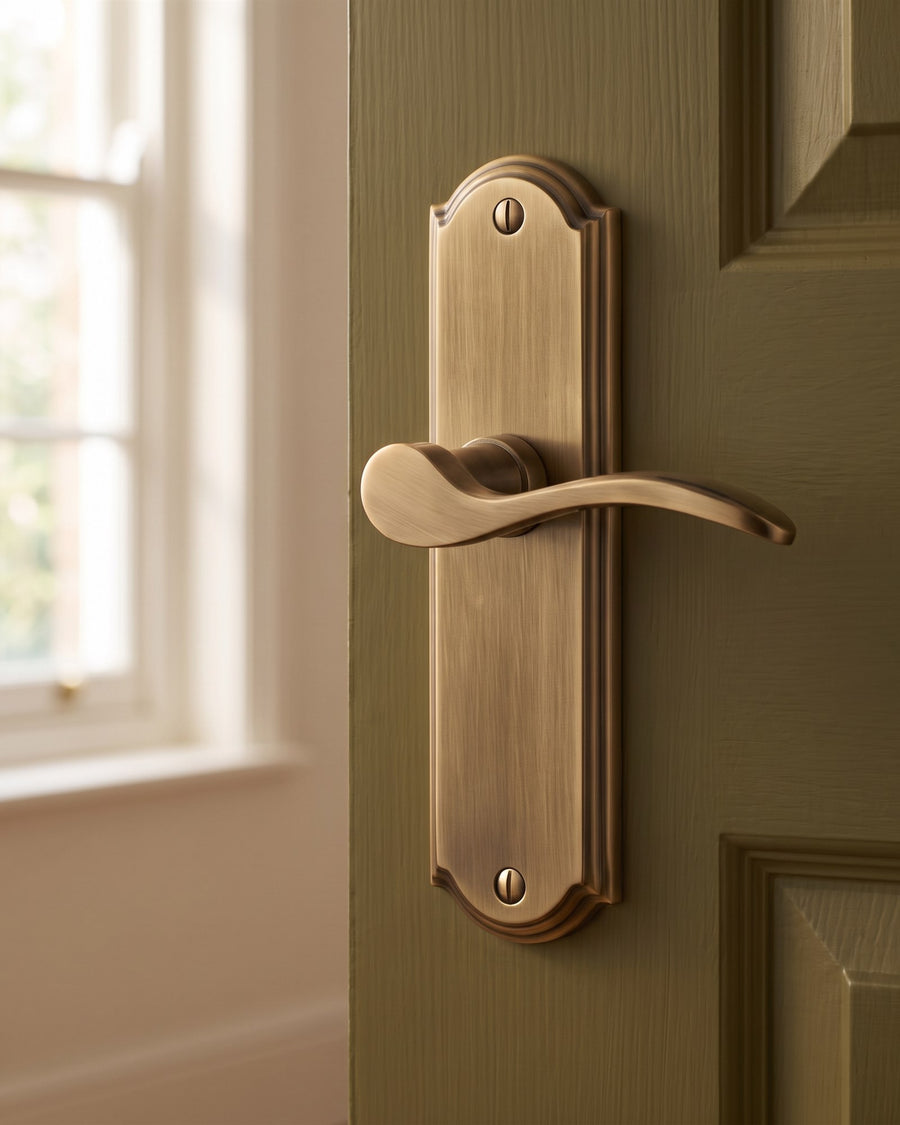
Howard Euro Lever Handles, Antique Brass


Why olive and antique brass suit a Victorian door
Where it comes from
Before the 1870s, Victorian front doors were painted in deep, practical colours: dark blue, chocolate brown, deep red and olive green. Olive has come back because it does the job grey did, quietly, but with far more warmth. Ideal Home names olive and sage as the front door colours homeowners are choosing in 2026, with Farrow & Ball's Bancha the favourite.
Why antique brass?
Bright brass can look loud against a dark, earthy green. Antique brass is darkened and lacquered, so its brown-gold sits in the same family as olive paint and red brick. The facets of the octagonal knob and the chamfered bar of the doctor knocker pick up thin lines of light rather than shining.
Why it still works
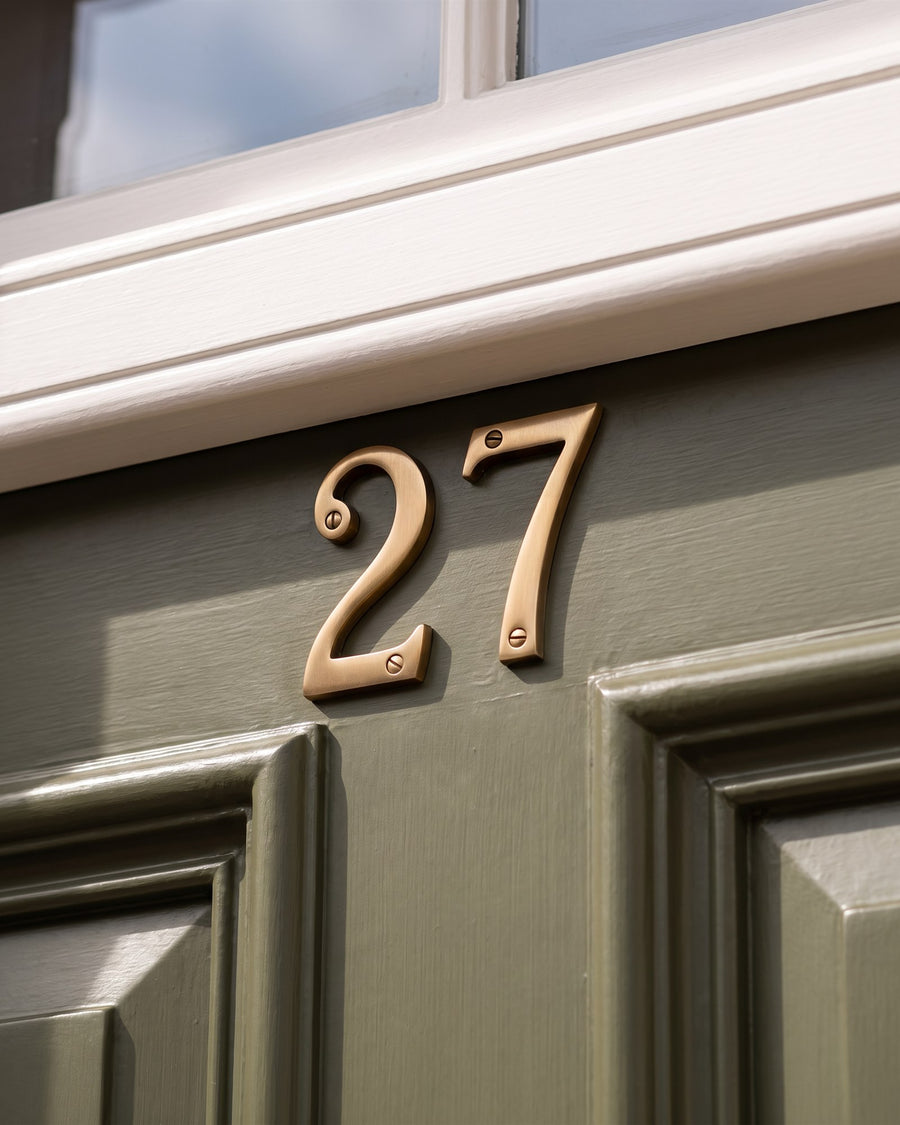
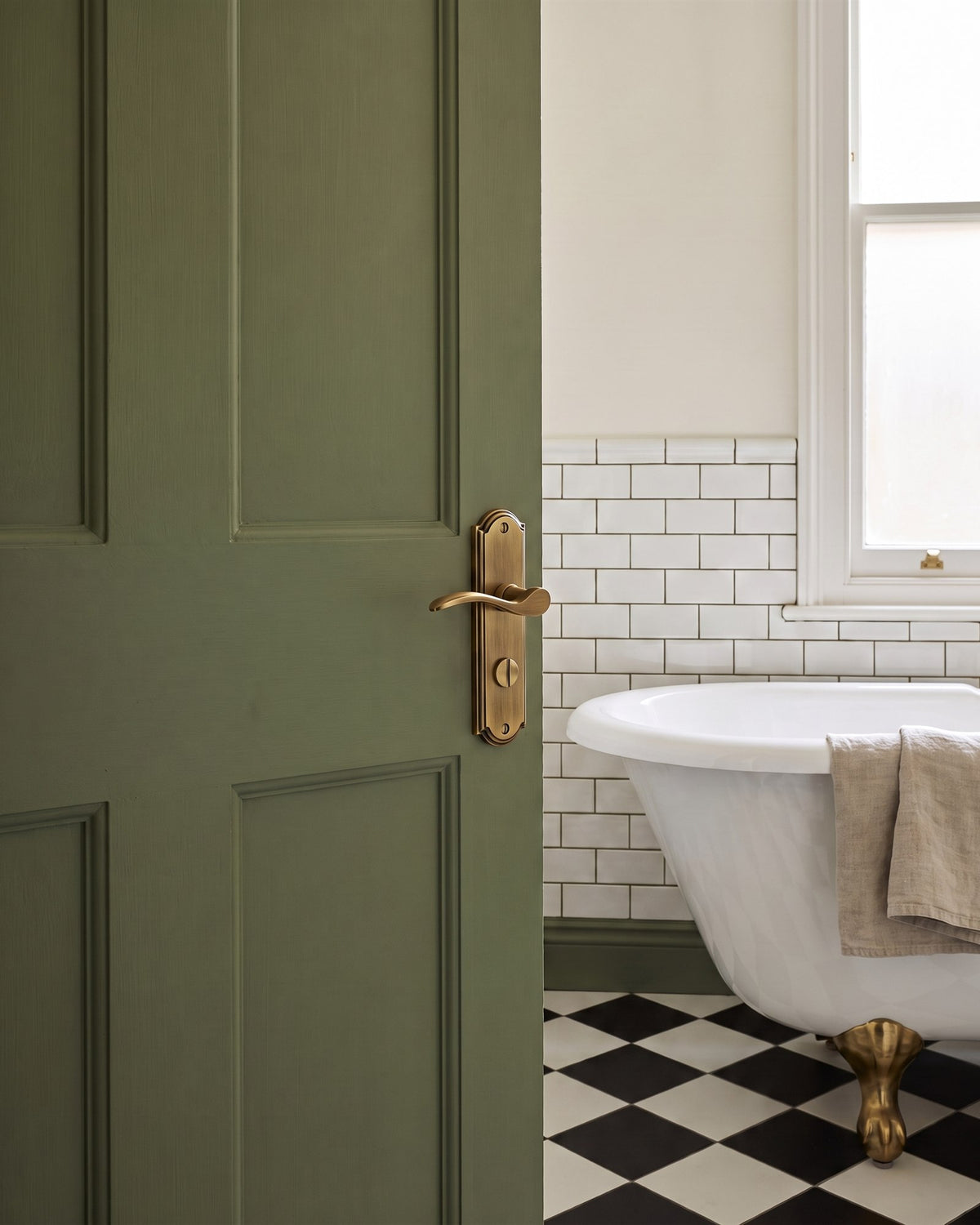
It is a period door done properly: knocker, knob and letter box on one centre line, numbers on the top rail, and nothing that doesn't need to be there. Paint the hall panelling the same olive and fit Howard levers on the internal doors, and the look carries on past the doormat.
Getting it right
One line down the middle
Fit the knocker at eye level, the knob below it and the letter box on the middle rail, all on the door's centre line. The knob is fixed and doesn't turn: it is there to pull the door shut behind you.
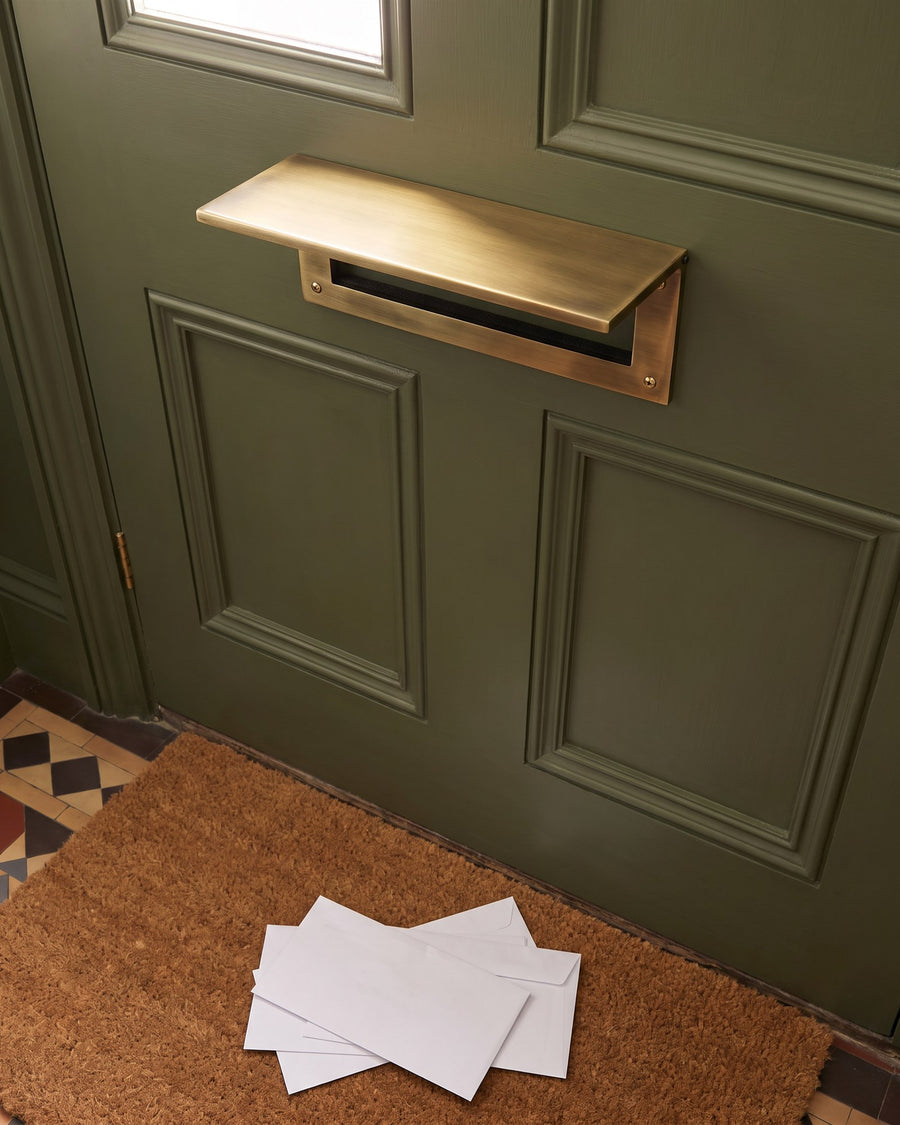
Letter box and tidy together
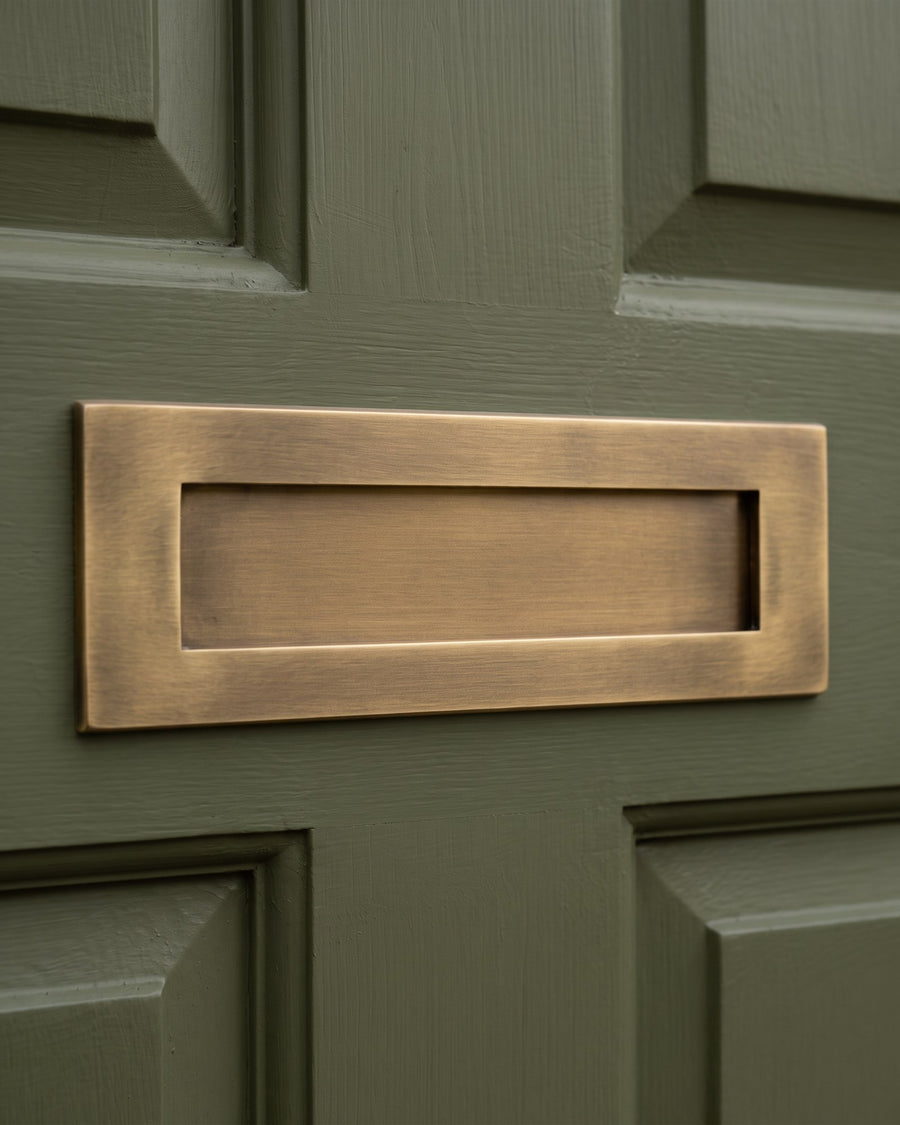
The 305x102mm letter box needs a 248x60mm cut-out and its bolts are 275mm apart. The 315x115mm tidy inside has the same 275mm screw centres, so the two line up, and its foam strip stops the draught.
Keys go through the pull
The cylinder pull goes on the outside of the door, around the rim cylinder that holds it in place, so you can turn the key and pull the door to in one movement.
Inside, stick to one range
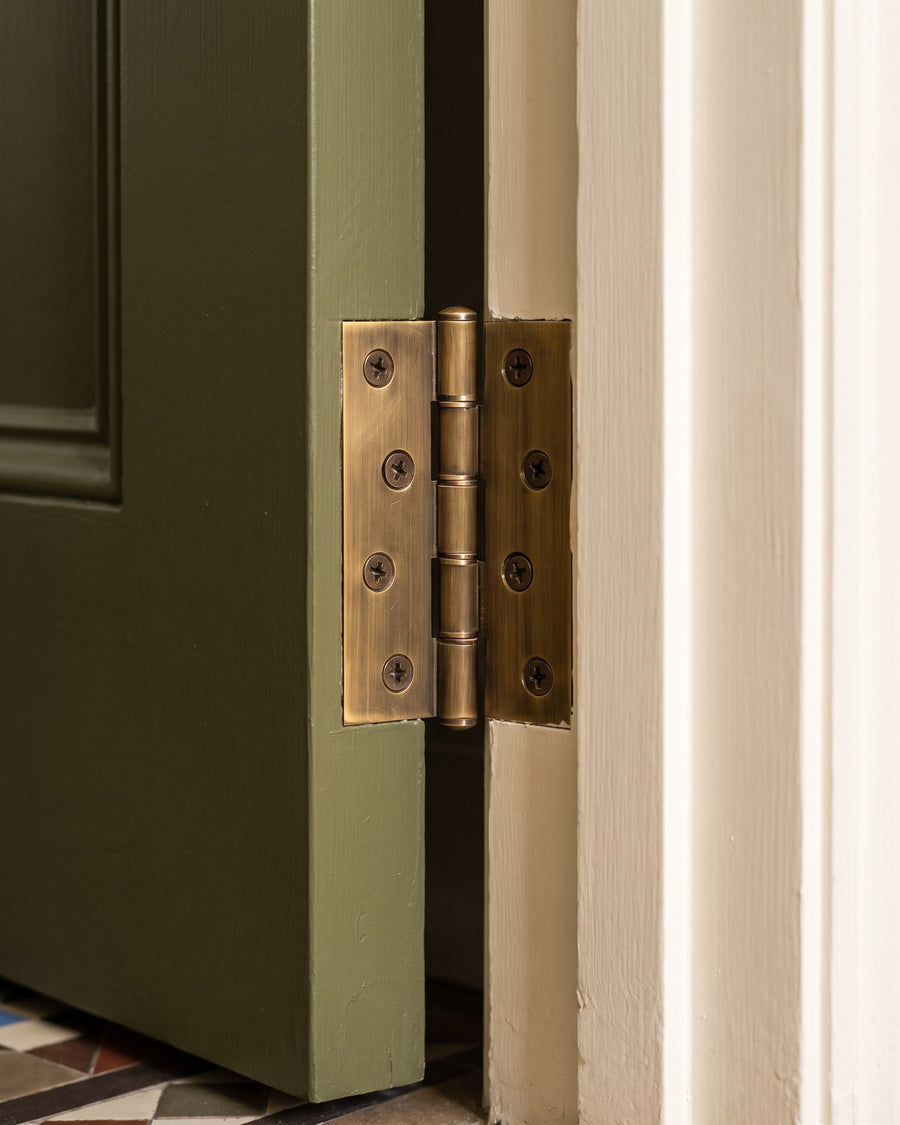
Use Howard latch handles on passage doors, the lock version on a study and the bathroom version upstairs: all share the same 170x48mm plate. Antique brass butt hinges (102x67mm, sold in pairs) finish the door edges.
