Polished Chrome Door Handles for Light-Filled Interiors
Polished chrome is one of the few door-handle finishes that changes noticeably with the room around it. Rather than presenting one fixed colour, its bright reflective surface picks up light, shadow and nearby tones. On a pale door it can appear crisp and almost weightless; against darker paint it becomes a much brighter feature; beside glass and mirrors it feels particularly natural because all of the surfaces are responding to light in different ways.
That makes polished chrome especially interesting in interiors designed around daylight. Glazed doors, pale oak, off-white walls, large windows, mirrors and smooth stone all give the finish something to reflect. The aim does not have to be a cold or clinical room. Used carefully, polished chrome door handles can bring clarity to warm timber, sharpen soft neutral schemes and add a small bright detail to rooms where most other surfaces are deliberately quiet.
The idea behind the look
Do not just match chrome to a colour. Give it light, space and surfaces to respond to.
Polished chrome is really a light-dependent finish
A matt black handle tends to remain visually dark wherever it is placed. Antique brass retains its warm brown and golden character. Polished chrome behaves differently because much of what you see on its surface is a reflection of the room.
Move the same chrome handle from a bright hallway into a dark bedroom and it can look surprisingly different. Position it opposite a window and highlights become stronger. Place it against a charcoal door and the silver outline becomes much more obvious. Fit it to pale oak and the surrounding timber can subtly warm what would otherwise appear to be a very cool metallic finish.
This is useful when planning an interior because polished chrome does not necessarily need another chrome object beside it to make sense. Sometimes the more important relationship is between the handle and the light source.
Direct daylight
Creates the brightest highlights and makes the reflective quality of polished chrome especially obvious.
Side light
Often gives the most attractive balance, with bright edges and enough shadow to reveal the shape of the lever.
Soft ambient light
Makes chrome feel quieter and less mirror-like, particularly in bedrooms and softly lit hallways.
Dark surroundings
The handle can become a bright accent because the surrounding door and room provide greater tonal contrast.
Start by looking at where the windows are
When choosing polished chrome for a hallway or landing, stand beside the proposed door and look towards the main source of daylight. You may find that one face of the door receives much more light than the other, particularly in houses with long corridors, stair windows or glazed extensions.
A reflective handle positioned sideways to the window often shows both bright and dark areas at once, which helps reveal its shape. A handle directly opposite a large window may reflect more of the bright opening and appear almost luminous in comparison with the door.
This is not something that needs precise lighting calculations. Simply viewing the door at morning, midday and evening can tell you whether polished chrome will become a prominent feature or a much quieter detail.
Try this before ordering
The teaspoon test
If you do not have a chrome handle sample to hand, hold a clean polished stainless-steel spoon or another small reflective metal object against the door at approximately handle height.
It will not reproduce the chrome finish exactly, but it can help you see what the surrounding room is likely to reflect. On one door you may notice mostly window light; on another, dark cabinetry, coloured walls or timber flooring may dominate the reflection.
It is a simple way of reminding yourself that reflective hardware will never be viewed in isolation.
Glass and polished chrome make a natural partnership
Clear and fluted glass introduce transparency and refraction; polished chrome introduces reflection. Although those effects are different, they both make light part of the design.
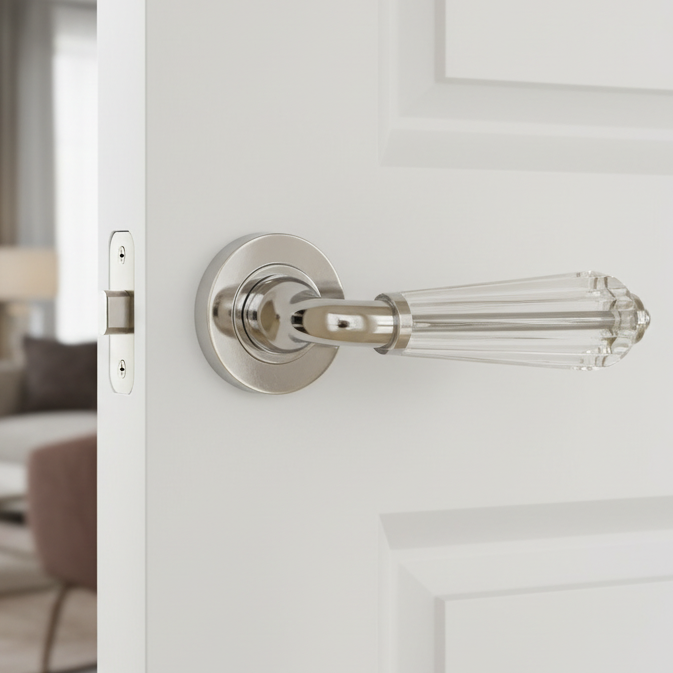
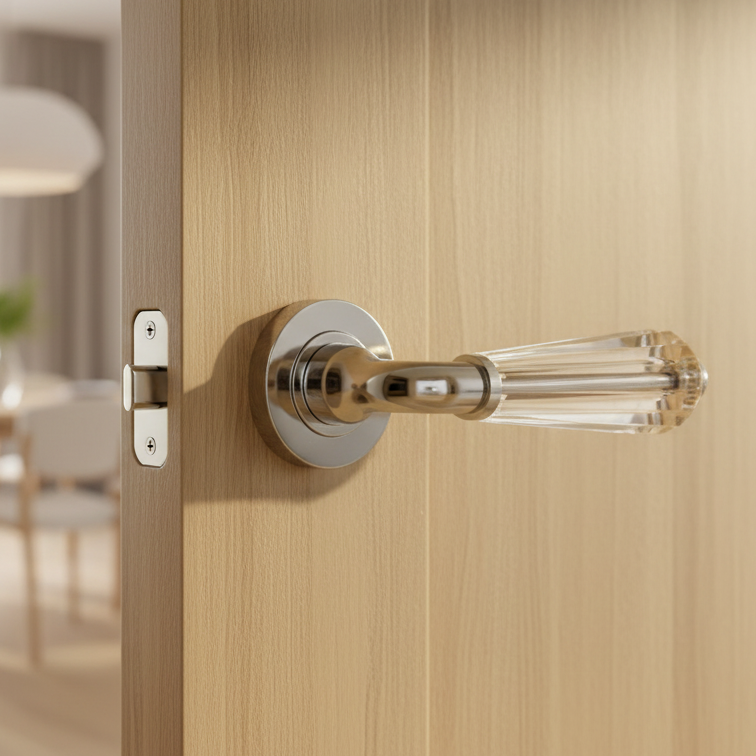
The Fluted Glass Lever on Polished Chrome Rose takes that idea further by combining both materials in the handle itself. The clear fluted grip catches and distorts the background while the chrome rose and metal sections reflect the colours immediately around them.
Material story
Let the handle almost disappear
A clear lever has less visual mass than an equivalent solid metal handle because the background remains partly visible through it. This can be especially attractive on light doors where you want the hardware to feel decorative without becoming a heavy block of metal.
It is also an interesting option near glazed doors, glass display cabinetry, mirrors and other transparent or reflective features. The relationship comes from the behaviour of the materials rather than from trying to make every surface exactly match.
Browse glass lever door handles to compare polished and satin chrome versions.
Chrome does not have to mean an all-white room
Bright chrome is often associated with white paint and cool grey interiors, but that is only one way to use it. In fact, polished chrome can be especially effective when it is the coolest element in an otherwise warm room.
Pale oak, beige stone, warm white paint and natural textiles provide a softer setting for reflective silver hardware. The surrounding warmth can even appear in the reflections on the handle itself, helping the chrome sit more comfortably within the room.
This palette works particularly well when you want an interior to feel bright and contemporary but not stark. The timber and stone provide the warmth; the chrome introduces a clean highlight; a small amount of charcoal or black can give the lighter materials definition.
For a cleaner look, reduce the amount of metal on the door
Because polished chrome is visually bright, you do not necessarily need a large fitting to make an impact. A lever on rose can provide enough reflective surface while leaving the majority of the door completely clear.
Minimal chrome
Use taper to reduce visual weight
The Geo Tapered Polished Chrome Lever on Rose narrows towards the end of the lever, creating a cleaner profile than a uniformly heavy bar.
The small circular rose means most of the door remains untouched visually. On a plain painted or veneered door, your eye sees the taper of the handle rather than a large plate surrounding it.
This is particularly useful when several doors are visible together. Instead of creating a series of large silver rectangles down the hallway, each door carries a relatively small reflective detail.
Use reflection differently on dark doors
A dark door transforms polished chrome. Against navy, charcoal, near-black, deep green or dark brown, the handle no longer blends into a light interior. It becomes a deliberate bright point.
This can work extremely well, but it changes the role of the hardware. If the door colour is dramatic and the handle is also highly reflective, the combination already contains plenty of contrast. You may not need an elaborate lever shape as well.
Texture changes what chrome reflects
A completely smooth polished-chrome surface acts more like a small mirror. Add fluting, knurling or other surface detail and the reflections are broken into many smaller highlights.
This makes textured polished chrome a useful option where you like the brightness of the finish but want more depth than a plain cylindrical lever provides.
Broken reflections
Knurling turns one highlight into hundreds
The Bari Knurled Polished Chrome Lever on Rose combines a smooth circular rose and collar with a finely patterned grip.
The smooth sections produce larger reflections, while the knurled section breaks the light across its patterned surface. The result has considerably more depth than an entirely smooth chrome lever even though the overall colour remains consistent.
This can work particularly well in contemporary kitchens, utility rooms, home offices and spaces containing metal-framed furniture or detailed cabinetry.
Fluting creates a softer version of the same idea
Knurling is precise and finely patterned. Fluting uses broader grooves, so the way light moves across the handle feels different again.
Broader highlights
The Bloom uses light to reveal its shape
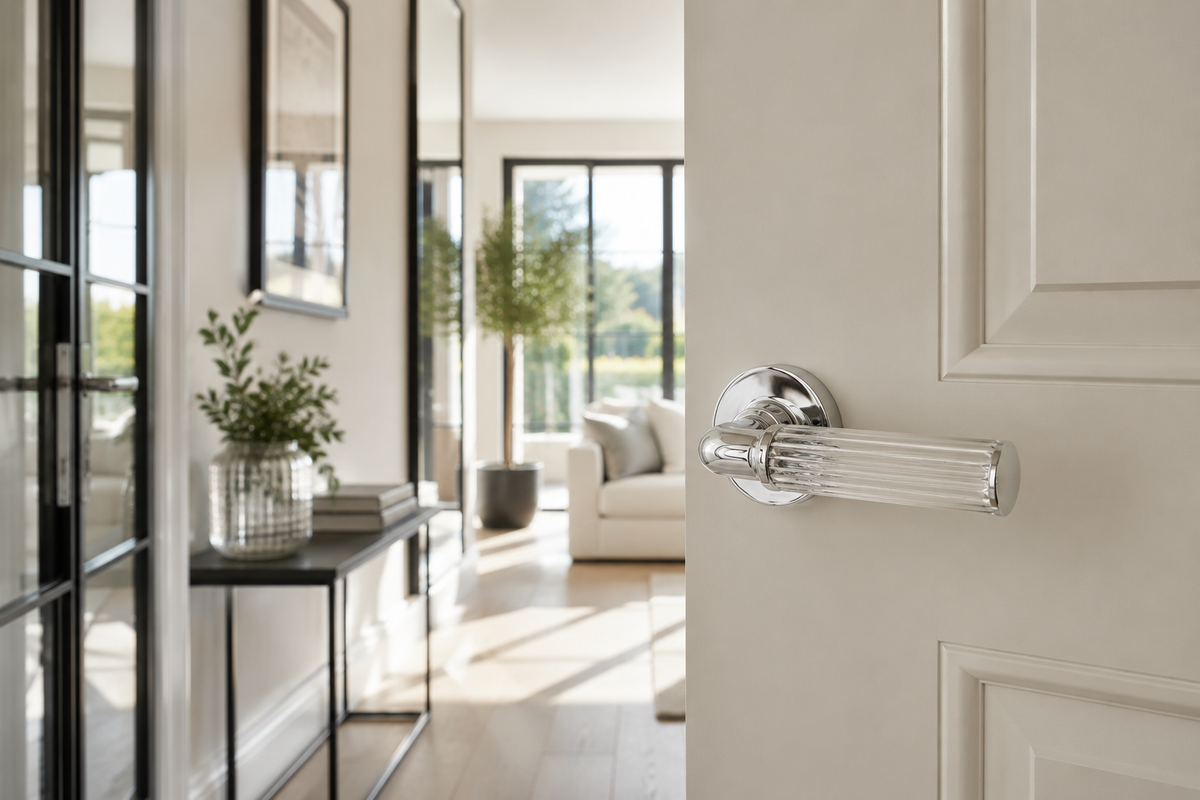
The Bloom Polished Chrome Lever on Rose has longitudinal fluting running along its otherwise straight lever.
Rather than reading as one flat reflective surface, each groove catches light at a slightly different angle. From a distance the handle remains simple; as you approach it, the repeated lines become more obvious.
This is a useful middle ground when a completely plain chrome handle feels too anonymous but a highly decorative lever would be too busy.
Use mirrors as a relationship, not a matching exercise
Chrome often works well in rooms containing mirrors because both surfaces reflect their surroundings. That does not mean the mirror frame itself needs to be chrome.
A frameless mirror, black-framed mirror or even an antique mirror can still make sense beside polished chrome hardware. The connection comes from the way light is bounced around the room.
In a hallway, for example, a mirror opposite a door can make the handle visible twice: once directly and once in reflection. That increases its visual importance, so it is worth checking what the hardware looks like from both angles.
Mirror check
If a door appears prominently in a hallway mirror, choose the handle as though you are specifying two visible fittings. Its shape, height and alignment become part of the reflected view as well as the actual doorway.
Polished chrome can help a small hallway feel visually lighter
No door handle can physically make a corridor larger, but the visual weight of the hardware can affect how busy the space feels. Large dark plates create clear blocks on each door, whereas compact reflective roses tend to appear lighter against pale surfaces.
For a narrow hallway with several doors, consider combining warm white or pale neutral paint with relatively simple polished-chrome levers. The highlights provide definition without creating a row of heavy dark marks.
If the hallway has little natural light, warm artificial lighting is important. Chrome under a very cool lamp can feel much colder than it does in daylight. A warmer lamp can soften the surrounding colours while still allowing the metal to retain its silver character.
See the room in daylight and after dark
Reflective finishes change more dramatically between daytime and evening than matt finishes do. A handle that reflects a bright window during the day may reflect a dark room and one warm wall light after sunset.
Day
Window light defines the edges
In bright conditions, polished chrome often appears lighter and more silvery. Nearby windows, pale walls and sky reflections can dominate the surface.
Best companions: glazing, pale oak, stone, white or soft-grey paint.
Night
Individual lamps become visible
In the evening, reflections become smaller and more concentrated. A pendant, wall light or lamp can create a warm highlight across an otherwise cooler chrome surface.
Best companions: warm lamps, dark timber, soft textiles and carefully placed wall lighting.
When polished chrome is too bright, satin chrome may be the better answer
There is no benefit in forcing polished chrome into a room simply because you like the finish in a product photograph. If the interior contains lots of direct sunlight, mirrors, high-gloss cabinetry and other reflective surfaces, adding another bright element may feel busier than intended.
Satin chrome door handles retain the neutral silver colouring but scatter reflections across a softer surface. They can therefore be a useful alternative where you want a related metallic tone with less shine.
The two finishes can look similar in small website thumbnails but behave differently in a real room, so it is worth deciding whether you actually want shine or simply a cool silver-coloured handle.
Do not feel obliged to use chrome on every visible fitting
A polished chrome handle can sit comfortably with black window frames, stainless-steel kitchen appliances, grey aluminium glazing and even warmer metals elsewhere in the room. Exact matching is not always necessary.
What matters more is avoiding a collection of unrelated finishes on the same door. If the handle is polished chrome and there is a separate keyhole fitting immediately beneath it, a coordinating polished chrome escutcheon will normally create a more deliberate result than introducing a completely different finish a few centimetres away.
Once you move away from the door itself, there is more flexibility. A black light fitting at the other side of the room does not need to match the chrome handle in order for both to belong.
Give privacy doors the same level of finish
Where a lever-on-rose handle is used on bedrooms and living areas, a bathroom or ensuite can retain the same compact appearance by adding a separate turn and emergency release beneath the lever.
Keep the privacy fitting visually separate
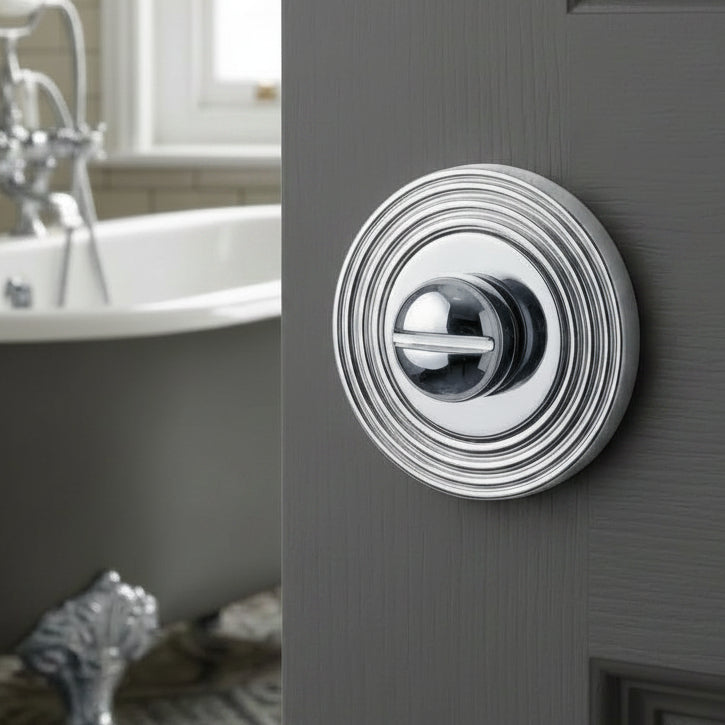
The Polished Chrome Thumbturn & Emergency Release allows a bathroom door to retain a lever-on-rose layout rather than changing to a large integrated backplate.
The turn sits on the inside of the door and the emergency-release side sits externally, used with a suitable bathroom mortice lock.
Visually, the two small circular fittings can echo the rose above them, which is particularly effective on uncluttered contemporary doors.
Chrome can connect doors to kitchens without making the house feel commercial
Kitchens naturally contain metal: taps, ovens, extractors, sinks and appliance trims. That can make polished chrome door furniture feel immediately at home, but there is no need to turn every cabinet fitting silver as well.
One approach is to use polished chrome on the room door and keep cabinet hardware simple or integrated. Another is to repeat chrome selectively on a few cupboard handles, particularly if the appliances and tap already create several silver reference points.
Browse chrome cabinet handles if you do want to carry the finish into kitchen, utility, wardrobe or fitted furniture.
A better matching rule
Match finishes closely when fittings sit together. Coordinate more loosely when they are separated by the room.
Watch reflections around very colourful doors
Polished chrome can pick up nearby colour more than you might expect. A strong red, blue or green door may appear subtly within the handle's reflective areas, particularly on broad smooth surfaces.
This is not a problem — it is part of the character of the finish. In fact, it can help chrome relate to a colourful door more successfully than a completely neutral product image might suggest.
Where the door colour is already vivid, keep the handle shape relatively disciplined unless you deliberately want a more decorative effect. The colour, reflection and lever shape are all contributing information at once.
Finger marks are more noticeable because the finish is reflective
The same bright surface that makes polished chrome attractive can also show fingerprints, water marks and dust more clearly than a highly textured or matt finish.
For everyday care, use a soft non-abrasive cloth and follow the cleaning guidance provided for the particular product. Avoid abrasive pads and harsh cleaners that could scratch or dull the finish.
This is worth considering when deciding where polished chrome will work best. A frequently used kitchen or family-room door will naturally need occasional wiping, while a less-used guest-room handle may remain visually pristine for longer.
A practical cleaning habit
Rather than waiting until the hardware looks marked, include the handles in ordinary light cleaning of the room. A quick wipe with a suitable soft cloth is easier than allowing residues to build up on the reflective surface.
Choose the lever according to what you want the light to do
By this point, chrome itself is only half of the decision. Different handle shapes create different kinds of reflection.
| Handle idea | How the surface behaves | Good setting |
|---|---|---|
| Geo tapered lever | Broad smooth surfaces with a clean narrowing profile | Minimal doors, bright hallways and contemporary extensions |
| Fluted glass lever | Transparency and reflection combined in one fitting | Rooms with glazing, mirrors and pale timber |
| Bari knurled lever | Fine texture breaks highlights into smaller points | Kitchens, offices and detail-led modern interiors |
| Bloom fluted lever | Long grooves create alternating strips of brightness and shadow | Simple doors where the handle itself can provide the decorative detail |
Think about the view through the doorway too
A polished-chrome handle is not only seen against the door. When the door is open, it may sit visually against the room beyond. That background can be completely different.
A handle fitted to a white door might normally appear subtle, yet when the door opens against a dark kitchen it becomes much more visible. A handle on pale oak may reflect a colourful bedroom when viewed from the hallway.
When possible, assess both positions before making the final choice. Open the door to its normal resting position and look at it from the adjoining room. This is particularly worthwhile for doors that are usually left open during the day.
Design from the real viewpoint
A handle may spend more time being seen on the edge of an open door than perfectly centred on a closed one. Choose it for the way your home is actually used.
A whole-house polished chrome scheme can still have variation
If polished chrome becomes the main door-furniture finish throughout the property, there is no requirement to fit one identical lever to every door.
You might use a very simple chrome lever through the main hallway, a glass-and-chrome design on a feature bedroom or dressing-room door, and a more textured chrome handle in a contemporary kitchen or office. The finish keeps the hardware related while the design responds to the character of each area.
If several different handles are visible from one position, keep the variation restrained. If each design sits in a separate part of the house, you can afford to be more adventurous.
Finish the door rather than stopping at the handle
Once the lever has been selected, check what other hardware will remain visible. A lockable room may need polished chrome escutcheons; a bathroom may need a matching turn and release; other doors may require visible bolts or related fittings.
The wider polished chrome door furniture collection includes handles, knobs and coordinating fittings if you want to keep the visible hardware within the same finish family.
As always, choose functional components such as locks, latches and hinges for their suitability to the particular door first. Appearance should complete the specification rather than override it.
Bring in the light
Choose polished chrome for what it reflects, not simply for what it looks like in the box.
Look at the window position, door colour, neighbouring materials and evening lighting. Then choose a lever shape that allows the reflective finish to play the role you actually want — subtle highlight, bright contrast or decorative feature.
Explore our polished chrome door handles for reflective contemporary and traditional designs, browse the complete polished chrome door furniture collection for coordinating fittings, or return to our door handle inspiration pages to explore more ways of using finish, light, colour and material throughout your home.