
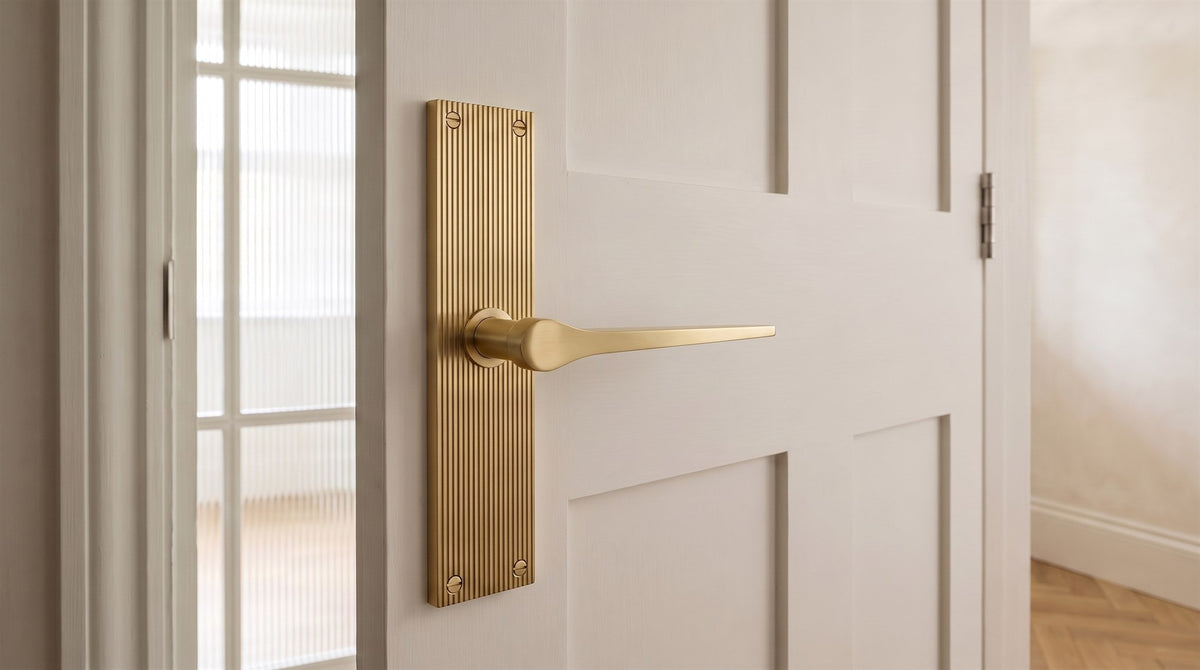
Reeded satin brass: one lever on every door
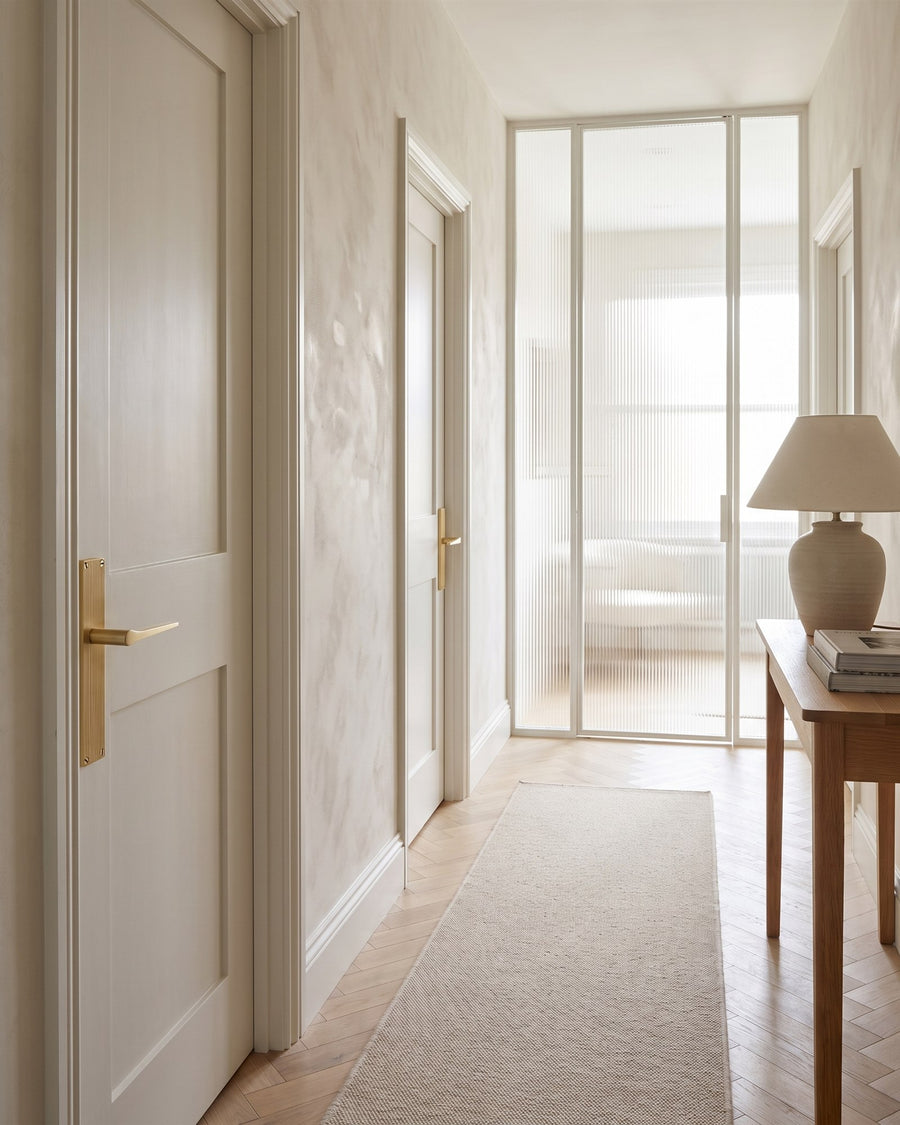
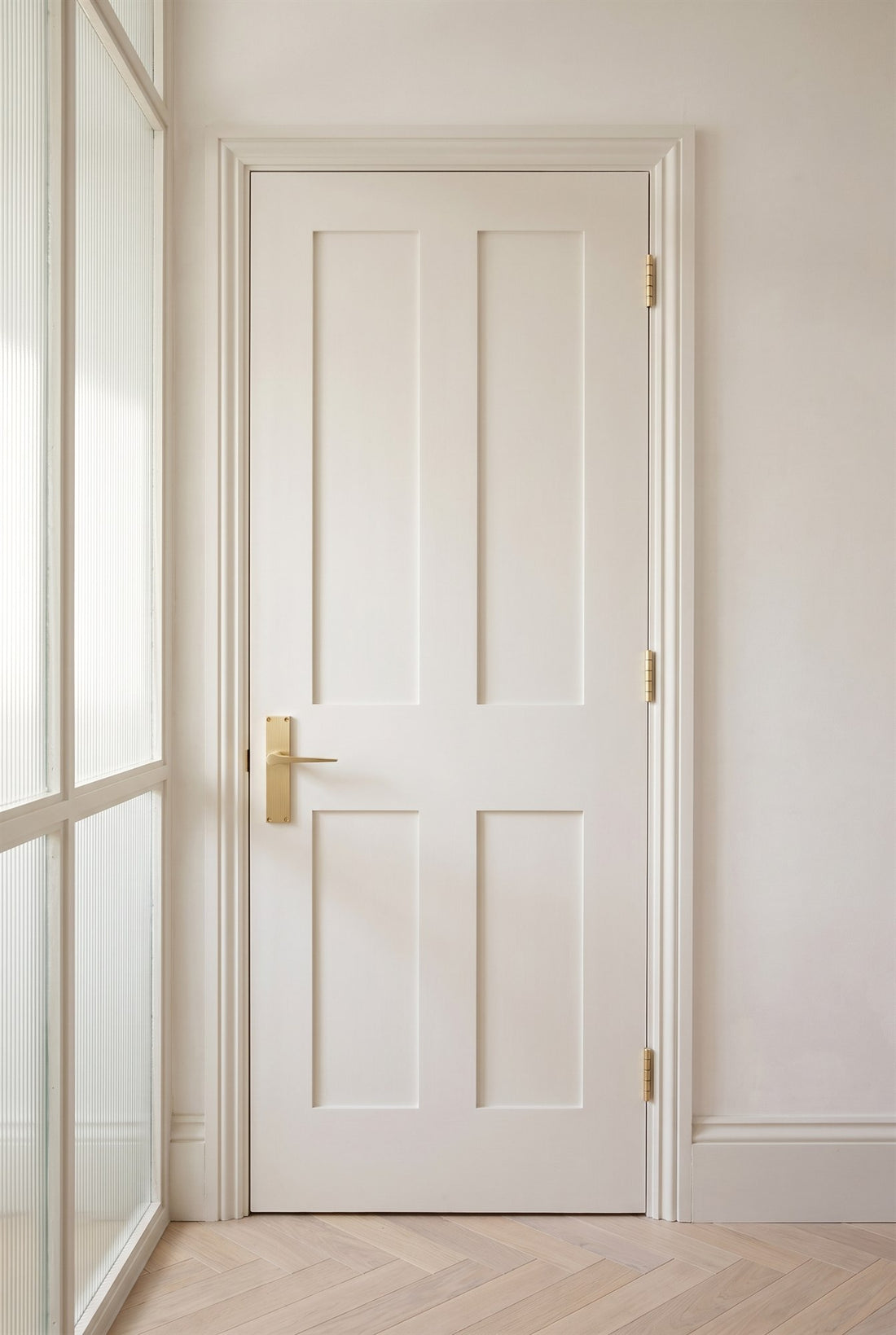
Warm white Shaker doors, fluted glass and the soft gold of reeded satin brass handles, from the hallway to the bathroom.
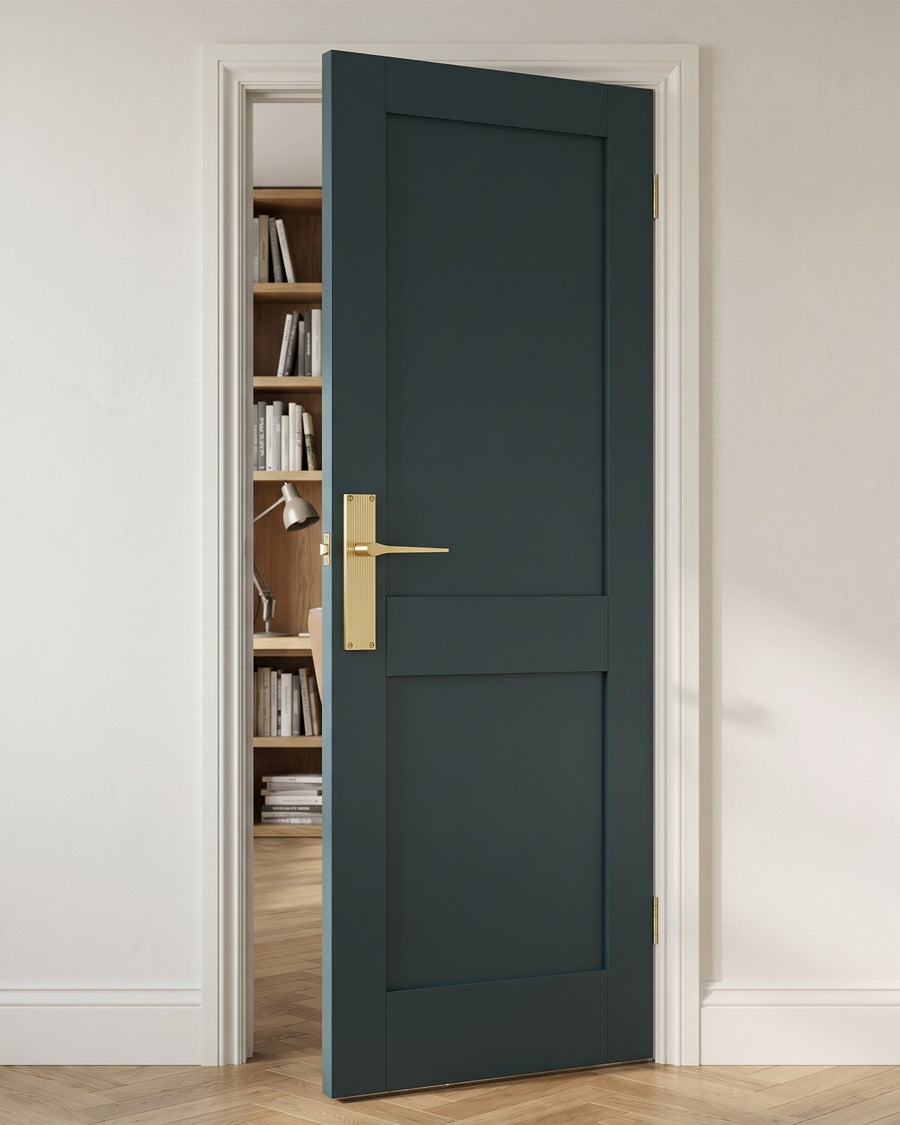
Warm white, stone or putty doors (or one statement door in a deep inky green), limewashed walls, fluted glass and oak or travertine floors, with reeded satin brass on every door.
One lever for every door
-
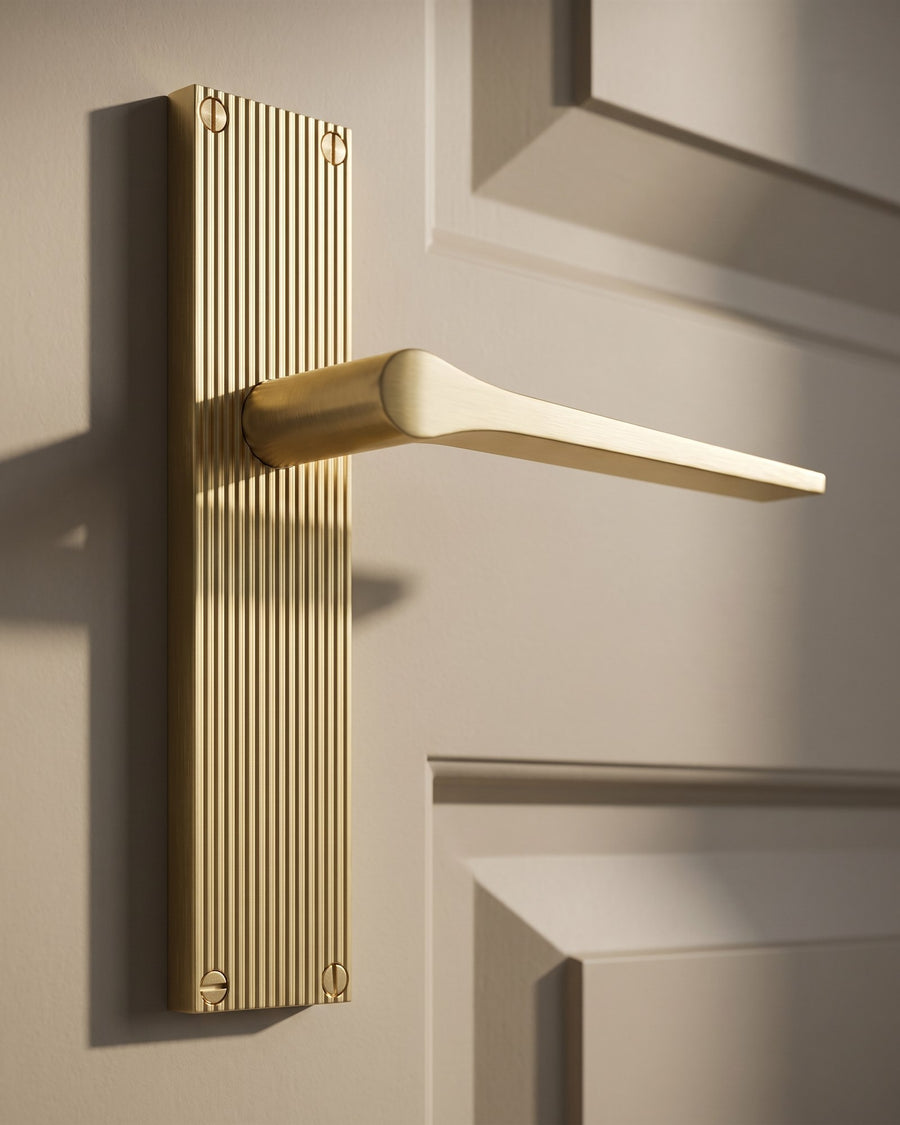
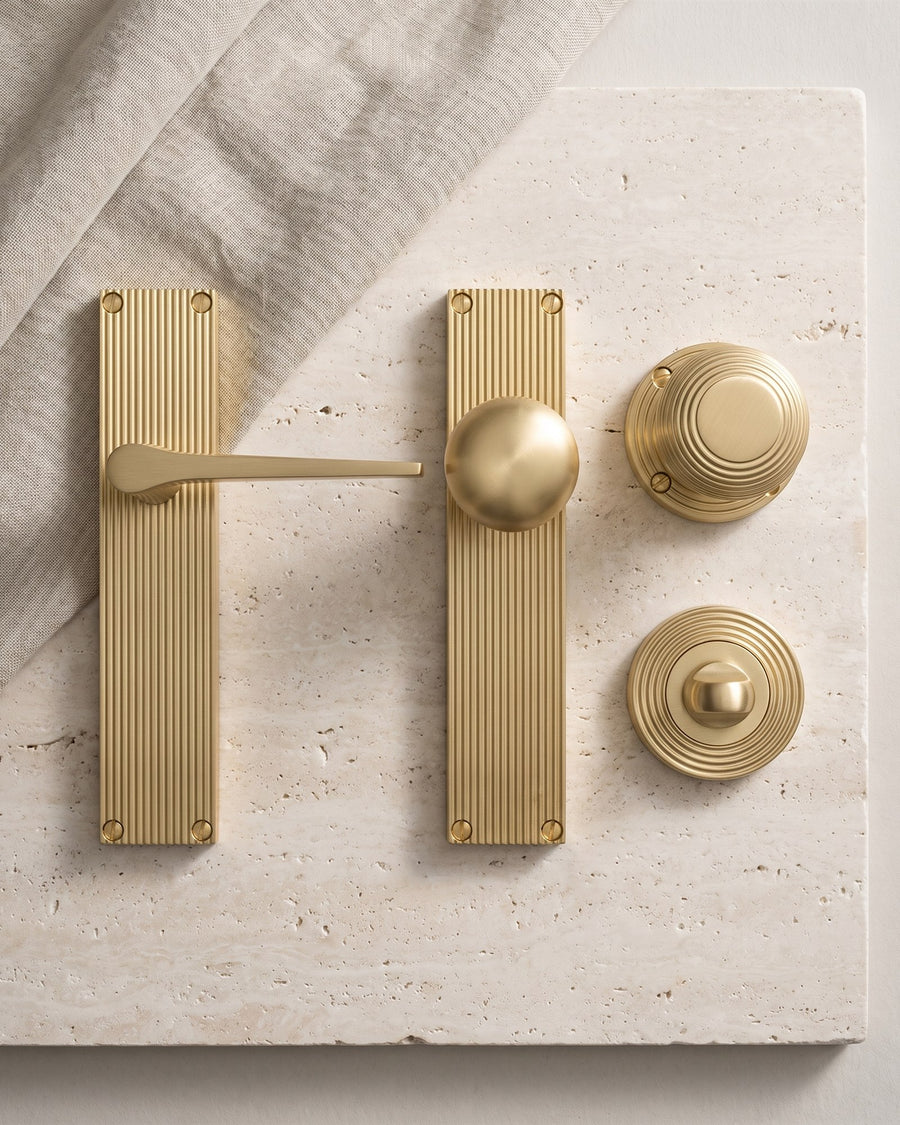
1Gio Reeded Satin Brass Lever Latch Handles

-
2Satin Brass Butt Hinges 4in (Pair)

-
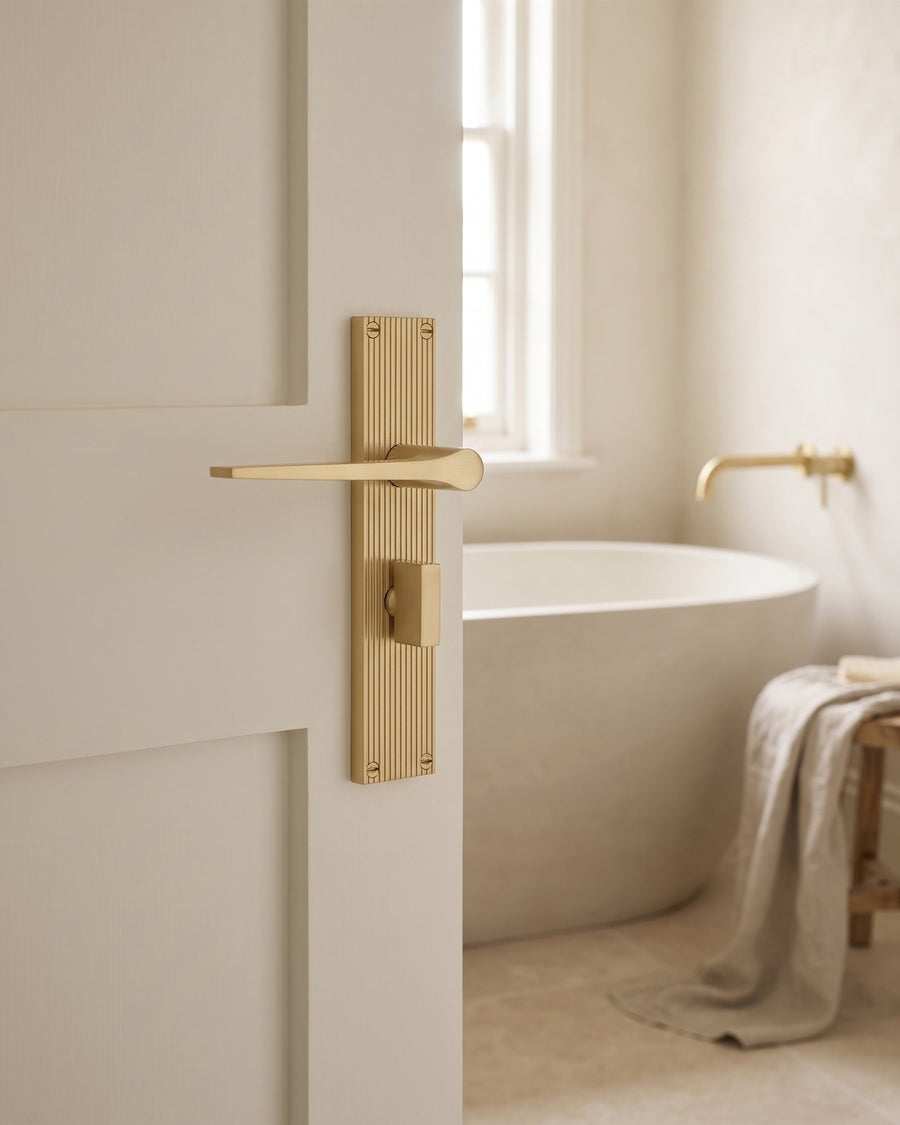
3Gio Reeded Satin Brass Bathroom Handles

-
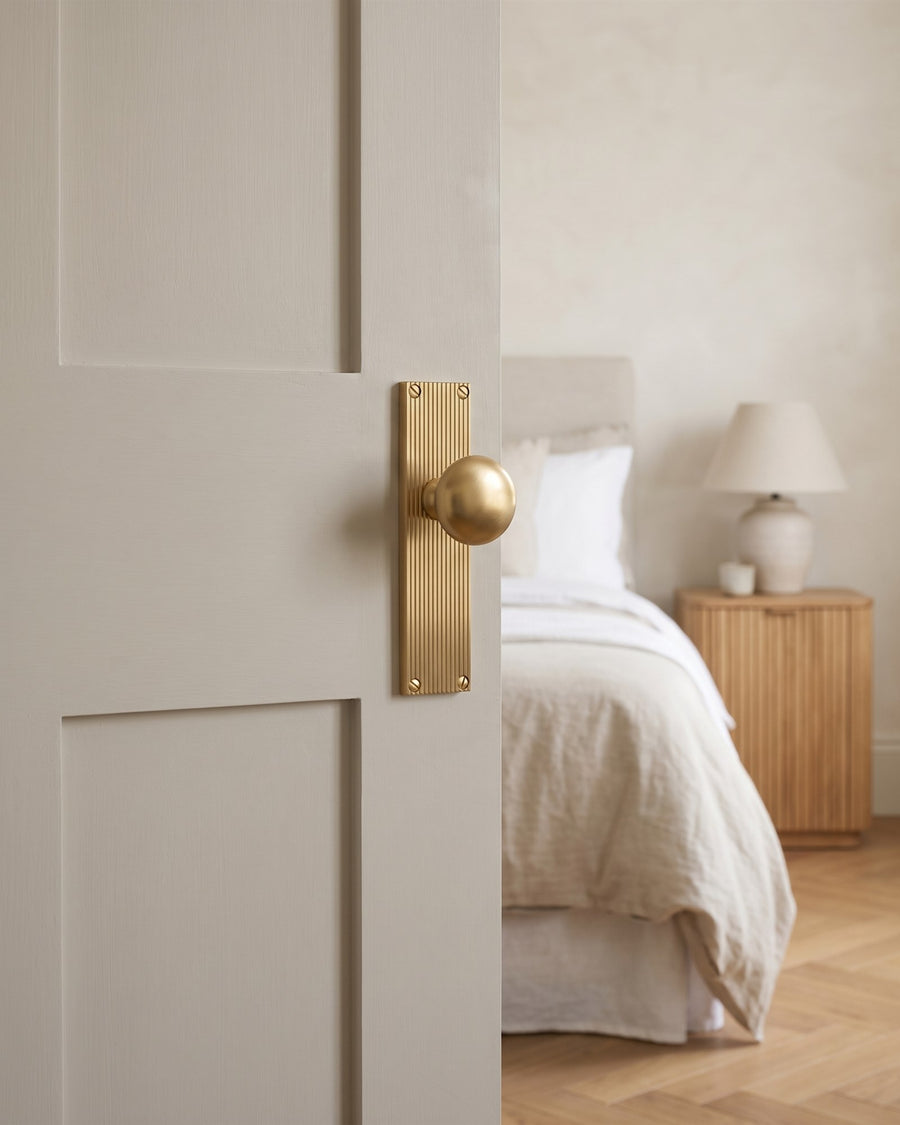
4Satin Brass Victoria Knob on Reeded Latch Plate

-
5Satin Brass Reeded Mortice Door Knobs 60mm

-
6Satin Brass Reeded Turn and Release 53mm

-
7Gio Reeded Satin Brass Keyhole Handles

-
8Gio Reeded Satin Brass Euro Handles

-
9Charlbury Reeded Satin Brass Lever Latch Handles

-
10Satin Brass Reeded Covered Escutcheon

More reeded satin brass, and other finishes
-
Gio Reeded Lever Latch Handles in Antique Brass

-
Gio Reeded Lever Latch Handles in Matt Bronze

-
Gio Reeded Lever Latch Handles in Satin Nickel

-
Charlbury Reeded Satin Brass Bathroom Handles

-
Charlbury Reeded Satin Brass Euro Handles

-
Satin Brass Victoria Knob on Reeded Bathroom Plate

-
Satin Brass Victoria Knob on Reeded Lock Plate

-
Satin Brass Victoria Knob on Reeded Euro Plate

-
Satin Brass Reeded Cabinet Knob 32mm

-
Satin Brass Reeded Centre Door Knob 76mm

-
Satin Brass Reeded Urn Door Knocker 195mm

-
Satin Brass Reeded Letter Plate 254x101mm

-
Satin Brass Reeded Bell Push 53mm

-
Satin Brass Projection Door Stop 76mm

-
Satin Brass Wall Mounted Door Stop 64mm

-
Satin Brass Sliding Door Pull Kit 60mm

The story behind reeded satin brass
Where it comes from
Reeding, a run of fine parallel ribs, has decorated furniture and architecture since classical columns, and was a favourite of 1930s Art Deco design. Today it is back across the whole house: fluted kitchen islands, reeded glass screens and ribbed bedside tables, and now door handles.
Why satin brass?
Satin brass is brushed to a soft, low sheen, so it has the warmth of brass without the shine. It is often called the new neutral: it sits as happily with warm white and stone as it does with a deep statement colour, and the reeds catch the light in fine gold lines.
Why it still works
Using one reeded lever on every passage door gives the whole house a calm, joined-up look. The same reeded plate comes with a bathroom turn, a keyhole or a euro cut-out, or with a knob instead of a lever, so every door can match.
Getting it right
Same plate, every door
Use the latch version on passage doors, the bathroom version with its thumbturn on bathrooms, and the keyhole version on a study you want to lock.
Softer in bedrooms
For a gentler look, use the Victoria knob on the same reeded plate. Knobs need a 3in (76mm) latch so your knuckles clear the frame.
Match the hinges
Swap plain steel hinges for satin brass butt hinges. Use three on heavy doors; they come in pairs.
Other finishes
The Gio reeded lever also comes in antique brass, matt bronze, satin nickel, polished brass and chrome if satin brass is not right for your scheme.
