
Satin chrome on a soft sage front door
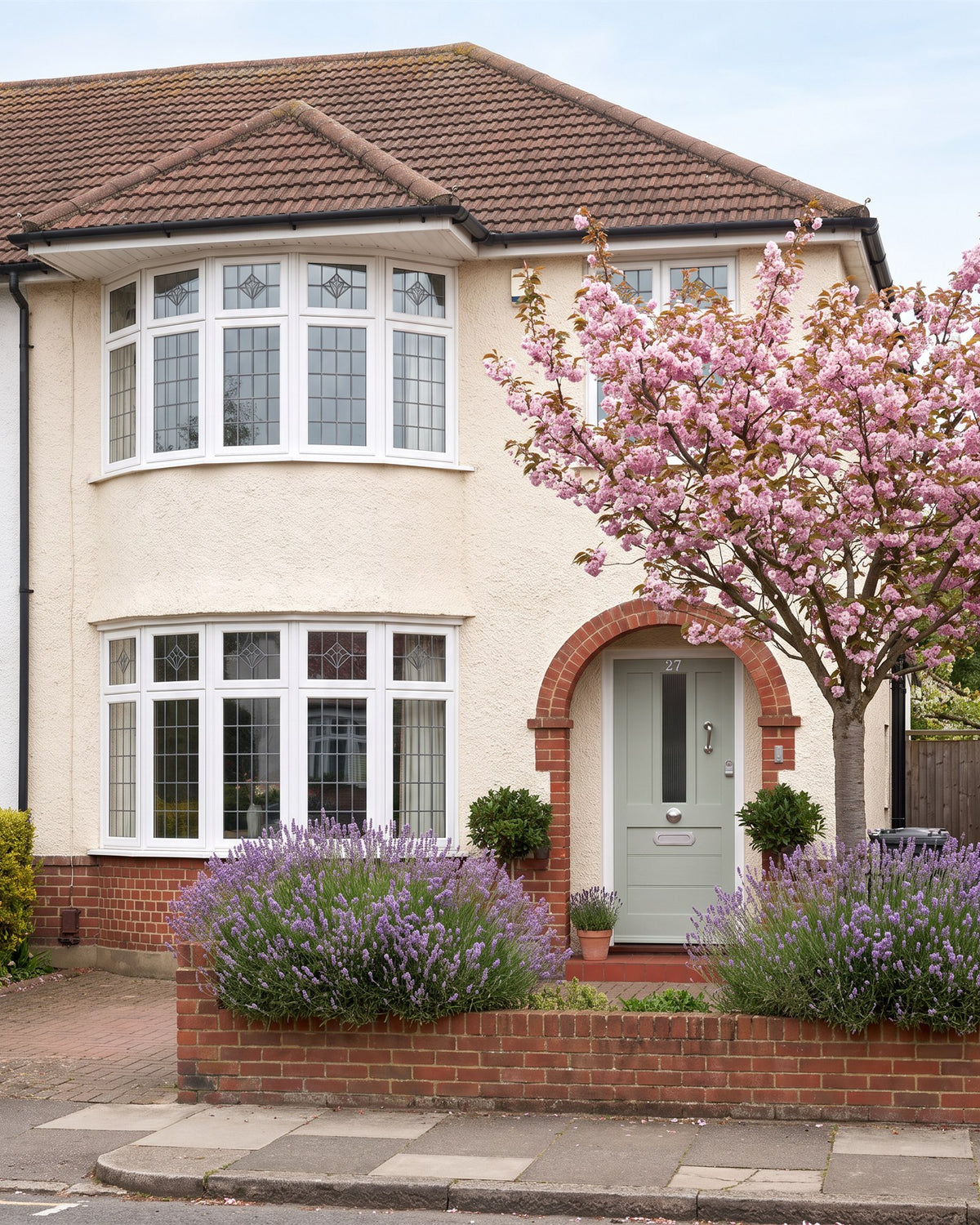
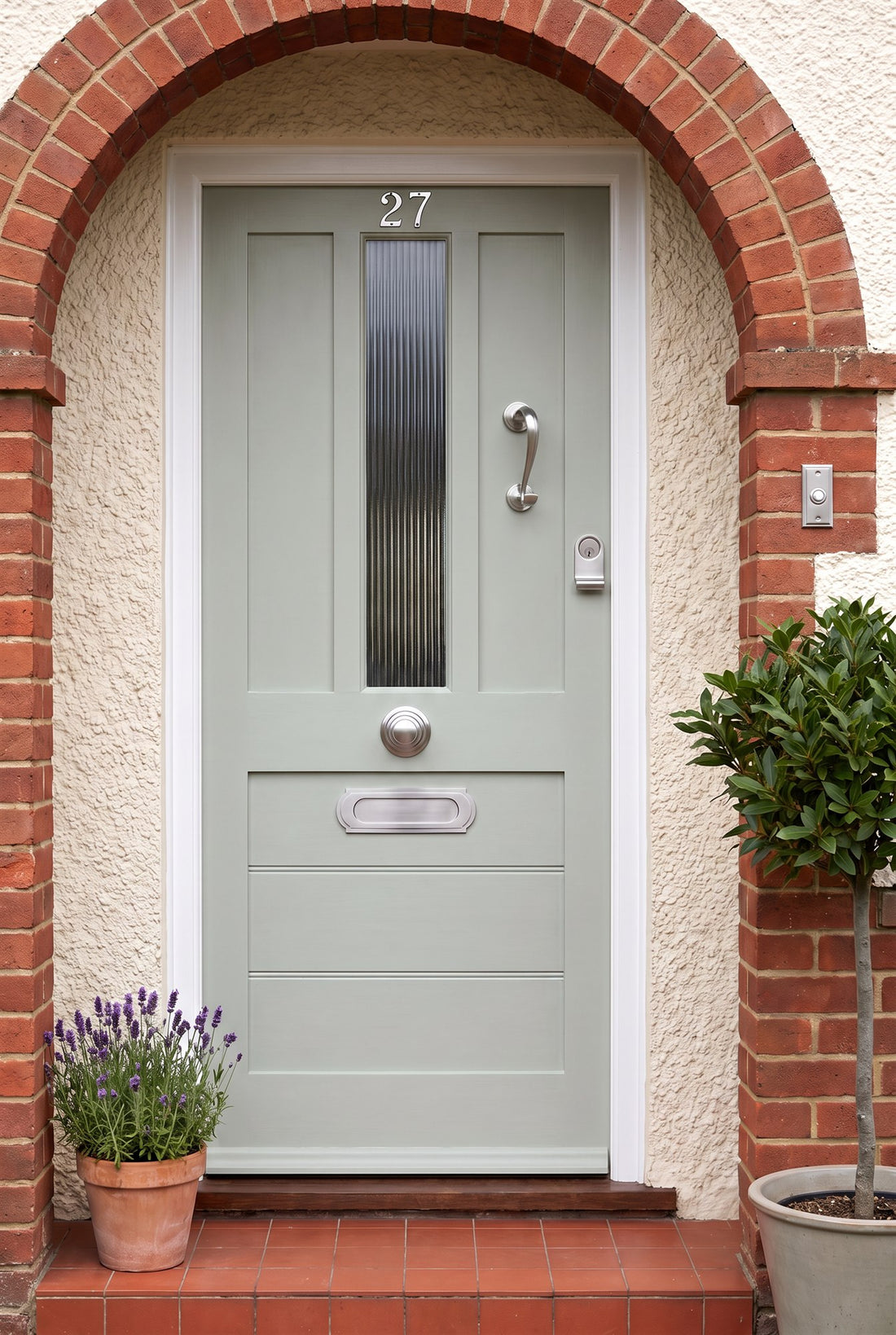
A silvery sage door on a 1930s semi, finished with brushed satin chrome: a calm, fresh pairing that suits the new appetite for silver.
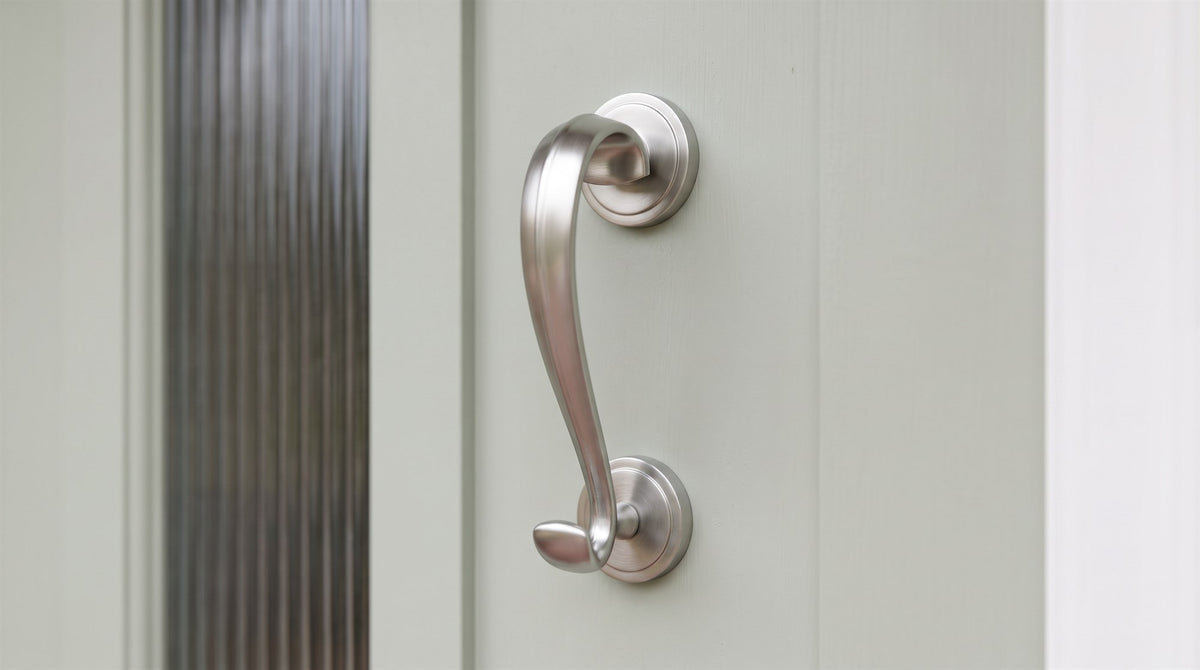
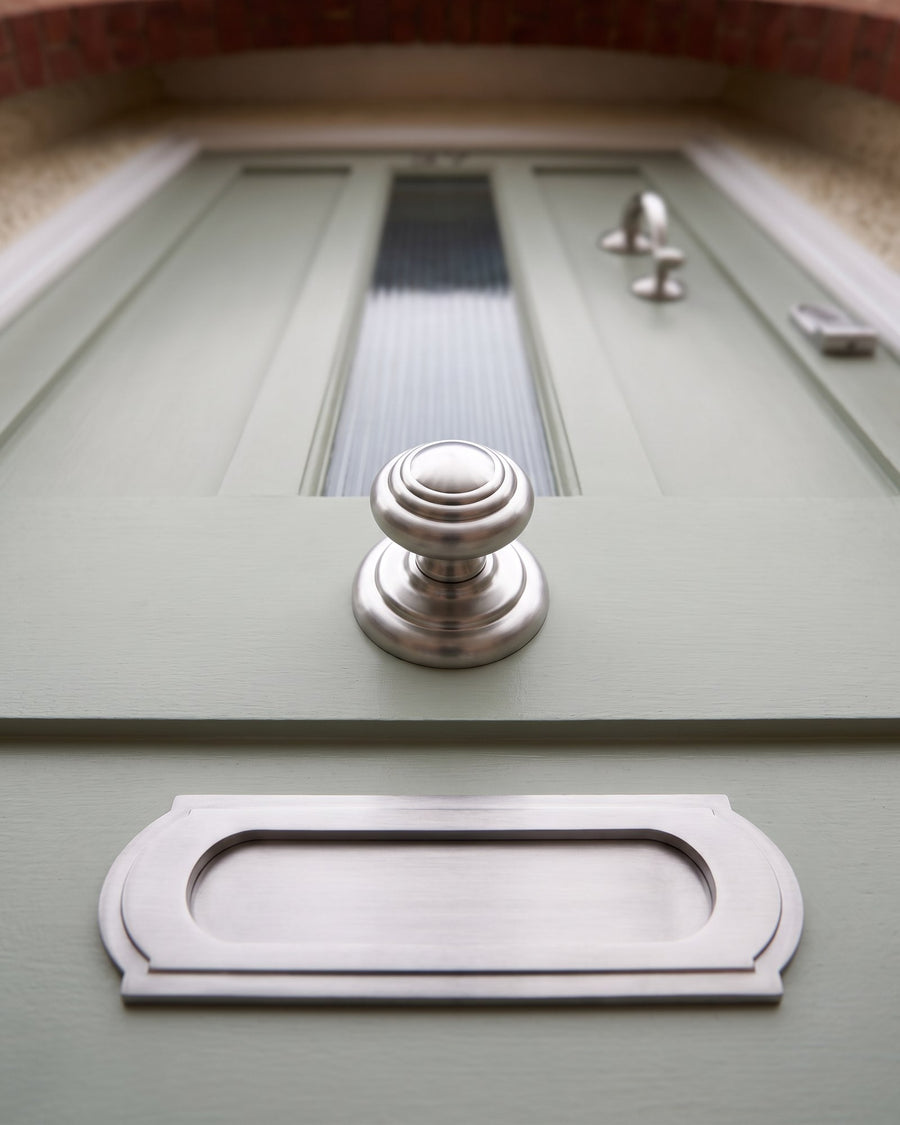
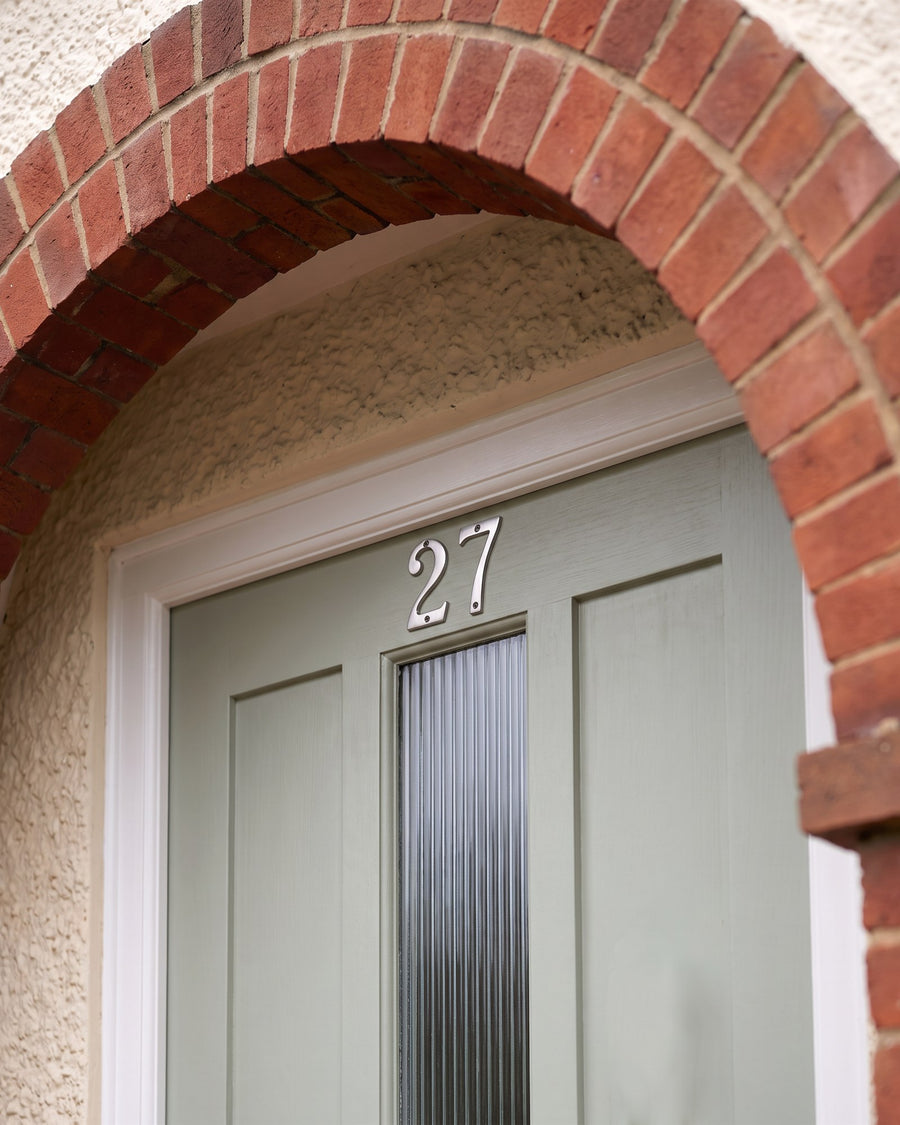
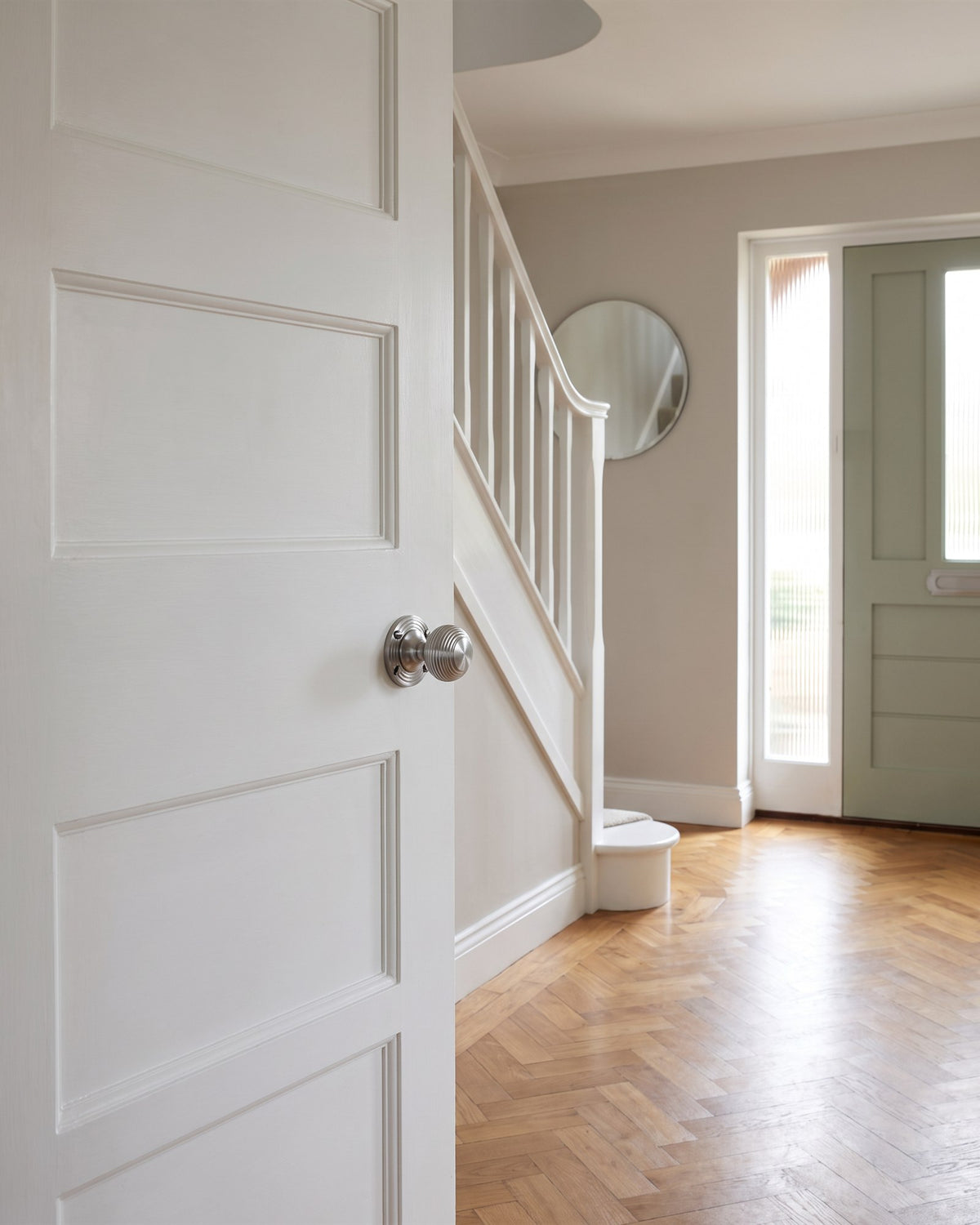
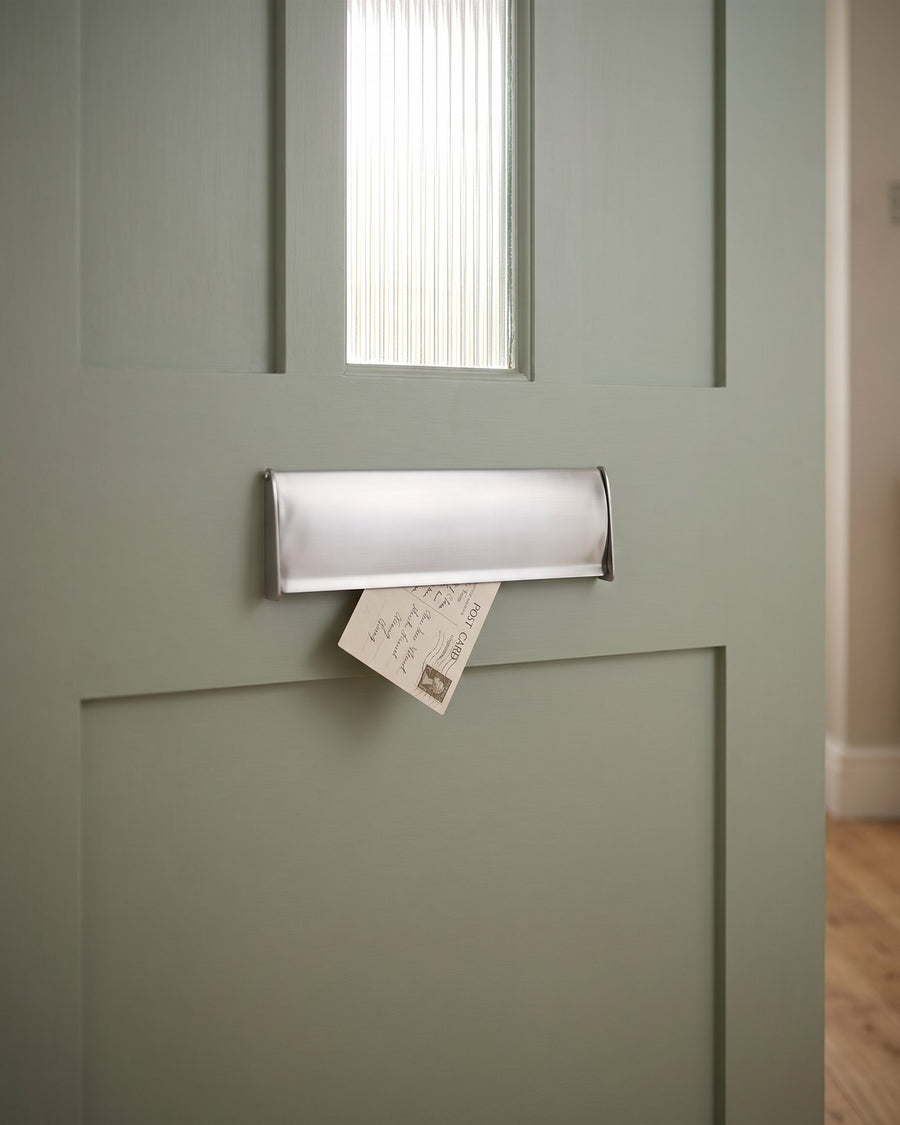
A 1930s semi with cream pebbledash, a curved brick porch and a red quarry-tiled step. The original door has its tall reeded-glass panel and flat horizontal panels, repainted a soft, silvery sage. Instead of the usual brass, the fittings are satin chrome: a curving Sloane knocker, a stepped Sloane knob and a letter plate with scalloped ends. The brushed silver picks up the grey in the green and keeps the whole entrance cool and fresh.
Satin chrome for a sage front door


More satin chrome knockers, knobs and letter plates
-
Sloane Knocker on Square Plate

-
Satin Chrome Urn Knocker

-
Satin Chrome Doctor Knocker

-
Satin Chrome Ring Knocker

-
Satin Chrome Profile Doctor Knocker

-
Satin Chrome Victorian Centre Knob

-
Satin Chrome Round Centre Knob

-
Satin Chrome Stepped Centre Knob

-
Satin Chrome Plain Letter Plate

-
Satin Chrome Edwardian Letter Plate

-
Satin Chrome Circular Bell Push

-
Satin Chrome Tidy with Draught Excluder

-
Satin Chrome House Numbers 51mm

-
Satin Chrome Victoria Door Knobs

-
Satin Chrome Reeded Escutcheon

Why satin chrome suits a sage door
The silver comeback
After a decade of brass, brushed silver finishes are back: satin nickel and satin chrome are now the most chosen hardware finishes in UK kitchens, and the trend has moved to the front door. Satin chrome is softer than polished chrome, so it looks calm rather than flashy.
Grey-green and grey metal
Sage has a grey undertone, and satin chrome shares it. The result is tonal and gentle, which suits pebbledash and brick far better than high contrast. If the sage were a warmer olive, brass would be the better partner.
Shapes with a 1930s feel
The Sloane knocker's long S-curve and the scalloped ends of its letter plate echo the soft, streamlined lines of the 1930s, without tipping into full Art Deco. The stepped Sloane knob ties the two together in the middle of the door.
Planning the door
Knocker off-centre
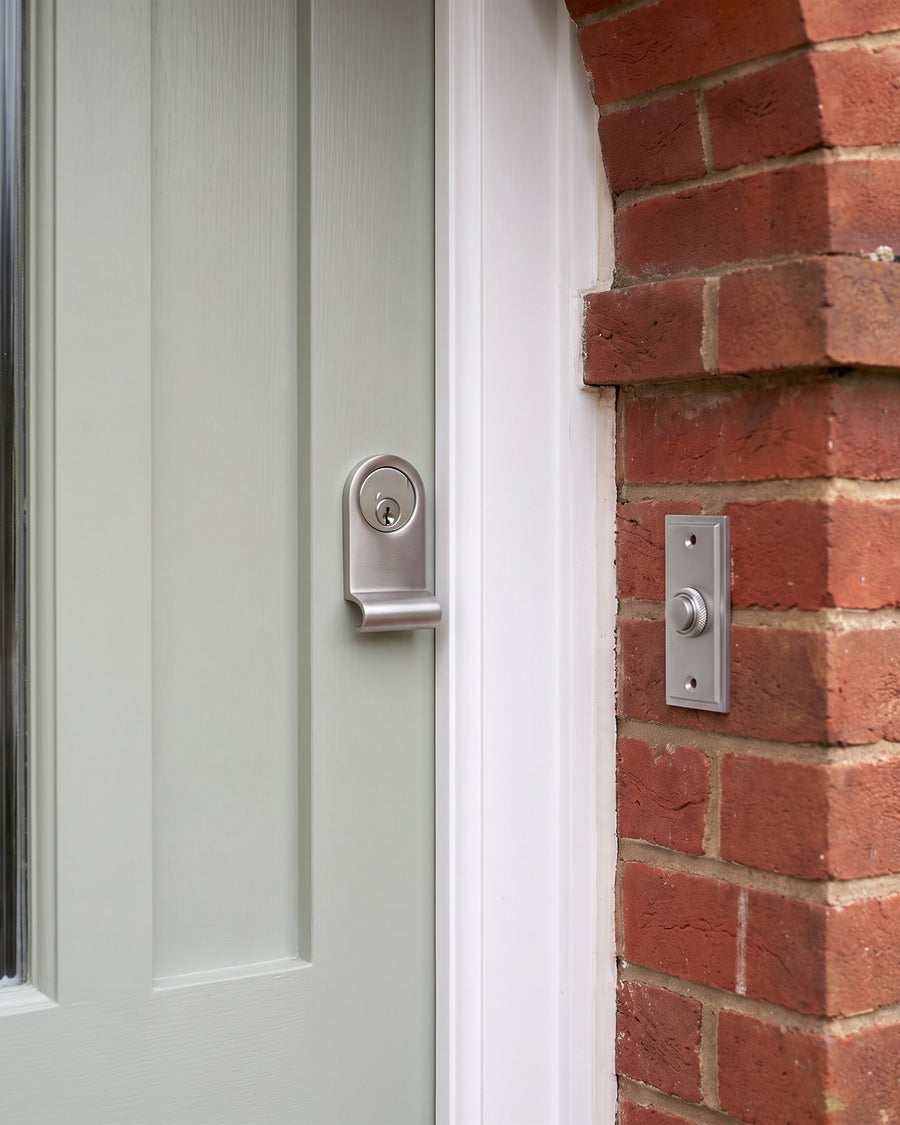
On doors with a central glazed panel, fix the knocker on the lock-side stile at shoulder height rather than over the glass, with the cylinder pull below it.
Sizing the knob
The Sloane knob sits on a 102mm rose, so it needs a middle rail at least that deep. On a narrower rail, choose the 78mm round centre knob in the same finish.
Inside the door
The 299mm interior tidy covers the cut-out behind the 304mm Sloane letter plate and stops the draught.
Easy upkeep
Satin chrome hides fingerprints well. Wipe it with a soft damp cloth and dry it; avoid polish, which can leave shiny streaks on a brushed finish.
