
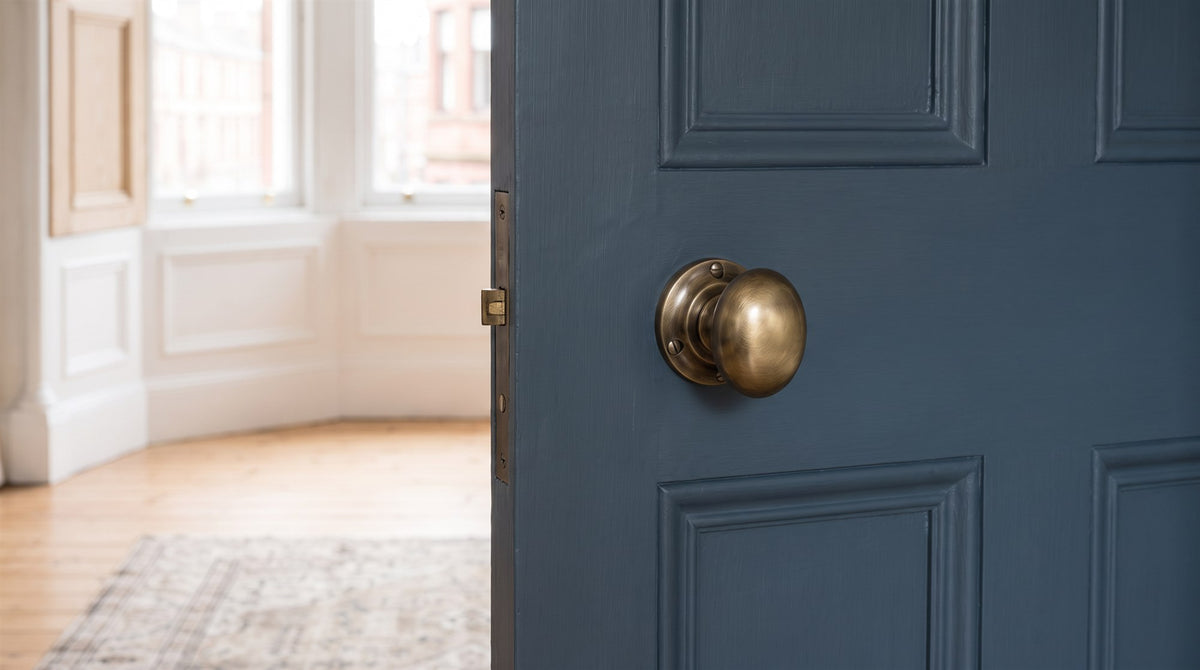
Antique brass in a tenement flat
Tall panelled doors, deep cornicing and a box bed, finished with antique brass knobs, finger plates and a smart flat door.
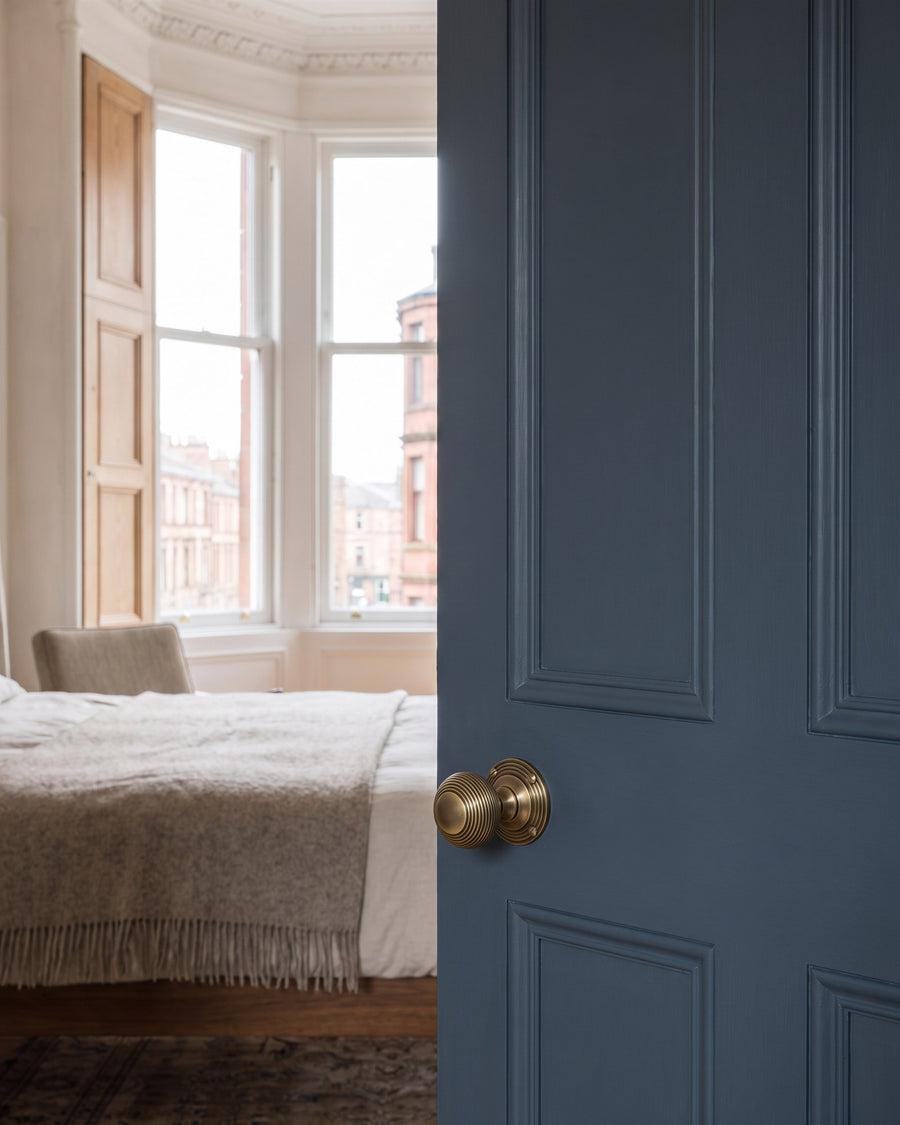
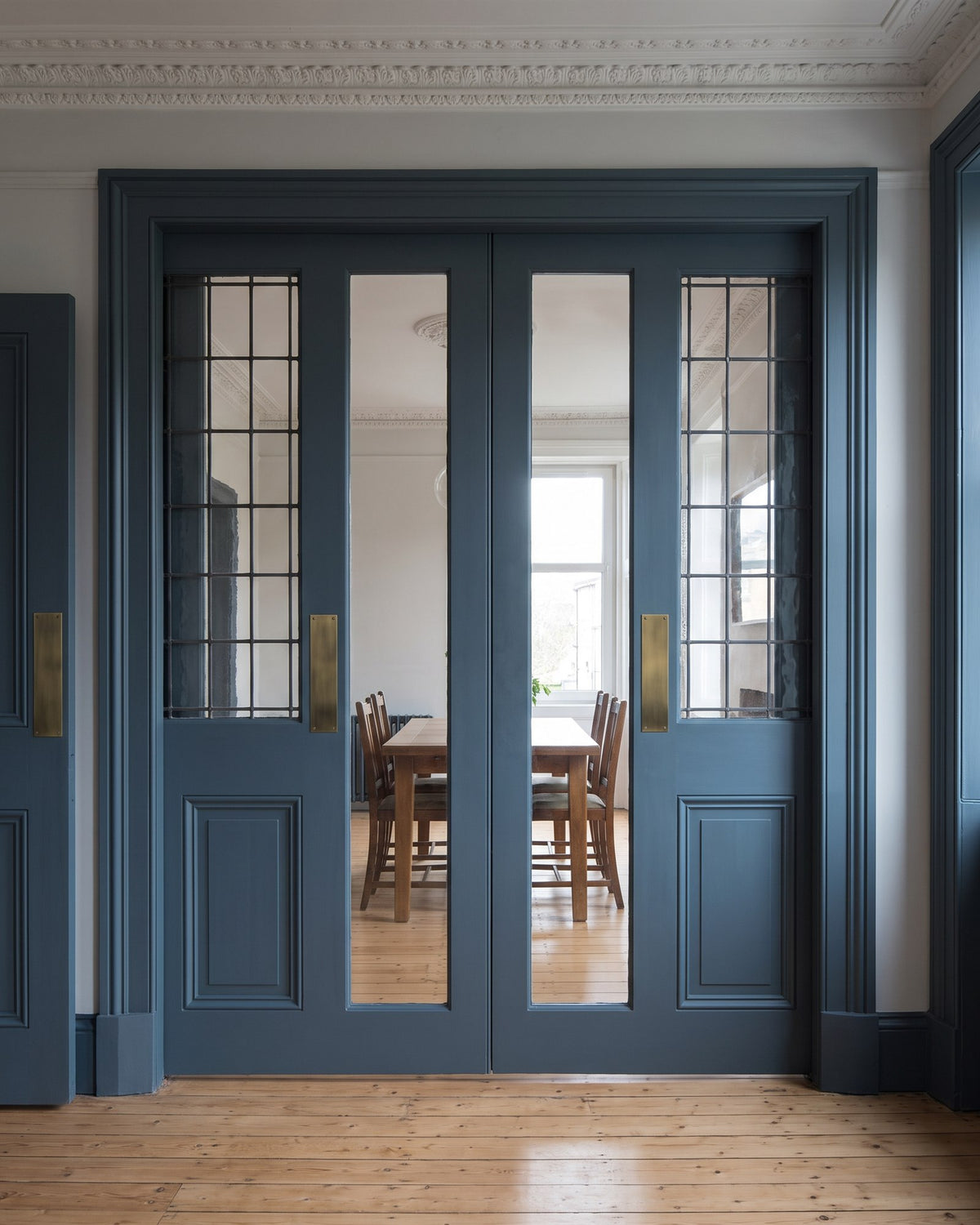
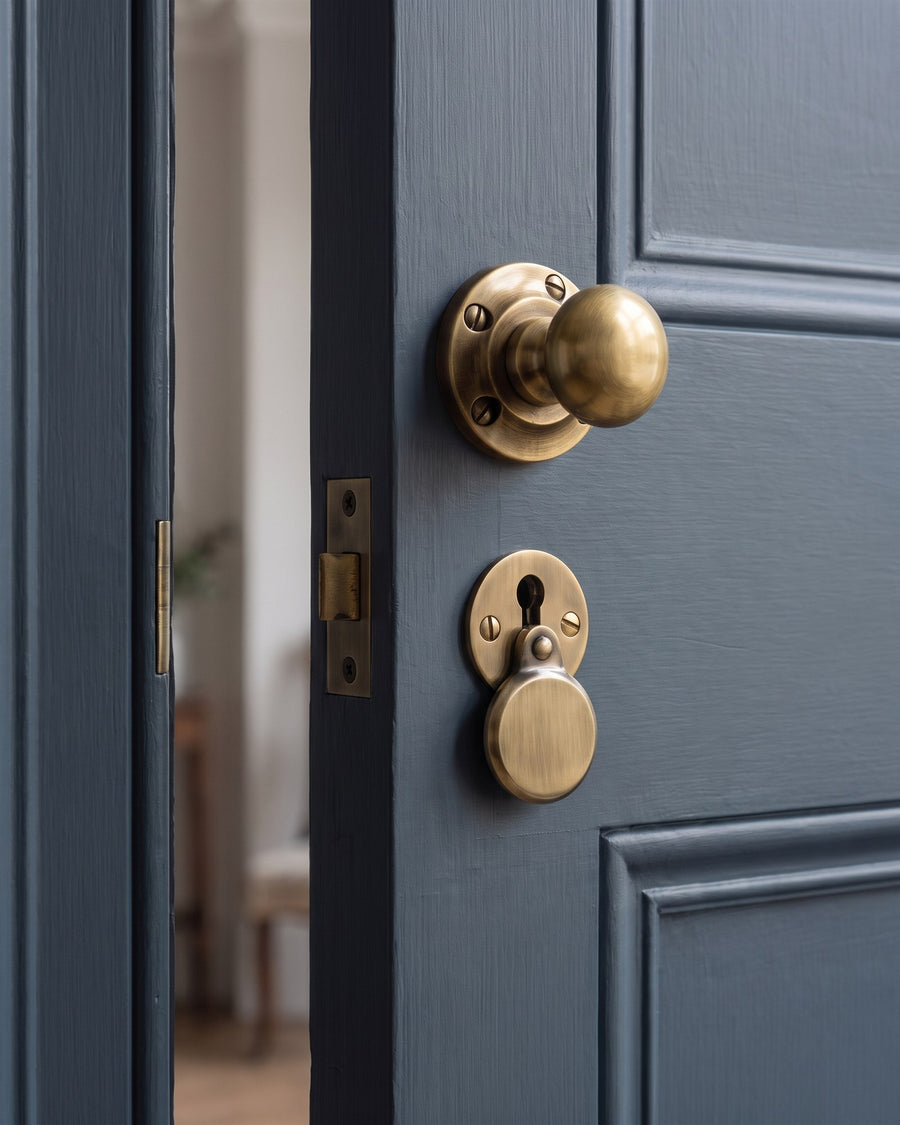
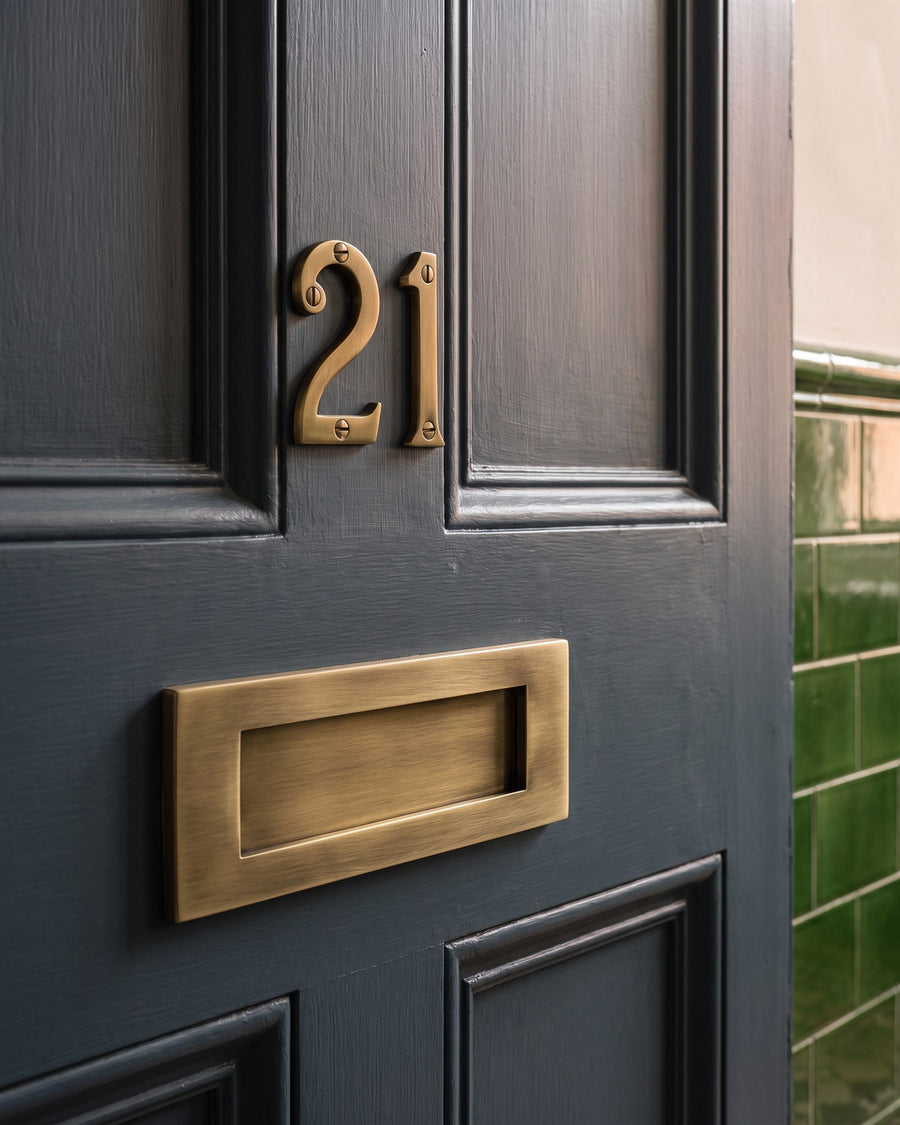
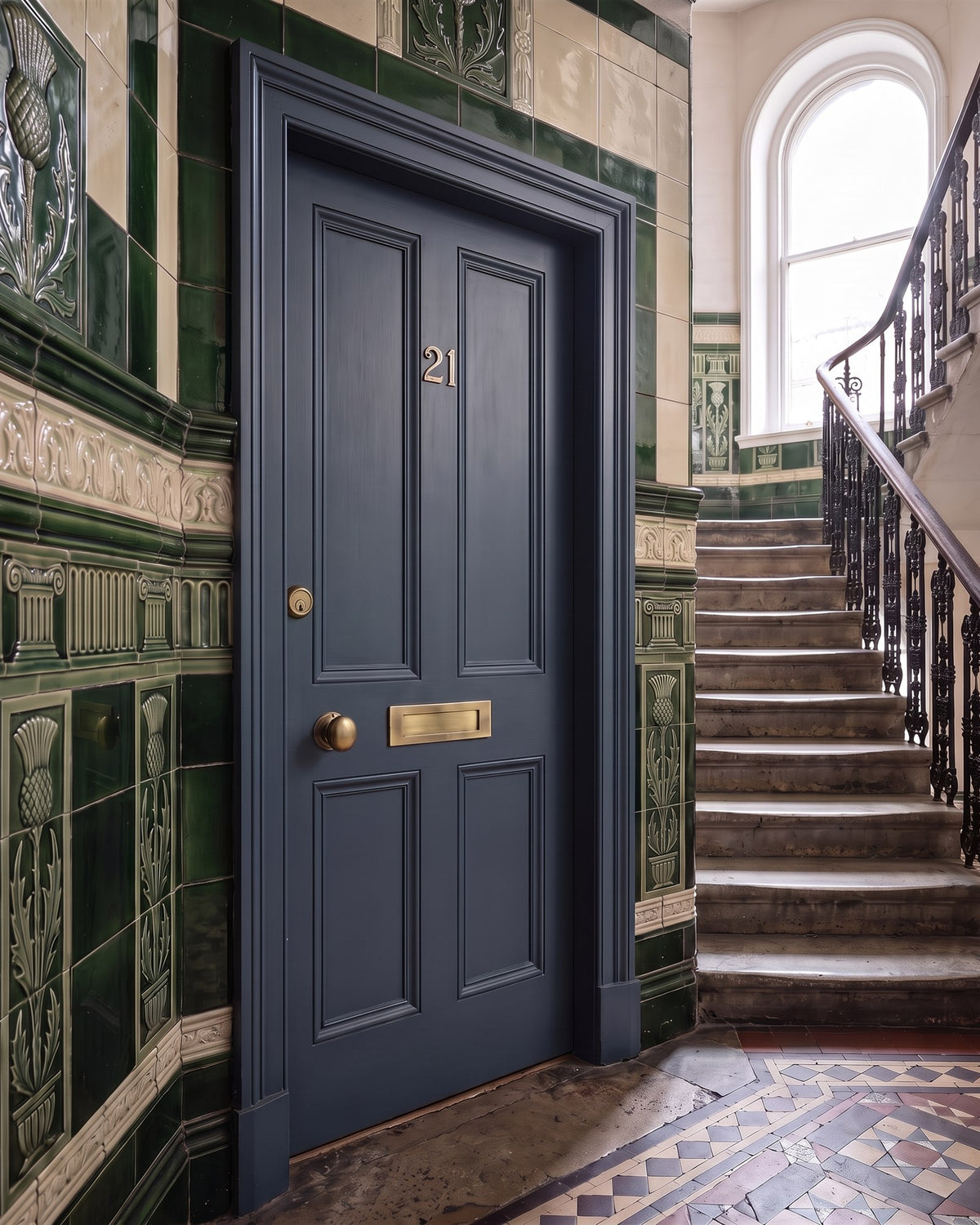
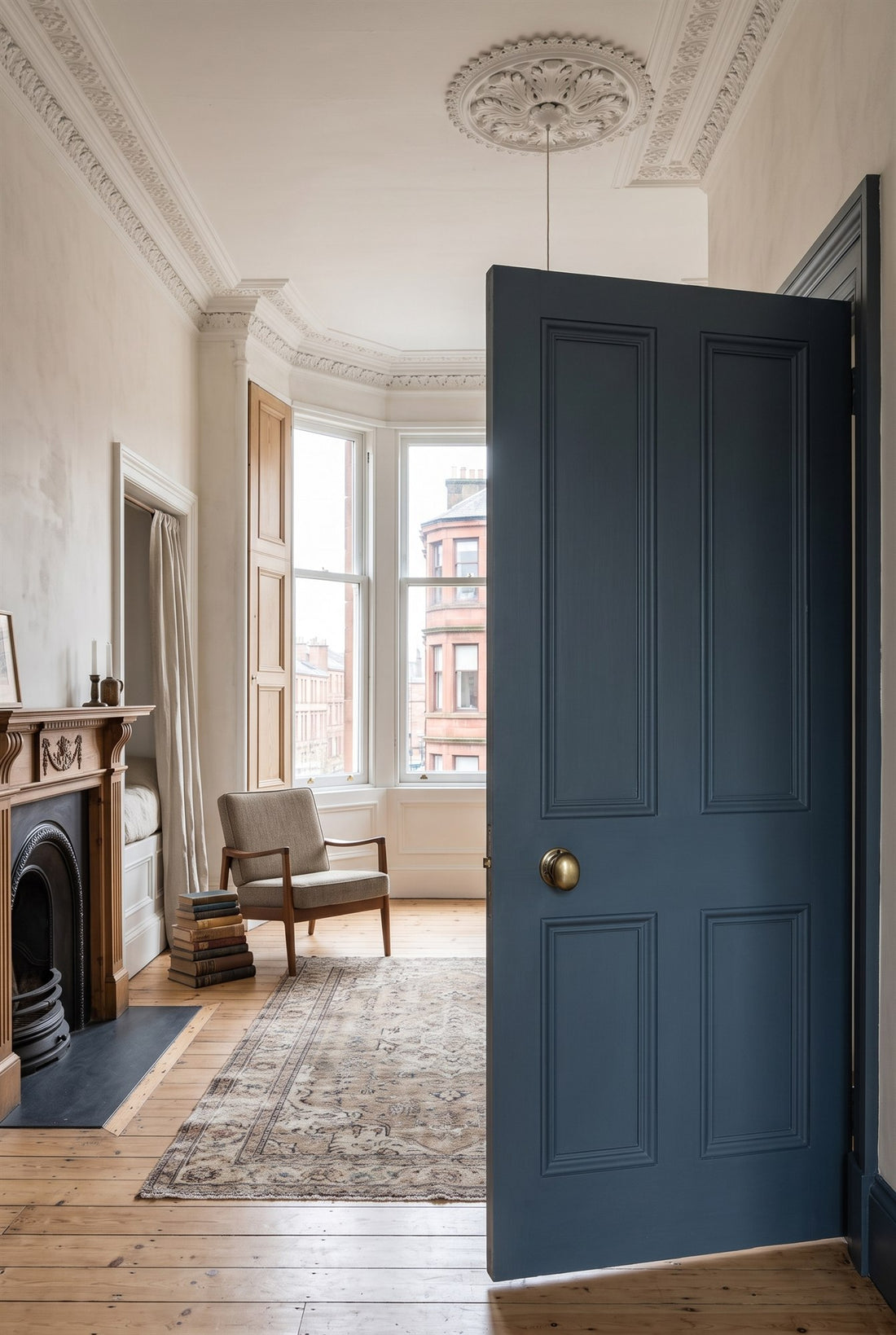
A red sandstone tenement flat in Glasgow's West End, with everything people love about these buildings: ceilings well over three metres high, ornate cornicing, a bay window with working shutters and the original box-bed alcove. The tall panelled doors are original, painted a deep blue-grey. Antique brass suits them perfectly: smooth Victoria knobs and covered escutcheons on the rooms, plain finger plates on the double doors between the front room and the dining room, and a letter plate and numbers on the flat door off the close.

Antique brass for a tenement flat


More antique brass for period flats


Doors in a Scottish tenement
Tall, heavy doors
Tenement doors are usually four or five panels and well over two metres tall. They're heavy, so a knob with some presence looks right, and the deep architraves around them frame brass beautifully.
Knobs, not levers
Mortice knobs were the original choice in these flats. The smooth Victoria knob is simple and comfortable to hold, while the reeded knob adds more texture for a bedroom or study.
Push doors and the flat door
Many tenements have glazed double doors between the front room and the dining room with no handles at all; finger plates protect the paint where you push. On the flat door, a letter plate and screw-on numbers smarten the close.
Planning notes
Finger plates only on push doors
Use finger plates on doors without a handle, such as double doors held by catches. On doors with knobs they look cluttered.
Keep the old locks
Original mortice locks often still work. A heavy covered escutcheon tidies the keyhole and stops draughts.
Knob clearance
Deep architraves can catch knuckles, so check the latch backset gives enough room for a 57mm or 60mm knob.
Flat door numbers
Screw-on 51mm numbers are easy to read across a dim close and fix through the door with the supplied screws.
