
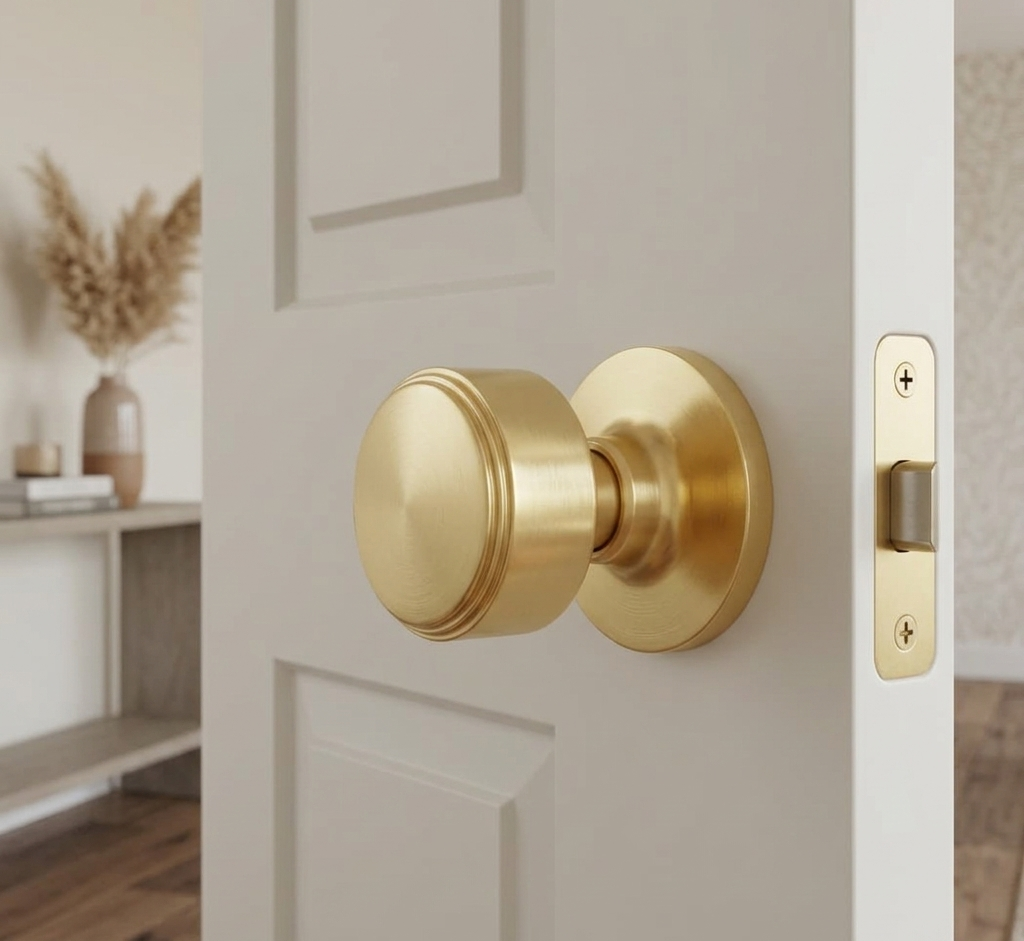
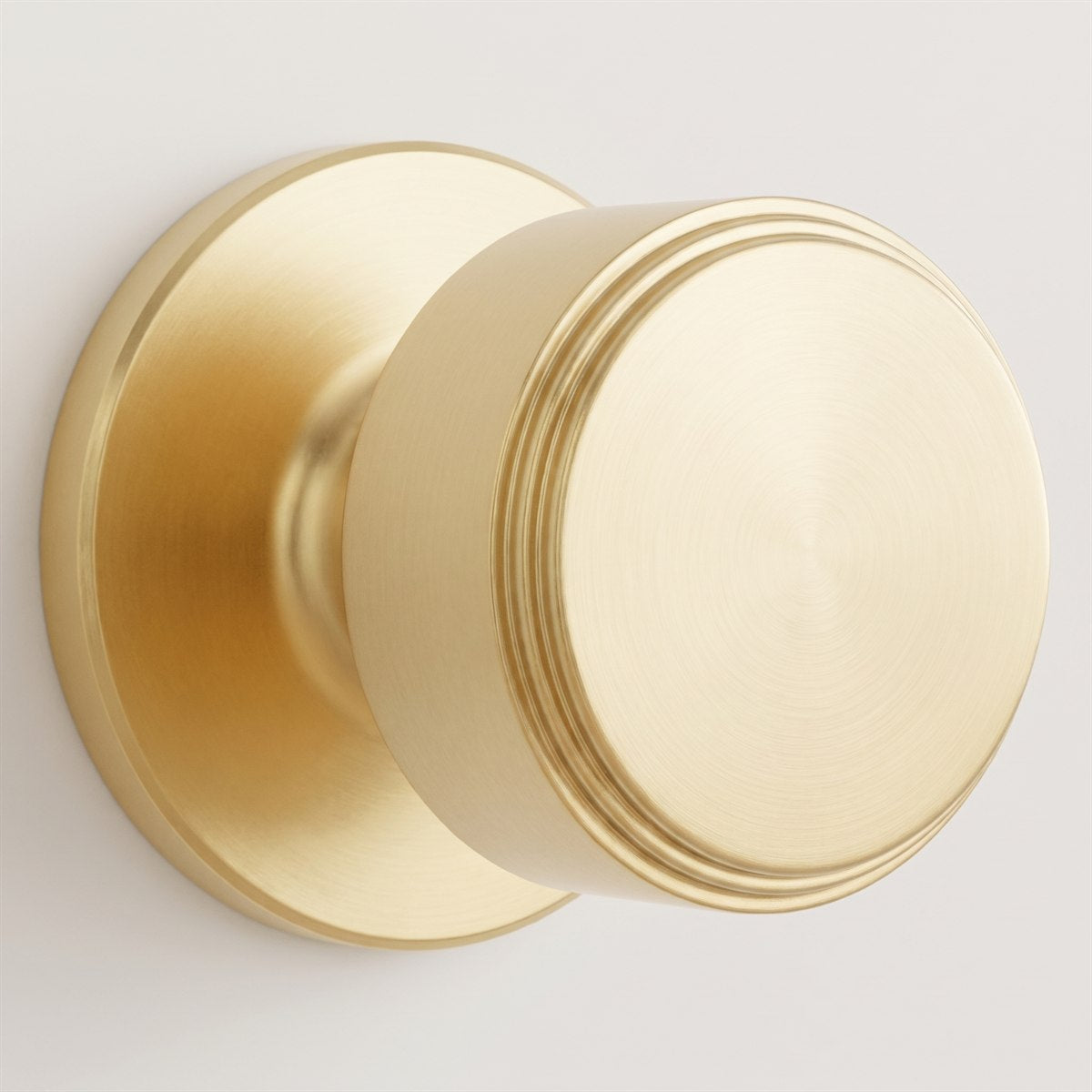
A stepped satin brass knob on a pale door
Soft white panelled doors, oak boards and a flat-faced brushed brass knob with three fine steps around its edge.
Warm white doors and pale greige walls, honey oak floorboards and dried grasses, with brushed satin brass at every door for a low, even glow rather than a shine.

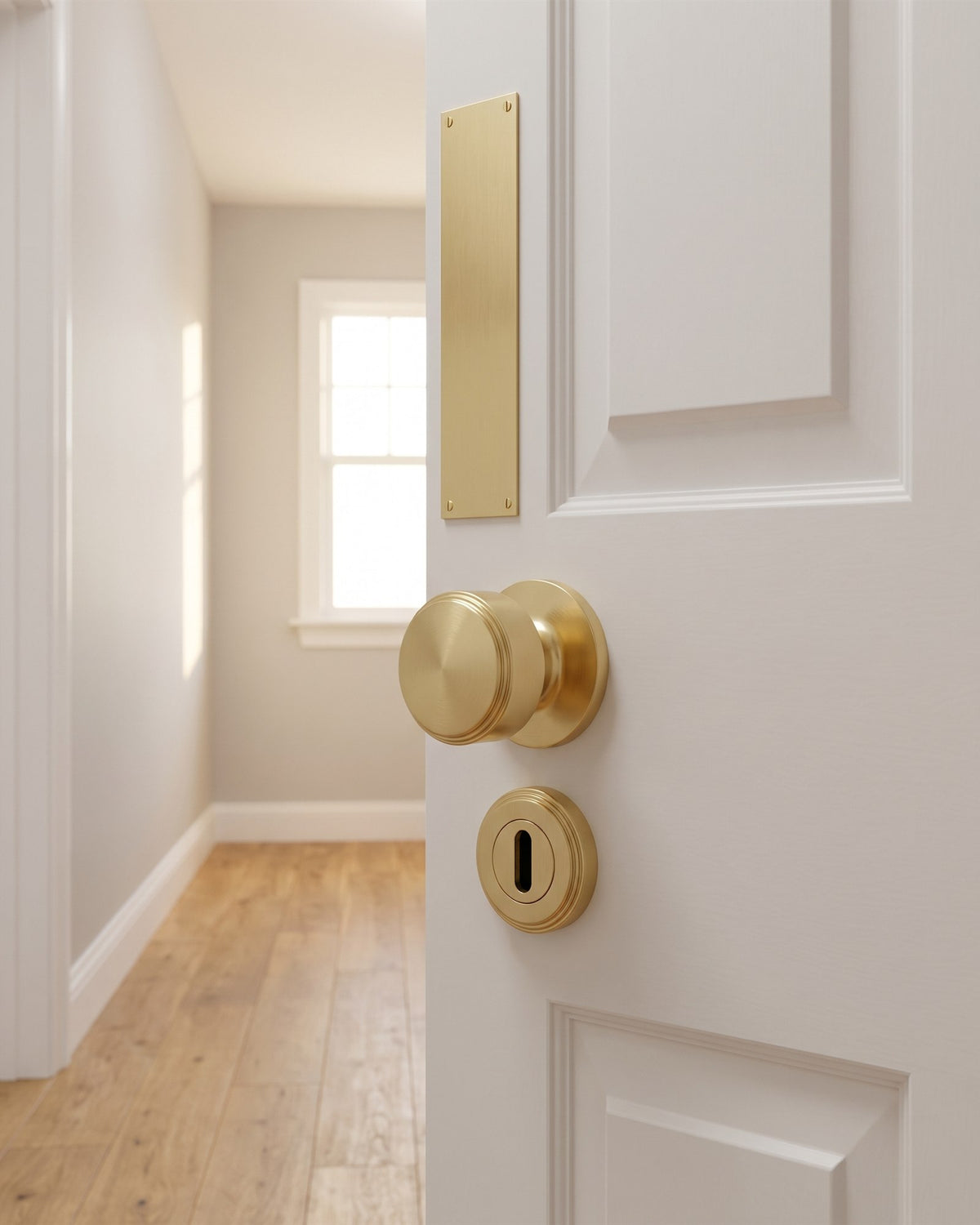
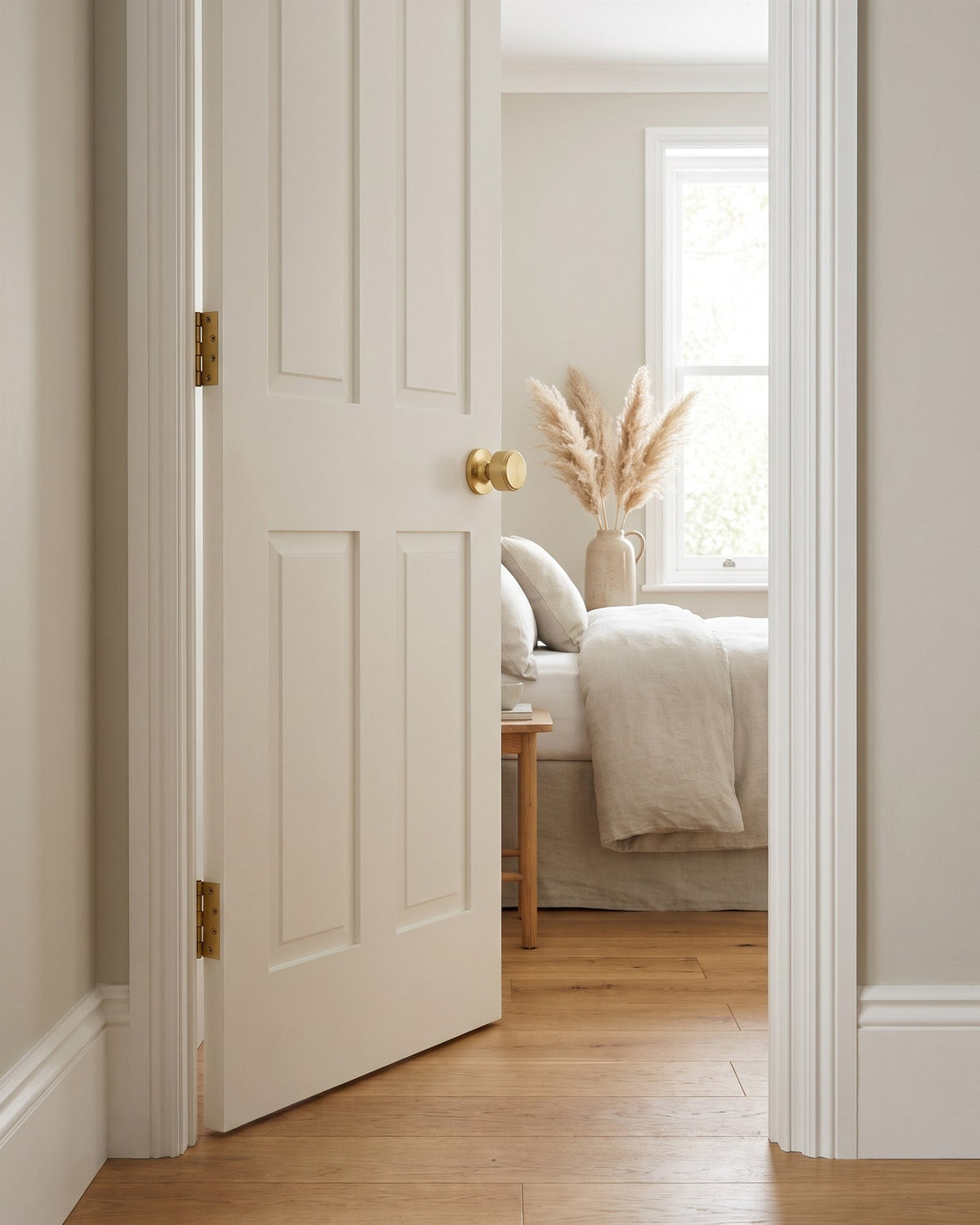
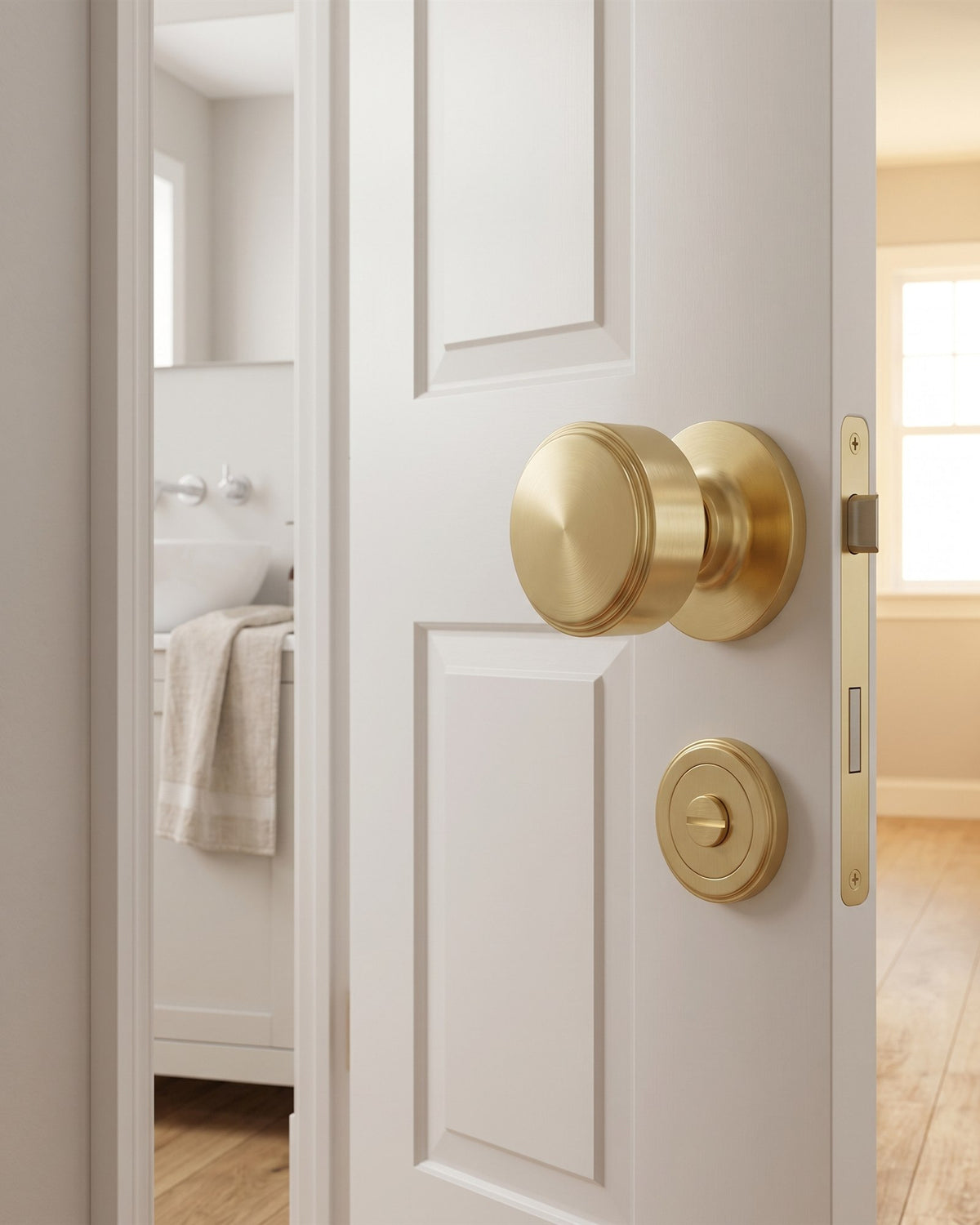
Satin brass down the corridor


Other satin brass knobs, and the step knob in other finishes
-
Satin Brass Classic Mortice Knobs 60mm

-
Satin Brass Cog Mortice Knobs 60mm

-
Satin Brass Ribbon Mortice Knobs 60mm

-
Satin Brass Victoria Mortice Knobs 57mm

-
Satin Brass Reeded Mortice Knobs 60mm

-
Satin Brass Kensington Mortice Knobs

-
Satin Brass Westminster Mortice Knobs

-
Satin Brass Mayfair Oval Mortice Knobs

-
Satin Brass Whitehall Mortice Knobs 63mm

-
Satin Brass Beehive Knob on Reeded Plate

-
Satin Brass Beehive Knob, Reeded Bathroom Plate

-
Satin Brass Tiered Euro Escutcheon 53mm

-
Step Mortice Knobs 60mm in Antique Brass

-
Step Mortice Knobs 60mm in Satin Nickel

-
Step Mortice Knobs 60mm in Matt Black

-
Step Mortice Knobs 60mm in Polished Chrome

Why a stepped knob suits a light, plain scheme
Where it comes from
Stepped edges, a few crisp rings cut around a plain shape, were a favourite detail of 1930s design, from mirrors and light fittings to door furniture. The step knob takes that idea and keeps it small: a flat round face, a straight side and three fine steps where they meet.
Why satin brass?
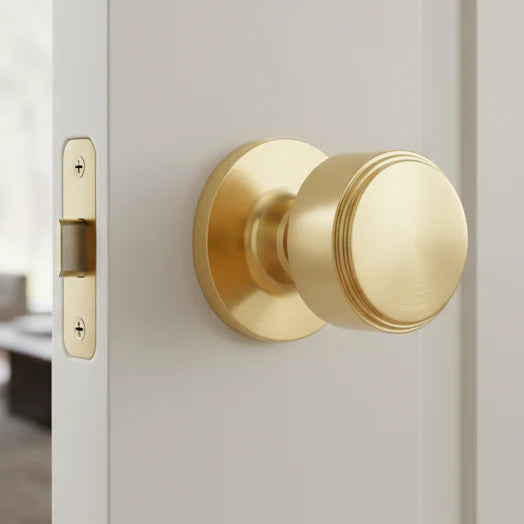
Satin brass is brushed, so the light spreads across it rather than bouncing off. On a white or putty door that gives a soft, even gold that never looks brassy, and the fine steps show up as thin lines of brighter brass at the edge of the face.
Why it still works
Pale doors and pale walls need one warm note to stop them feeling flat. A knob with a clean outline does that without adding fuss, and repeating it down a corridor, with satin brass hinges to match, makes a plain run of doors look finished.
Getting it right
Use a heavy duty 3in latch
These knobs are unsprung, so the latch's own spring has to return them. Fit a heavy duty tubular latch, and choose the 3in (76mm) size rather than 2.5in so your knuckles clear the frame.
Check your door thickness
The knobs suit doors 35-45mm thick and come in pairs with 90mm and 110mm spindles, screws and back to back fixings. The rose screws onto a plate fixed to the door, so no screw heads show.
Echo the steps
The tiered-edge key escutcheon and turn and release, both 53mm, repeat the knob's stepped detail. Use the escutcheon where a door locks with a key and the turn and release with a bathroom lock.
Finish the door
Change silver hinges for satin brass butt hinges, 102x67mm and sold in pairs. Fit a skirting door stop, or the small oval floor stop where the door opens into the room, so the knob never marks the wall.
