

Reeded antique brass on a smoky green door
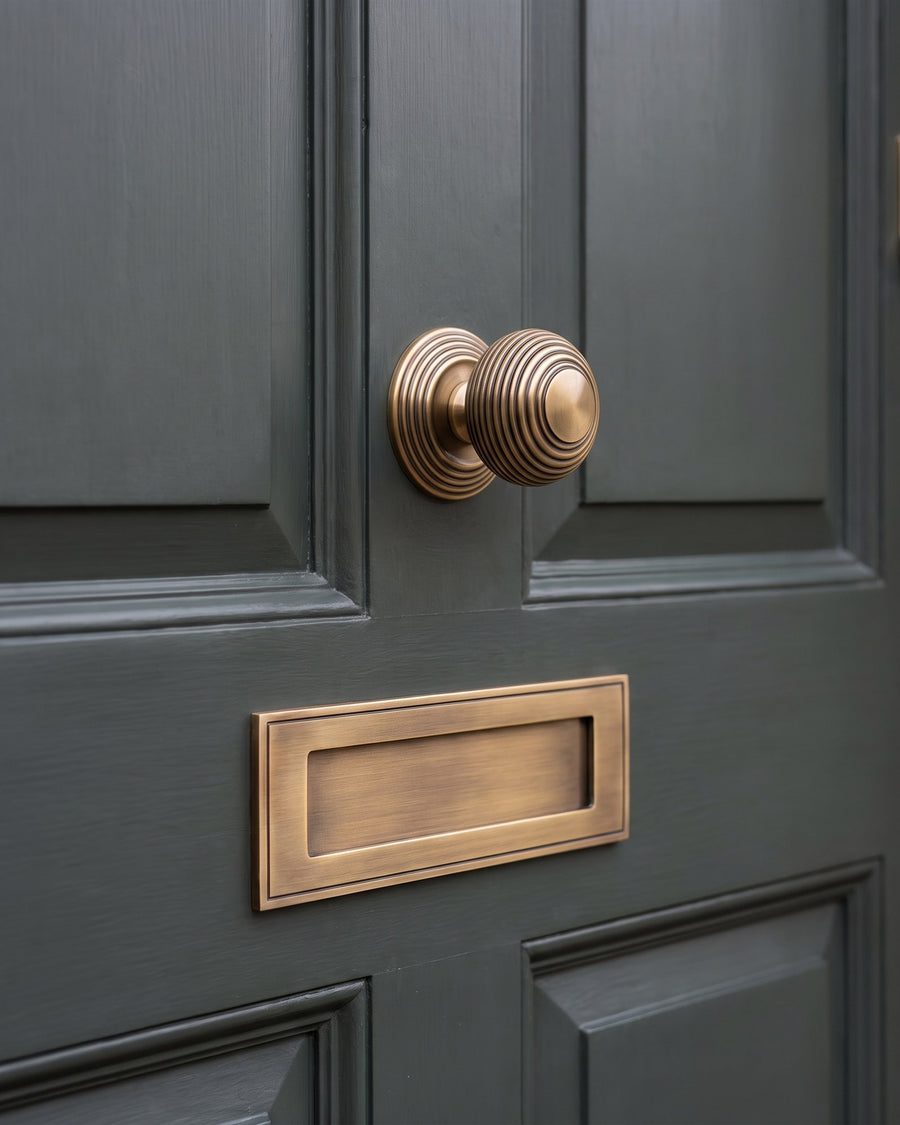
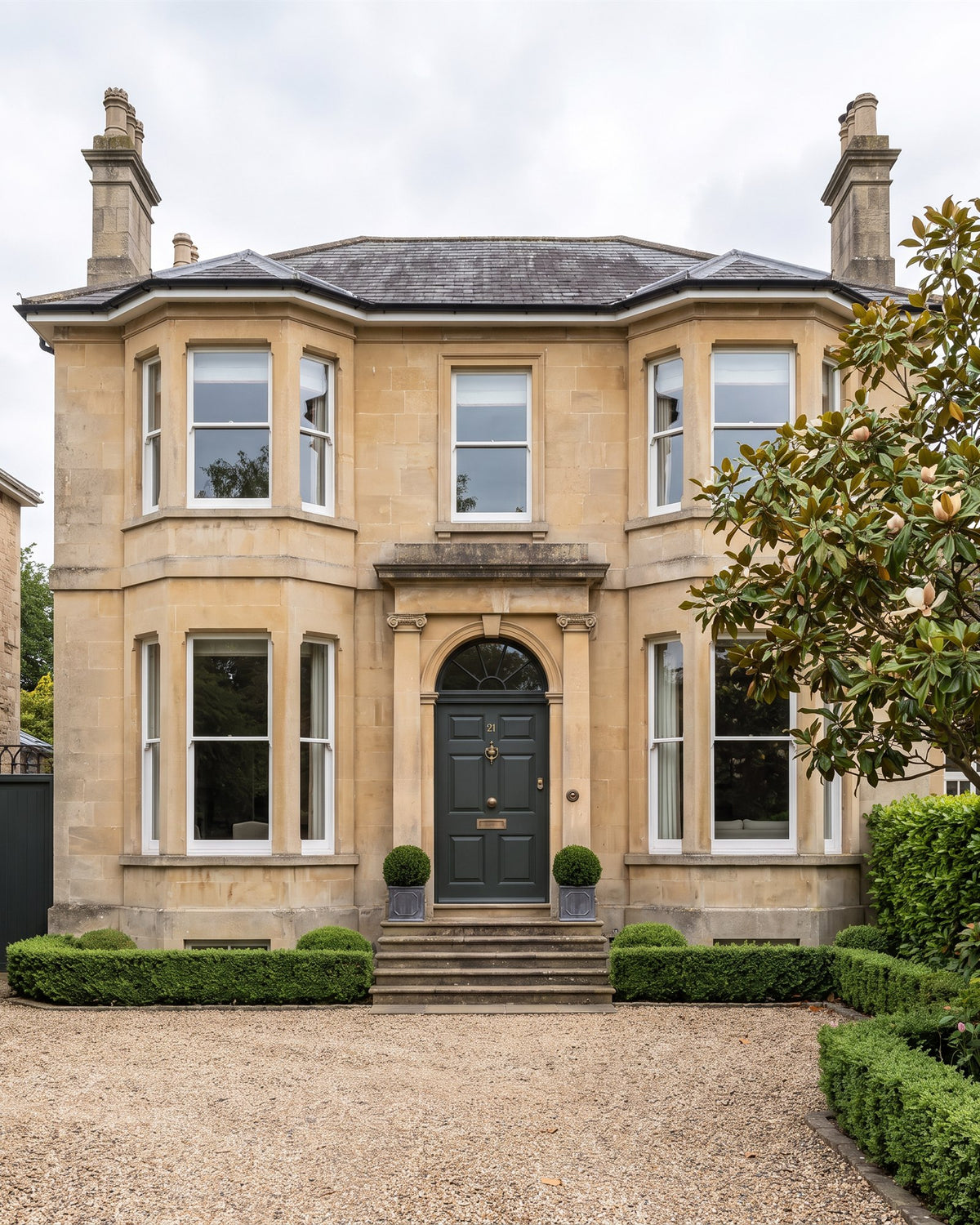
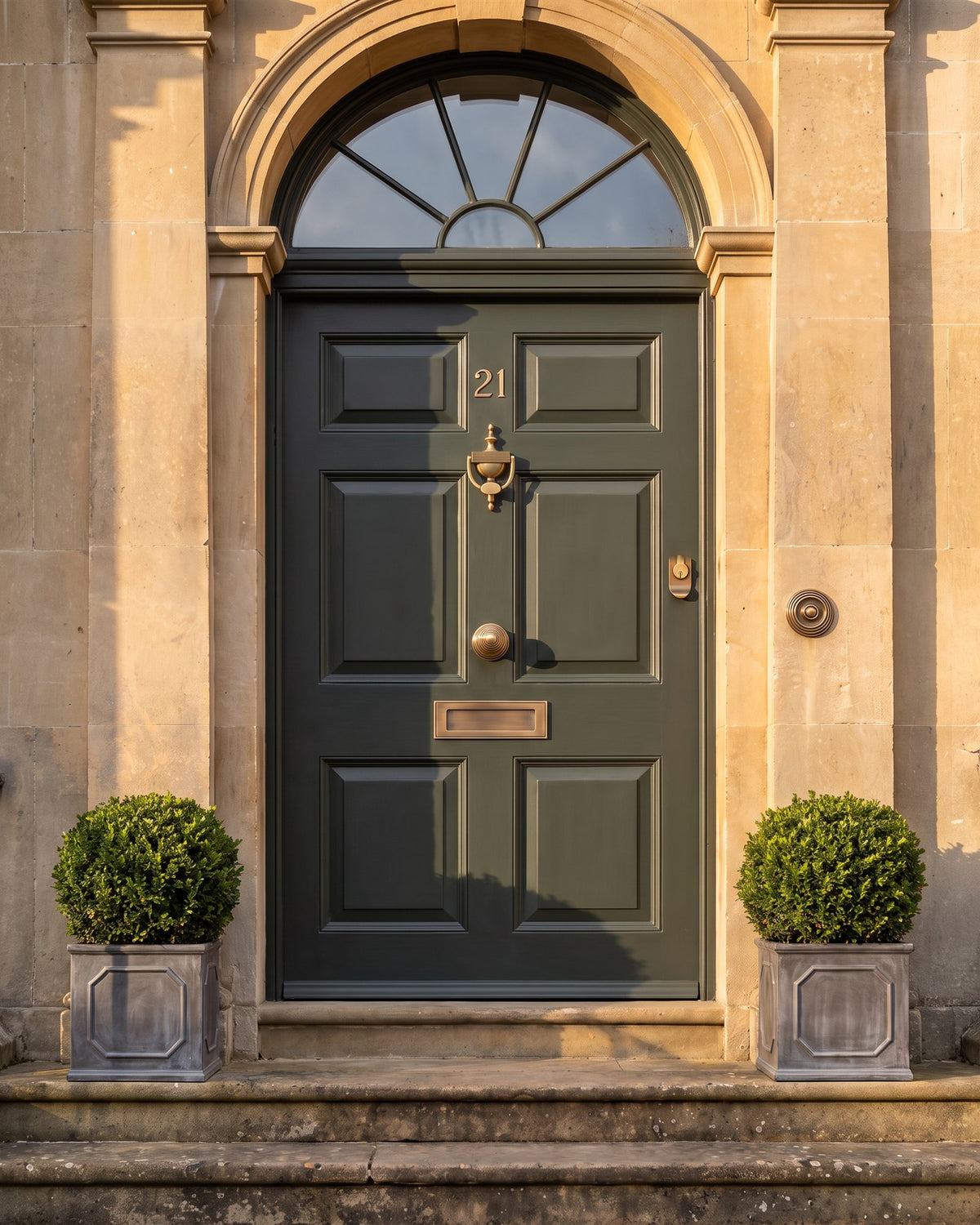
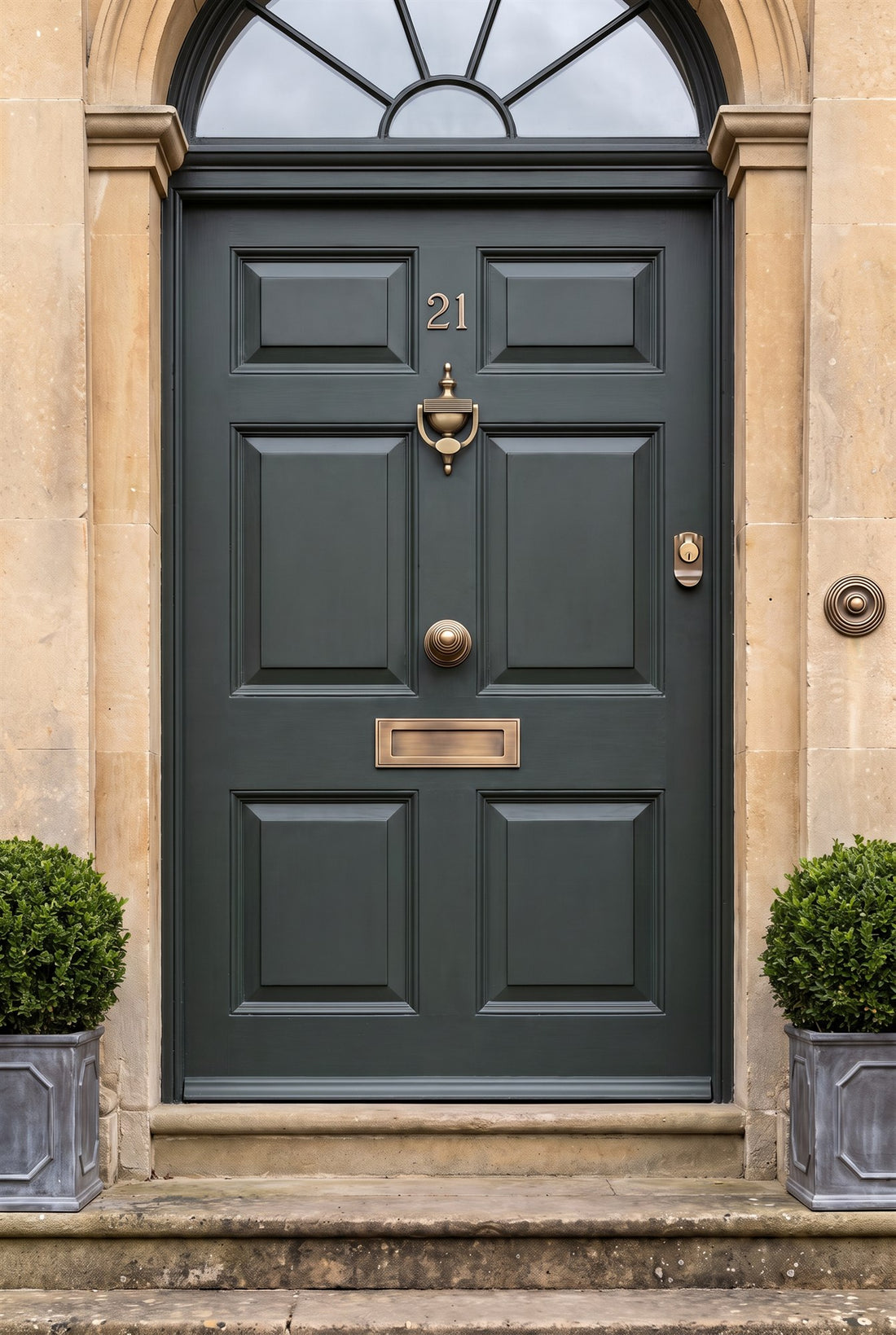
A near-black green door in a Bath stone doorcase, with a reeded knocker, reeded knob and reeded bell push in softly aged brass.
A detached Victorian villa in honey Bath stone, with a pilastered doorcase, a semicircular fanlight and three worn stone steps. The six-panel door is painted a deep, smoky green that reads almost black on a dull day and unmistakably green in sunshine. Its fittings share one detail: fine reeded grooves on the knocker's top bar, around the centre knob and on the round bell push, all in warm antique brass that sits comfortably against the stone.
Reeded antique brass for a green front door
-
1Antique Brass Reeded Urn Knocker

-
2Antique Brass Reeded Centre Door Knob

-
3Antique Brass Letter Plate 254x102mm

-
4Antique Brass House Numbers 76mm

-
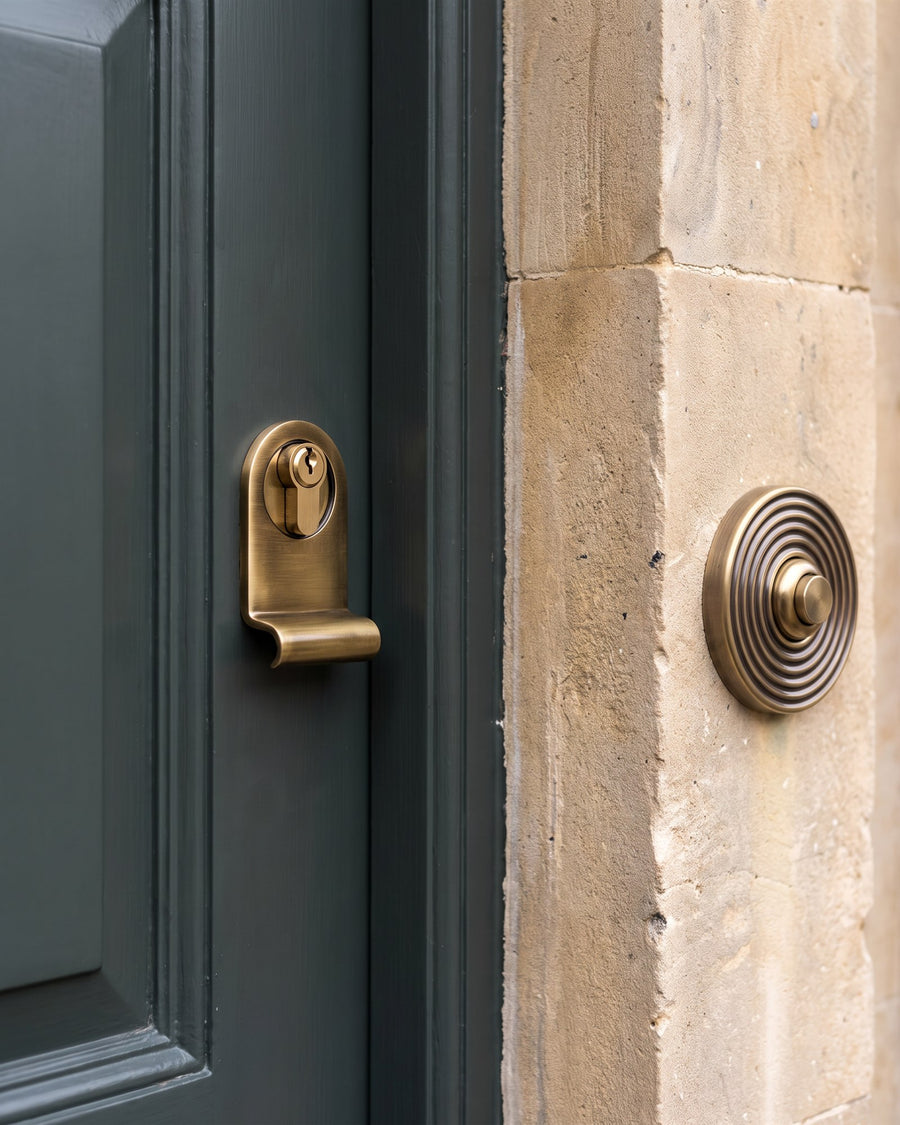
5Antique Brass Cylinder Pull

-
6Antique Brass Reeded Bell Push

-
7Antique Brass Interior Flap 280mm

-
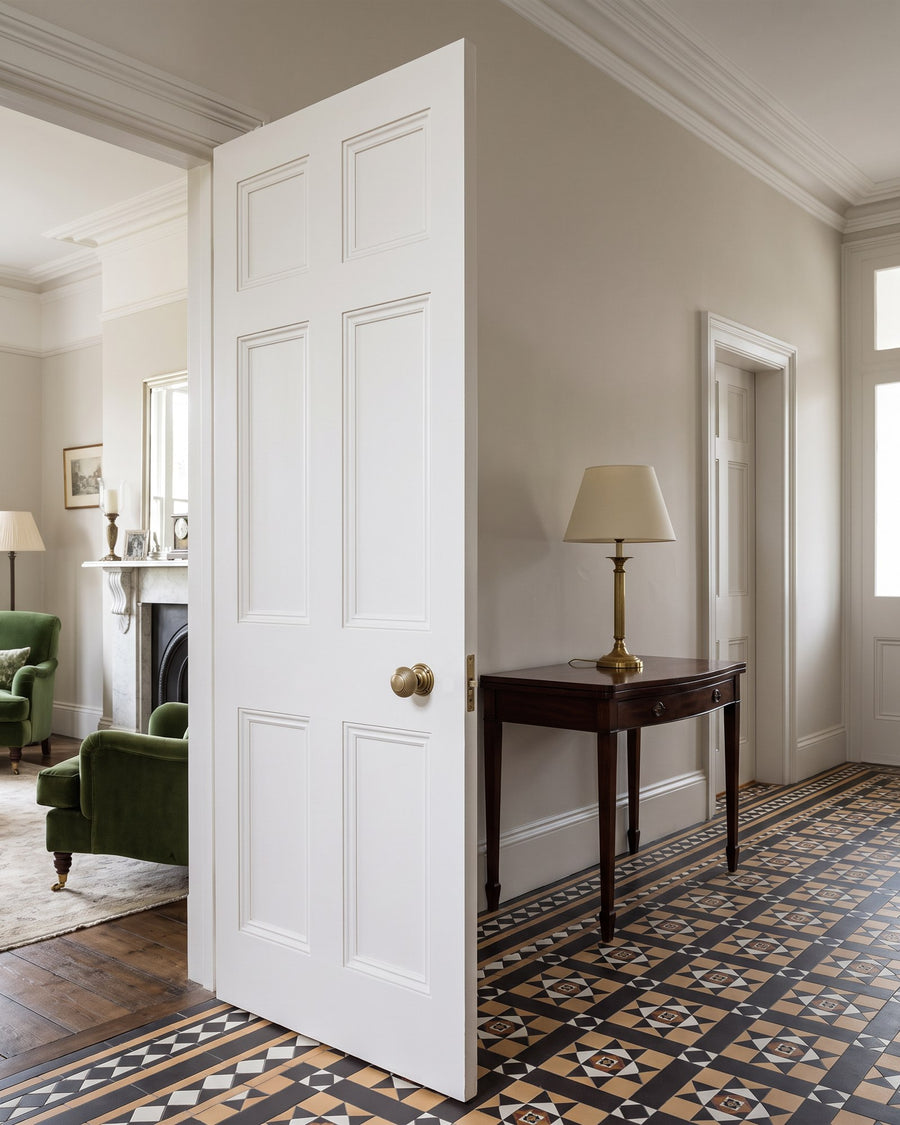
8Antique Brass Reeded Door Knobs

-
9Antique Brass Reeded Escutcheon

Other antique brass knockers, knobs and bell pushes
-
Antique Brass Plain Urn Knocker

-
Antique Brass Doctor Knocker

-
Antique Brass Ring Knocker

-
Antique Brass Lion Knocker

-
Antique Brass Octagonal Centre Knob

-
Antique Brass Round Centre Knob

-
Antique Brass Letter Plate 254x79mm

-
Antique Brass Postal Knocker

-
Antique Brass Square Cylinder Pull

-
Antique Brass Rectangular Bell Push

-
Antique Brass Circular Bell Push

-
Antique Brass Tidy with Draught Excluder

-
Antique Brass Reeded Turn and Release

-
Antique Brass Knob on Reeded Plate

-
Gio Reeded Antique Brass Lever

-
Antique Brass House Numbers 51mm

Why reeded brass suits a green door
A green that changes with the light
Deep smoky greens such as Farrow & Ball's Studio Green have become one of the favourite front door colours of the last few years. They look almost black under cloud and rich green in sun, which makes them feel more considered than black, and they sit naturally beside honey-coloured stone and clipped box.
One detail, repeated
Reeding is a run of fine parallel grooves cut into the metal. Here it appears on the knocker's top bar, on the knob and in rings around the bell push, so the set reads as a family even though each piece has a different shape. The plain letter plate gives the eye a rest in the middle of the door.
Why antique brass, not polished
Antique brass is a darkened, brushed finish that already looks decades old. Against warm stone it blends rather than glints, and it suits a house where the steps are worn and the stone has weathered. It is also forgiving: fingerprints and rain spots barely show.
Planning the door
Centre everything
Fix the numbers, knocker and knob on the door's vertical centre line, with the letter plate centred on the middle rail. On a six-panel door the centre stile is narrow, so measure the knob's 76mm base against it first.
Knob for pulling
The reeded centre knob is fixed and doesn't turn. It is there to pull the door closed; you open the door with your key in the cylinder, framed by the cylinder pull.
Inside the door
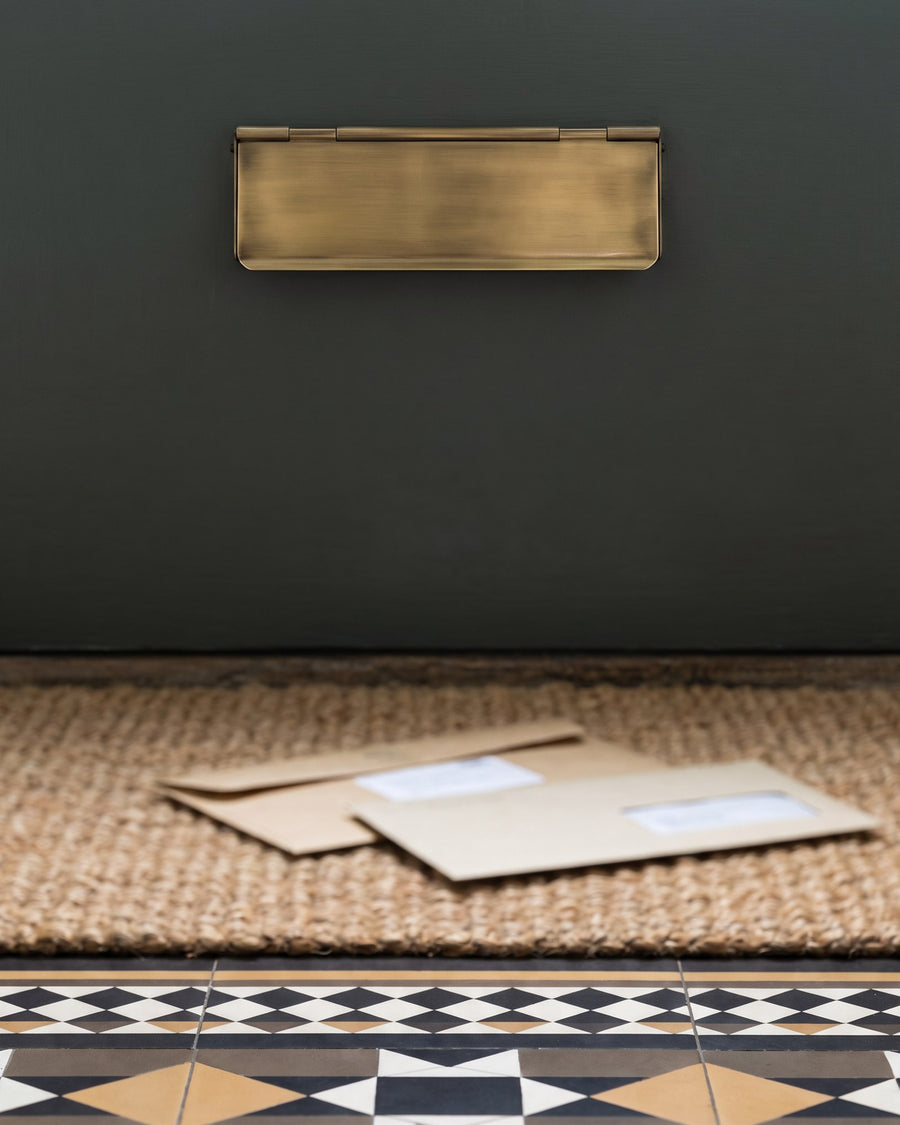
The 280mm interior flap covers the cut-out behind the 254mm letter plate and keeps the draught off the hall.
Carry it inside
Use reeded mortice knobs and reeded escutcheons on the internal doors so the same detail runs from the front step into every room.
