

Unlacquered brass: the finish that grows with the house
Bare brass with no protective coating, so it mellows to a soft gold-brown and stays bright wherever hands touch it.
Deep navy or dark green gloss on the front door, chalky off-whites inside, and bare brass that will slowly take on the character of the house.

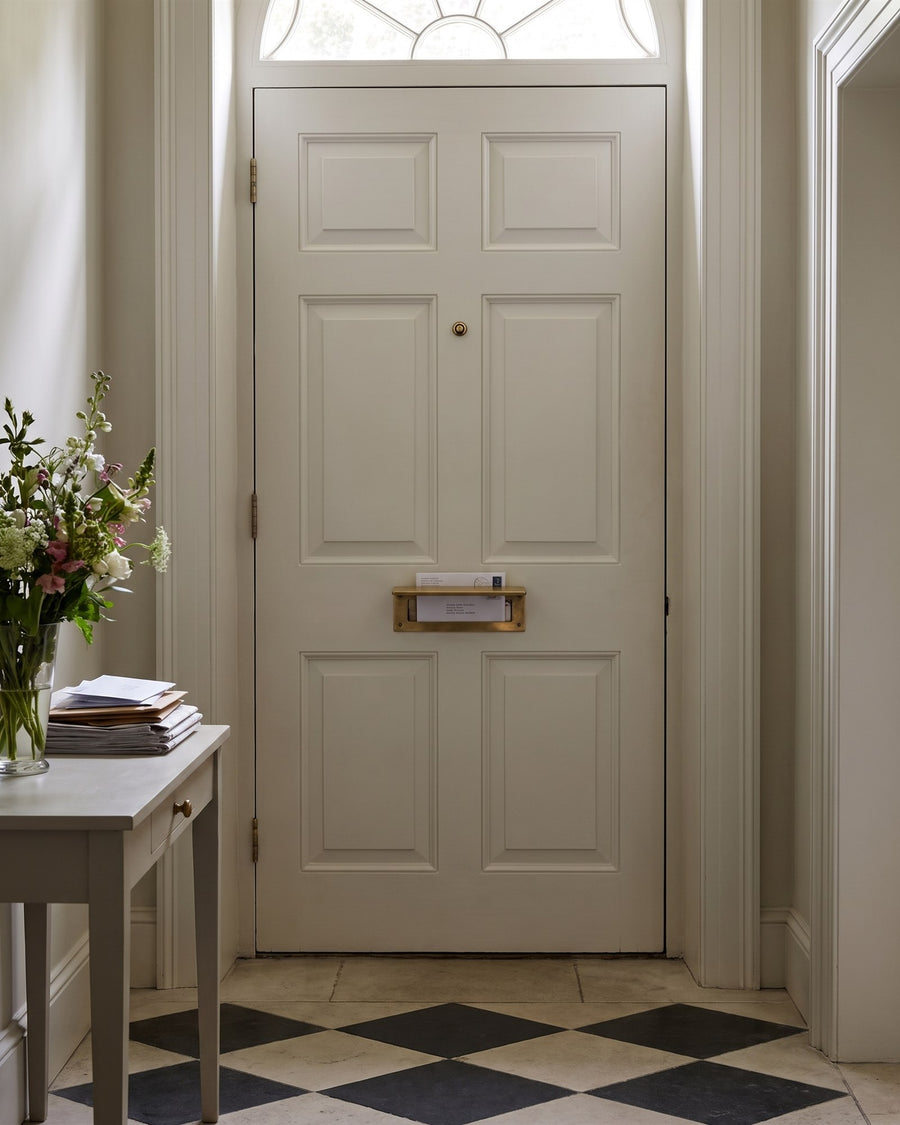
Bare brass for the whole door

-
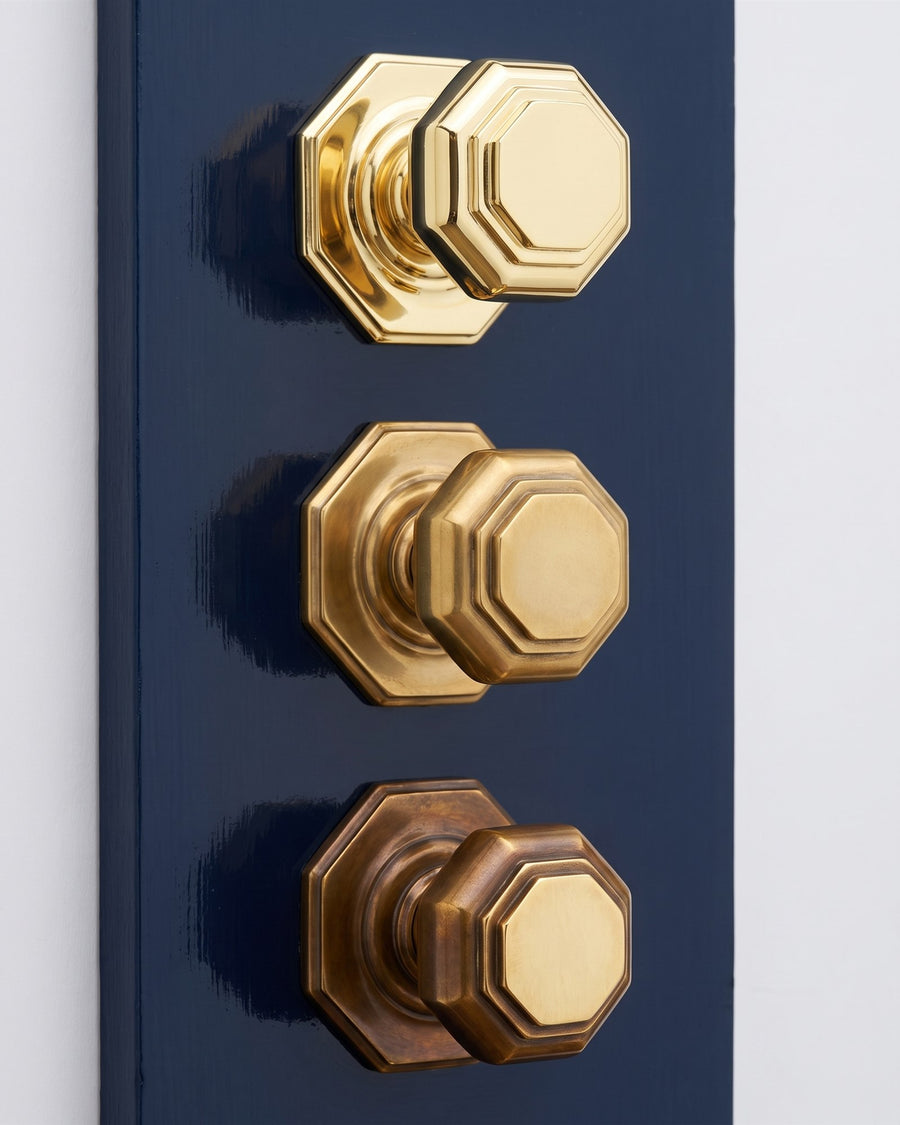
1Unlacquered Brass Octagonal Centre Door Knob

-
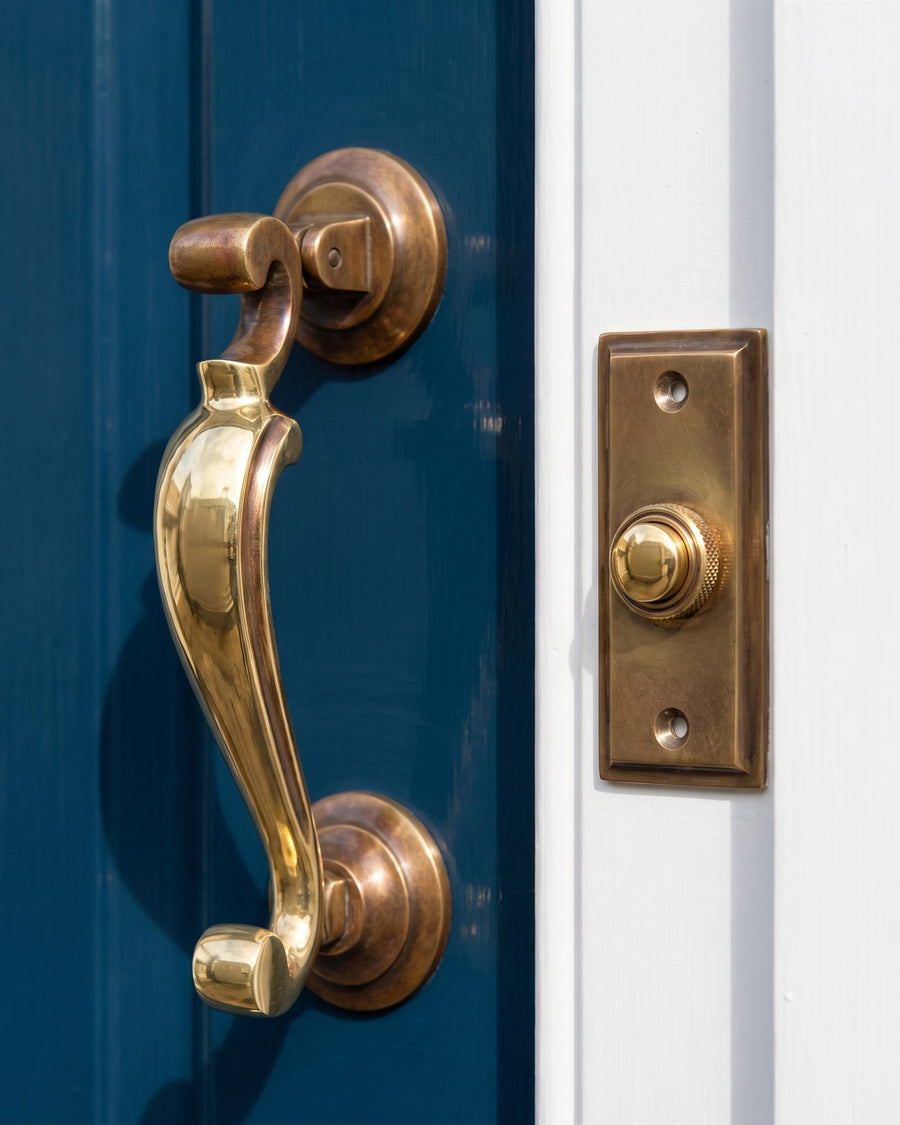
2Unlacquered Brass Profile Doctor Knocker

-
3Unlacquered Brass Letter Plate 305x97mm

-
4Unlacquered Brass Stepped Bell Push

-
5Unlacquered Brass Cylinder Pull

-
6Unlacquered Brass Letter Tidy with Draught Excluder

-
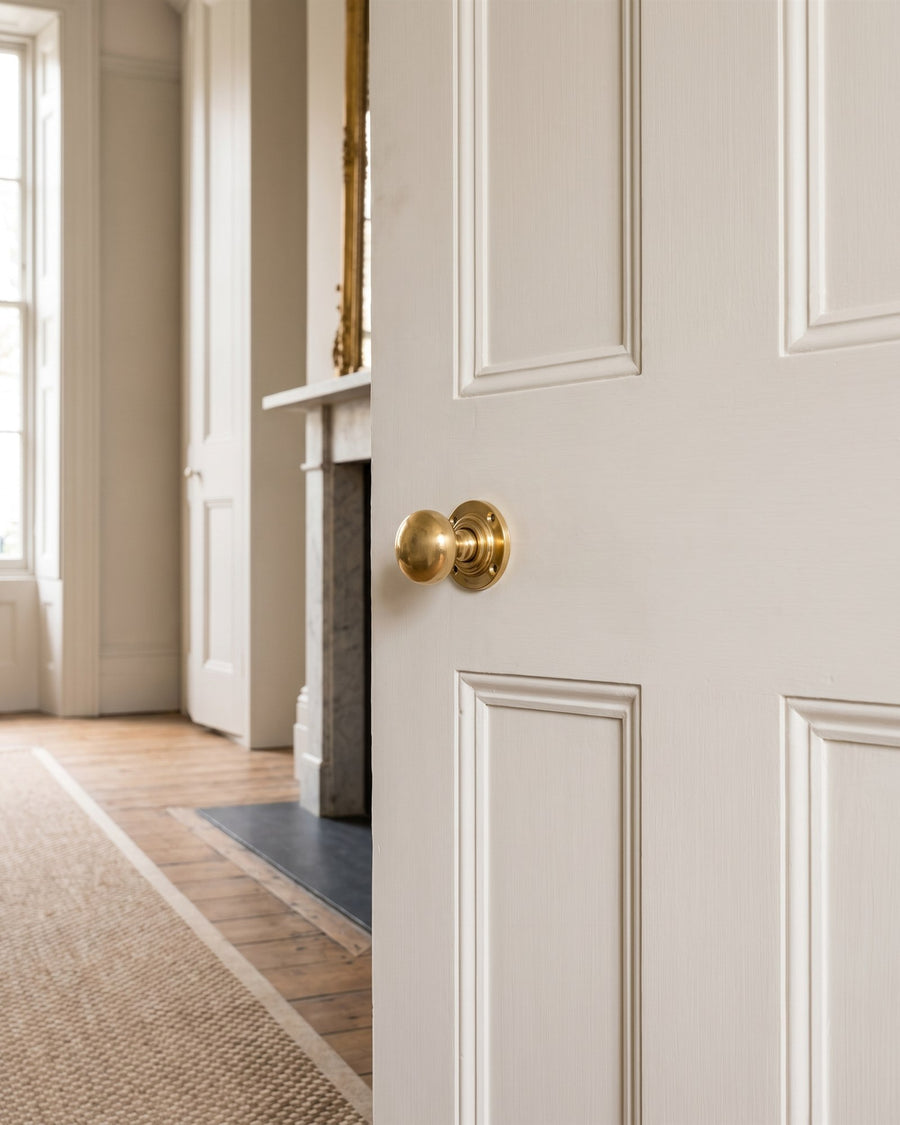
7Unlacquered Brass Mushroom Mortice Knobs 60mm

-
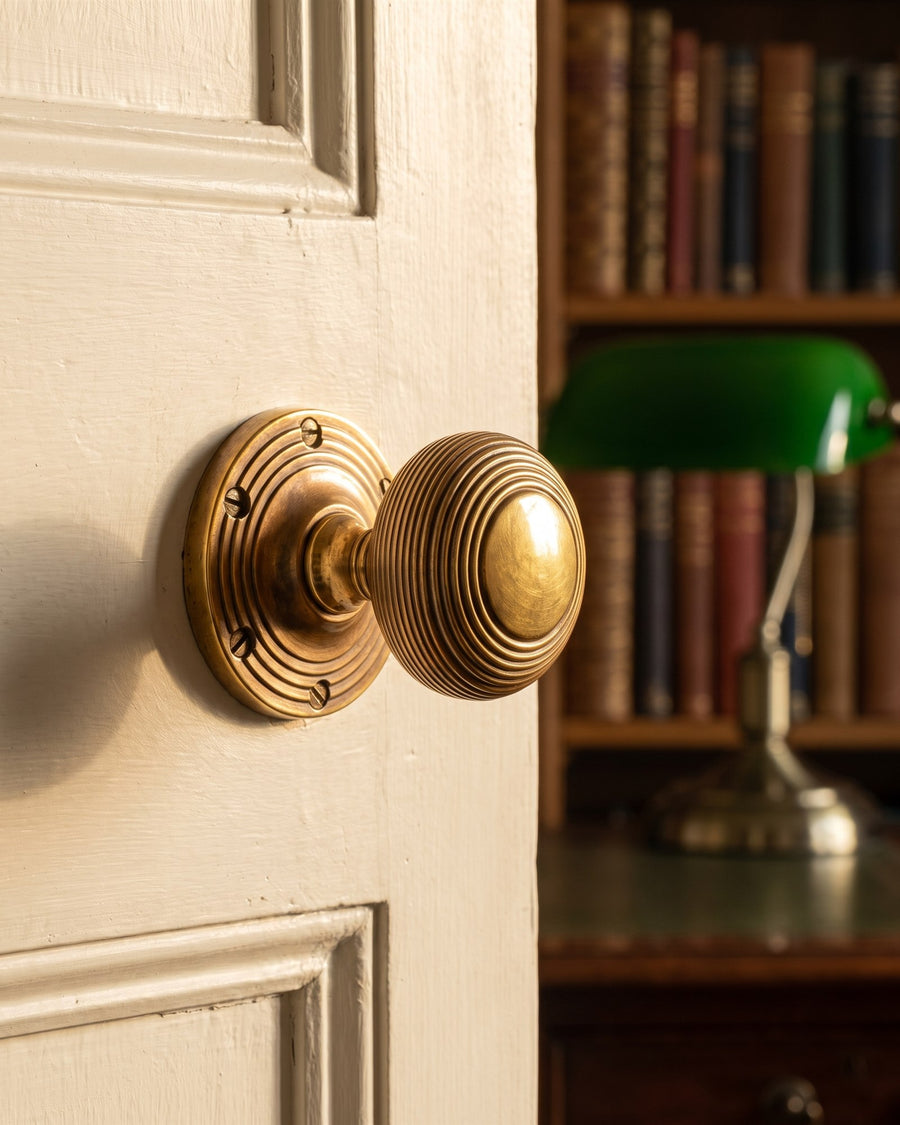
8Unlacquered Brass Reeded Mortice Knobs 50mm

-
9Unlacquered Brass Bow Door Knocker

-
10Unlacquered Brass Covered Escutcheon

More unlacquered brass
-
Unlacquered Brass Tiered Centre Door Knob

-
Unlacquered Brass Princess Centre Door Knob

-
Unlacquered Brass Contemporary Door Knocker

-
Unlacquered Brass Letter Plate 254x76mm

-
Unlacquered Brass Letter Tidy with Draught Excluder 260mm

-
Unlacquered Brass Interior Letter Tidy 254x90mm

-
Unlacquered Brass Interior Letter Tidy 305x90mm

-
Unlacquered Brass Plain Keyhole Escutcheon

-
Rosewood and Brass Beehive Escutcheon

-
Ebony and Brass Beehive Escutcheon

-
Polished Brass House Numbers 76mm (3in)

Why choose a finish that changes
How period brass looked
Before clear lacquers were widely used, door brass was simply polished by the household. It was never uniformly bright: knobs and knockers gleamed where they were handled, while the edges and recesses settled into a warm, darker tone. Unlacquered brass recreates exactly that look.
What to expect
Fresh out of the box it is bright yellow gold. Within a few months outdoors it mellows and the shine softens; over a year or two it develops a deep brown-gold patina, while the parts you touch every day stay burnished. Inside the house the change is slower and gentler.
You stay in control
Because there is no coating to wear through, nothing ever peels or flakes. Leave it to age, wax it to slow the process, or polish it back to bright whenever you like, as often or as rarely as suits you.
Getting it right
Polish, or don't
A good brass polish and a soft cloth restore the shine in minutes. Many owners polish only the knob and knocker, and let the plates age around them.
Slow it down
A thin coat of microcrystalline wax after polishing keeps the brightness longer, which is useful on a front door that faces the weather.
House numbers
There are no unlacquered numerals in the range. Lacquered polished brass numbers stay bright, so they work best set slightly apart from the knocker and knob.
Mix with care
Inside, use unlacquered knobs throughout a floor rather than mixing with lacquered brass; the two finishes drift apart in colour over time.
