

Victorian interiors: porcelain, ebony and brass knobs
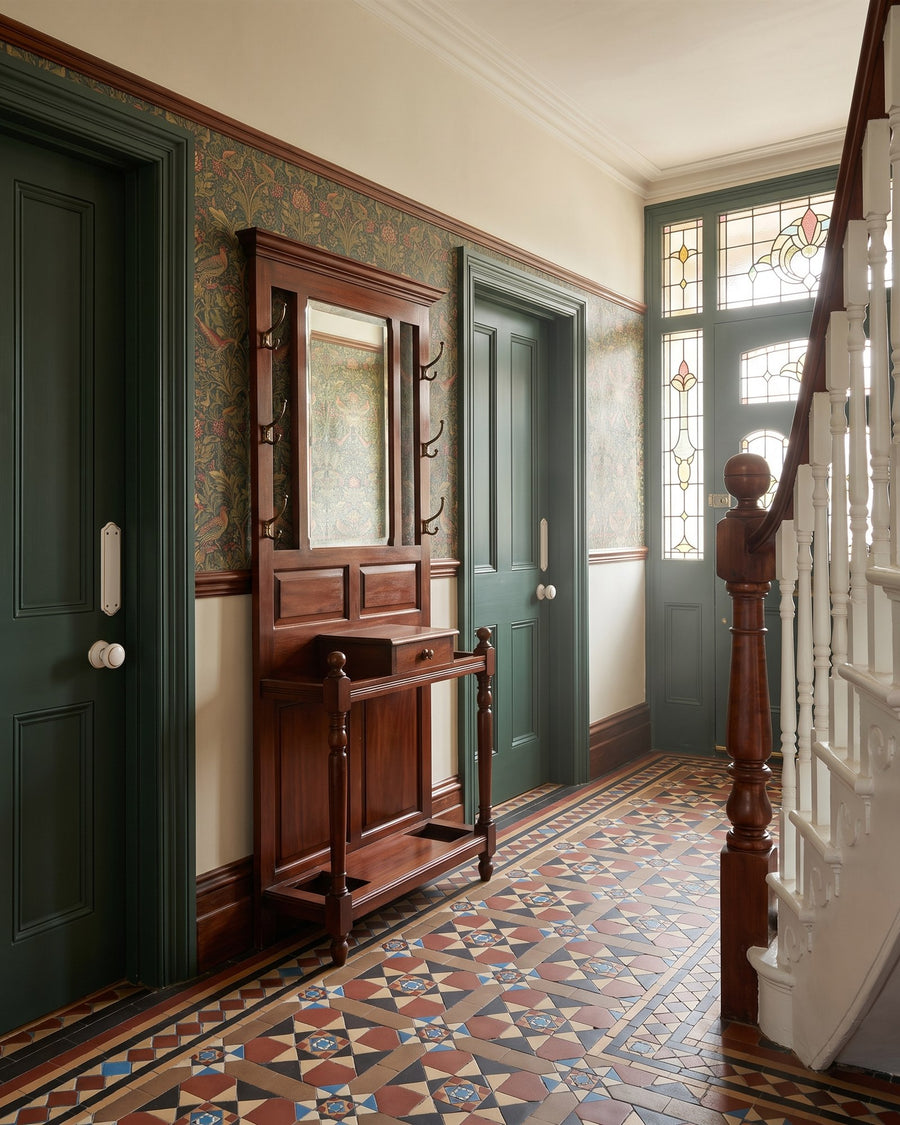
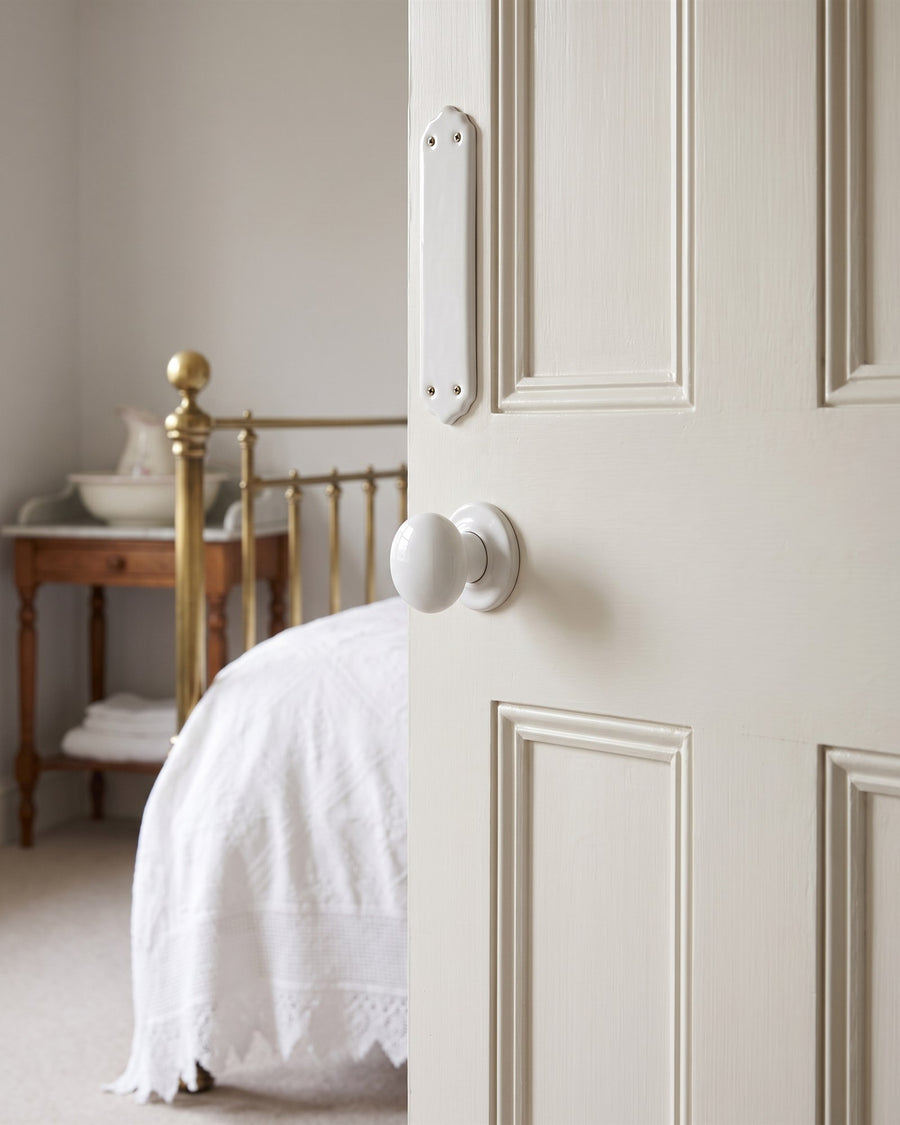
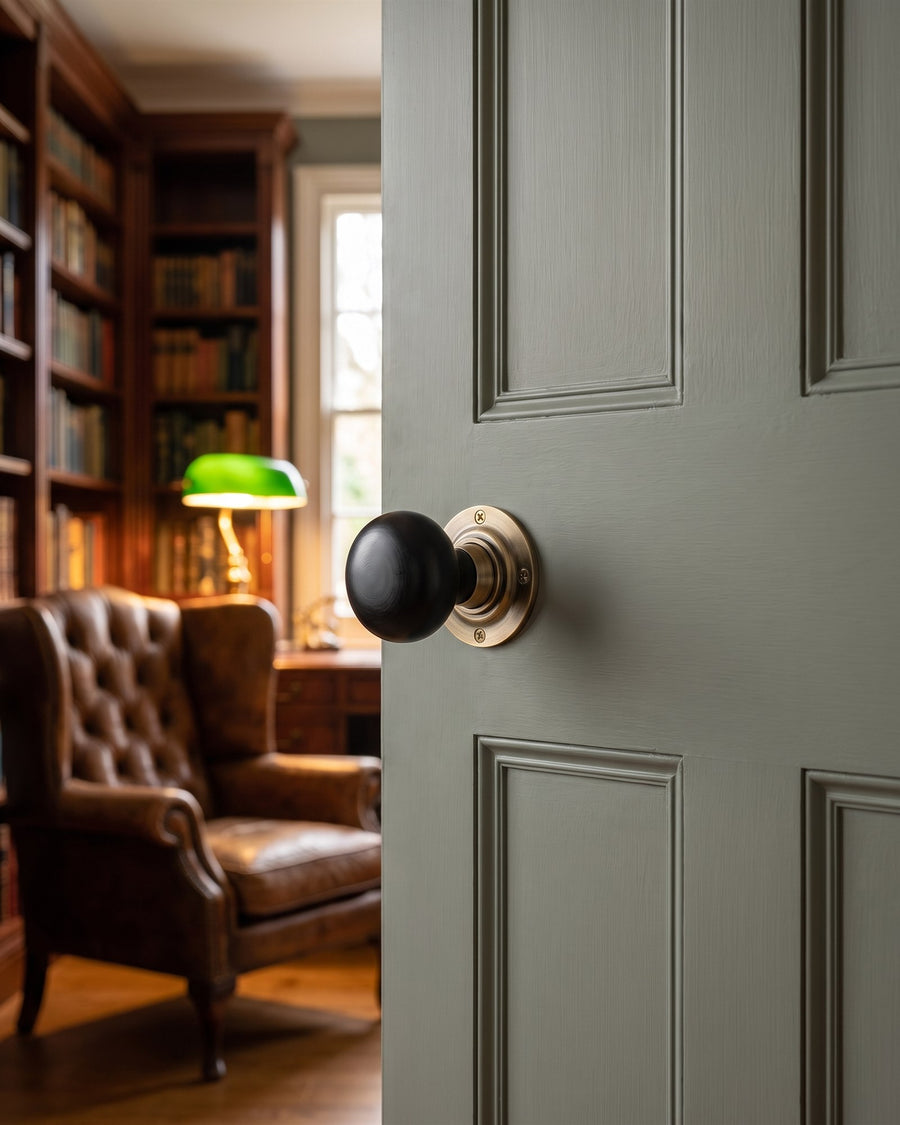
Gold-line porcelain in the reception rooms, plain white upstairs and ebony in the study, the way a Victorian house was first dressed.
Deep greens and soft grey-greens on four-panel doors, patterned papers beneath a picture rail, encaustic tiles in the hall, and glossy white porcelain catching the light at every door.

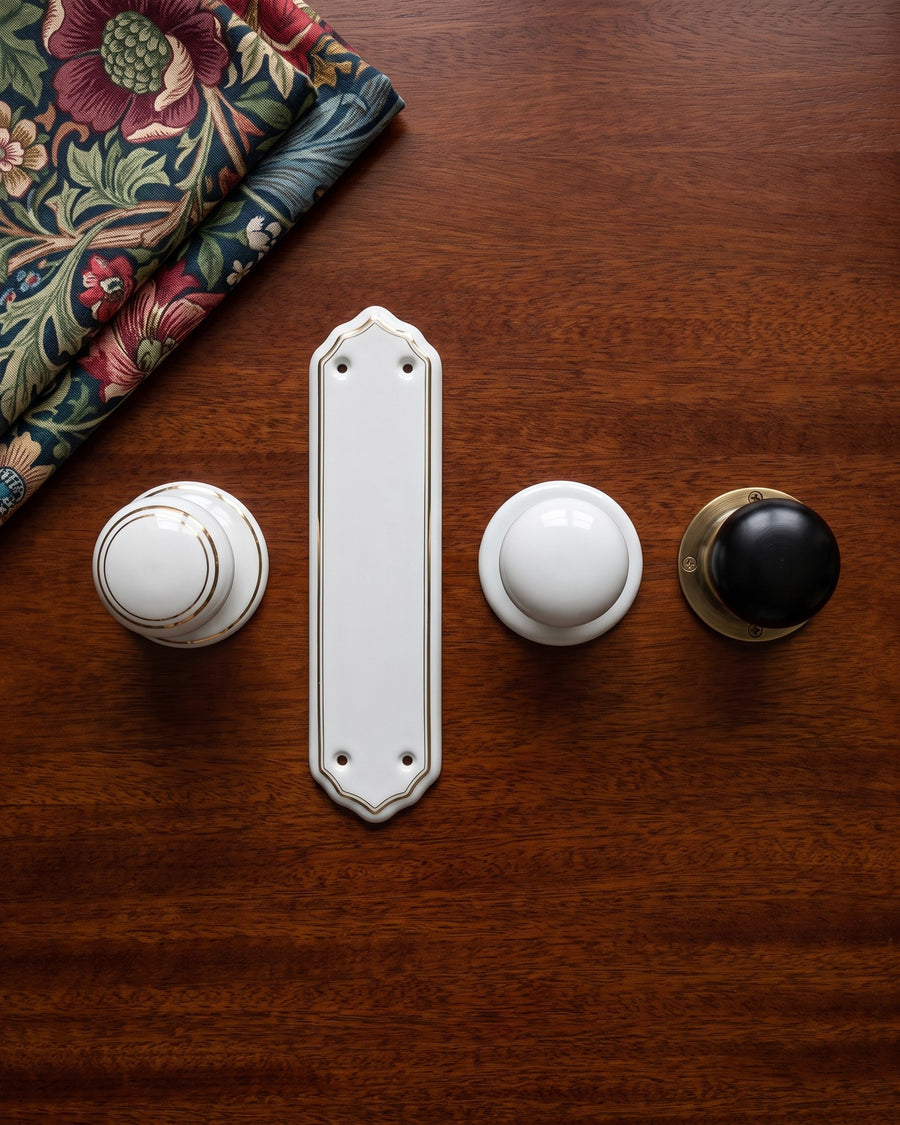
Knobs and finger plates, room by room

-
1White Gold Line Porcelain Mortice Knobs

-
2White Gold Line Porcelain Finger Plate

-
3White Porcelain Mortice Knobs 60mm

-
4White Porcelain Shaped Finger Plate

-
5Ebony and Antique Brass Mushroom Knobs

-
6White Porcelain Turn and Release

-
7Antique Brass Butt Hinges 4in (Pair)

-
8Metal Roses for Porcelain Knobs

-
9Tapered Spindle for Porcelain Knobs

-
10White Gold Line Covered Escutcheon

Black porcelain, silverline and more ebony
-
Ebony and Antique Brass Reeded Knobs

-
Ebony and Polished Brass Mushroom Knobs

-
Ebony and Polished Brass Reeded Knobs

-
Ebony and Polished Chrome Mushroom Knobs

-
Black Gold Line Porcelain Knobs

-
Black Gold Line Porcelain Finger Plate

-
Black Gold Line Porcelain Escutcheon

-
Black Porcelain Turn and Release

-
Black Silverline Porcelain Knobs

-
Black Silverline Porcelain Finger Plate

-
White Silverline Porcelain Knobs

-
White Silverline Porcelain Finger Plate

-
Cream Crazed Porcelain Mortice Knobs

-
Grey Crazed Porcelain Mortice Knobs

-
White Porcelain Covered Escutcheon

-
Replacement White Porcelain Roses

How the Victorians dressed their doors
Knobs before levers
Until the end of the nineteenth century most internal doors had knobs rather than lever handles. Glazed porcelain was affordable, easy to keep clean and bright against the deep paint colours Victorians loved, which is why it turned up in so many houses of the period.
A hierarchy of rooms
The best fittings went where guests would see them. Gold-line porcelain or ebony and brass suited the drawing room, dining room and study, while bedrooms and back stairs had plain white porcelain. Following that order today makes a restored house feel authentic rather than themed.
Why finger plates matter
A finger plate above the knob takes the hand marks that would otherwise wear through the paint. In matching porcelain it finishes the door, and on a dark colour such as deep green it frames the knob beautifully.
Getting it right
Use a 3in latch
Fit porcelain and ebony knobs with a 3in (76mm) tubular latch so your knuckles clear the door frame as you turn them.
Go gently on the grub screw
Porcelain knobs fix to a tapered spindle with a small grub screw in the neck. Tighten it just enough to hold; overtightening can crack the porcelain.
Metal roses for busy doors
On a door that is used constantly, swap the porcelain rose for a metal one in antique brass or dark bronze; it is tougher and still looks right.
Mind the bathroom
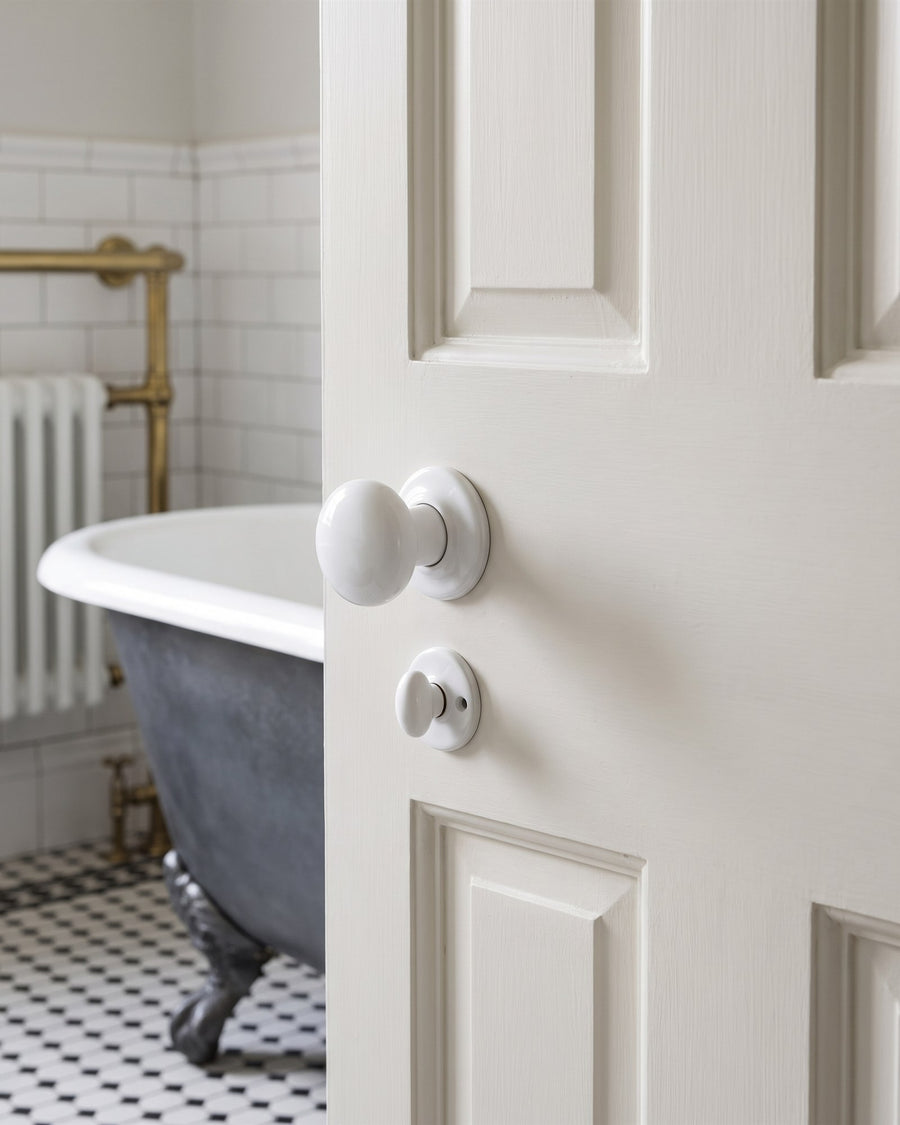
The porcelain turn and release has a 42mm rose; fit it about a hand's width below the knob so the two read as a pair.
