
How to Choose Door Handles That Match Your Interior Design Style
Door hardware works a little like jewellery in an interior: it occupies very little space, but the finish, shape and proportion can change how the whole room feels. Put a slim satin chrome lever on a plain white door and the result feels crisp and contemporary; fit the same door with an aged brass knob or black iron lever and it immediately carries a different visual character.
When choosing door handles to match an established interior style, look beyond colour alone. The profile of the lever, the shape of the rose or backplate, the amount of visual detail and the level of shine all contribute. A finish can be right while the shape is wrong, and vice versa.
Contemporary and minimalist interiors
Contemporary rooms generally benefit from hardware that looks deliberate but visually controlled. Straight or gently curved levers, compact roses and concealed fixings work well because they keep the door surface uncluttered. Square roses can reinforce an architectural look, while a thin round rose softens the result without making it traditional.
Satin chrome, satin nickel and stainless-steel tones are natural choices because they sit comfortably alongside modern lighting, taps, sockets and kitchen appliances. Polished chrome can also work, particularly in cleaner monochrome schemes, although its higher shine makes the handle more noticeable.

For a minimalist room, the strongest option is often the handle with the fewest competing details. Avoid ornate backplates or heavily decorative levers unless the contrast is intentional. The chrome lever on rose handles range is a useful place to compare simple modern profiles without introducing a large backplate.
Traditional and classic interiors
Traditional interiors usually respond well to warmer metals and more visible detailing. Antique brass, polished brass, bronze and aged finishes bring depth that works naturally with timber furniture, panelled doors, cornicing and classic cabinetry.
The handle itself can carry more ornament than it would in a minimalist room. Curved levers, shaped backplates, reeded details and round knobs all make sense because the surrounding interior already contains mouldings, profiles and decorative edges.
A classic room does not have to look heavily historical. A simple brass lever on a round rose can bridge traditional architecture and newer furniture very effectively. The important thing is to avoid choosing a fitting that feels noticeably colder or sharper than everything around it.

If warm metal is already part of the room, the antique brass door handles range can help carry that tone onto the doors without making every fitting identical.
Industrial interiors
Industrial schemes tend to suit hardware that feels substantial rather than delicate. Matt black, dark bronze, black iron and darker aged finishes work particularly well against painted doors, exposed brick, steel-framed glazing, darker timber and concrete-inspired surfaces.
Shape matters just as much as finish. A simple straight lever, strong rectangular backplate or restrained black rose usually fits the style better than a highly polished decorative handle. Visible fixings can even be an advantage where the rest of the interior celebrates exposed construction rather than hiding it.

Black does not have to mean ultra-modern. The black antique door furniture collection shows how darker hardware can move between industrial, rustic and traditional settings depending on the shape of the lever and backplate.
In a more modern industrial room, use the finish as the connecting thread. Black handles can relate to black-framed windows, shelving brackets, light fittings or furniture legs without every item being from the same product range.
Scandinavian and relaxed interiors
Scandinavian-inspired rooms usually rely on light timber, simple forms, pale walls and a limited material palette. Door furniture works best when it supports that restraint rather than becoming the dominant feature.
Satin nickel, brushed silver tones and understated stainless finishes work especially well because they have less visual glare than highly polished metal. A simple rounded lever on a small rose can feel softer and more relaxed than a sharply angular square design.
Warm brass can also work in a Scandinavian scheme, particularly where the room includes oak, natural textiles and warmer neutral colours. In that setting, choose a relatively plain handle profile so that the warmth comes from the material rather than ornate detailing.

The same thinking suits coastal and relaxed interiors. Rather than choosing obviously nautical hardware, use soft metallic finishes, simple rounded shapes and hardware that sits quietly alongside painted timber, linen textures and natural materials.
Period and heritage interiors
Period interiors need a little more sensitivity because “traditional” covers a very wide range of architectural styles. Georgian, Victorian and Edwardian rooms did not all use the same door furniture, and an exaggerated reproduction can look less convincing than a simpler fitting with appropriate proportions.
Mortice knobs, reeded knobs, brass furniture, bronze and black iron are all useful starting points. Round roses and traditional backplates tend to feel more natural than very thin square contemporary roses, particularly on original panelled doors.
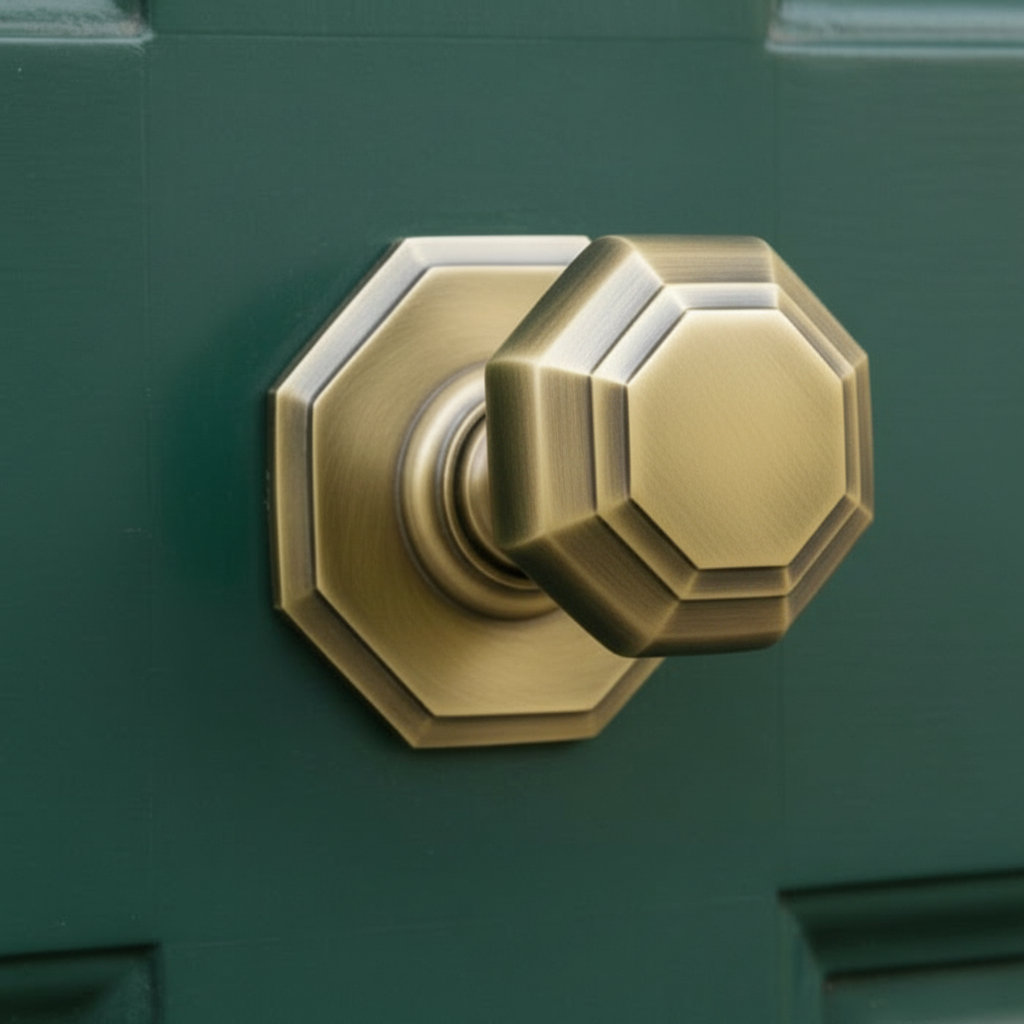
With genuinely old doors, surviving ironmongery elsewhere in the property is often a better design reference than a showroom image. If one room still has original brass knobs or black iron furniture, that can provide clues about the scale, finish and level of detail that will look convincing elsewhere.
The mortice door knobs range is particularly relevant where a traditional knob format suits the building better than a contemporary lever.
Keep a visual thread running through the whole house
A well-designed house does not necessarily need the exact same handle on every door. What matters more is that the hardware feels related when you move from room to room.
One approach is to keep the finish consistent while allowing the handle form to change. Satin brass levers might be used on the main internal doors while a related brass knob appears on a study or dressing room. Another option is to keep the handle family consistent and change only the functional furniture required for bathrooms, bedrooms or locking doors.
Look beyond the doors themselves as well. Kitchen cabinet pulls, wardrobe handles, window furniture, taps, light switches and visible hinges all contribute to the metal palette of an interior. They do not have to be identical, but repeating a finish or colour in several places helps the room read as intentional.
Exact matching can sometimes look overly controlled. A house containing aged brass cabinet pulls does not require every door handle to have precisely the same patina. Closely related warm metals can sit together comfortably, especially in traditional or layered interiors. What tends to look accidental is using several finishes that are almost, but not quite, the same without any obvious design reason.
Different rooms can have different personalities
A stronger visual identity in one room does not mean the entire house has to copy it. A dark home office might suit black hardware while adjoining rooms use satin nickel, provided there is some repeated element that links the spaces together.
Hallways deserve particular attention because several doors are often visible at once. If every doorway can be seen from the same position, using completely unrelated handles may make the scheme feel fragmented. Keeping either the finish, handle shape or backplate style consistent is usually enough to create order.
Private rooms give more freedom. A bedroom, ensuite or study can take a different finish if that choice relates clearly to the interior inside the room. The aim is consistency of design logic rather than rigid uniformity.
Think about finish durability as well as appearance
The finish that looks best in a sample photograph also has to live with daily handling. Highly polished surfaces tend to show fingerprints and fine marks more readily, while satin and brushed finishes can disguise everyday use more effectively.
Dark coatings can create strong contrast, but quality matters because chips are more visible when the underlying metal is a different colour. Brass and bronze finishes can vary substantially too: polished, lacquered, antique and unlacquered versions may all age differently.
Before committing across an entire house, it is worth considering where each handle sits. A rarely used guest-room door and a busy kitchen door do not experience the same amount of contact, cleaning and wear.
Mix metals deliberately rather than accidentally
There is no design rule saying every metal in a home must match. Mixing metals can give an interior more depth, particularly when one finish acts as the dominant choice and another appears as an accent.
Black handles with brass lighting can work because the contrast is obvious. Satin nickel handles with warm brass cabinet hardware can also work if both finishes repeat elsewhere in the scheme. More difficult combinations are near-matches, such as two slightly different brushed silver finishes sitting directly beside one another. Because they appear intended to match, the difference becomes more noticeable.
If you want to mix, make the decision visible enough to look purposeful. If you want matching hardware, compare close-up product photographs and finish descriptions rather than relying only on broad colour names.
Let the handle complete the room rather than simply disappear
Door furniture does not always need to be neutral. In a simple interior, a strong handle can become one of the details that gives the room character. A satin brass lever against a deep green door, a black handle on pale oak or a polished metal fitting against a dark painted door can work as a deliberate accent rather than something chosen to blend in.
Start with the interior style you already have, then judge the handle through three lenses: finish, shape and visual weight. Once those three elements suit the room, the hardware will usually feel as though it belongs there rather than having been added afterwards.
If you already know the direction you want to take, browsing all door handles by finish and form makes it easier to compare designs that fit the wider scheme rather than choosing each door in isolation.
