
Split Spindle vs Fixed Spindle Door Handles Explained
A door-handle spindle is the square metal bar that runs through the latch or lock and transfers movement from the handle into the mechanism. Press the lever down, the spindle turns, the follower inside the latch turns with it, and the latch bolt retracts.
That basic job is the same on many doors, but the spindle itself is not always arranged in the same way. Some handles use one continuous spindle linking both sides of the door. Others use a split spindle so that the inside and outside handles can interact with the lock independently. That difference matters when replacing door handles, because a handle that looks correct from the outside can still be mechanically incompatible with the lock behind it.
It is also easy to confuse a true split spindle with other components that happen to be split, slotted or supplied in more than one piece. Before ordering a replacement, it helps to understand what the spindle is doing inside the door rather than matching it by appearance alone.
Split spindle vs fixed spindle: what is the actual difference?
For this guide, a fixed spindle means the conventional full or continuous square spindle that connects the handles on both sides of the door. When one lever turns, that same spindle turns through the latch or lock and the opposite lever is mechanically connected to it.
A split spindle uses separate spindle sections entering a compatible lock or latch from opposite sides. The mechanism has to be designed for this arrangement, usually with a split follower, so that the two handles can perform different functions rather than simply turning together.
| Feature | Fixed/full spindle | Split spindle |
|---|---|---|
| How the handles connect | One continuous square bar normally passes through the latch or lock and engages both handles. | Separate spindle sections enter the mechanism from each side. |
| Can each side operate independently? | Normally no. Both handles act on the same continuous spindle and follower. | Yes, provided the lock or latch has a compatible split follower designed for independent operation. |
| Common applications | Standard passage doors, lever-latch sets, many mortice-lock handles and most conventional internal lever furniture. | Some lever/pad entrance sets, controlled-entry arrangements and certain multipoint-lock systems. |
| Bathroom/WC use | Common. The main lever handles on many bathroom sets still use a normal continuous spindle, while the thumbturn has its own separate spindle. | Not automatically required for a bathroom or WC door. A true split spindle is only used where the lock mechanism specifically requires one. |
| Length adjustment | A plain spindle is often supplied long enough for several door thicknesses and can commonly be shortened where the manufacturer permits. | Each section must engage correctly with the split follower and handle. Adjustment should follow the lock or handle specification rather than treating the two pieces as ordinary cut-down spindles. |
What a split spindle looks like once the handle is off
On a conventional internal door, removing one handle often reveals a single square spindle passing through the latch towards the handle on the opposite side. If you pull the bar out, it is one continuous piece.
A true split-spindle arrangement is different. Instead of one square bar connecting both handles directly, separate spindle sections engage the lock from either side.
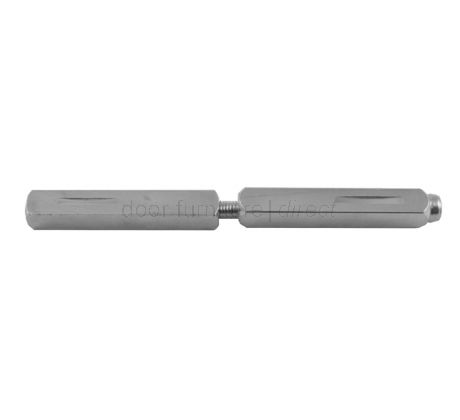
A replacement such as this 110mm split spindle is intended for mechanisms designed to accept two separate spindle sections. The important point is that the spindle does not create the independent function by itself. The lock or latch must have the correct internal follower arrangement too.
Why would a door need the two handles to work independently?
The most obvious example is an entrance door with lever furniture inside and a pad outside. The internal lever may need to retract the latch normally, while the external pad is intended to behave differently depending on the state of the lock.

In arrangements like this, the handle furniture and the multipoint gearbox have to be considered together. A lever/pad set intended for a twin- or split-spindle system cannot safely be replaced with an apparently similar lever/lever set without checking how the gearbox is designed to operate.
This is why spindle type is particularly important when replacing handles on uPVC, composite and other multipoint-locked doors. Screw centres, backplate size and cylinder position can all match while the spindle arrangement is still wrong.
A slotted spindle is not the same thing as a functional split spindle
Another source of confusion is the slotted spindle. A slotted spindle may have a visible split running into one or both ends, but it can still be one continuous bar linking the two handles.
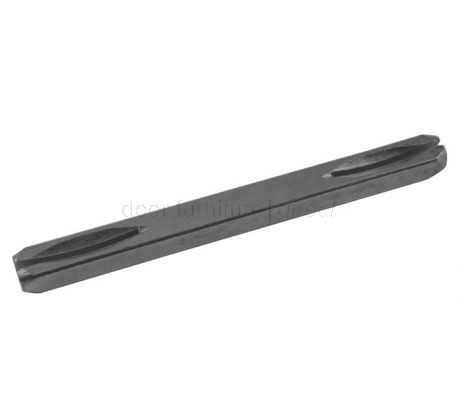
With an 8mm slotted spindle, the slot is part of the way the lever is secured. A retaining or grub screw can engage with the end of the spindle and help lock the handle firmly in place.
Mechanically, that is different from a true split-spindle system. The slotted bar still runs continuously through the latch or lock, so both handles are connected through the same spindle.
This distinction is worth checking carefully when product descriptions use terms such as “split spindle”, “slotted spindle”, “split-ended spindle” or “twin spindle”. The names can sound similar while referring to different mechanical arrangements.
Bathroom spindle does not automatically mean split spindle
Bathroom and WC furniture causes another common misunderstanding because there can be two separate square bars associated with the same lock.
The main lever handles can still use an ordinary continuous handle spindle through the latch follower. The thumbturn and emergency release then operate the locking section using their own smaller spindle.
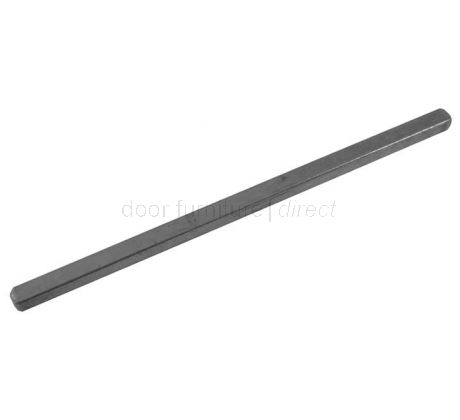
That second spindle does not mean the main handles are operating on a true split-spindle system. It simply performs a different job inside the bathroom lock. If you need a replacement, compare the available door handle spindles by function and dimensions rather than assuming every square bar is interchangeable.
Checking your own door before ordering
If I had taken an unfamiliar handle off a door, I would start by leaving the door open and looking at what actually passes through the latch or lock. If there is one square bar that can be withdrawn as a complete piece and that normally enters both handles, I would expect it to be a conventional full-spindle arrangement.
If separate spindle sections disappear into the mechanism from opposite sides, I would stop there and identify the lock or gearbox before ordering anything. Two separate spindle pieces strongly suggest that the mechanism itself needs checking, because the replacement has to match the internal follower arrangement as well as the handles.
I would then measure the square section of the spindle and its usable length. An 8mm square spindle is extremely common on modern lever furniture, but it is not universal. Older ironmongery and specialist locks can use different dimensions, so measuring the part you actually have is safer than buying something described simply as a “standard door spindle”.
Door thickness also matters. A replacement spindle has to project far enough into each handle for secure engagement without being so long that the furniture cannot sit correctly against the door. If the handles are already off, it is a good opportunity to record the other important dimensions using the replacement door handle measuring guide.
It is also worth inserting the existing spindle into the latch or lock and turning it carefully by hand. If the latch retracts smoothly and returns cleanly, that suggests the central mechanism is doing its job. If the spindle feels stiff, excessively loose or fails to operate the latch consistently, the fault may not be in the handle furniture at all.
Getting spindle length wrong causes more problems than people expect
A spindle does not merely need to be long enough to reach both handles. It needs sufficient engagement inside each handle once the roses or backplates are tightened fully against the door.
If a one-piece spindle is too short, one handle may initially appear to work but only engage the very end of the bar. During use, the spindle can shift sideways and partially or completely disengage from one lever.
If the spindle is unnecessarily long, the handles may not seat correctly against the door, or tightening the furniture can put pressure on the mechanism and make the lever feel stiff.
Plain spindles are often deliberately supplied longer than necessary so they can be cut to suit different door thicknesses. If shortening one, enough material has to remain inside both handles. With a slotted spindle, you also need to retain enough of the slotted end for the handle's retaining screw to engage correctly.
A true split-spindle arrangement needs more care again. Both spindle sections must engage with their respective sides of the follower by the correct amount. Do not assume you can reproduce the system simply by cutting an ordinary spindle into two pieces.
Common mistakes when replacing a door-handle spindle
Matching the handle but ignoring the lock
This is especially common on multipoint doors. A replacement handle can have the correct dimensions and still fail to work because it is designed for a single spindle while the gearbox requires a split or twin-spindle arrangement.
The spindle system is part of the lock specification, not just a feature of the visible handles.
Assuming two pieces automatically means split-spindle operation
A bathroom privacy set may contain more than one spindle, and some handles use unusual retaining arrangements. Independent inside/outside operation only exists where the lock or latch itself has been designed for it.
Ordering a spindle by overall length alone
Length is only one measurement. The square section must fit the handle and follower correctly, and specialist systems may require particular slots, drilled sections or split arrangements.
Even with a common 8mm spindle, check how the handle is secured before replacing the bar with a plain piece of square steel.
Blaming every drooping handle on the spindle
A worn, undersized or badly fitted spindle can introduce play and make a handle feel loose, but a lever that hangs below horizontal often points to the return spring in the handle, the spring in the latch, poor alignment or binding between the two sides.
If the spindle corners are visibly worn or rounded, replacement may remove unwanted movement. If the spindle is sound, however, fitting another identical bar will not repair a failed spring. The guide to drooping door handles covers the other likely causes.
Cutting first and measuring afterwards
Once a spindle has been shortened too far, there is no useful way to put the missing engagement back. Assemble the handle loosely, establish how deeply the spindle enters each side and mark the required length before cutting.
On a specialist split spindle, follow the lock or handle manufacturer's dimensions rather than using the trial-and-error method you might use with a simple internal latch.
The important match is handle, spindle and lock together
A normal fixed or full spindle is one continuous bar mechanically connecting both handles. A true split spindle uses separate sections with a compatible split-follower mechanism so the two sides can operate independently. A slotted spindle may look split at its ends but can still be a conventional one-piece operating spindle.
Once you know which arrangement is already in the door, replacement becomes much less mysterious. Confirm the lock type, square spindle size, usable length and door thickness before ordering, then choose furniture designed to work with that mechanism. If you have established what you need, you can compare the relevant spindle accessories before browsing all door handles for a compatible replacement.
